7 Hidden Gems in Italy That Will Steal Your Heart (And Avoid the Tourist Crowds)

Hidden Gems in Italy

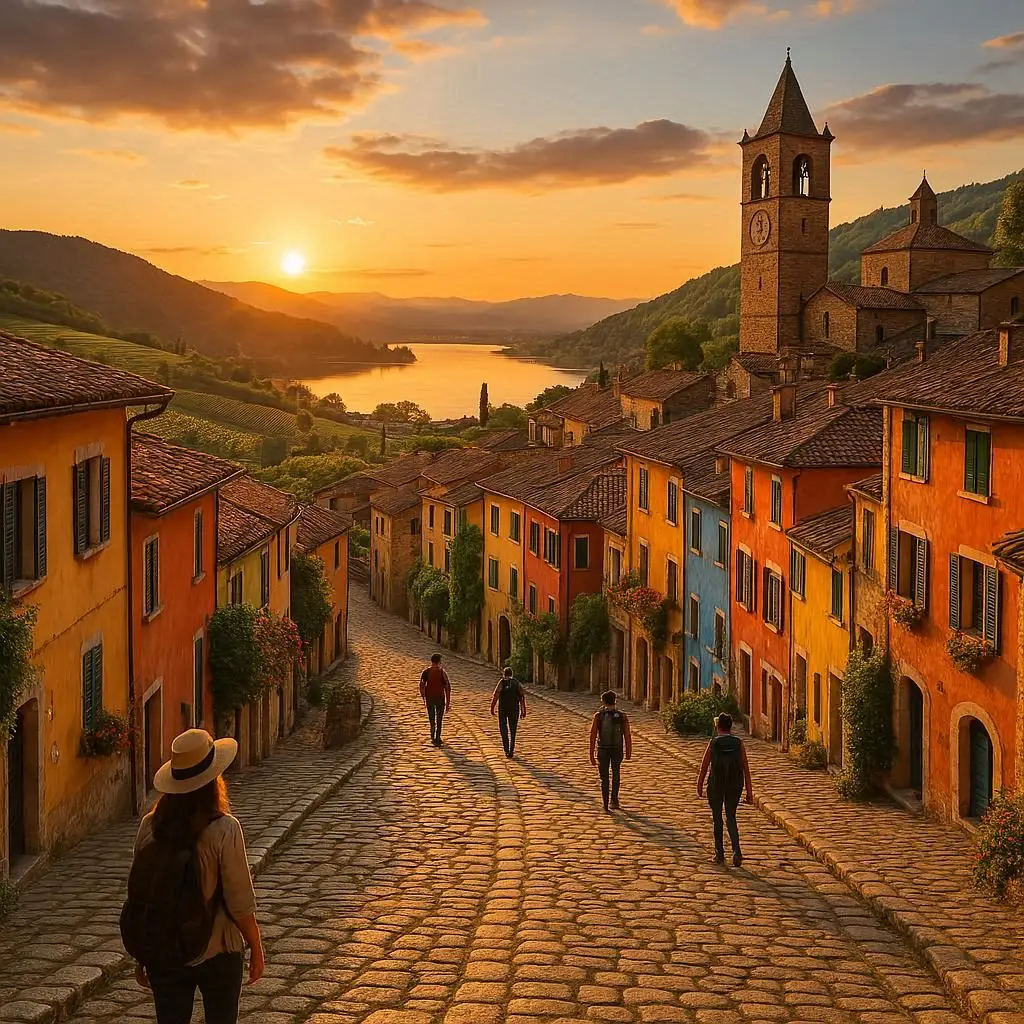
Hidden Gems in Italy do not really need an introduction, and yet nobody talks about them the way they deserve. Everyone lands in Rome, snaps a photo at the Colosseum, hops on a gondola in Venice, and calls it Italy. Rome, Venice, and Florence earn every bit of their fame – this is not an argument against visiting them. But the version of Italy that actually rearranges something in you, the one you find yourself daydreaming about months later, tends to live somewhere quieter.

Some of the best experiences I have had in this country never made it into a single glossy guidebook. They happened in medieval villages balanced on crumbling cliffs, on pastel-colored fishing islands, and in hilltop towns where the biggest event of the day is deciding which café pours the better espresso. These are the places where a family-run trattoria still serves handmade pasta from a grandmother’s recipe, where you end up chatting with a fisherman who’s worked the same stretch of coast for forty years, and where nobody’s rushing you along to the next stop on a tour schedule.

That’s what this guide is really about – 7 hidden gems in Italy that I have either wandered through myself or have sitting at the top of my next-trip list. These are not obscure for the sake of being obscure. They are the kind of places that reward you with depth instead of just another photo, and if you have already ticked off the big three, they are exactly what your next Italy trip is missing. If you’re already deep into planning, our 10-day Italy itinerary on a budget pairs nicely with everything below.

Quick note before we dive in: most of these towns are easiest to reach by rental car, and a few require a short transfer from a major airport. Comparing flights on WayAway Plus and booking an airport pickup through GetTransfer ahead of time takes the guesswork out of the logistics, so you can spend your energy on the towns themselves instead of the getting-there part.

If you love this kind of off-the-beaten-path travel, our Destination Guides section and Travel Tips category are both worth bookmarking for more.

Let’s get into it – here are seven hidden gems in Italy you have probably never heard of, in no particular order of how much they’ll take over your camera roll (all of them, honestly).

1. Civita di Bagnoregio – The Dying Town

Ancient hilltop town of Civita di Bagnoregio glowing under golden sunlight. Italy hidden gems.

Imagine walking across a narrow footbridge suspended above a valley, leading to a medieval village that looks like it’s floating. That’s Civita di Bagnoregio. Locals call it “La città che muore” – the dying town – because of its slowly crumbling cliffs, and the nickname only adds to the feeling that you’ve stepped into another era entirely.

When I visited, I had lunch at a tiny family-run trattoria where the chef served handmade pici pasta with truffle sauce and casually mentioned it was his grandmother’s recipe. It was one of those meals where the view, the food, and the story all blended into something you don’t forget.

What makes Civita different from most hilltop towns in Italy is how small it actually is – you can walk the entire village in twenty minutes. That’s part of the charm. There is no rush, no long list of attractions to check off, just cobblestone lanes, a handful of tiny shops, and views over the valley that change completely depending on the time of day.

  • Why go: dramatic cliffside views, car-free medieval streets, a genuine sense of history
  • Best time to visit: spring or early autumn, when the valley mist rolls in at dawn

Travel tip:

Arrive early in the morning – the valley mist makes the whole scene look almost unreal, like walking into a dream. Civita sits about 90 minutes north of Rome, and since there’s no train station nearby, renting a car through GetRentACar is genuinely the easiest way to reach it and the other hill towns on this list.

2. Alberobello – The Village of Trulli

Whitewashed Trulli houses with conical stone roofs glowing under golden light in Alberobello. Italy hidden gems.

Down in Puglia, in Italy’s sun-baked southern heel, you’ll find Alberobello – famous for its whitewashed houses topped with cone-shaped roofs called trulli. At first glance, the whole town looks like a set from a fantasy film.

Most visitors wander around for an hour, take their photos, and move on. Staying overnight in a converted trullo is next-level. I stayed in one with thick stone walls and fell asleep to the sound of rain tapping on the conical roof – simple, cozy, and completely different from a standard hotel room.

  • Why go: one-of-a-kind architecture, UNESCO World Heritage status, a genuinely walkable old town
  • Best time to visit: spring, when wildflowers bloom around the edges of town and the crowds are thinner

Travel tip:

Book a trullo stay well in advance during peak season, since there are only so many. If you had rather have a local guide walk you through the area’s wine cellars and olive groves instead of figuring it out solo, Travel & Tours Finder has a decent range of small-group options around Puglia.

3. Procida – The Pastel Island

Colorful pastel houses along Procida’s harbor glowing under sunset light. underrated places in Italy.

Skip Capri – it’s beautiful, but it’s also wall-to-wall tourists most of the year. Head to Procida instead, a small, colorful island in the Bay of Naples where life still feels unmistakably authentic. Fishermen mend their nets right on the shore, kids play football in the narrow streets, and pastel-colored houses stack up around the harbor like a postcard that got rained on in the best way.

One afternoon, I met an old fisherman who pointed me toward his favorite trattoria and swore they served the best linguine alle vongole (clam pasta) in the whole region. He wasn’t exaggerating.

  • Why go: authentic island life, colorful harbor views, quiet beaches without the Capri crowds
  • Best time to visit: May through June or September, before or after the peak summer rush

Travel tip:

Rent a small boat and circle the island yourself – you’ll find secret coves that the ferry crowds never reach. Searadar makes it easy to compare boat and yacht rental options if you want to spend an afternoon on the water instead of just looking at it.

4. Matera – The City of Caves

Ancient stone dwellings and cathedral tower of Matera glowing in sunset light. off the beaten path Italy.

Matera, tucked into the Basilicata region, is one of the oldest continuously inhabited cities in the world. Its ancient cave dwellings, known as the Sassi di Matera, are carved directly into the cliffside. Walking through them feels less like sightseeing and more like stepping thousands of years into the past.

I stayed in a boutique cave hotel – candle-lit stone walls, arched ceilings, and thankfully, working wifi. At night, the whole city glows a warm gold, and it’s genuinely one of the most striking sights I have come across anywhere in Italy.

Matera also has a darker, more complicated history worth knowing before you go – until the 1950s, these caves housed some of the poorest families in Italy under genuinely difficult conditions, before the government relocated residents and the Sassi sat largely empty for decades. It’s only in the last thirty years that the caves have been restored and reopened as homes, restaurants, and hotels, which makes walking through them today feel like witnessing a genuine comeback story, not just an old ruin.

  • Why go: ancient cave architecture, UNESCO World Heritage status, unbeatable night views
  • Best time to visit: autumn, when the light hits the stone just right and the summer heat has passed

Travel tip:

Stay at least one night in a cave hotel – it’s an experience you can’t replicate anywhere else. Hotellook is worth checking for comparing cave-hotel rates across booking sites, and if you’re arriving with bags you do not want to lug through the Sassi’s steep stone lanes, Radical Storage has drop-off points near the city center.

5. Orvieto – The Hilltop Jewel

Orvieto Cathedral and medieval town glowing atop a golden cliff at sunset.

Orvieto sits proudly on a slab of volcanic rock overlooking the Umbrian countryside. It’s a small town, but its gothic cathedral is genuinely jaw-dropping – the façade alone is a masterpiece of mosaics, sculpture, and gold detailing that catches the light in a way photos never quite capture.

I remember sipping a glass of Orvieto Classico, the local white wine, at a tiny piazza café, watching locals chat in the square. Nothing about it was rushed. It was just Italy at its quietest and best.

  • Why go: a stunning cathedral, strong local wine culture, underground caves and tunnels beneath the town
  • Best time to visit: early autumn, which lines up with the local wine harvest

Travel tip:

Take the funicular up from the train station instead of driving – it’s cheap, quick, and gives you panoramic views of the countryside on the way up that you’d otherwise miss entirely.

6. Portovenere – The Forgotten Cinque Terre

Colorful waterfront houses and ancient church of Portovenere glowing at sunset.

Everyone knows Cinque Terre. Almost no one talks about Portovenere, and honestly, that’s a blessing for anyone who actually visits. This seaside town has the same colorful houses and dramatic coastline as its famous neighbors, plus a medieval castle and a romantic legend tied to Byron’s Grotto, without anywhere near the same crowds.

Instead of battling lines in Monterosso or Vernazza, I sat down to fresh seafood right on the Portovenere waterfront with no wait at all. It felt like getting the best parts of Cinque Terre without the parts that wear you down.

  • Why go: all the charm of Cinque Terre, a fraction of the crowds
  • Best time to visit: shoulder season – late spring or early autumn keeps both the weather and the tourist numbers manageable

Travel tip:

Visit at sunset – the pastel houses glowing in golden light are a photographer’s dream. For more low-key coastal spots like this one, our guide to hidden beach destinations in Europe rounds up several worth adding to the list.

7. San Gimignano – The Town of Towers

Medieval stone towers of San Gimignano rising above terracotta rooftops at sunset.

In Tuscany, San Gimignano is often nicknamed the “Medieval Manhattan” for its collection of tall stone towers rising above the hillside. Walking through its narrow lanes feels like stepping straight into a historical film set – cobblestones, stone archways, and views of rolling Tuscan hills at every turn.

My favorite part, though, is the gelato. There’s a gelateria here, Gelateria Dondoli, that’s won World’s Best Gelato honors multiple times. I tried the saffron and pine nut flavor, and no gelato has tasted quite the same to me since.

  • Why go: medieval towers, sweeping Tuscan countryside views, genuinely legendary gelato
  • Best time to visit: spring or early autumn for cooler weather and fewer day-trip crowds from Florence

Travel tip:

Climb Torre Grossa, the tallest of the towers, for a full 360-degree view of the surrounding hills. It’s a short climb, but the payoff at the top is worth every step.

Recommended Travel Resources

Planning a trip to Italy’s smaller towns does not have to be complicated. The right tools save you money, time, and a fair amount of hassle. Here’s a handpicked list of resources that make getting around these hidden gems in Italy noticeably easier:

  • GetRentACar — affordable car rental deals across Europe, useful for reaching hill towns with no train access.
  • Airalo eSIM — stay connected across Italy without paying roaming fees, installed instantly on your phone.
  • Searadar — rent yachts and boats at competitive rates for exploring the coastline.
  • WayAway Plus — book flights with cashback rewards on top of already low fares.
  • Yesim eSIM — another solid eSIM option for affordable data while traveling in Europe.
  • GetTransfer — pre-book private transfers and rideshares for cheaper rates than grabbing a taxi at the airport.
  • NordVPN — protects your data on public wifi and unlocks location-restricted content while abroad.
  • Radical Storage — safely store your luggage near stations and city centers so you can explore hands-free.
  • Packing List Generator — Build a carry-on-only packing list for any destination with our free 
  • AI Travel Budget Estimator — Estimate your total trip cost (including all flight fees)

For more planning help, our Travel Tips guide covers the basics, and our cheap travel in Europe guide is worth a look if you’re stretching a tighter budget across multiple towns.

FAQs About Hidden Gems in Italy

What are the best hidden gems in Italy to visit?

Civita di Bagnoregio, Alberobello, Procida, Matera, Orvieto, Portovenere, and San Gimignano are all excellent starting points. Each offers something different – cliffside villages, cave cities, pastel islands, and medieval hill towns – without the crowds you’d find in Rome, Venice, or Florence.

How many days do you need to explore Italy’s hidden gems?

A week gives you enough time to comfortably cover three or four towns without rushing. Ten to twelve days lets you work through most of this list at a relaxed pace, especially if you’re basing yourself in Tuscany or Puglia for a few nights at a time rather than moving every single day.

Is it safe to visit small towns in Italy?

Yes, generally very safe, often more so than the bigger tourist cities where pickpocketing is more common. Standard precautions apply – keep valuables secure and be sensible at night – but small-town Italy is known for being welcoming and low-risk for travelers.

What is the best time to visit hidden gems in Italy?

Late spring (May–June) and early autumn (September–October) hit the sweet spot: mild weather, thinner crowds, and lower accommodation prices than peak summer. Several towns on this list, like Orvieto and Alberobello, are also noticeably prettier outside of the July–August rush.

How do you get around Italy’s small towns without a tour group?

A rental car is the most flexible option, since several of these towns have limited or no train service. Where trains do work well, particularly for Tuscany’s hill towns, our guide to Europe’s most scenic train journeys has some useful routes worth building a trip around.

Do I need travel insurance for a trip to rural Italy?

It’s a good idea regardless of where in Italy you are headed. Medical costs, cancelled trains, or lost luggage can turn an inexpensive trip expensive fast, and budget-friendly policies exist specifically for this kind of travel.

Can I combine hidden gems with a classic Rome, Venice, and Florence trip?

Absolutely, and it is often the best approach for a first visit to Italy. Orvieto and San Gimignano both sit close enough to Rome and Florence for an easy day trip or a one-night detour, while Matera and Alberobello make more sense as a dedicated few days if you’re already heading south toward Puglia or Basilicata.

Final Thoughts

Italy is full of surprises, and while Rome’s Colosseum and Venice’s canals will always be iconic for good reason, the country’s real heart beats in these quieter corners. Each of these hidden gems in Italy comes with its own story, its own flavor, and its own kind of charm, waiting for someone to slow down long enough to notice it.

So next time you’re planning your Italian escape, leave a little room for the unseen. You might find that your favorite memory from the whole trip isn’t in a crowded piazza, but in a quiet cobblestone lane where life moves slowly and, somehow, a little more beautifully.

Have you visited any of these towns, or have a hidden gem in Italy of your own worth sharing? Drop it in the comments – I’m always adding to the list.

Hidden Travels Team / HiddenTravels.site

Scroll to Top