
Why First-Time International Travel Feels Overwhelming
Traveling abroad for the very first time is exciting – new places, new cultures, new food. But it can also feel a little overwhelming. Between visas, packing, airports, and that constant nagging worry of “what if I forget something important,” most first-time travelers feel a bit lost before they have even left the house. That’s exactly why having a reliable Travel Tips Guide on hand actually matters.
I still remember my first international trip, to Istanbul. I thought I was fully prepared. I was not. I overpacked, paid extra for overweight luggage, and nearly missed my connecting flight because I underestimated how strict security checks could be. That trip is the reason this guide exists.
Whether you are traveling solo, with friends, or with family, what follows is practical, experience-based advice for a smoother, safer, less stressful first international trip – the kind that lets you actually enjoy the parts of travel that made you want to go.
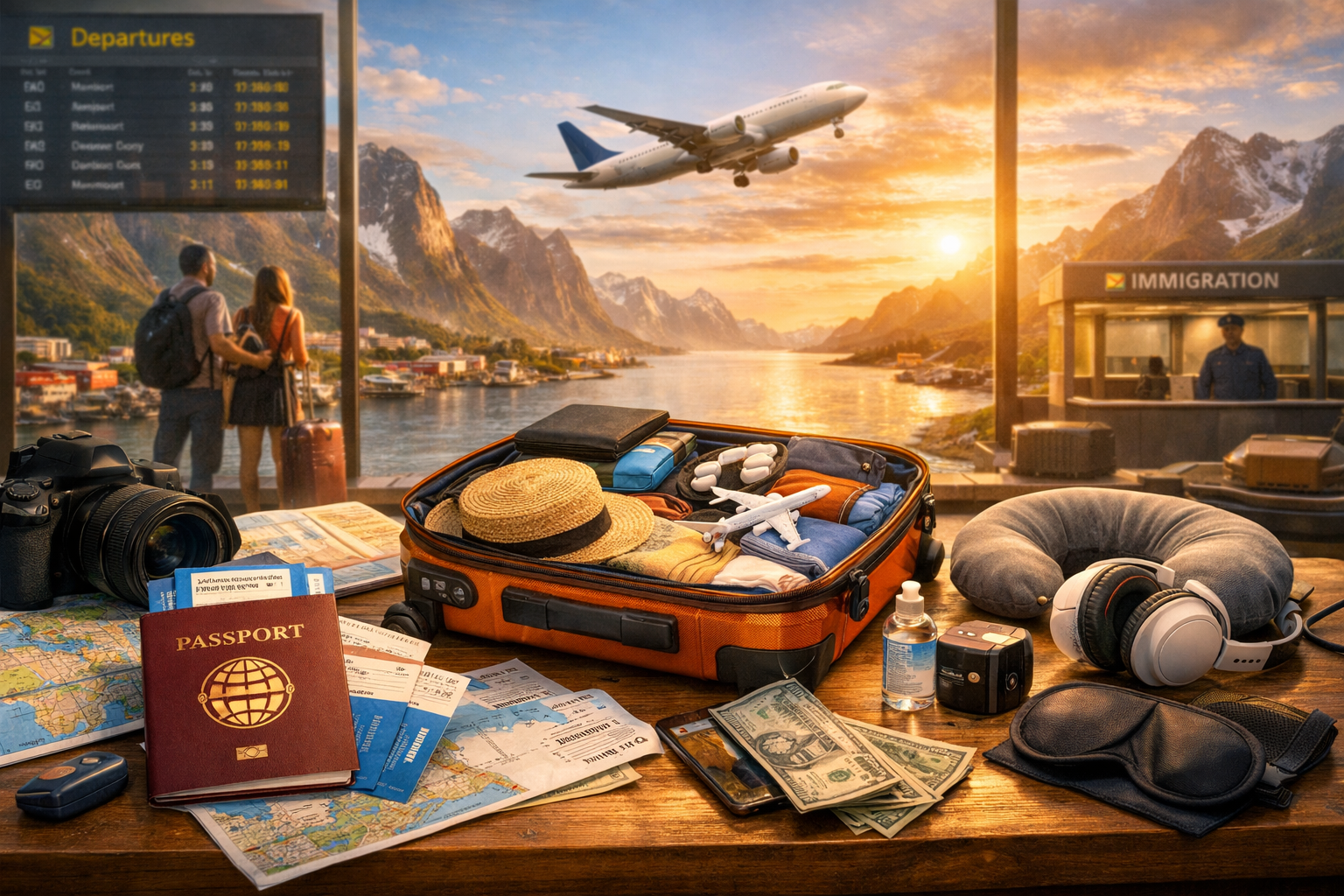
Packing and Luggage Tips That Make Traveling Easier

1. Pack Light and Smart
The most common mistake first-time travelers make is overpacking. You convince yourself you’ll need extra clothes or three pairs of shoes “just in case.” In reality, you’ll wear the same handful of comfortable outfits on repeat.
- Stick to clothes you can mix and match
- Pack in layers instead of one or two heavy items
- Neutral colors save you from overthinking outfits every morning
Quick tip:
Always pack one full outfit in your carry-on. If your checked luggage gets delayed, you’ll thank yourself. For a full breakdown of what to bring, our ultimate packing list for budget travelers is worth a look before you zip your bag shut.
2. Use Packing Cubes and Roll, Don’t Fold
Packing cubes aren’t just about saving space – they keep your suitcase organized, which matters more than you’d think when you’re living out of one for two weeks. And roll your clothes instead of folding them; it’s an old trick, but it genuinely saves space and cuts down on wrinkles.
3. Check Airline Baggage Rules Before You Leave
Every airline has its own baggage limits, and they’re rarely identical. Some allow a free personal item plus a carry-on; others charge you at the gate. I once paid €40 because my backpack was slightly bigger than their “personal item” allowance – a five-minute check before you leave home avoids that.
4. Keep Digital Copies of Important Documents
Scan your passport, visa, and ID, then email them to yourself or save them somewhere in the cloud. If your bag gets lost or stolen, having access to your details can save you hours at an embassy later.
5. Put Together a Mini Emergency Kit
Don’t underestimate how useful a small kit can be. Mine usually has:
- Travel-size hand sanitizer
- A universal power adapter
- Basic medicines like painkillers and band-aids
- A reusable water bottle
Airport and Flight Hacks Every First-Time Traveler Should Know
Airports can be a lot – long lines, confusing signage, that low-grade panic about missing your gate. A few good habits make the whole process feel far less chaotic, and most of them cost nothing.

1. Arrive Early, but Not Too Early – and Download the Airline App
Everyone says arrive three hours before an international flight, but don’t overdo it – five hours early just means sitting around bored. Two and a half to three hours is the sweet spot. Also download the airline app before you fly; it usually shows gate changes before the overhead announcement does.
2. Sort Out Connectivity the Moment You Land
Hunting for airport wifi or a local SIM card in a country you have never been to is more stressful than it needs to be. I set up a local data eSIM through Airalo before I leave home. And if you’re landing late at night, a pre-arranged transfer through GetTransfer beats negotiating with taxi drivers while jet-lagged.
3. Stay Hydrated, Move Around, and Charge Up Before You Board
Long flights dry you out fast – cabin air has very low humidity and leaves you tired and foggy. Carry a reusable water bottle and refill it after security. Get up every couple of hours to stretch, and charge your phone and power bank at home rather than fighting for a crowded outlet.
4. Sleep Smart to Beat Jet Lag
Try syncing your sleep to your destination’s time zone before you even land. On a flight from Pakistan to Paris, I forced myself to stay awake until it was nighttime there – the adjustment afterward was much easier. It also helps to check shorter layovers in advance on Aviasales, since a rough connection can make the difference between arriving rested or wrecked.
5. Sort Out a Little Cash and Check Entry Requirements Early
Airport currency exchange counters almost always offer the worst rates you’ll see on the whole trip. Exchange a small amount at home or from an ATM once you land instead, and check real rates with a currency converter before you go. Also double-check visa and entry requirements early – some countries need an eVisa applied for weeks in advance.
Accommodation Hacks That Save Money and Stress
Where you stay shapes the entire trip, and for first-time international travelers this is often the most confusing part. Hotel, Airbnb, or hostel? Here’s what’s actually worked for me.

1. Book Early and Compare Platforms
In popular cities, rooms sell out fast during tourist season, so booking early usually means better prices. Don’t rely on a single booking site either – the same room can run 20-30% cheaper elsewhere. Hotellook is my go-to for pulling several sites’ rates together instead of tab-hopping.
Quick tip:
I once found a nice hotel in Istanbul through a booking site, but the hotel’s own website had a “book direct and get free breakfast” deal. Always worth a quick check before you confirm.
2. Location Matters More Than Price
A cheap room far from the city center can end up costing you more once you factor in transport and wasted time. In Bangkok, I picked a budget guesthouse right in the center and saved hours of commuting every single day.
3. Read Reviews Carefully and Consider Hostels
Pay attention to what people say about cleanliness, safety, and noise, not just the star rating. And don’t write off hostels – many now offer private rooms, not just dorm beds, and they are genuinely social.
4. Watch Out for Hidden Fees
Always check for cleaning fees, resort charges, or city taxes before confirming – they add up fast. A €40 room in Barcelona turned into €55 once fees were tacked on. And if you’re checking out early but your flight isn’t until that evening, drop your bags at a Radical Storage location instead of paying for a late checkout you don’t really need.
5. Don’t Be Afraid to Ask
Sometimes politely asking is all it takes. In Venice, I asked at check-in if a better room was available and got moved to one with a canal view, no extra charge. It’s also worth choosing places in well-lit areas with solid security reviews.
Budget and Money-Saving Tips
Traveling doesn’t have to drain your savings. As a rough guide, a budget-conscious first international trip lands somewhere between $50 and $100 a day per person, not counting flights – that covers a hostel or budget guesthouse, public transport, casual meals, and one or two paid activities.

1. Travel in the Shoulder Season
Instead of visiting Europe at peak summer (June–August), try late spring or early autumn. Flights and accommodation are noticeably cheaper and the crowds thin out. Our guide to cheap travel in Europe breaks down exactly when and where this pays off most.
2. Use Public Transport and Cook Your Own Meals
It is tempting to grab a taxi after a long flight, but trains, buses, and metros are almost always cheaper. And instead of eating out every meal, grab bread, cheese, and fruit from a local supermarket and picnic in a park.
3. Use City Travel Cards and Overnight Transport
Cities like London, Amsterdam, and Barcelona sell passes bundling transport with museum entry. And when moving between cities, an overnight train or bus saves a night’s hotel cost while maximizing daylight for sightseeing.
4. Track Fares and Travel With a Friend
Set price alerts through flight comparison tools like Aviasales months in advance instead of refreshing tabs daily. Traveling with even one other person helps too – splitting a private room or an airport transfer often beats going solo. Our budget travel hacks guide and roundup of the best travel apps to save money go further than I have room for here.
5. Get a Card With No Foreign Transaction Fees
Regular debit and credit cards often charge 2-3% on every purchase you make abroad, plus a flat fee on ATM withdrawals. That adds up fast over a two-week trip. A no-foreign-transaction-fee card is a five-minute application that can genuinely save you a hundred dollars or more.
Safety and Health Tips Every Traveler Should Follow
Unexpected problems can pop up anywhere – a minor health issue, a lost bag, an uneasy feeling about a neighborhood. A little preparation goes a long way toward handling any of it calmly.

1. Travel Insurance Is not Optional
A lot of people skip this to save money – but a single hospital visit abroad can run into the thousands. Travel insurance covers accidents, medical emergencies, and lost baggage. If your flight gets delayed or cancelled instead, a service like AirHelp can help you claim compensation you are often entitled to but never think to ask for. A traveler I know had a scooter accident in Thailand and racked up a $2,000 hospital bill – insurance covered it in full.
2. Be Smart About Food and Water
Your stomach may not always agree with local food. That doesn’t mean skip it – just choose stalls where locals are eating, avoid raw or half-cooked meat, stick to bottled water, and carry basic meds for food poisoning.
3. Protect Your Data on Public Wifi
Airport and hotel wifi networks are convenient and rarely secure. I run NordVPN whenever I’m connecting to anything public, especially before logging into banking apps on the go.
4. Stay Aware and Trust Your Instincts
You don’t need to be paranoid, but a little alertness helps. Keep valuables close, and use a crossbody bag in crowded areas. If a place, a stranger, or a taxi ride feels off, just avoid it – your gut is a pretty reliable alarm system.
5. Save Emergency Numbers
Note down the local police, ambulance, and embassy number, saved clearly as contacts – two minutes now beats searching in a panic later.
Quick recap:
Safety and health are not about limiting your fun – they are about making sure your trip stays memorable for the right reasons.
Common Travel Mistakes to Avoid
Traveling is fun, but everyone messes something up eventually. Most of these are avoidable once you know they’re coming.
Overpacking Your Bags
We all start stuffing in clothes “just in case” and end up hauling half a wardrobe. Pick versatile pieces you can mix and match, and if you’re not sure you’ll wear it, leave it. Our ultimate packing list for budget travelers makes this decision a lot easier.
Ignoring Local Customs
Every country has its own unwritten rules, and breaking them can offend people without you realizing it. In Japan, being loud on public transport is considered disrespectful – our first-time visiting Japan guide covers more of this etiquette before you land.
Forgetting Travel Insurance and Relying on One Payment Method
Skipping insurance is a costly gamble – flights get cancelled, luggage goes missing, people get sick. A friend once paid $600 out of pocket for a doctor’s visit abroad because he figured insurance was “a waste.” Carry a mix of cash and cards too; some places lean heavily on cash, others are nearly cashless.
Overplanning Every Second
Planning is good. Scheduling every single minute just adds stress. Some of the best travel memories come from an unplanned detour – a cozy café down a side street beats rushing between five tourist stops in one afternoon.
Final Words
Mistakes happen, and that’s completely normal – most are avoidable once you know what to watch for, which is really the point of a guide like this one. At the end of the day, it is not about how far you go, it’s about how deeply you experience each place. If you are still figuring out your first trip, feel free to reach out – happy to help where I can.
Explore More Travel Tips Guides & Helpful Tools
If you found this guide useful, here are a few tools that make the planning side of things a lot easier:
- Pack Smart for Your Trip – generate a personalized checklist with our Packing List Generator.
- Travel Budget Tips & Planning – stay on track with our AI Travel Budget Estimator.
- Check the Weather Before You Go with our Weather Checker.
- Currency & Expenses Made Easy – use our Currency Converter to manage money abroad.
For more like this, browse our full Travel Tips category or dig into our Budget Travel section.
FAQs About First-Time International Travel
What documents do I need for my first international trip?
A valid passport, a visa if your destination requires one, flight tickets, hotel confirmations, and travel insurance documents. Keep both digital and physical copies of everything.
How early should I arrive at the airport for an international flight?
Two and a half to three hours before departure. That covers check-in, security, and any unexpected delays without leaving you rushed.
Is travel insurance really necessary for first-time travelers?
Yes. It covers medical emergencies, lost baggage, and flight cancellations, and it can save you hundreds or even thousands of dollars if something goes wrong.
How can I save money while traveling internationally?
Travel during shoulder season, use public transport instead of taxis, stay in budget accommodation, and pack picnics instead of eating out every meal.
How can I avoid jet lag on long flights?
Shift your sleep schedule toward your destination’s time zone a few days before you fly, stay hydrated, and move around periodically during the flight.
How much cash should I carry abroad?
Carry a mix of cash and cards. Keep a small emergency stash separate from your main wallet, and consider a travel or prepaid card for convenience.
Must-Have Travel Tools & Resources
Affiliate Disclosure: some of the links below are affiliate links. If you book or purchase through them, I may earn a small commission at no extra cost to you. These are tools I actually use and recommend, not random ads.
- Aviasales – compare flight prices and set fare alerts before you book.
- Hotellook – compares hotel rates across multiple booking sites at once.
- AirHelp – helps you claim compensation for delayed or cancelled flights.
Hidden Travels Team / hiddentravel.sit