
⚠️ Affiliate Disclosure: Some links in this post are affiliate links – we earn a small commission at no extra cost to you. We only recommend services we personally use and trust.
There is a trattoria in Trastevere the old working-class neighbourhood across the Tiber from the Roman Forum – where the owner has been seating people at mismatched wooden tables since 1974. The menu is handwritten, the wine comes in ceramic jugs at €3 per litre, and the cacio e pepe is the kind of dish that makes every other version you’ve ever eaten seem like a rehearsal. It costs €12. The tourist restaurant fifty metres around the corner sells an identical dish for €24 and the pasta is from a packet.
Italy is full of this gap. The tourist version and the Italian version coexist in every city, often on the same street, and the difference in price and quality tends to go in the same direction: the Italian version is better and costs less. Finding it is not difficult. It requires only a willingness to walk one or two streets off the main drag and eat where you see Italians eating.
This guide is built around that principle. Ten days in Italy, covering Rome, Florence, Tuscany, Venice, and the Amalfi Coast – the greatest concentration of art, food, landscape, and history available in any ten-day period anywhere on earth – without paying tourist prices for any of it. The experiences are full and uncompromised. The approach is practical and specific. The budget is realistic.
Italy is not particularly expensive once you understand how it works. The coffee is €1-1.50. The local wine is €3-4 per glass. The lunch specials at neighbourhood restaurants are €10-15 for two courses. The gelato from a gelateria that makes it on-site rather than selling it from a pre-frozen tub is €2.50 and better than anything you’ve ever had from a tub. The art museums – the Uffizi, the Vatican, the Borghese – require advance booking and cost €20-25 each, but they contain the greatest collection of Renaissance painting and ancient sculpture in the world and that is, objectively, excellent value.
Ten days. Let’s plan them properly.
Pro Tip: Before you book anything, check the current EUR exchange rate at our Live Currency Converter and build your complete Italy trip budget at the AI Travel Budget Estimator. Italy costs vary significantly by season – see the best time to visit section before setting your dates.
What Italy Actually Costs: A Realistic Budget Breakdown
Italy’s reputation for expense is partly earned (Venice and tourist-facing Rome are genuinely pricey) and largely overstated once you know how to navigate the two-tier pricing system. Here’s what a solo budget traveller actually spends per day across the three tiers:
- Budget (hostel, self-catering breakfast, one sit-down meal): €55-75/day
- Mid-range (2-star hotel or Airbnb, café breakfast, restaurant lunch and dinner): €110-160/day
- Comfort (3-star hotel, full restaurant meals, paid attractions daily): €200-300/day
The specific line items that most impact the budget:
- Accommodation: Hostel dorms €20-35/night; B&B or budget hotel €65-110/night; Airbnb private room €50-90/night
- Coffee: €1-1.50 standing at the bar (the correct way). €3-5 sitting at a table, which you are paying for the experience of not the coffee
- Pasta lunch at a local trattoria: €8-14 including house wine
- Gelato from an artisan gelateria: €2.50-3.50 per scoop
- Intercity train (Frecciarossa, booked 3+ weeks ahead): €19–35 for Rome-Florence; €29-45 for Florence-Venice
- Museum entry (Vatican, Uffizi, Colosseum): €20-26 per major museum – book online to skip queues and avoid touts
Local Insight: The coperto – a cover charge of €1.50-3.50 per person – is added to the bill at most Italian restaurants as a charge for bread and table service. It is legal and standard. Prices on the menu do not include it. Check the small print at the bottom of the menu; if you see ‘coperto €2.50 per persona’, budget accordingly. It is not a tourist trap. It is how Italian restaurants work.
The Perfect 10-Day Italy Itinerary
Day 1–3: Rome → The Eternal City – Give It Three Days Minimum
Rome has been continuously inhabited for 2,800 years and it shows – in the most extraordinary possible way. Ancient Roman ruins sit inside medieval neighbourhoods that were built around Renaissance churches that were decorated in the Baroque period. The city is a compression of Western history that can not be summarised and only partially absorbed, even on a third or fourth visit.
Three days is the minimum and still does not cover everything. The approach that works best: do not try to tick off a list. Pick a neighbourhood each morning and walk it thoroughly. Let the discoveries be unplanned.
Day 1 – Ancient Rome and Trastevere
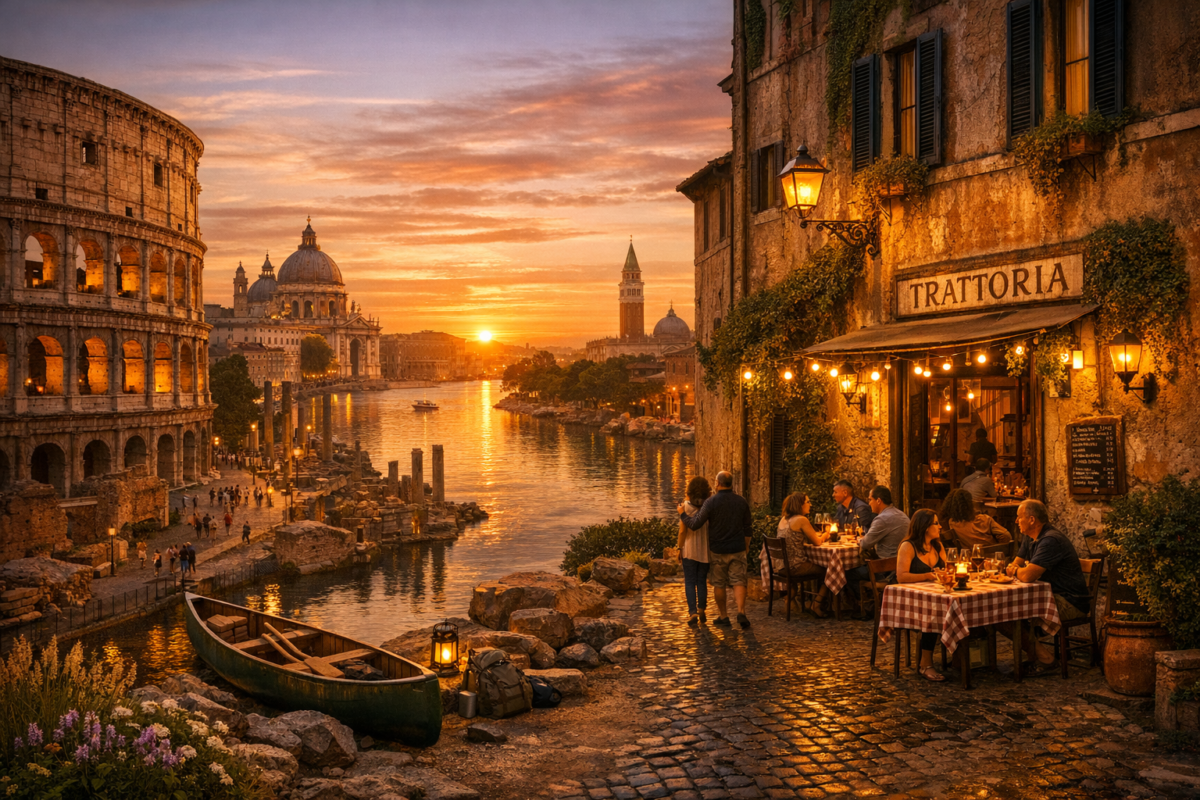
Begin with the Colosseum (book online in advance at coopculture.it, €18 + €2 booking fee – skip the queue that wraps around the block and costs people 2 hours). The scale from the inside is completely different from the outside: standing on the arena floor looking up at four tiers of arches, you understand viscerally how a building whose stones were robbed for half a millennium still commands the surrounding city.
Walk directly to the Roman Forum (included in the Colosseum ticket) – the administrative and civic heart of the Roman Empire for a thousand years, now a field of columns and arches that requires imagination to reassemble but rewards the effort. The Palatine Hill above it (also included) gives the best overview of the Forum and views across the city.
Afternoon: cross the Tiber to Trastevere. This is where you find the Italy that the guidebooks talk about – narrow cobblestone streets, potted geraniums on every windowsill, the smell of garlic from open kitchen windows, children playing football in front of a 12th-century basilica. Wander without a map. Eat dinner at a trattoria where the menu is on a blackboard and the tables have paper covers.
Food Note: In Rome, the four canonical pasta dishes are cacio e pepe (pecorino and black pepper), carbonara (guanciale, egg, pecorino – no cream, ever), amatriciana (guanciale and tomato), and gricia (guanciale and pecorino, no tomato – the oldest of the four). Order these at a proper trattoria, not a restaurant with photos on the menus outside. The difference is categorical.
Day 2 – Vatican and Piazza Navona
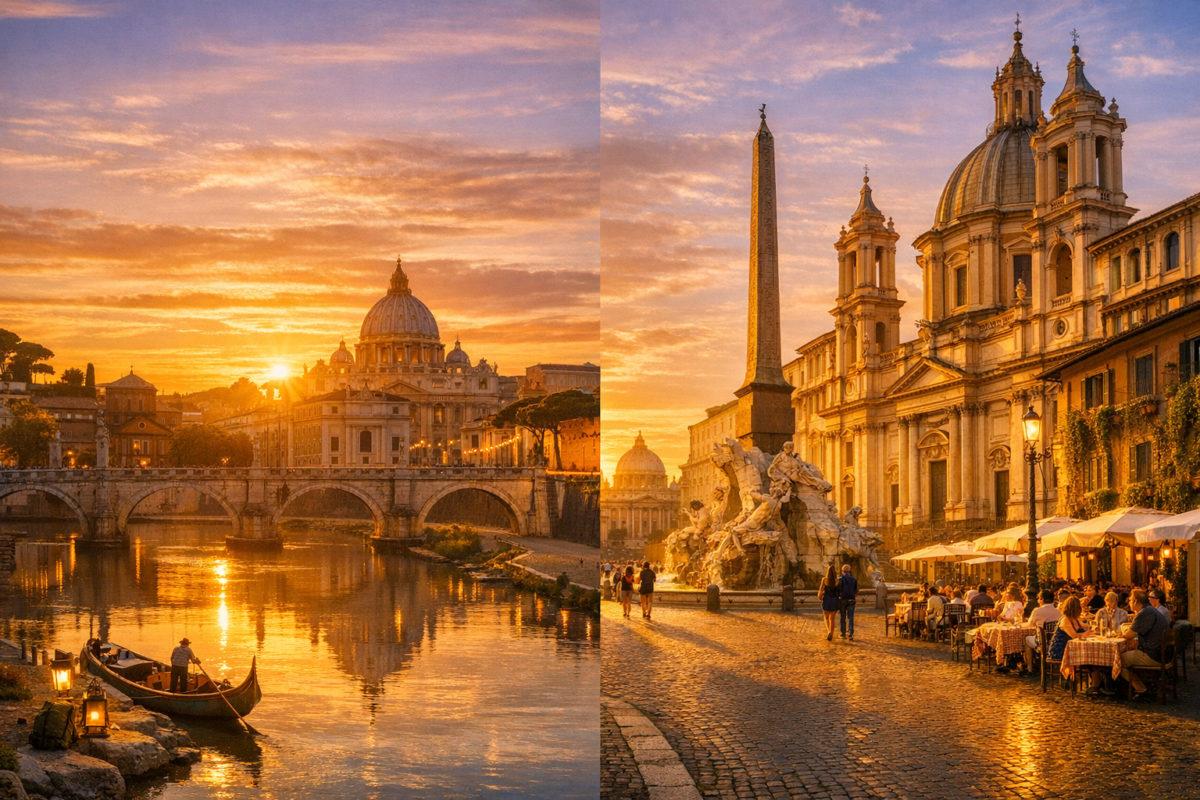
The Vatican Museums contain one of the great art collections in human history, and the Sistine Chapel ceiling – Michelangelo’s nine Genesis scenes painted between 1508 and 1512 from a standing position on scaffolding 20 metres high – is in a category of its own. Book online at museivaticani.va at least 2-3 weeks ahead (peak season: 4-6 weeks). Entry €20, skip-the-queue tickets from €27. Arrive when the doors open at 9am – crowds build rapidly and the Sistine Chapel is genuinely overwhelming by 11am.
Afternoon: Piazza Navona (built over a Roman stadium, hence the elongated oval shape), the Pantheon (entry €5, still the best-preserved ancient building in the world, with the largest unreinforced concrete dome ever built), and the Campo de’ Fiori market (mornings only) for the best street food in central Rome – supplì (rice balls), pizza al taglio, and the artichokes that Romans do better than anyone else on earth.
Day 3 – Borghese Gallery and Neighbourhood Rome
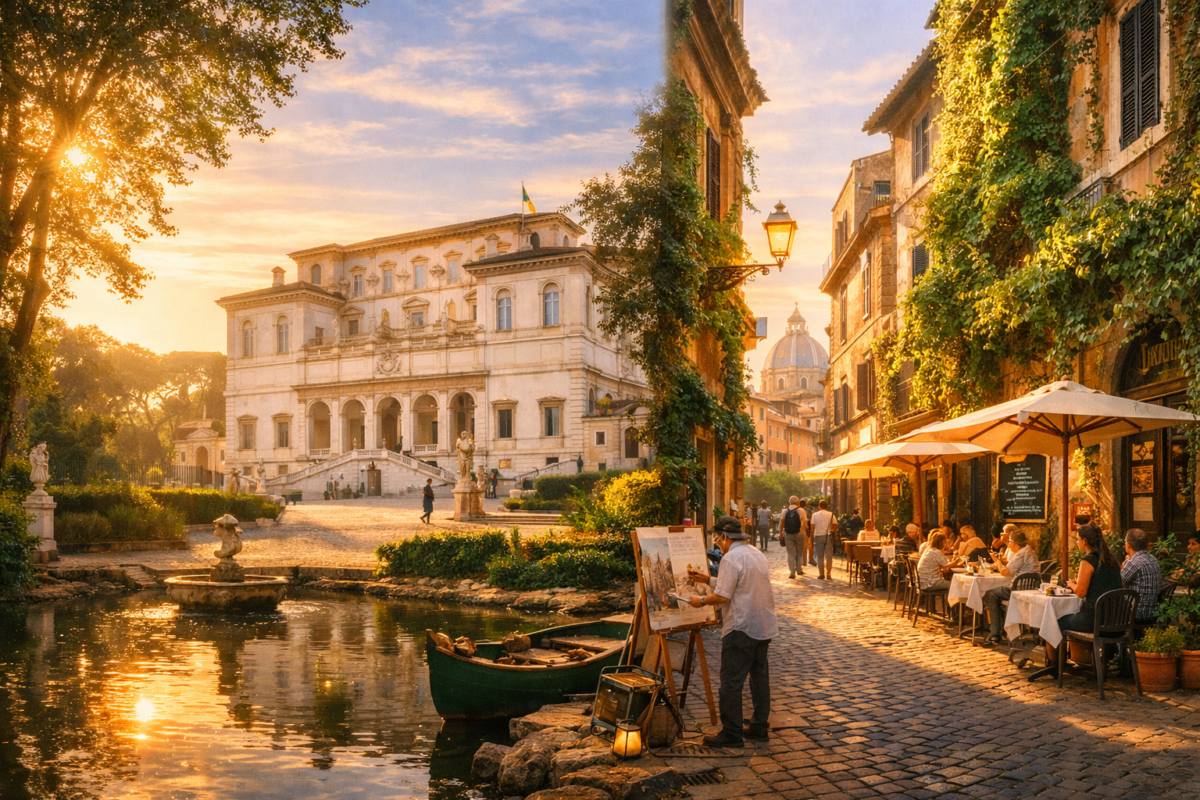
The Borghese Gallery (book at galleriaborghese.it – entry €15, mandatory advance booking, 2-hour timed entry sessions) contains Bernini’s greatest sculptures – the Apollo and Daphne, the Rape of Proserpina, the David – in a palatial villa setting that allows you to get within a metre of work that would be behind barriers in any other museum. The marble is so detailed it appears soft. Standing in front of Apollo and Daphne for twenty minutes is time well spent.
Afternoon: pick a neighbourhood you haven’t seen yet. Testaccio – Rome’s old slaughterhouse district, now the city’s best food market and a cluster of excellent restaurants – is the most local-feeling neighbourhood in central Rome. Pigneto further east has the Rome that young Romans actually live in: excellent coffee, creative restaurants at non-tourist prices, and a neighbourhood feel that is completely removed from the Colosseum crowd.
Pro Tip: The Roma Pass (48hr €32 or 72hr €52) gives unlimited public transport and free or discounted entry to two museums. It’s worth the 72hr version if you’re visiting both the Borghese Gallery and the Colosseum – calculate against individual ticket costs and free public transport for three days.
Day 4-5: Florence (Firenze) → Two Days for the Renaissance Capital
Take the Frecciarossa high-speed train from Roma Termini to Firenze Santa Maria Novella – 90 minutes, booked 2+ weeks ahead for €19-35. The train drops you in the heart of the city and you don’t need transport from the station to most major sights.
Florence is smaller than Rome, denser with great art per square kilometre, and the city that most people leave with the specific feeling of having been somewhere that matters in the history of Western civilisation. The Renaissance was invented here. The banking families of Florence funded Michelangelo, Leonardo, Botticelli, and Brunelleschi. The results are still here, in the same city, in the same buildings, sometimes in the same rooms they were made for.
Day 4 – Uffizi, Duomo, and the Oltrarno
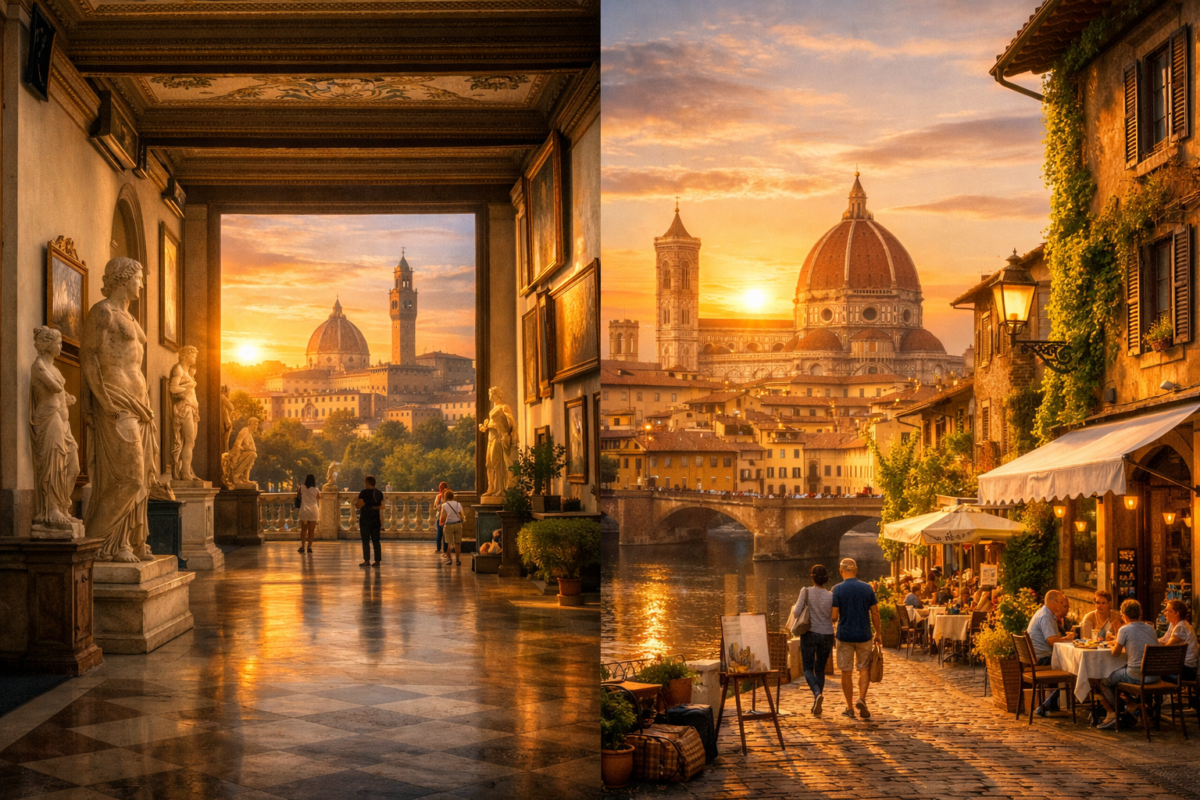
The Uffizi Gallery – book at uffizi.it, €25-35 depending on season – contains the greatest collection of Renaissance painting in the world. Botticelli’s Birth of Venus and Primavera, Leonardo’s Annunciation, Michelangelo’s Doni Tondo, Titian, Raphael, Caravaggio. Give it three hours minimum. The building is a labyrinth and the collection is denser than any single visit can absorb.
Afternoon: the Duomo complex (the cathedral facade, Brunelleschi’s dome, the Baptistery, and Giotto’s campanile – entry to the complex €20-30, book at operaduomo.firenze.it). Climbing Brunelleschi’s dome (463 steps to the top of the lantern) gives the finest view over Florence’s terracotta roofscape available, and the structure itself – the largest masonry dome ever constructed, built without scaffolding between 1420 and 1436 by an engineering technique that Brunelleschi invented and refused to disclose – is one of the great human achievements of any era.
Cross the Arno to the Oltrarno – Florence’s left bank, quieter and more local than the tourist centre – for dinner. The Oltrarno has better restaurants at lower prices than the area around the Duomo, and the walk back across the Ponte Vecchio at dusk – when the gold jewellers have closed their shutters and the light on the Arno is long and warm – is one of those free experiences that cities like Florence dispense as a matter of course.
Day 5 – Accademia, San Miniato, and Piazzale Michelangelo
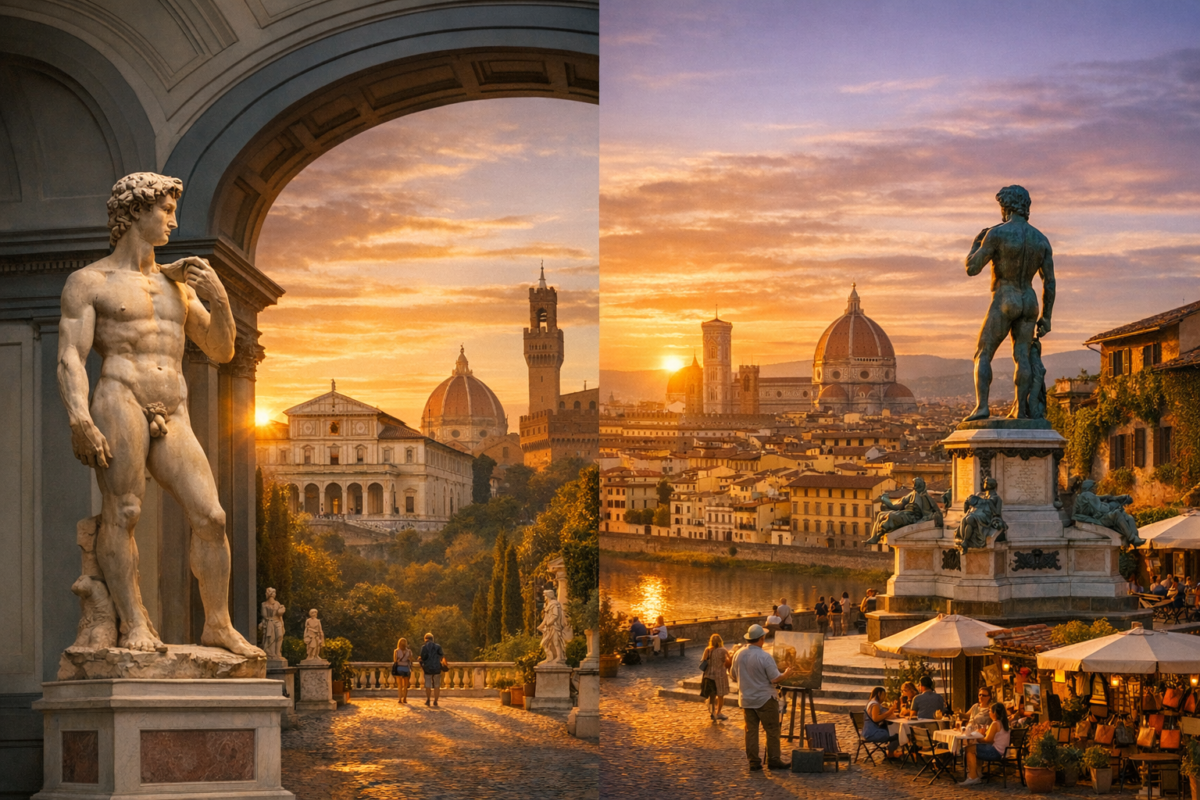
The Accademia Gallery (€20, book at ticketlandia.com or museumsinflorence.com – always advance book) contains Michelangelo’s David, which is considerably larger than you expect (5.17 metres), better-lit than you’ve seen in photographs, and genuinely more powerful in person than any reproduction suggests. The unfinished Prisoners – four figures that appear to be emerging from the marble, mid-release – are around the corner and equally extraordinary.
Afternoon: take the walk up to San Miniato al Monte – a Romanesque basilica on a hillside above the city that has been here since 1013 and has arguably the finest striped marble facade in Tuscany. The monks still sing vespers at 5:30pm. The view over Florence from the hillside below the church is better than the Piazzale Michelangelo view 100 metres downhill because it has fewer people taking selfies in it.
Food Note: Florence’s canonical dish is the bistecca alla Fiorentina – a T-bone steak from Chianina cattle, grilled over charcoal, served rare to very rare, priced by weight (€6–10 per 100g, typical portion 800g-1.2kg). It is one of the great steaks in the world, must be shared between two people minimum, and should be eaten at a restaurant in the Oltrarno or San Frediano neighbourhood rather than anywhere near the Duomo. Buca Mario (est. 1886) or Trattoria Mario at lunch (no reservations, communal tables, extraordinary value) are both right.
Day 6: Tuscany Day Trip → Siena and/or the Val d’Orcia
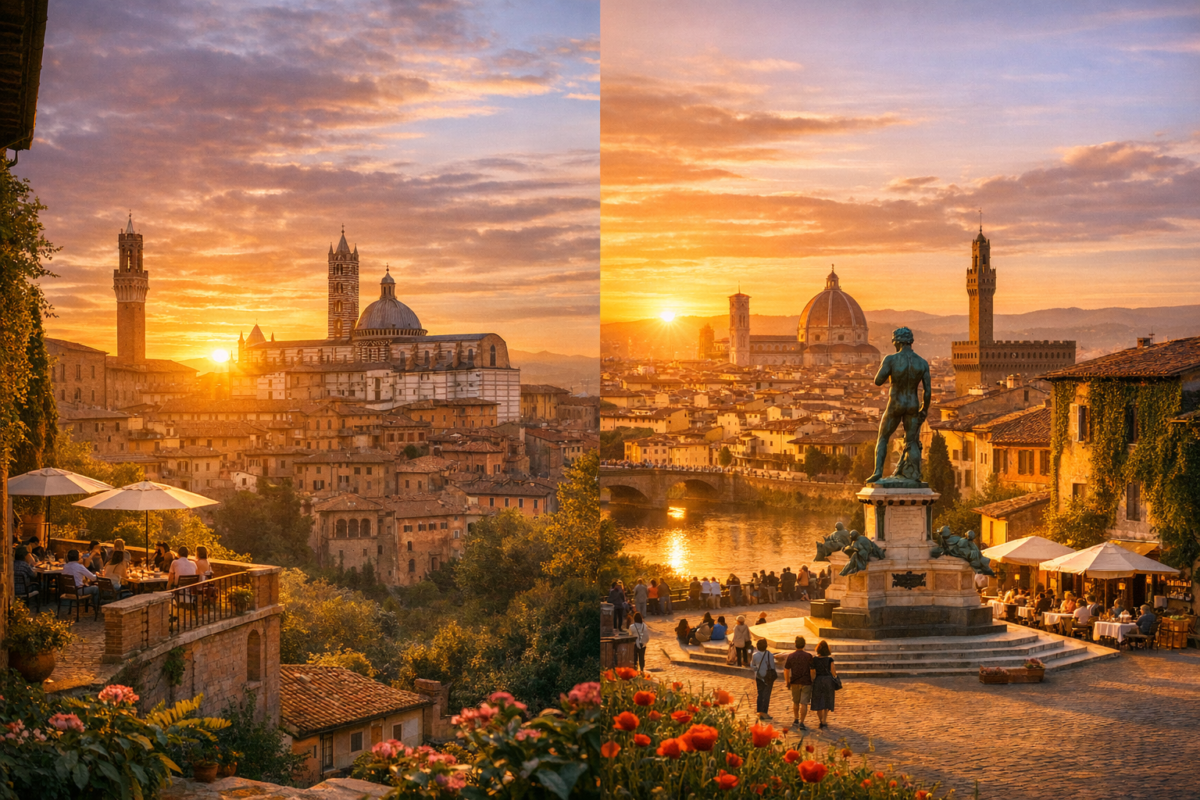
On your last morning in Florence, rent a car (pick up at Florence Santa Maria Novella station – GetRentACar for the best prices – and drop off at Venice Mestre or return to Florence) and drive south into Tuscany. Today is the day the landscape postcards come from.
Siena is 75km south of Florence – an hour’s drive through rolling hills of wheat and cypress and sunflower. The city climbs over three hills around its central Piazza del Campo, the most beautiful civic square in Italy and possibly in Europe: a fan-shaped expanse of herringbone brick, the medieval Palazzo Pubblico at the flat end, the surrounding palaces rising uniformly around the curve. In July and August the Palio horse race takes place here – one of the most extraordinary and dangerous folk spectacles in the world.
Drive further south to the Val d’Orcia – a UNESCO World Heritage landscape of rolling hills, isolated farmhouses, medieval hilltop towns (Pienza, Montepulciano, Montalcino), and road cypress trees that frame the view exactly as they do in every Tuscany photograph you’ve ever seen. In May when the wheat is green, in July when it’s gold, in September when the olive trees are heavy with fruit – the valley is extraordinary in every season.
Local Insight: Montepulciano produces the Vino Nobile di Montepulciano – one of Italy’s great red wines from Sangiovese grapes. The cantinas (wine cellars) that line the main street offer tastings for €5-10. Montalcino, 30km west, produces the Brunello di Montalcino – arguably Italy’s greatest red wine, aged in oak barrels for five years before release. Cellar-door prices are significantly below what you’d pay in any restaurant. Both towns are extraordinary to walk in regardless of the wine.
Day 7-8: Venice → Two Days on the Water
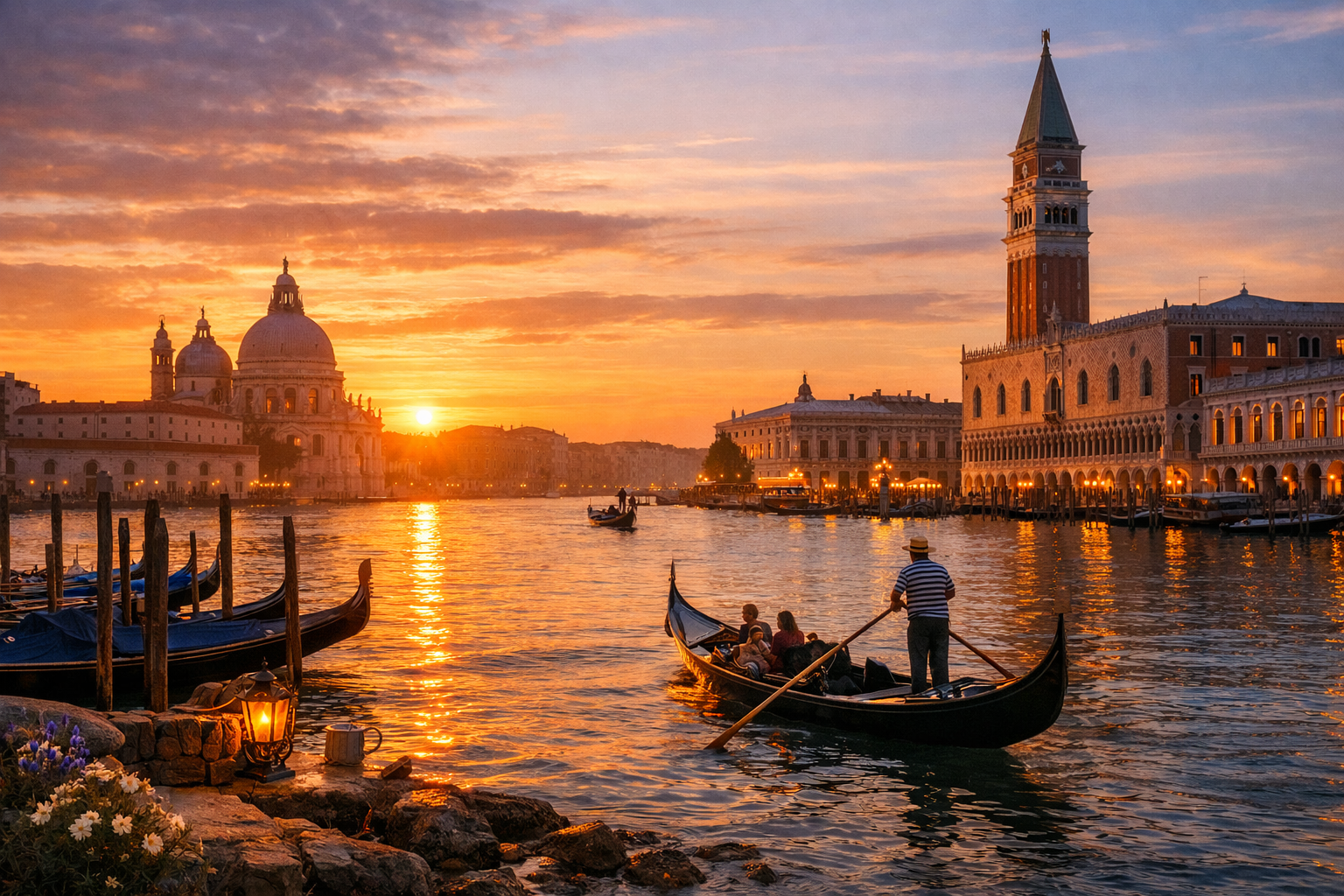
Train from Florence to Venice (2 hours on the Frecciarossa, €29-45 booked ahead). Venice Santa Lucia station drops you at the mouth of the Grand Canal with the entire city ahead of you, and no matter how many photographs you have seen of it, the physical reality – the palaces rising directly from the water, the vaporettos churning past, the gondoliers calling to each other across the canal – is genuinely not what you expected. Venice is one of those places that photographs from the outside and overwhelms from the inside.
Venice is expensive. This is not a misconception. A cappuccino at Caffè Florian in the Piazza San Marco costs €9.50 (plus supplement if an orchestra is playing). A gondola ride costs €80–100 for 30 minutes. A room with a canal view at a 3-star hotel costs €200-300+ per night. The way to manage this without sacrificing the experience: stay in Cannaregio or Castello (the non-tourist neighbourhoods where residents actually live), eat at bacari (Venetian wine bars) rather than tourist restaurants, and walk everywhere rather than using the vaporetto for every journey.
Day 7 – San Marco, Rialto, and the Grand Canal
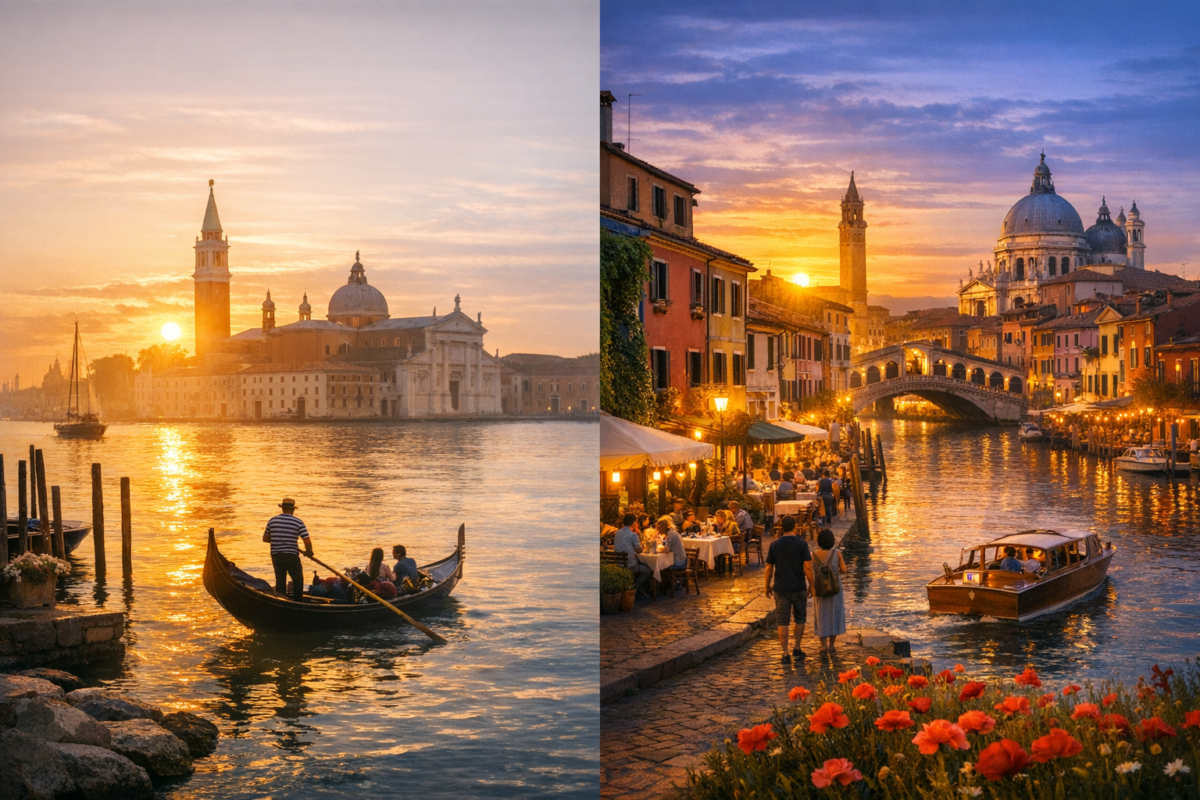
Start at Piazza San Marco before 8am, when the crowds have not arrived and the morning light on the Basilica’s gold mosaics is extraordinary. Basilica di San Marco entry is free (queue management required in summer – use the Reserve Mark app to book a timed entry slot). The interior gold mosaics cover 8,000 square metres of ceiling. The Pala d’Oro – a gold altarpiece set with 1,300 precious stones – is one of the great examples of Byzantine craftsmanship in existence.
Take Vaporetto Line 1 (the slow boat) along the Grand Canal at least once – the full length from Piazzale Roma to San Marco is 40 minutes and gives you the Venetian palaces from the water in a way that no photograph conveys. Buy an all-day vaporetto pass (€25) rather than individual tickets (€9.50 each).
Afternoon: the Rialto Market (mornings only, closed Sunday) is where Venetians have been buying fish, vegetables, and fruit since 1097. The seafood is extraordinary – crab claws, sea bass, squid, clams hauled from the Adriatic that morning. Lunch in the surrounding bacari: cicchetti (small plates of crostini, fried fish, marinated vegetables, stuffed olives) with a glass of Prosecco for €3-5 per piece. This is the correct Venetian lunch and it costs €15-20 for a generous meal.
Day 8 – Islands and Getting Lost
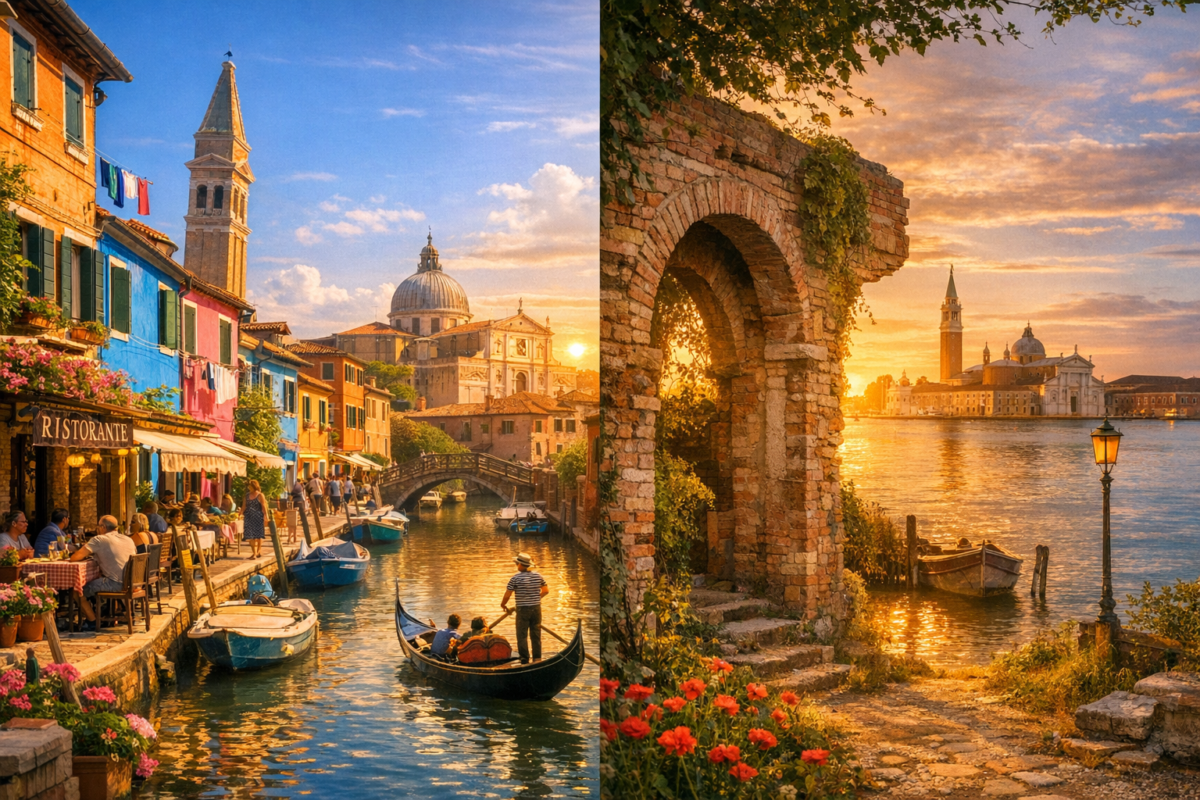
Take the vaporetto to Murano (20 minutes – Vaporetto Line 4.1 or 4.2) to watch Venetian glass blown by hand in workshops that have operated on this island since 1291. The glassblowing demonstrations are free at the major workshops; the showrooms are sales operations, but there’s no obligation to buy. The island itself is worth an hour of wandering – quieter than Venice, more local, with smaller canals and better prices at the bars.
Return and spend the afternoon walking the Castello and Cannaregio sestieri – the residential neighbourhoods where Venetians who aren’t in the hospitality industry actually live. The streets narrow to shoulder-width. The campo (neighbourhood squares) have children playing and old men on benches and laundry strung between windows. This is the Venice that exists behind the Grand Canal tourism, and it is extraordinary – and almost completely unvisited by the cruise ship crowds.
Heads Up: Venice has introduced a daily entry fee (€5) for day visitors arriving during peak periods (specific dates announced annually on the city website veneziaunica.it). Overnight visitors staying in Venice accommodation are exempt. The fee applies April–July on weekends and peak days – check the specific dates before planning a day trip.
Pro Tip: For accommodation in Venice, search Hotellook for the best prices across all platforms – Venice accommodation pricing varies enormously between booking sites. Staying in Cannaregio (the northern neighbourhood, 20 minutes’ walk from San Marco) gives you a quieter, more local base at 30-40% lower prices than the San Marco sestiere.
Day 9-10: Amalfi Coast → The Final Act
Train from Venice to Naples (4.5 hours on the Frecciarossa, €35-60 booked ahead – or overnight Intercity from Venice to Naples if you want to save a night’s accommodation). From Naples, the Circumvesuviana regional train takes you to Sorrento (65 minutes, €4.60) – the gateway to the Amalfi Coast.
The Amalfi Coast is a 50-kilometre stretch of Mediterranean coastline between Sorrento and Salerno where the Lattari Mountains plunge directly into the sea, creating a cliff-hung sequence of villages – Positano, Amalfi, Ravello, Praiano – that appear to be held in place by nothing more substantial than optimism and ancient engineering. The coast road (SS163) is famous for its hairpin bends above 300-metre drops. The views at every turn are what people mean when they say Mediterranean.
Day 9 – Positano and Praiano
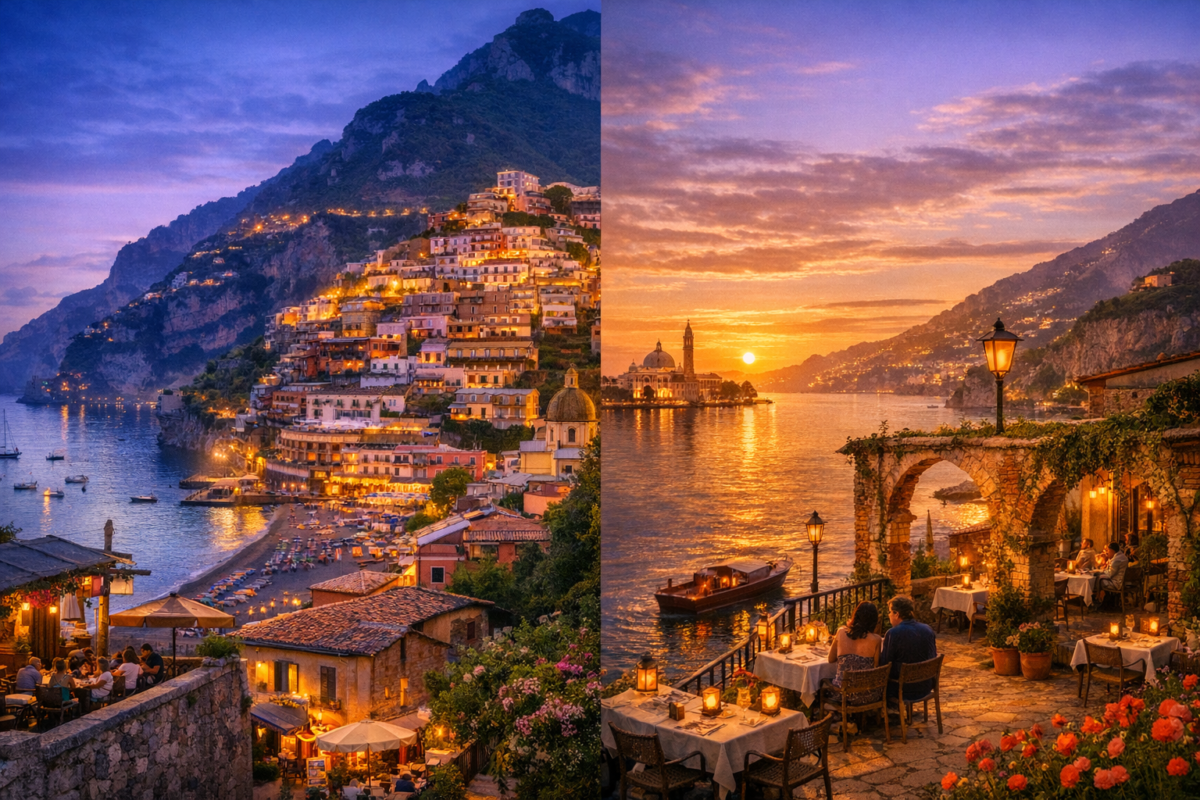
SITA bus from Sorrento to Positano (45 minutes, €2.80 – buy tickets at tobacco shops, not on the bus) descends into the most photographed village on the Amalfi Coast. Positano is built on a near-vertical hillside above a small pebble beach and looks exactly as it does in photographs, only more so. It’s expensive (€20 cocktails, €30 pasta) and crowded in July and August, but genuinely beautiful in a way that justifies the crowds – just eat away from the main beach strip.
Continue west by bus to Praiano – a smaller village that most day-trippers drive straight through without stopping. Its beach (a 300-step descent from the road) is less crowded, its restaurants charge half the Positano price, and it has the same cliff and sea view. The cove at Marina di Praia – a boat garage, a fishing hut, a single restaurant, and twenty metres of sand – is the Amalfi Coast that existed before photography made it famous.
Day 10 – Ravello and the Departure
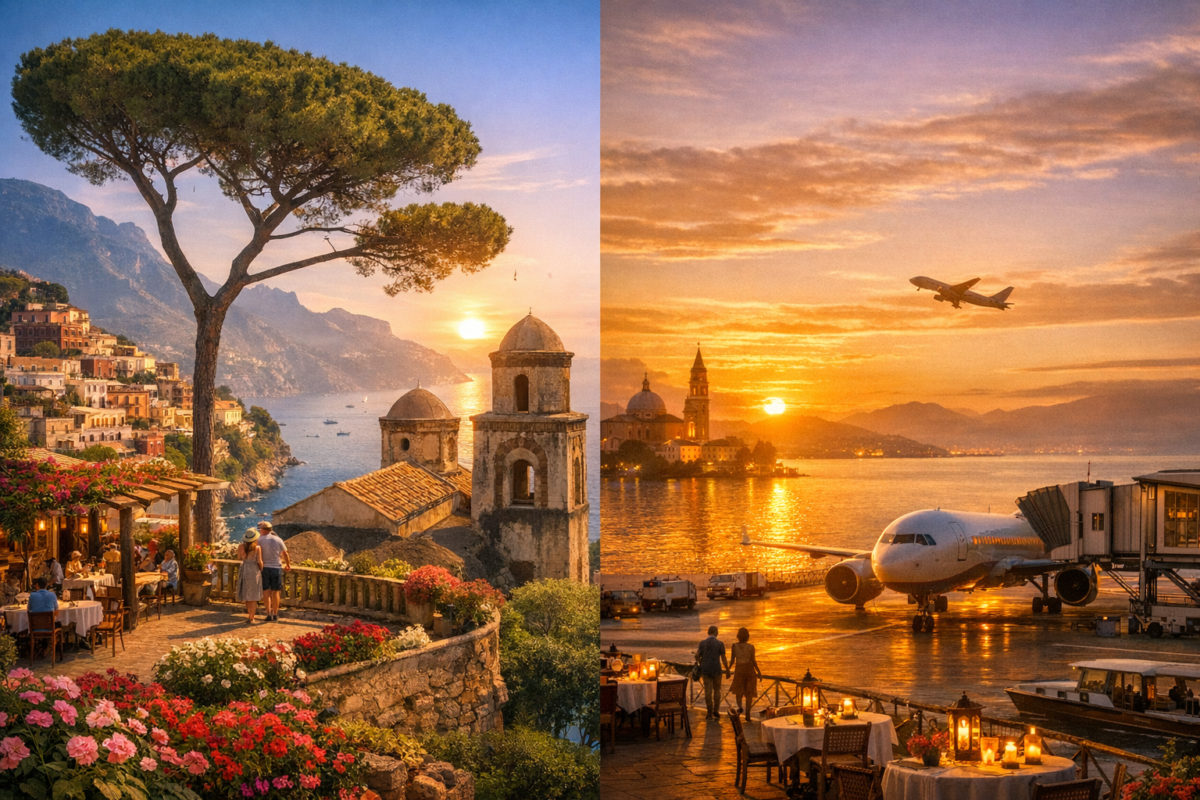
Take the morning bus from Amalfi to Ravello (30 minutes, €2 – hill town 365 metres above the sea, connected to the coast road by a single switchback lane). Ravello is the most refined and least visited of the Amalfi towns – the Villa Rufolo and Villa Cimbrone gardens (€7 each) have views over the coast that are regularly described as the finest in Italy. Wagner composed part of Parsifal here. The Belvedere of Infinity at Villa Cimbrone – a terrace at the garden’s edge with a balustrade of classical busts and a sheer 300-metre drop to the sea below – is one of the great views in the Western world.
Return to Naples for your departure flight (search for the best return fares on Aviasales) or continue to Rome for an international connection. Naples itself – chaotic, exhilarating, and home to the best pizza on Earth (Pizzeria Brandi, where the Margherita was allegedly invented in 1889, or Di Matteo on Via dei Tribunali for a €2 fried pizza from the street counter) – is worth half a day before departure.
Food Note: Neapolitan pizza is a specific, legally regulated thing (the True Neapolitan Pizza Association has written standards). The dough is made with ’00’ flour and fresh yeast, proved for 8-24 hours, stretched by hand, and cooked in a wood-fired oven at 485°C for 60-90 seconds. The result has a thick, charred, soft-chewy crust, a thin centre, and toppings of San Marzano tomato and fior di latte or buffalo mozzarella. It costs €5-9. It has no equivalent elsewhere in the world.
15 Money-Saving Tips for Italy That Actually Work
- Drink coffee standing at the bar: The rule everywhere in Italy. Sitting at a café table costs 2-3x more for the same coffee. Stand. Drink. Continue.
- Eat lunch at a trattoria, not dinner: The pranzo fisso (fixed lunch) at a local restaurant – typically two courses, house wine, and bread for €12-18 – offers the same quality kitchen at a fraction of the dinner price.
- Avoid restaurants with pictures on the menu outside: Without exception. Walk past them. The restaurant two streets away with a handwritten menu and locals inside is better and cheaper.
- Buy gelato from artisan gelaterias only: Look for gelato stored in covered metal containers (not piled high and brightly coloured – that is industrial gelato with artificial colouring). Artisan gelato in metal pozzetti (containers) typically costs €2.50-3.50 and is a completely different product.
- Use the regional train for scenic routes: The Circumvesuviana to Sorrento, the Cinque Terre regional trains, the Douro Line-equivalent routes – slow, cheap, and beautiful.
- Book all major museums online in advance: Vatican, Uffizi, Colosseum, Borghese, Accademia – all require advance booking in peak season and the online price is the same as the door price. The queue-skip alone is worth the 2-minute booking.
- Drink tap water: Italian tap water is safe, free, and excellent. The nasoni (fountain spigots) in Rome provide constant fresh water throughout the city. Decline bottled water at restaurants – ask for ‘acqua del rubinetto’ (tap water).
- Use Trenitalia’s advance booking discounts: Frecciarossa tickets booked 30+ days ahead can be as low as €9.90 for routes that cost €45 at the gate. Check trenitalia.com from the moment your dates are confirmed.
- Free attractions list: Rome’s Pantheon interior (now €5, but exterior free), all of Rome’s public piazzas and fountains, Florence’s San Miniato al Monte, Siena’s Piazza del Campo, the interior of most Italian churches (major exceptions: Duomo complex in Florence). The best things to see in Italian cities are very largely free.
- Shop at supermarkets for breakfast and snacks: Esselunga, Conad, and Carrefour are the main chains. Fresh bread from a forno (bakery), local cheese, prosciutto, and tomatoes for a picnic lunch cost €4-6 and are better than most restaurant meals below €15.
- Avoid taxi tours and shuttle buses: Amalfi Coast bus (€2.80), Vaporetto day pass (€25), Trenitalia regional trains – the public transport is excellent, affordable, and more interesting than a private tour.
- Stay in residential neighbourhoods: Trastevere in Rome, Oltrarno in Florence, Cannaregio in Venice – lower prices, better food, more interesting streets.
- Visit churches at vesper time: Late afternoon at an Italian church is when the light is best, the tourists are thinnest, and the music sometimes present. Free, always.
- Aperitivo hour: Between 6 and 8pm, many Italian bars offer free food (substantial, in some places – olives, bruschetta, small pasta dishes) with the purchase of a drink. This is not a tourist offer; it’s an Italian institution. A Spritz (€5–7) + aperitivo buffet = dinner in northern Italy.
- Carry cash: Italy’s card acceptance is improving but many small trattorias, markets, and smaller towns still prefer cash. Keep €50-100 in small notes.
Practical Italy: Getting There, Getting Around, and Everything Else
Flights to Italy
Rome Fiumicino (FCO) and Milan Malpensa (MXP) are the main international gateways, with Fiumicino the better choice for this itinerary. Venice Marco Polo (VCE) and Naples Capodichino (NAP) both have growing international route networks. Search for the best fares on Aviasales and earn cashback on every booking with WayAway. If your flight is disrupted, AirHelp handles EU261 claims on a no-win-no-fee basis.
Trains in Italy
Italy’s Trenitalia Frecciarossa high-speed network connects Rome, Florence, Venice, and Naples efficiently and affordably when booked ahead. The Italo service is a private competitor on the same routes – often slightly cheaper, always worth checking. For regional trains (Cinque Terre, Amalfi Coast, day trips), the regional network is slow but scenic and inexpensive.
Car Rental
Essential for the Tuscan day trip (Day 6) and helpful for the Amalfi Coast. Compare prices at GetRentACar. Do not drive into the ZTL zones in historic city centres – restricted traffic zones (Zona a Traffico Limitato) are enforced by cameras and violations result in fines of €80-200 sent to your home address months later through the rental company. Book accommodation outside city centres and use trains into the cities.
Getting Around Cities
Rome, Florence, and Venice are all walkable. For Rome, the metro (€1.50 per journey, day pass €7) covers the main sites efficiently. For airport transfers, GetTransfer offers pre-booked private cars from all Italian airports at fixed prices – useful for Rome Fiumicino (45 minutes from the city centre, taxi fare €48–55 fixed) and Naples.
Connectivity
Italy has good 4G coverage in cities and along major transport routes. Airalo and Yesim both offer Italy-specific and Europe-wide eSIM packages. Activate before flying. For geo-restricted streaming services, NordVPN works reliably on Italian networks.
Travel Insurance
Comprehensive travel insurance is essential, particularly for the Amalfi Coast driving and Naples public health access. Ekta Travel Insurance offers flexible policies covering medical, trip cancellation, and activities including hiking and water sports relevant to Italy itineraries.
Luggage Storage
Between accommodation check-outs and late departures, Radical Storage has locations at or near major Italian train stations in Rome, Florence, Venice, and Naples – ideal for a final afternoon’s exploration unburdened by suitcases.
Tours and Experiences
For guided experiences – Vatican early-morning access tours, Uffizi expert-led visits, Prosecco vineyard tours in the Veneto, small-group cooking classes in Florence – WeGoTrip has an excellent Italy catalogue. For concerts, opera (La Fenice in Venice, Teatro dell’Opera in Rome), and cultural events, Ticket Network covers major Italian venues.
Best Time to Visit Italy
- April-June (Spring – Ideal): Mild temperatures, wildflowers across Tuscany, manageable crowds, accommodation 20-40% below July prices. The best overall month is May
- September–October (Autumn – Second Best): Warm (25-30°C), harvest season (grapes, olives, truffles), thin crowds from mid-September, golden light. October is extraordinary in Tuscany
- July-August (Peak Season): Hot, crowded, expensive. Venice is particularly uncomfortable in August heat. Go early morning and late evening for the great sights and book everything months ahead
- November-March (Quiet Season): Lowest prices, few crowds, rain in the north, mild in the south (Sicily and Puglia are genuinely pleasant in March). Some coastal towns and smaller museums close outside season
Pro Tip: Check weather at your specific Italian destinations at our Weather Checker before setting your dates. Italy’s climate varies significantly between the Alps in the north and Sicily in the south – and even within single regions (the Amalfi Coast is warmer and drier than the Po Valley 400km north in the same month).
Plan Your Italy Trip with These Free Tools
- AI Travel Budget Estimator – calculate your complete 10-day Italy trip budget including flights, accommodation, trains, food, and museum entry
- Live Currency Converter – real-time EUR conversion from USD, GBP, CAD, AUD, and all major currencies
- Weather Checker – check conditions by city – essential for Amalfi Coast, Tuscany, and northern Italy
- Packing List Generator – custom Italy packing list for the season and specific cities, including comfortable walking shoes and dress code reminders for churches
- Travel Planning Services – need a custom Italy itinerary for your specific dates, budget, and interests? Our team builds them end to end
- More Destination Guides – our full library of Europe destination guides including Portugal, Spain, Scotland, and Greece
- Budget Travel Hub – money-saving strategies that work across Italy and every other destination we cover
Frequently Asked Questions
Q1: How much money do I need for 10 days in Italy?
A realistic budget for a solo traveller: shoestring (hostel, self-catering breakfasts, one restaurant meal per day): €600-750 total excluding flights and trains. Mid-range (budget hotel, café breakfast, restaurant for lunch and dinner): €1,100-1,600 total. Comfort (3-star hotels, full restaurant dining, paid activities daily): €2,000-3,000 total. Intercity trains add €120-200 for this itinerary. International flights vary enormously. Use our AI Travel Budget Estimator for a fully itemised breakdown.
Q2: Do I need to book Italian museums in advance?
For the major sights – Vatican Museums, Uffizi, Colosseum + Forum, Borghese Gallery, Accademia – advance booking is essential in March through October, and strongly recommended year-round. All have official booking websites. The queue-skip alone is worth the (zero) extra cost, and the timed-entry system prevents the overcrowding that makes some of these museums genuinely unpleasant without a reservation. Book as soon as your dates are confirmed.
Q3: Is Italian food as good as they say?
Yes – provided you eat in the right places. Italy has one of the most ingredient-focused food cultures in the world and the regional diversity is extraordinary: Roman cacio e pepe, Florentine bistecca, Venetian cicchetti, Neapolitan pizza, Sicilian arancini are not variations on the same theme but distinct culinary traditions that have developed over centuries. The rule is simple: eat where locals eat, avoid menus with photographs or outdoor hawkers, and trust your nose. The smell of real Italian cooking from an open kitchen window is unmistakable and always worth following.
Q4: Is it safe to visit Italy as a solo female traveller?
Italy is generally safe for solo female travellers. Petty theft (pickpocketing) is the main concern in tourist areas of Rome and Naples – use a concealed money belt for passports and large cash amounts, keep phones in pockets rather than bags in crowded areas, and be alert in train stations. Street harassment (catcalling, unwanted attention) is more common in Italy than in Northern Europe and is best managed by confident, direct disengagement. The main tourist cities are well-policed and genuinely safe for solo travel.
Q5: What is the dress code for Italian churches?
Italian churches require covered shoulders and knees for entry – this applies to men and women. Many major churches (the Duomo in Florence, St. Peter’s Basilica) have strict enforcement and will turn visitors away for bare shoulders or shorts. Carry a lightweight scarf or sarong in your bag to cover up when needed. The dress code requirement applies even if you’re not religious – it is a condition of entering a functioning place of worship.
Q6: How do Italian trains work for first-time visitors?
Book at trenitalia.com or italo.it. For the Frecciarossa high-speed trains (Rome-Florence-Venice-Naples), seats must be reserved and your ticket specifies a car number and seat. Regional trains (Cinque Terre, Circumvesuviana to Sorrento) are often unreserved – buy a ticket, stamp it in the yellow machine at the platform entrance before boarding, and find any available seat. Never board a regional train without stamping your ticket – inspectors check regularly and an unstamped ticket results in an €80+ fine regardless of whether you paid for it.
Final Thoughts: Italy Is Worth Every Planning Hour
There’s a reason Italy consistently tops surveys of the world’s most desirable travel destinations. It’s not just the art or the food or the landscape, though all three are genuinely extraordinary. It is the combination – the fact that you can walk from the greatest collection of Renaissance sculpture in existence to a table where a woman who has been making the same pasta dough for fifty years brings you a bowl of cacio e pepe and a ceramic jug of house wine, and that both of these experiences are available on the same street on the same afternoon.
Ten days is enough to feel the shape of it. It’s not enough to understand it. That takes more trips, more seasons, more neighbourhoods you haven’t found yet. Every person I know who has been to Italy once has been back. The country is built for returning to.
Start planning your Italy trip today. Find the best flights on Aviasales, earn cashback with WayAway, compare car rentals at GetRentACar, book accommodation via Hotellook, get your airport transfer with GetTransfer, activate your eSIM with Airalo or Yesim, and protect the whole trip with Ekta Travel Insurance. Browse our full Destination Guides library and budget travel hub for more.
A presto — see you in Italy.
Hidden Travels Team | hiddentravels.site