
⚠️ Affiliate Disclosure: This post contains affiliate links. Booking through our links earns us a small commission at no extra cost to you. We only recommend services we trust and use ourselves.
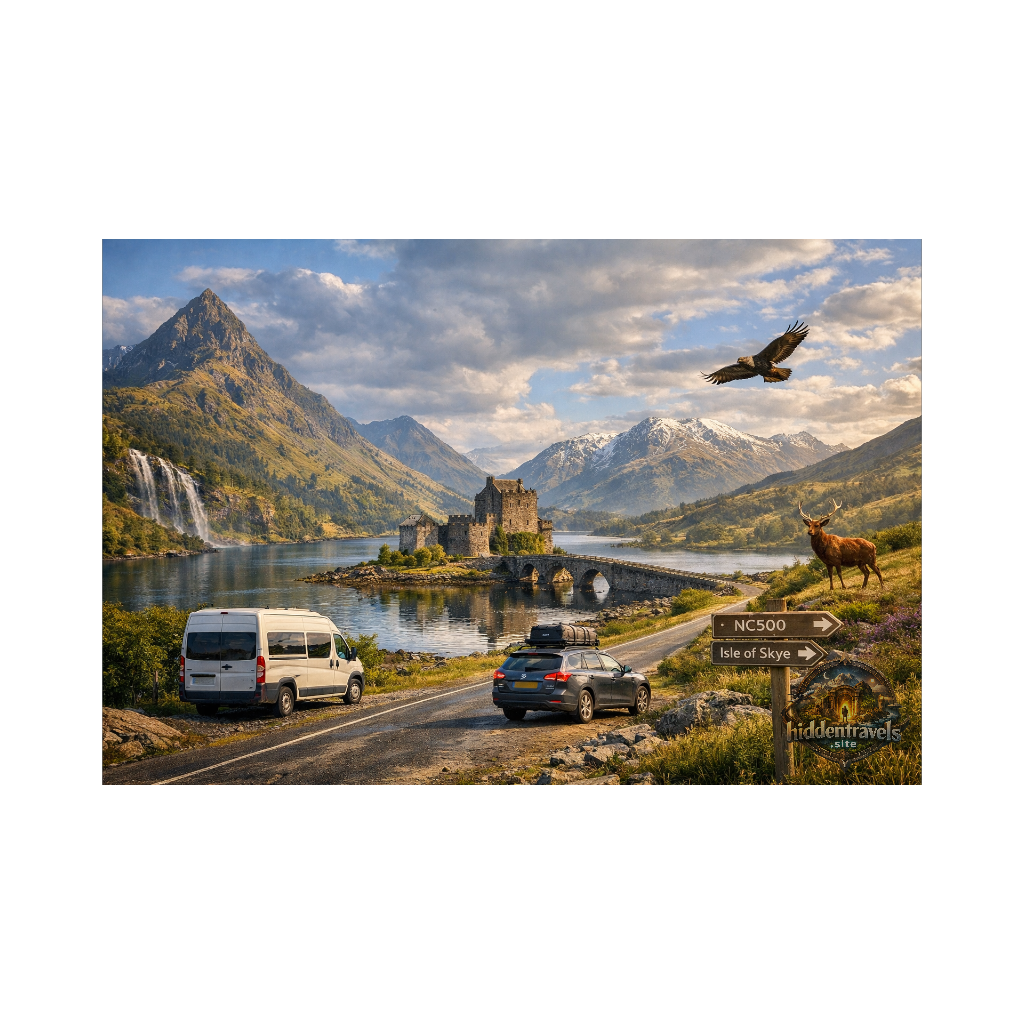
The rain arrived somewhere between Glencoe and Fort William – a curtain of silver mist rolling down from the black peaks and swallowing the road whole. My rental car crawled forward and I pulled over at a layby, engine ticking in the silence. Through the windscreen, a waterfall I had not noticed on any map was threading down a cliff face like a white ribbon on grey velvet.
Nobody was around. No coaches, no tour groups, no information boards. Just the rain, the waterfall, and that particular quality of silence you only find in the Scottish Highlands – a silence so complete it has a texture to it.
That unscheduled stop became the best 20 minutes of the entire trip. And that, more than anything else, is the lesson of a Scotland road trip: the map is a suggestion. The route is just a starting point. The real Scotland – the Scotland that rewires your brain and permanently raises your benchmark for dramatic scenery – is found when you pull over and get out of the car.
This 10-day Scotland road trip itinerary covers the Highlands from Edinburgh to the far north, looping back through the whisky heartland of Speyside and the romantic ruins of Perthshire. It’s designed for travelers from the USA, Canada, Europe, and beyond – with practical information on driving, costs, accommodation, and everything in between.
Pro Tip: Before you travel, use our Packing List Generator at hiddentravels.site/travel-tools/packing-list-generator/ to build the perfect Scotland-specific packing checklist – layers, waterproofs, and walking boots are non-negotiable.
Why Scotland Should Be on Every Traveler’s Bucket List
Scotland punches far above its weight as a travel destination. In a land smaller than the state of South Carolina, you will find:
- Over 800 castles – more per square mile than almost anywhere on Earth
- The world’s greatest concentration of malt whisky distilleries
- Landscapes that have inspired painters, poets, and filmmakers for centuries
- One of Europe’s last great wildernesses, where red deer outnumber humans
- A food scene that has transformed beyond recognition in the last decade
- Ancient history stretching back 5,000 years to the Neolithic standing stones
Scotland is also, for most international visitors, surprisingly accessible. Edinburgh has direct transatlantic flights from New York, Boston, Toronto, and several European hubs. The roads – once you are comfortable driving on the left – are well-maintained and often breathtakingly beautiful. And the Scottish people, contrary to no stereotype anyone has ever held, are among the warmest, most genuinely hospitable people you will encounter anywhere in the world.
Pro Tip: Flying from the USA or Canada? Search for Edinburgh flights on Aviasales for the best transatlantic fares, or use WayAway to earn cashback on every booking.
10-Day Scotland Road Trip: At a Glance
Here’s your complete route overview before we dive into the day-by-day detail:
| Day | From | To | Highlights | Drive |
| Day 1 | Edinburgh | Edinburgh | Old Town, Arthur’s Seat, whisky bar | — |
| Day 2 | Edinburgh | Stirling / Loch Lomond | Stirling Castle, first Highlands views | ~55 mi |
| Day 3 | Loch Lomond | Glencoe | Rannoch Moor, Glencoe valley | ~75 mi |
| Day 4 | Glencoe | Fort William / Ben Nevis | Britain’s highest peak, Glenfinnan Viaduct | ~20 mi |
| Day 5 | Fort William | Isle of Skye | Fairy Pools, Dunvegan Castle | ~80 mi |
| Day 6 | Isle of Skye | Isle of Skye | Old Man of Storr, Quiraing | Scenic loop |
| Day 7 | Isle of Skye | Inverness via NC500 start | Eilean Donan Castle, Loch Ness | ~120 mi |
| Day 8 | Inverness | NC500 North Coast | Dunrobin Castle, Smoo Cave | ~110 mi |
| Day 9 | NC500 North | Speyside | Cairngorms, whisky distilleries | ~130 mi |
| Day 10 | Speyside | Edinburgh | Perthshire, Pitlochry, journey home | ~115 mi |
Day 1: Edinburgh – The City That Sets the Tone
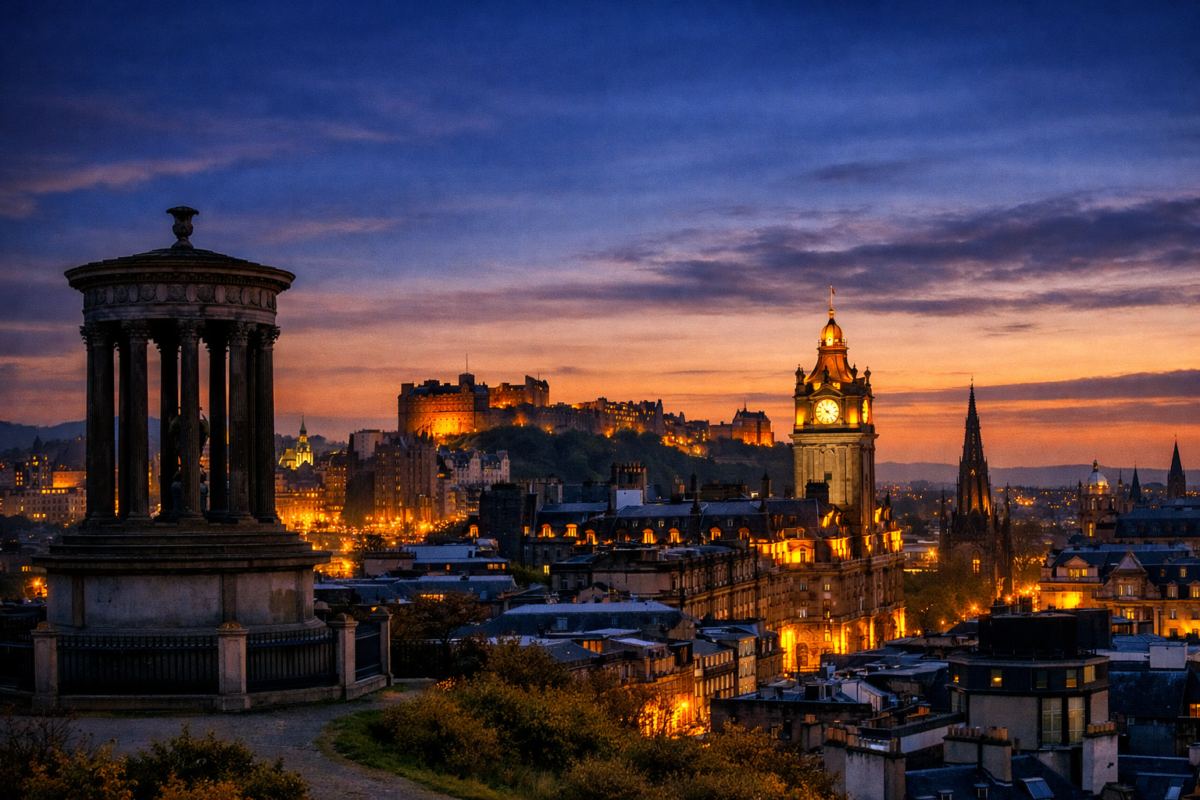
Land at Edinburgh Airport, pick up your rental car (you won’t need it today – park it and leave it), and walk directly into one of the most dramatically beautiful capital cities in the world.
Edinburgh’s Old Town is a medieval masterpiece stacked on a volcanic ridge, with the Castle at one end and the Palace of Holyroodhouse at the other. The Royal Mile connecting them is tourist-heavy but genuinely historic – take the closes (narrow alleyways) off to the sides to find the real city breathing underneath.
What to Do on Day 1
- Morning: Edinburgh Castle – arrive when it opens at 9:30am to beat the crowds
- Afternoon: Walk the Royal Mile, Victoria Street (the real Diagon Alley), and Grassmarket
- Late afternoon: Climb Arthur’s Seat – an extinct volcano with panoramic city views, free, takes 45 mins
- Evening: The Scotch Whisky Experience for a tasting, then dinner in the Grassmarket
Pro Tip: Book Edinburgh Castle tickets online in advance to skip the queue. On busy summer days, the walk-up line can be over an hour long. Skip it entirely with a pre-booked time slot.
Good to Know: Driving in Edinburgh city centre is stressful and parking is expensive. Park your rental car at the airport hotel or a park-and-ride and use the tram or Uber for Day 1.
Day 2: Edinburgh to Loch Lomond – Hello, Highlands
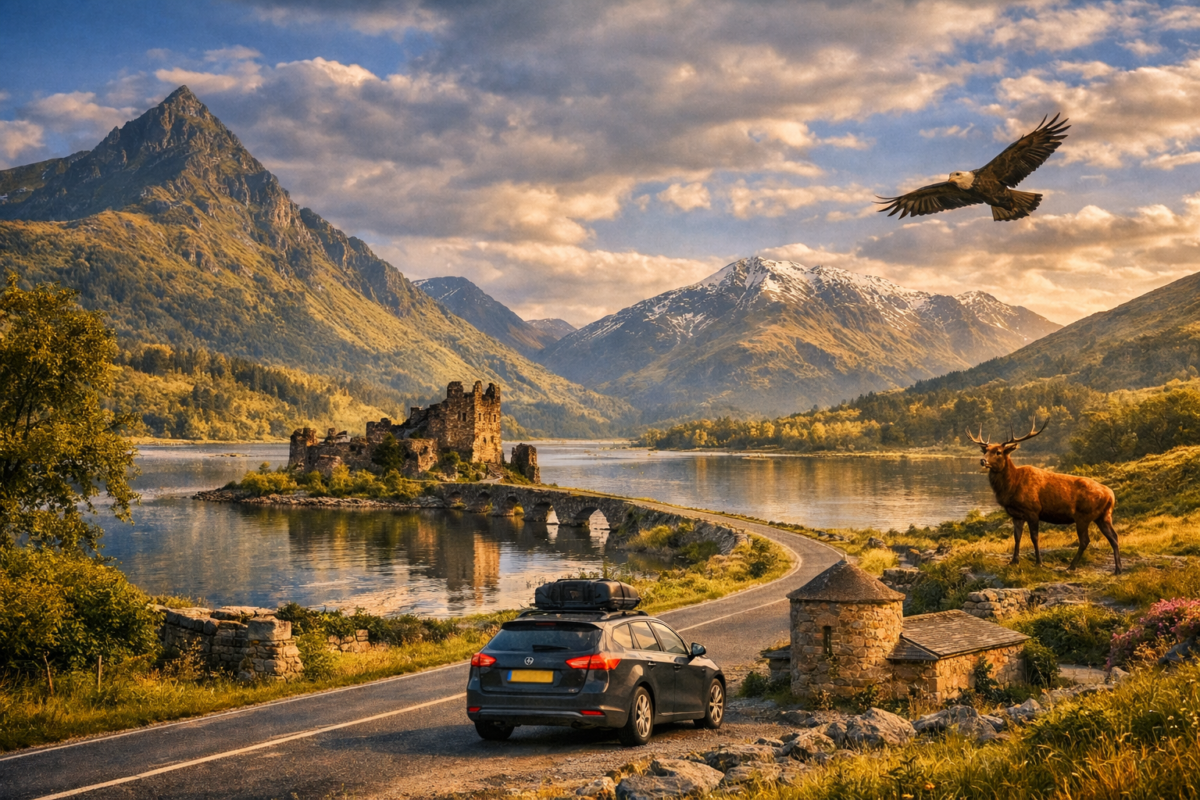
Your road trip begins properly this morning. Load the car, point it northwest, and prepare for Scotland to reveal itself gradually – from the flat farmland of the Central Belt to the first stirring glimpses of highland geography as you approach Stirling.
Stirling Castle – The Other Castle
Make your first stop Stirling Castle, which many historians argue is more important than Edinburgh Castle and far fewer visitors realise it. This is where Mary Queen of Scots was crowned as an infant, where the Scottish crown jewels were hidden for decades, and where the great hall – recently restored to its original golden lime-washed exterior – dazzles.
From Stirling, continue northwest past the Lake of Menteith (the only lake in Scotland – everywhere else is a loch) and into Loch Lomond & The Trossachs National Park. Your first proper Highland loch appears with almost no warning: a sheet of silver-grey water stretching between forested hills, islands scattered across the surface, and the light changing everything every five minutes.
Where to Stay
Base yourself at Balloch, Luss, or Tarbet on the western shore of Loch Lomond. There are excellent hotels, B&Bs, and self-catering cottages at every price point. Compare accommodation across platforms using Hotellook to find the best available rates.
Day 3: Loch Lomond to Glencoe – The Road Gets Dramatic
This is the day Scotland stops being beautiful and starts being overwhelming.
The drive north from Loch Lomond via Crianlarich and Bridge of Orchy takes you across Rannoch Moor – one of the largest and most desolate blanket bogs in Europe. There are no trees. No buildings. No mobile phone signal. Just an endless, treeless expanse of peat and water under a vast sky, with mountains rising on every horizon.
And then, almost without warning, the road drops into Glencoe.
Glencoe is the valley that defines the Scottish Highlands in the imagination of anyone who has ever seen it. Three-pronged ridges called the Three Sisters rise 2,700 feet straight up from the valley floor. The River Coe flows dark and peaty through the bottom. The whole place vibrates with a combination of geological drama and historical tragedy – this is where, in 1692, the Campbells massacred 38 members of the MacDonald clan in the night after accepting their hospitality.
Pro Tip: Stop at the Glencoe Visitor Centre (National Trust for Scotland) to understand the landscape and history before you drive through it. The 3-mile Glencoe Valley Trail is flat, free, and utterly spectacular.
- Don’t miss: The Lost Valley (Coire Gabhail) hike — a hidden valley behind the Three Sisters where the MacDonalds hid their cattle
- Stay: Glencoe village has excellent B&Bs and a brilliant local pub
- Alternative: Wild camp (legal in Scotland) at the base of the valley
Day 4: Fort William & the Glenfinnan Viaduct – Harry Potter Country
Fort William calls itself the Outdoor Capital of the UK, and it earns the title. Ben Nevis – at 4,413 feet the highest point in the British Isles – rises directly above the town. The summit route is a 10-hour round trip on a good day; a shorter walk to the base of the north face reveals the mountain’s true scale without the commitment.
The Glenfinnan Viaduct – Scotland’s Most Photographed Structure
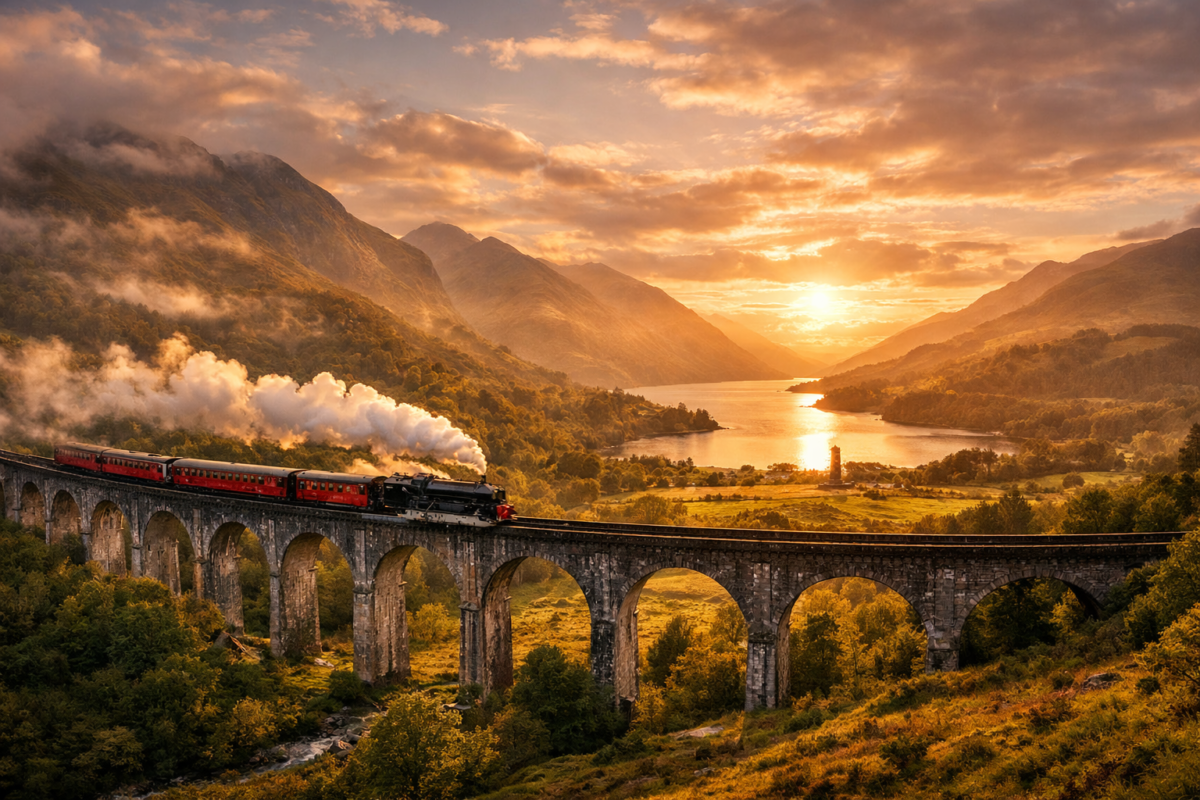
Drive 16 miles west on the Road to the Isles to reach Glenfinnan, where a 21-arch Victorian viaduct curves across a moorland valley at the head of Loch Shiel. This is the viaduct used in the Harry Potter films for the Hogwarts Express, and it is genuinely, objectively stunning in real life – particularly if you time your visit to see the Jacobite Steam Train crossing it.
Pro Tip: The Jacobite Steam Train runs May to October between Fort William and Mallaig. Book tickets at least 3 months in advance – they sell out. The full return journey takes 4 hours and passes some of the most beautiful coastline in Scotland.
Good to Know: The viewpoint car park at Glenfinnan fills by 9am in summer. Arrive before 8:30am or after 5pm for parking and the best photography light.
Day 5: Crossing to the Isle of Skye – Scotland’s Crown Jewel
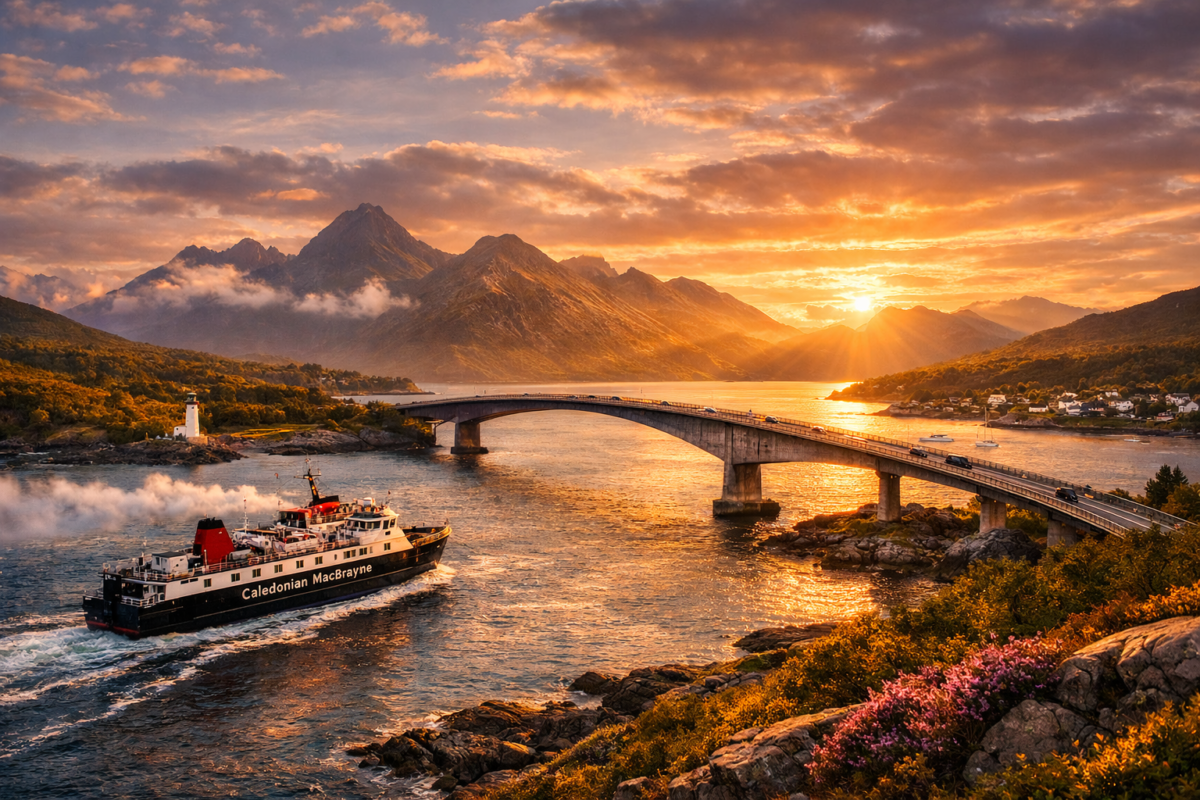
Cross the Skye Bridge from Kyle of Lochalsh – or take the small CalMac ferry from Glenelg for a more dramatic arrival – and prepare for the island that has captured imaginations for centuries.
The Isle of Skye is a 50-mile long ragged peninsula of gabbro and basalt, shaped by ice ages and inhabited by myths. The Cuillin Mountains – a jagged black ridge unlike anything else in Britain – dominate the south. The Trotternish Peninsula in the north offers the most extraordinary geological formations in the UK: towers of rock, ridges of black lava, and a 50-mile escarpment that looks like it belongs on another planet.
The Fairy Pools – Magic Made Real
In the foothills of the Black Cuillin, a series of crystal-clear glacial pools connected by waterfalls cascade down a moorland hillside in shades of aquamarine and emerald. The Fairy Pools at Glen Brittle are among the most visited spots on Skye – and justifiably so. The water is freezing, the colour is extraordinary, and a 2-mile circular walk connects the main pools through spectacular mountain scenery.
Dunvegan Castle
The oldest continuously inhabited castle in Scotland (the MacLeods have lived here since the 13th century) sits above a sea loch in the north of the island. The gardens, the sea views, and the clan history inside the castle walls make for a rich half-day.
Pro Tip: Stay two nights on Skye – one night is not enough. Compare hotels, B&Bs and self-catering cottages using Hotellook to find the best value for your dates.
Day 6: Trotternish Peninsula – The Most Dramatic Drive on Skye
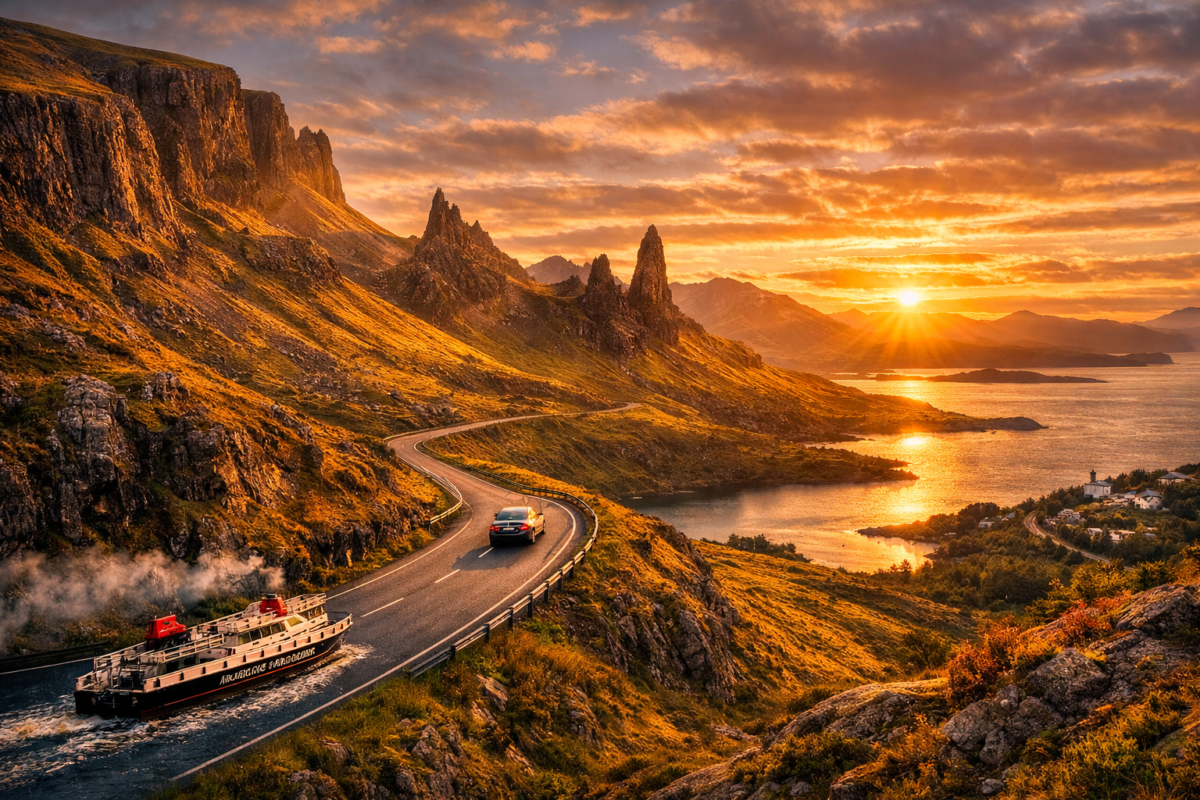
Dedicate today entirely to the Trotternish Peninsula – a circular 55-mile loop that packs more extraordinary geology into a single drive than almost anywhere in Europe.
Old Man of Storr
A 160-foot pinnacle of black basalt rising from a ridge above Loch Leathan, the Old Man of Storr is Skye’s most iconic image. The 2.5-mile round hike gains 1,000 feet of elevation and deposits you in a surreal landscape of spires and cliffs with views across the Sound of Raasay. Go early – the car park fills by 8am in summer.
The Quiraing
Further north, the Quiraing is a landslip on the eastern face of the Trotternish Ridge – a chaotic tumble of pinnacles, cliffs, and hidden meadows that locals have used for centuries to hide cattle during Viking raids. The 4-mile circular walk is moderate and rewards with otherworldly views over the Hebridean islands.
Kilt Rock & Mealt Falls
A sea cliff of columnar basalt that resembles the pleats of a kilt, with a 300-foot waterfall plunging directly into the sea below. It takes three minutes to appreciate and is genuinely astonishing. Don’t skip it.
Day 7: Skye to Inverness – Eilean Donan and Loch Ness
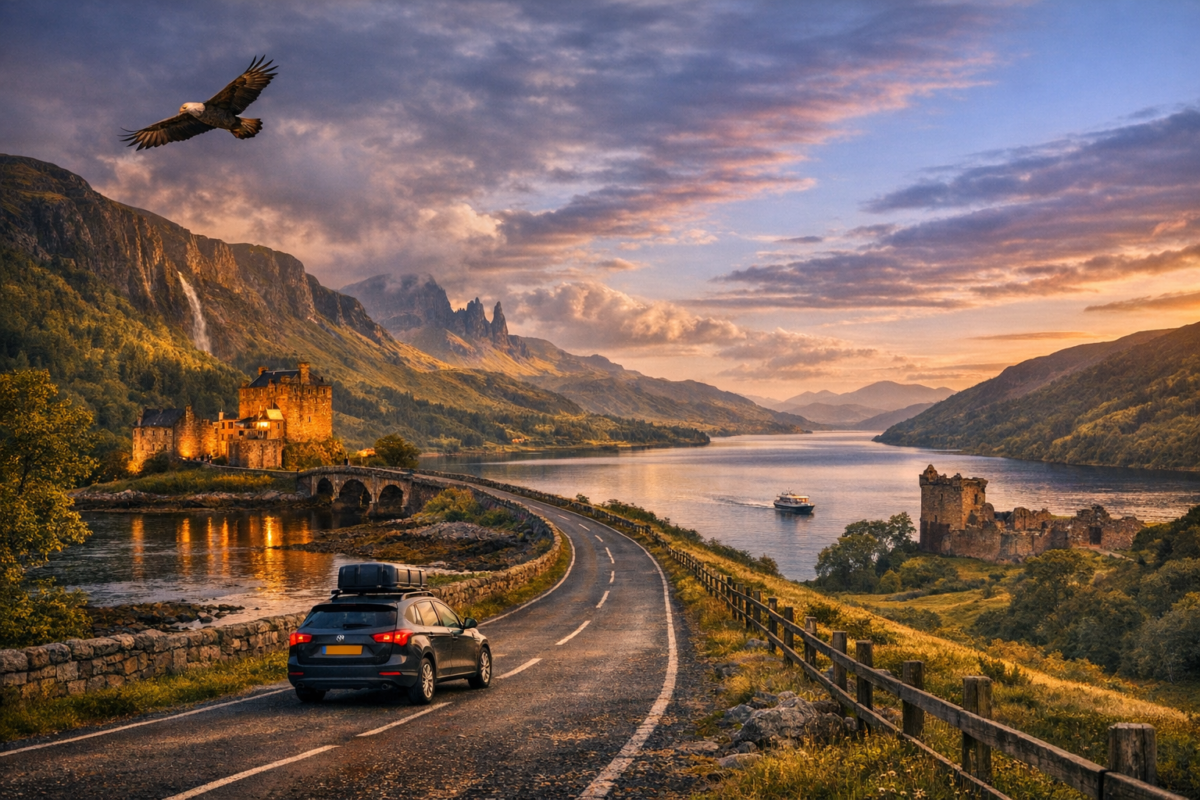
Leave Skye reluctantly. Cross back to the mainland and drive east along the southern shore of Loch Duich toward the most photographed castle in Scotland.
Eilean Donan Castle
Perched on a tiny island at the confluence of three sea lochs, Eilean Donan Castle looks precisely as a Scottish castle should look: ancient, brooding, and reflected perfectly in still water when the light cooperates. The interior has been substantially restored (the castle was largely ruined until 1932) but the exterior setting is legitimately one of the most beautiful in Europe.
Loch Ness
No Scotland road trip is complete without at least a passing acknowledgment of the world’s most famous lake monster. Loch Ness stretches 23 miles south of Inverness and holds more water than all the lakes of England and Wales combined. Nessie has never been found, but Urquhart Castle – dramatically ruined on the western shore – absolutely has, and it’s worth a stop.
Spend the night in Inverness, a proper Highland city with excellent restaurants, a Victorian market, and a lively pub scene. It is also the start of the famous North Coast 500 – Scotland’s answer to Route 66.
Day 8: The North Coast 500 – Scotland’s Greatest Road Trip
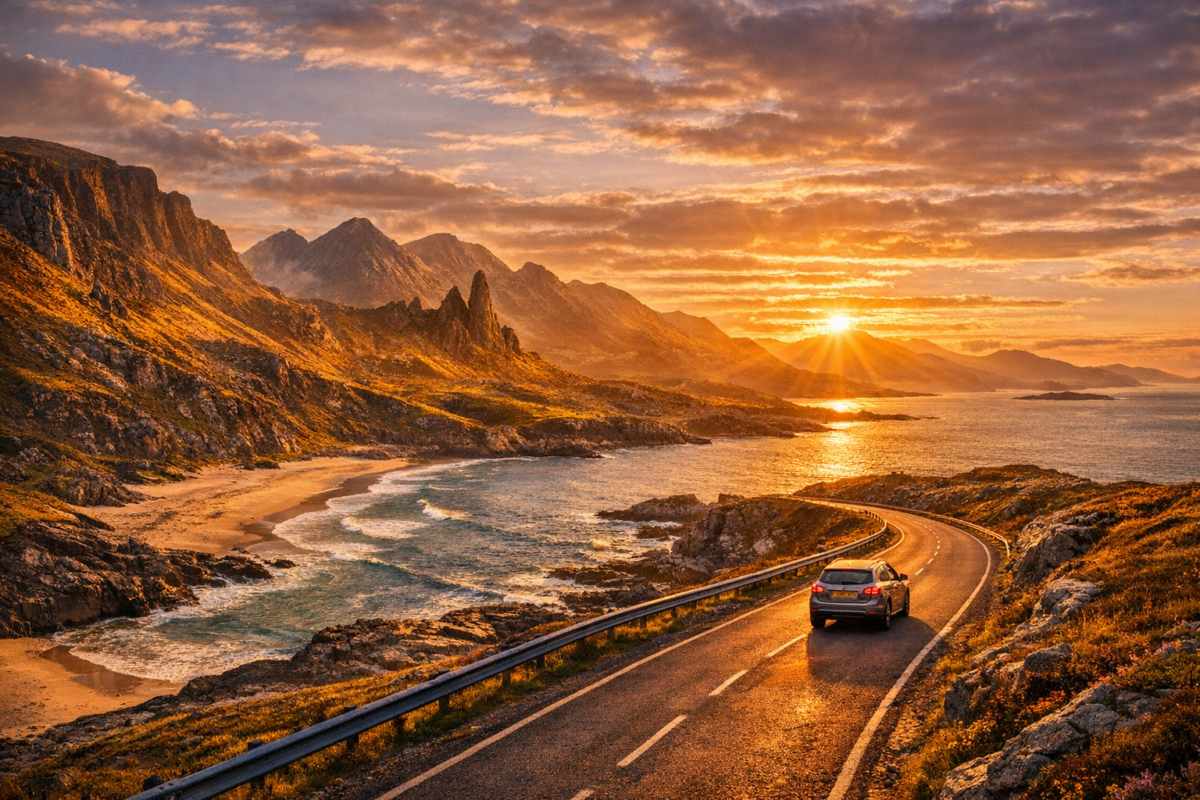
The North Coast 500 (NC500) is a 516-mile circular route around the northern Highlands that has been called one of the world’s greatest road trips, and the claim is hard to dispute. You won’t complete it in one day – but a full day heading north along the eastern coast before looping across the top gives you a flavour that will leave you desperate to return.
Dunrobin Castle
The most fairytale-esque building in Scotland sits above the North Sea near Golspie: Dunrobin Castle looks like it was teleported directly from the Loire Valley, with French Renaissance spires rising above immaculate formal gardens. It is home to the Earls and Dukes of Sutherland and houses one of the finest private collections of art and historical objects in Scotland. The falconry displays in summer are exceptional.
Smoo Cave
Near Durness at the far northwestern tip of the mainland, Smoo Cave is a vast sea cave created by both marine erosion and a freshwater stream that plunges through the roof in a waterfall. Boat tours run into the inner chambers when water levels permit. The entrance arch – 50 feet high and 130 feet wide – is one of the largest sea cave entrances in Britain.
Pro Tip: The NC500 gets extremely busy in July and August. Book accommodation 6-8 weeks in advance, especially in Durness, Tongue, and Ullapool. Many places have only 3-4 rooms.
Day 9: Speyside – The Whisky Road
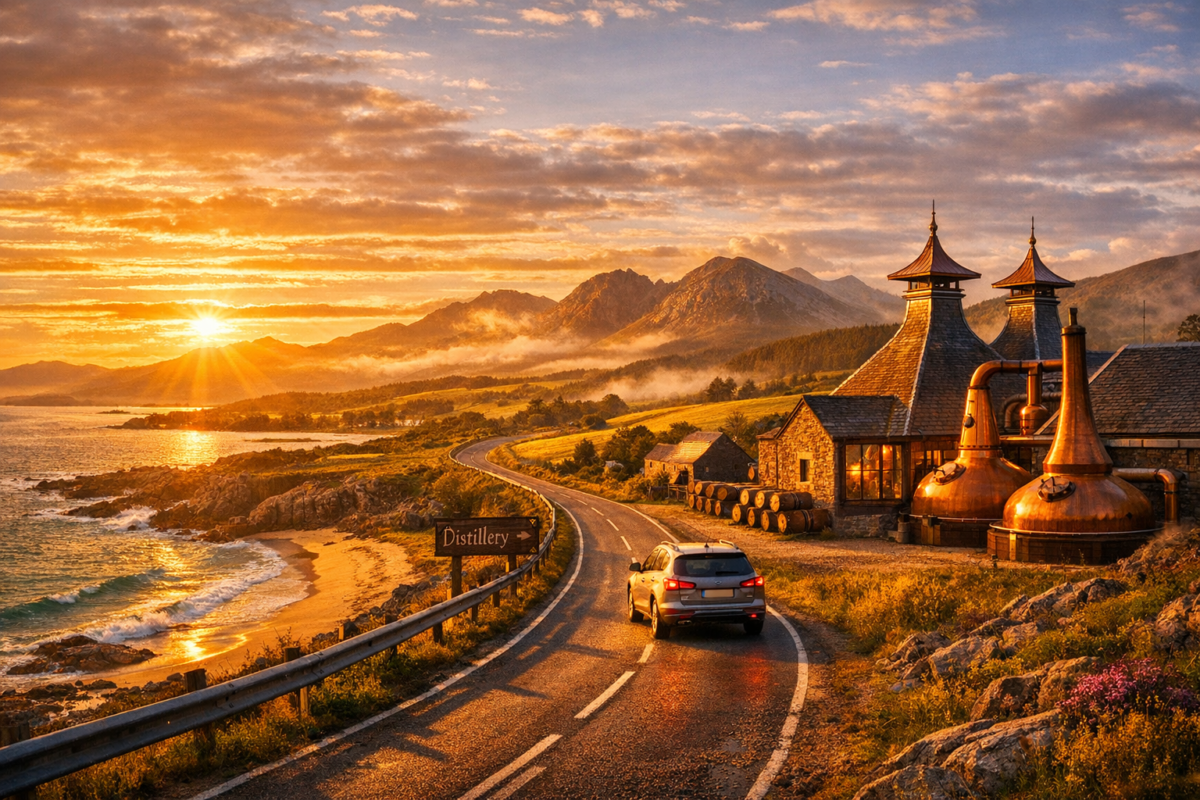
Turn south from the far north coast and drive through the Cairngorms National Park – the largest national park in Britain, with a subarctic plateau that’s home to reindeer, ospreys, and red squirrels – before dropping down into the valley of the River Spey.
Speyside is the most concentrated whisky-producing region on Earth. Within a 30-mile stretch of river valley, there are over 50 active distilleries, each producing single malts of distinct character shaped by the local water, barley, and oak barrels.
The Essential Speyside Distillery Trail
- Glenfiddich (Dufftown) – the world’s best-selling single malt, excellent free tours
- Macallan (near Craigellachie) – extraordinary architecture, premium tasting experiences
- Glenfarclas (Ballindalloch) – family-owned since 1865, exceptional sherry cask expressions
- Cardhu (Knockando) – where Johnnie Walker Black Label begins, beautiful visitor centre
- The Speyside Cooperage (Craigellachie) – watch coopers hand-making oak barrels, fascinating
Good to Know: Distillery tours involving tastings mean one person drives sober. Plan your designated driver in advance, or hire a private tour van. Drink driving laws in Scotland are stricter than England – the limit is 50mg/100ml blood alcohol vs 80mg in England.
Pro Tip: Use the Live Currency Converter at hiddentravels.site/travel-tools/currency-converter/ to check GBP exchange rates before your trip so you know exactly what distillery experiences will cost in your home currency.
Day 10: Speyside to Edinburgh – Perthshire & the Journey Home
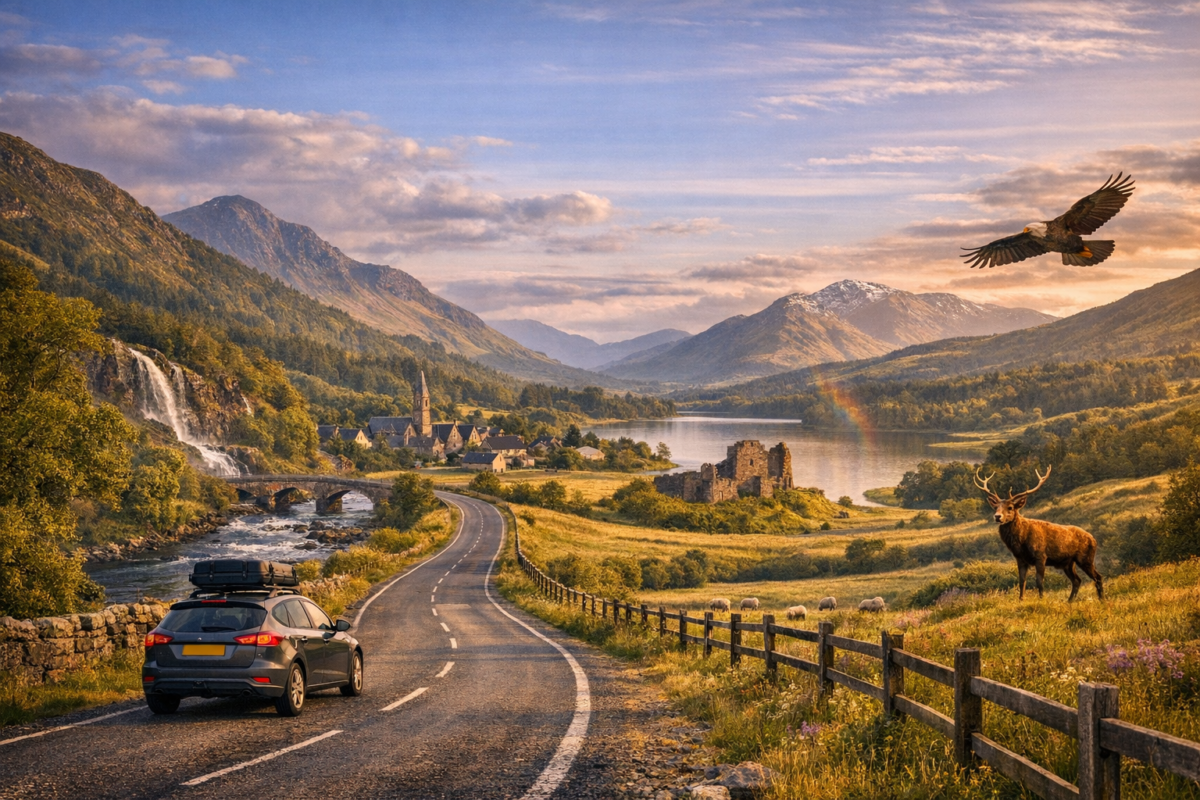
Your final day takes you south through the most romantically beautiful part of lowland Scotland – the Perthshire Highlands, sometimes called ‘the gateway to the Highlands’, where the mountains slowly soften into wooded river valleys and the light has a quality that 19th-century landscape painters couldn’t stop trying to capture.
Pitlochry – The Perfect Final Stop
The Victorian spa town of Pitlochry sits in the Tummel Valley surrounded by forested hills and is one of Scotland’s most charming small towns. Blair Athol Distillery offers free tastings. The Pitlochry Dam has a working fish ladder where you can watch Atlantic salmon swimming upstream through glass panels. Killiecrankie Gorge – a 10-minute drive north – was the site of one of Scotland’s most dramatic battles in 1689.
From Pitlochry, it’s 80 miles south on the A9 back to Edinburgh – past Dunkeld’s cathedral ruins, through the Ochil Hills, and home.
Practical Scotland Road Trip Information
Driving in Scotland
- Left side of the road: Scotland drives on the left. Allow a day to adjust if you’re from North America or Europe.
- Single-track roads: Much of the Highlands uses single-lane roads with passing places. Pull into passing places to let oncoming traffic through – it is both courtesy and law.
- Speed limits: 70mph motorway, 60mph national roads, 30mph towns. Average speed cameras are common on Highland roads.
- Fuel: Fill up whenever you see a petrol station in remote areas. Some Highlands villages have no fuel for 40+ miles in any direction.
- Parking: Most scenic layby stops are free. Pay-and-display in city centres. The NTS and Historic Scotland car parks charge £3-7.
Car Rental Tips
Book your rental car early – Scotland is popular in summer and good cars sell out fast. Compare prices across providers at GetRentACar. Opt for a smaller car – Highland roads can be narrow and easier to manoeuvre matters.
Getting Connected
Mobile coverage in the Highlands is patchy at best. Download offline maps (Maps.me or Google Maps offline) before you leave. For international travelers, Airalo eSIM offers UK data packages that work on arrival – no SIM-swapping needed, just activate on your phone before you fly.
Travel Insurance
Always travel with comprehensive insurance. Ekta Travel Insurance offers flexible coverage for road trips including vehicle hire excess, medical, and trip cancellation – compare options before you travel.
Best Time to Visit Scotland
Scotland’s weather is famously unpredictable, but the following general patterns apply:
- May–June: Best overall. Long daylight hours (up to 18hrs in June), wildflowers, waterfalls at full flow, midges not yet at peak. Accommodation still available.
- July–August: Peak season. Warmest temperatures (15-20°C). Midges at their worst. Book everything 3+ months in advance.
- September–October: Excellent choice. Golden autumn colours, fewer crowds, midges dying off, whisky festival season.
- November–March: Cold, dark, and dramatic. Snow on the Munros, empty roads, authentic atmosphere. Some tourist attractions closed.
Good to Know: Scottish midges (tiny biting insects) are active May–September in calm, humid conditions – particularly around lochs and in the morning/evening. Carry midge repellent (Smidge is the best Scottish brand) and a head net for camping.
Scotland Road Trip Budget Guide
Scotland is not cheap – but it’s far more affordable than its reputation suggests if you plan correctly. Here iss a realistic daily budget breakdown:
- Budget (£60–80/day): Hostel dorms or wild camping, self-catering food, free attractions (most are free), packed lunches
- Mid-range (£120–180/day): B&Bs and guesthouses, pub dinners, 1-2 paid attractions per day, occasional distillery tour
- Comfort (£250+/day): Country house hotels, restaurant dinners, private whisky tours, boat trips and activities
Use our AI Travel Budget Estimator at AI Travel Budget Estimator to build a personalised budget for your specific dates, group size, and travel style.
Frequently Asked Questions
Q: Do I need a specific driving licence to drive in Scotland?
US, Canadian, Australian, and EU driving licences are all valid in Scotland for up to 12 months. An International Driving Permit (IDP) is recommended for non-EU visitors but not strictly required. Your licence must be in English or accompanied by a certified translation.
Q: How many days do you need for a Scotland road trip?
10 days is the minimum to cover the Highlands properly without feeling rushed. 7 days is possible if you focus on either the west coast and Skye, or the NC500 – but not both. 14 days allows you to explore the Outer Hebrides and the Orkney Islands as well, which are exceptional.
Q: Is the North Coast 500 suitable for first-time visitors to Scotland?
Yes, but with caveats. The NC500 involves significant stretches of single-track road that can be intimidating for first-time left-side drivers. Drive slowly, use passing places correctly, and give yourself more time than you think you need. The scenery will reward your patience many times over.
Q: What should I pack for a Scotland Highlands road trip?
The non-negotiables: waterproof jacket (a good one – Scottish rain is horizontal), waterproof trousers, walking boots with ankle support, layers including a mid-weight fleece, and midge repellent (May-September). Full packing list available at hiddentravels.site/travel-tools/packing-list-generator/
Q: Can I wild camp in Scotland?
Yes – Scotland has the most progressive right-to-roam legislation in the world under the Land Reform (Scotland) Act 2003. You can camp almost anywhere on unenclosed land as long as you follow the Scottish Outdoor Access Code: leave no trace, respect privacy near houses, and move on after 2-3 nights.
Q: What is the best base for a Scotland road trip?
Edinburgh is the best starting and ending point for most international visitors – it has the best transport links (including transatlantic flights), the finest hotels across all budgets, and is itself worth 2 full days of exploration before you hit the road.
Final Thoughts: Scotland Will Change You
There is a moment on every Scotland road trip – different for every traveler, happening in a different place – when the country stops being a destination and becomes something more personal. For some it’s a castle appearing through morning mist. For others it’s the light on a loch at 10pm in June, still golden, the day refusing to end. For others it’s the silence of Rannoch Moor, or a conversation in a pub with a stranger who turns out to know more about your own country’s history than you do.
Whatever form that moment takes for you, it will come. Scotland is one of those rare places that asks something of you – a willingness to slow down, to get rained on, to pull over at the waterfall that isn’t on any map – and rewards you in ways you didn’t expect and won’t forget. Start planning your Scotland road trip today. Compare flights at Aviasales, book your rental car at GetRentACar, and use our AI Travel Budget Estimator to make sure the numbers work. The Highlands are waiting.
Happy travels — and stay hidden.
Hidden Travels Team | hiddentravels.site