

Here is something nobody tells you about your first-time international travel – the excitement and the overwhelm hit at exactly the same time. One minute you are daydreaming about cobblestone streets and street food. The next you’re three tabs deep into visa requirements, wondering if you packed enough, and genuinely unsure whether you need to print your boarding pass or not.
Been there. Done that. Made every single mistake possible.
My first international trip was Istanbul. I thought I had it figured out. I absolutely did not. I overpacked badly, paid extra for overweight luggage, nearly missed a connecting flight because I didn’t account for how strict security checks can be, and spent the first night in a hotel that looked nothing like its photos. Classic rookie stuff.
But here’s the thing – every single one of those mistakes was completely avoidable. And that’s exactly why I put this guide together. Whether you are heading to Europe, Southeast Asia, the Middle East, or anywhere else, this is the no-fluff, experience-based guide that actually prepares you for what international travel is really like.
Planning your trip budget first? Use the AI Travel Budget Estimator on Hidden Travels to get a realistic cost breakdown before you book anything.

Packing Tips That Actually Work (From Someone Who Over-Packed Badly)
Let’s start with packing because it’s where most first-timers go wrong – and it sets the tone for your whole trip. A heavy, disorganized bag makes every airport, every bus station, and every hotel check-in more stressful than it needs to be.
1. Pack Light. Seriously, Pack Less Than You Think
The classic mistake. You’re staring at your suitcase thinking ‘just in case’ about every single item. Spoiler: you’ll wear the same three outfits on rotation and you know it.
Stick to clothes that mix and match. Neutral colors, layers instead of heavy items, and one pair of shoes that works for both walking and going out. On a trip to Dubai I packed three pairs of jeans and wore exactly one. The other two just made my bag heavier and cost me money at the check-in counter.
QUICK TIP Always pack one complete outfit in your carry-on. If your checked luggage gets delayed – and it happens more than airlines admit – you’ll be genuinely grateful for this.
2. Use Packing Cubes
Not just for saving space – though they do that too. Packing cubes keep your bag organized when you’re living out of a suitcase for two weeks. I use different colors for different categories. Blue for tops, grey for bottoms, red for essentials. Small habit, big difference.
3. Roll, Don’t Fold
Old trick, still works. Rolling clothes saves space, reduces wrinkles, and makes it easier to see everything at a glance. Fold and you’re digging. Roll and you can spot your favourite shirt immediately.
4. Check Baggage Rules Before You Pack – Not After
Every airline has different rules. Some include a carry-on, some charge extra for it. Some allow 23kg checked bags, some cap at 20kg. I once paid 40 euros at the gate because my backpack was slightly over their personal item size limit. That’s an extra meal in Paris. Don’t make this mistake.
5. Keep Copies of Every Important Document
Passport, visa, travel insurance, hotel confirmations – scan them all and save to your email and cloud storage. If your bag goes missing or gets stolen, you’ll still have access to everything you need. This step takes 10 minutes and can save you hours at an embassy.
6. Build a Small Emergency Kit
Mine always has the same things:
- Universal power adapter
- Travel-size hand sanitizer
- Basic medicines – painkillers, antihistamine, something for stomach issues
- Band-aids
- Reusable water bottle
On a trip to Thailand I also threw in a small travel clothesline. Sounds ridiculous. Absolutely saved me – washed a couple of shirts at night, dried by morning, avoided packing extras. Sometimes the weird additions are the best ones.
Not sure what to pack for your destination? The Packing List Generator on Hidden Travels builds a custom checklist based on where you are going and how long you’ll be there.
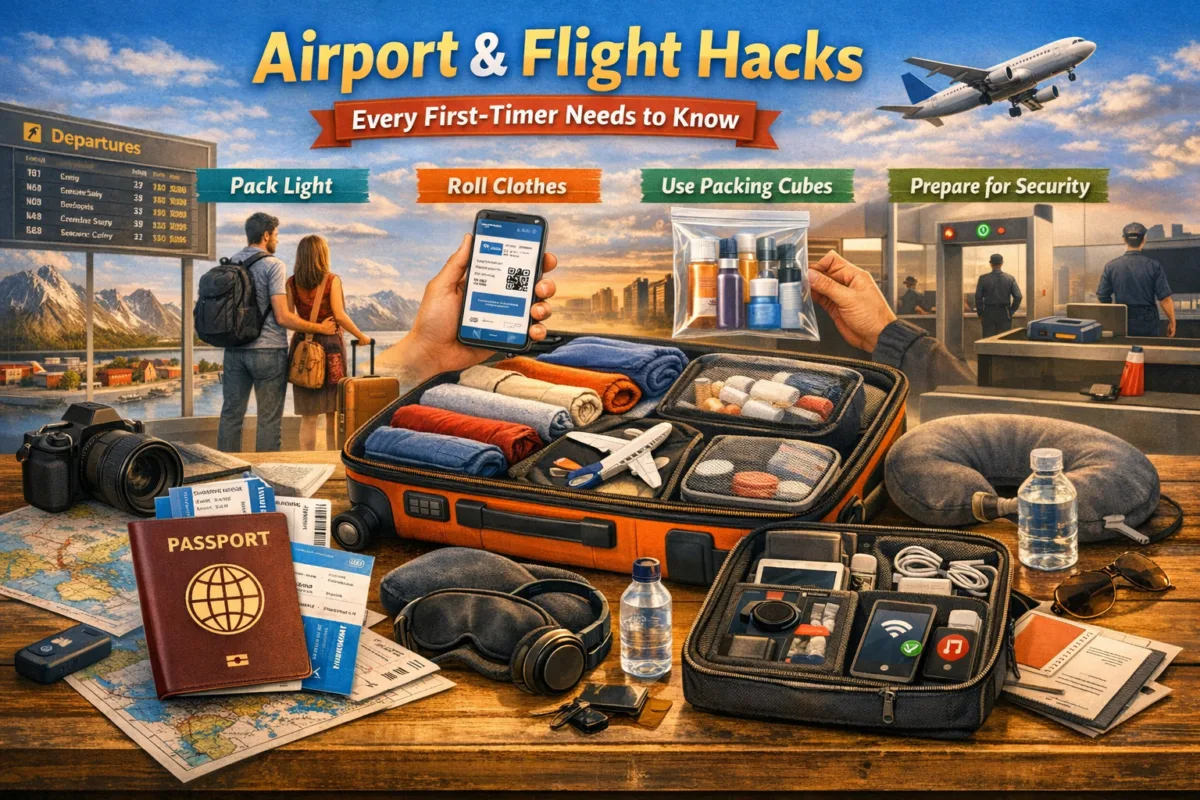
Airport & Flight Hacks Every First-Timer Needs to Know
Airports are genuinely confusing the first time. Long lines, signs in multiple languages, security theater, gates that seem to change just to spite you. But once you know the moves, it gets much easier.
1. Arrive Early – But Not Comically Early
Two and a half to three hours before an international flight is the sweet spot. Gives you time for check-in, security, a coffee, and a calm walk to your gate. I once showed up five hours early thinking it would feel relaxing. It did not. I sat on an uncomfortable airport chair for three hours with nothing to do. Two and a half hours is plenty.
2. Keep Security Essentials in One Accessible Pocket
The security line is where first-timers slow everything down – not because they’re doing anything wrong, but because they’re not ready. Keep these easy to grab:
- Passport and boarding pass (digital or printed)
- Liquids in a clear resealable bag, already out
- Laptop or tablet separate from your main bag
I once had my power bank buried at the bottom of my bag and had to unpack everything in front of a long, impatient queue. Never again.
3. Download the Airline App
Genuinely underrated. The app shows real-time gate changes, boarding updates, and allows mobile check-in. In Istanbul my gate changed at the last minute – I caught it on the app before they even made an announcement. Saved me from sprinting across a massive airport.
4. Stay Hydrated on the Plane
Cabin air is incredibly dry. Most people don’t drink enough on flights and land feeling like they’ve aged five years. Carry a reusable water bottle, fill it after security, and drink regularly throughout the flight. On an 8-hour flight I once skipped this and landed with a headache that ruined most of my first day. Not worth it.
Flying internationally and worried about roaming costs? Airalo eSIM gives you affordable local data the moment you land – no SIM swapping, no roaming surprises.
5. Move Around on Long Flights
Get up every couple of hours. Walk the aisle, stretch at the back of the plane. Sitting completely still for 10+ hours wrecks your circulation and makes jet lag worse. Your body will thank you when you land.
6. Invest in Noise-Cancelling Headphones (or Earplugs)
6. Invest in Noise-Cancelling Headphones (or Earplugs)
Crying babies, loud conversations, constant announcements. Flights can be noisy. Noise-cancelling headphones are one of the best travel investments you can make. If that’s too expensive right now, foam earplugs cost almost nothing and do a surprisingly good job.
7. Sync Your Sleep to Your Destination
To fight jet lag, try to sleep on the plane according to your destination’s time zone – not where you took off from. On a flight from Pakistan to Paris I forced myself to stay awake until it was nighttime in France. First day still felt a bit groggy, but the adjustment was genuinely faster than previous trips.
8. Charge Everything Before You Leave Home
Airport charging stations are crowded and unreliable. Leave home with a fully charged phone, laptop, and power bank. A full power bank has saved me multiple times – landed in a new city, needed Google Maps immediately, and the airport WiFi wasn’t working.
Looking for cheap flights? Check Aviasales and WayAway – WayAway also gives cashback on bookings, which adds up nicely over a full trip.

Accommodation Tips: Finding the Right Place Without Getting Burned
Where you stay shapes your entire experience more than most people realize. Too far from the center and you waste hours commuting. Bad reviews ignored and you end up in a nightmare. Let’s do this properly.
1. Book Early, Especially for Popular Destinations
In peak season, good rooms in well-located areas sell out fast. Book at least a month in advance for popular cities. My first trip to Rome I waited too long and ended up in an overpriced, poorly located hotel that added 40 minutes of commuting to every single day. Book early, sleep better – literally.
2. Compare Platforms – Never Rely on Just One
The same room can be 20-30% cheaper on a different platform. I check at least three before booking. And always check the hotel’s own website too – they sometimes offer ‘book direct’ perks like free breakfast or late checkout that booking platforms don’t show.
Use Hotellook to compare hotel prices across multiple platforms at once – it’s genuinely one of the fastest ways to find the best deal.
3. Location Is Worth Paying a Bit More For
A cheap room 45 minutes from everything often costs more in transport, time, and energy than just paying slightly more for something central. When I stayed in Bangkok I chose a budget guesthouse right in the middle of everything – saved hours every day and could walk to most places.
4. Read Reviews Properly – Not Just Star Ratings
Don’t trust the star average alone. Read what people actually write. Pay attention to mentions of cleanliness, noise, safety, and whether photos match reality. In Athens I booked a place with great photos and ignored a handful of reviews mentioning thin walls. The walls were thin. I didn’t sleep well. Read the reviews.
5. Hostels Are Not What You Think
If you’re traveling solo or on a tighter budget, modern hostels are genuinely excellent. Many offer private rooms, not just dorms. They’re social, often centrally located, and frequently include extras like free walking tours and local recommendations that no booking site can give you.
6. Short-Term Rentals for Longer Stays
For trips longer than a week, platforms like Airbnb make a lot of sense. A small kitchen means you can cook occasionally, do laundry, and feel settled rather than constantly ‘on the road.’ In Paris I had a tiny kitchen and spent mornings shopping at local markets. Cheap, fun, and genuinely one of my favourite travel memories.
7. Watch for Hidden Fees
Cleaning fees, city taxes, resort charges – they add up fast. A room listed at 40 euros can easily become 55 euros after fees. Always click through to the final price before you compare options.
8. Ask for an Upgrade at Check-In
Sounds awkward. Works more often than you’d expect. A simple ‘Is there anything better available?’ said politely at check-in has gotten me canal-view rooms in Venice, higher floors, and better amenities – all at no extra cost. The worst they can say is no.

Budget & Money Tips: Spend Less, Experience More
Traveling doesn’t have to be expensive. But it does require some strategy. Here’s what actually works for keeping costs down without missing out on anything good.
1. Travel in the Shoulder Season
Visiting Europe? Skip peak summer (June-August) and go in May or September instead. Flights and hotels drop significantly, crowds thin out, and honestly the weather is often better too. Rome in September is magical. Rome in July is hot, packed, and overpriced.
2. Use Public Transport Like a Local
Taxis and rideshares from airports look tempting after a long flight. But trains, buses, and metro systems are almost always faster and a fraction of the cost. In Paris, a day transport pass covers unlimited journeys for less than the cost of one short cab ride.
Need a rental car for flexibility? Rent a Car has affordable options worldwide – book early for the best rates, especially in summer.
3. Mix Accommodation Types
Don’t feel like you have to stay in hotels the whole time. Mix it up – a hostel here, a short-term rental there. Budget guesthouses in Southeast Asia or Eastern Europe are often cleaner and more characterful than mid-range hotel chains anyway.
4. Eat Like a Local, Not Like a Tourist
Restaurant three times a day adds up fast. Head to local markets, grab fresh bread, cheese, and fruit. Picnic in a park. Eat street food where locals eat. Not only cheaper – often the best food you’ll have on the trip.
5. Look Into City Travel Cards
Many cities – London, Amsterdam, Barcelona, Prague – offer passes that bundle unlimited transport with museum entry. If you’re planning to see multiple attractions, these cards often pay for themselves within two days.
6. Take Overnight Buses or Trains Between Cities
Night journeys save you both transport costs and a night’s accommodation. An overnight train from Prague to Budapest, for example, covers the journey while you sleep. Two savings in one ticket.
Want to track your daily spending and avoid going over budget? The AI Travel Budget Estimator helps you plan realistic daily limits before you go.
7. Set Price Alerts for Flights
Don’t just search flights once. Use tools to track prices over time. Setting alerts months in advance and booking when prices dip can save you hundreds – sometimes more than enough to cover a whole extra day of travel.

Safety & Health: The Stuff That Seems Obvious Until It Isn’t
Nobody wants to think about this part. But a little preparation here prevents a lot of stress. And the good news is – most of it is quick and easy to sort before you leave.
1. Travel Insurance Is Non-Negotiable
I know it feels like an unnecessary expense. It isn’t. A single hospital visit abroad – especially in the US, Switzerland, or Japan – can cost thousands. Travel insurance covers medical emergencies, lost luggage, flight cancellations, and more. A friend of mine had a scooter accident in Thailand and walked away with a $2,000 hospital bill. He had insurance. It was fully covered. Without it, his budget trip would have been financially catastrophic.
Don’t skip this. Ever.
2. Keep Document Copies in Multiple Places
Digital copies in your email and cloud. One physical photocopy kept separate from your originals. If your bag gets stolen or lost, you’ll still have everything you need to get help. This takes 15 minutes to set up and can save you days of stress.
3. Be Smart About Food and Water
Your digestive system needs time to adjust to local food and water. That doesn’t mean avoid street food – some of the best meals you’ll ever have come from street stalls. Just be sensible:
- Choose stalls where locals are actually eating
- Avoid raw or undercooked meat
- Stick to bottled or filtered water in countries where tap water isn’t safe
- Carry basic stomach meds just in case
4. Stay Aware – But Don’t Be Paranoid
Keep your phone, wallet, and camera close in crowded areas. Use a crossbody bag or money belt in busy tourist spots. And before you arrive anywhere new, spend five minutes Googling common scams in that city. In Paris it’s fake petitions near tourist sites. In Rome it’s ‘friendship bracelets.’ Knowing about them in advance means they don’t work on you.
5. Note Down Emergency Numbers
Save local emergency numbers – police, ambulance – and your country’s nearest embassy as contacts in your phone before you arrive. Label them clearly. You probably won’t need them. But if you do, you’ll want them instantly.
6. Trust Your Gut
If a situation feels off, leave. If a taxi driver feels wrong, don’t get in. If a street feels unsafe, turn around. Your instincts process information faster than your conscious mind. Listen to them.
Using public WiFi abroad? Your data is vulnerable. NordVPN encrypts your connection and keeps your banking, passwords, and browsing private – worth running the whole trip.

Common First-Timer Mistakes (So You Don’t Have to Learn These the Hard Way)
Let’s call these out directly. These are the mistakes almost every first-time international traveler makes – and all of them are completely avoidable.
Overpacking
Every single time. You pack ‘just in case’ for every scenario, end up with a bag that weighs twice what it should, and pay for it – literally – at the check-in counter. Stick to versatile pieces. If you’re not 100% sure you’ll wear it, it stays home. I once carried three pairs of shoes to Europe and wore the same trainers the entire trip.
Ignoring Local Customs
Every country has unwritten rules. In Japan, being loud on public transport is genuinely considered rude. In parts of Southeast Asia, entering temples without covering your shoulders is disrespectful. In some Middle Eastern countries, public displays of affection are frowned upon. Ten minutes of research before you arrive prevents awkward – or worse, offensive – moments.
Skipping Travel Insurance
Already covered this but it bears repeating. A friend paid $600 out of pocket for a doctor visit abroad because he thought insurance was unnecessary. It was a routine issue. $600 gone. Don’t be that person.
Relying Only on Cash or Only on Cards
Some places are almost cashless. Others barely accept cards. Always carry both. And if you’re carrying significant cash, split it – some in your wallet, some hidden elsewhere in your bag, maybe a small emergency stash tucked somewhere safe.
Not sure what the exchange rate is or how much cash to bring? Check the Currency Converter on Hidden Travels before you go.
Overplanning Every Single Minute
Planning is good. Scheduling every hour of every day is exhausting and kills the spontaneity that makes travel magical. Leave gaps. Some of the best travel memories come from wandering down an unmarked street and stumbling into something you never would have found on a list. Would you rather tick off twelve tourist spots in a day or genuinely enjoy four of them?
Not Checking Visa Requirements Early Enough
Some visas take weeks to process. Some require specific documents, bank statements, or hotel confirmations. Finding this out three days before your trip is a nightmare. Check requirements the moment you book – not the week before you leave.
Helpful Travel Tools to Make Your Trip Smoother
A few tools worth bookmarking before your trip:
Packing List Generator – Build a personalized packing checklist based on your destination and trip length. → Packing List Generator
AI Travel Budget Estimator – Get a realistic daily and total budget breakdown before you book anything. → AI Budget Estimator
Weather Checker – Check forecasts before you pack so you’re not caught out by unexpected weather. → Weather Checker
Currency Converter – Quick and accurate currency conversion – useful before and during your trip. → Currency Converter
Must-Have Travel Resources & Tools
AFFILIATE DISCLOSURE Some links below are affiliate links. If you purchase through them, I may earn a small commission at no extra cost to you. Every resource listed is one I genuinely recommend.
Flight Deals: Aviasales — Search and compare cheap flights worldwide.
Flight Cashback: WayAway — Cheap flights with cashback rewards on every booking.
Car Rentals: Rent a Car — Affordable rental deals in destinations worldwide.
eSIM Data (Option 1): Airalo — Local data in 190+ countries, no SIM swap needed.
eSIM Data (Option 2): Yesim — Great eSIM coverage across Europe, Asia, and beyond.
Hotel Comparison: Hotellook — Compare hotel prices across all major booking platforms.
Airport Transfers: GetTransfer — Private transfers at fixed prices, no surprises.
Tours & Activities: EktaTraveling — Guided tours and unique local experiences worldwide.
Boat & Yacht Rentals: SeaRadar — Perfect for island-hopping and coastal adventures.
Online Security: NordVPN — Protect your data on public WiFi abroad.
Luggage Storage: Radical Storage — Safe luggage storage in major cities worldwide.
Tickets & Passes: TPK Deals — Best offers on travel tickets and experiences.
City-to-City Transfers: InDrive — Affordable intercity rides across multiple countries.
Flight Delay Help: AirHelp — Claim compensation if your flight is delayed or cancelled.
FAQs: First-Time International Travel
Q1: What documents do I need for my first international trip?
A: Passport, visa if required, flight tickets, hotel confirmations, and travel insurance. Keep digital and physical copies of everything.
Q2: How early should I arrive at the airport for an international flight?
A: Two and a half to three hours before departure. Enough for check-in, security, and a calm walk to your gate without killing three hours sitting around.
Q3: Is travel insurance really necessary?
A: Yes. Full stop. One medical emergency abroad without insurance can cost more than your entire trip. It’s not optional.
Q4: How can I save money while traveling internationally?
A: Travel in shoulder season, use public transport, eat where locals eat, mix accommodation types, and use city travel cards where available.
Q5: How do I handle jet lag on long flights?
A: Adjust your sleep to your destination’s time zone during the flight, stay hydrated, avoid alcohol, and get moving when you land rather than going straight to sleep.
Q6: How much cash should I carry abroad?
A: Enough for a day or two of expenses as backup. Carry a mix of cash and cards, and split your cash across different places in your bag.
Q7: What are the most common first-timer mistakes?
A: Overpacking, skipping travel insurance, ignoring local customs, overplanning every minute, and not checking visa requirements early enough.
Q8: How do I stay safe while traveling internationally?
A: Stay aware in crowded areas, keep valuables secure, research common scams before you arrive, note emergency numbers, and always trust your gut.
Final Thought: Just Go
International travel feels overwhelming before your first trip. That’s completely normal. But the overwhelm is mostly in the planning – once you’re actually there, everything clicks into place faster than you expect.
The airport makes sense. The metro isn’t that confusing. The food is incredible. The people are mostly kind. And the feeling of waking up in a place you’ve never been before – that never gets old, no matter how many trips you take.
Start with the basics covered: visa sorted, insurance booked, bag packed sensibly, documents backed up. Then leave room for everything else to surprise you. Because it will.
For more guides, tips, and travel tools, head to Hidden Travels. And if you want help planning your actual trip – itinerary, budget, logistics – check out the Travel Planning Services page.
Safe travels. You Have got this.