
I still remember sitting at my kitchen table with three browser tabs open – one showing a CHF 12 train ticket for a 20-minute ride, one showing Zurich hotel prices that made me close my laptop, and one Reddit thread where someone swore they did Switzerland on $60 a day. My brain could not reconcile all three. That was two trips ago. I have since figured out how the math actually works, and I promise you: a real Switzerland travel guide on a budget is not a myth. It just requires knowing where the money actually goes. If you want the short version of good money habits before you even land, our travel tips guide is a solid place to start.
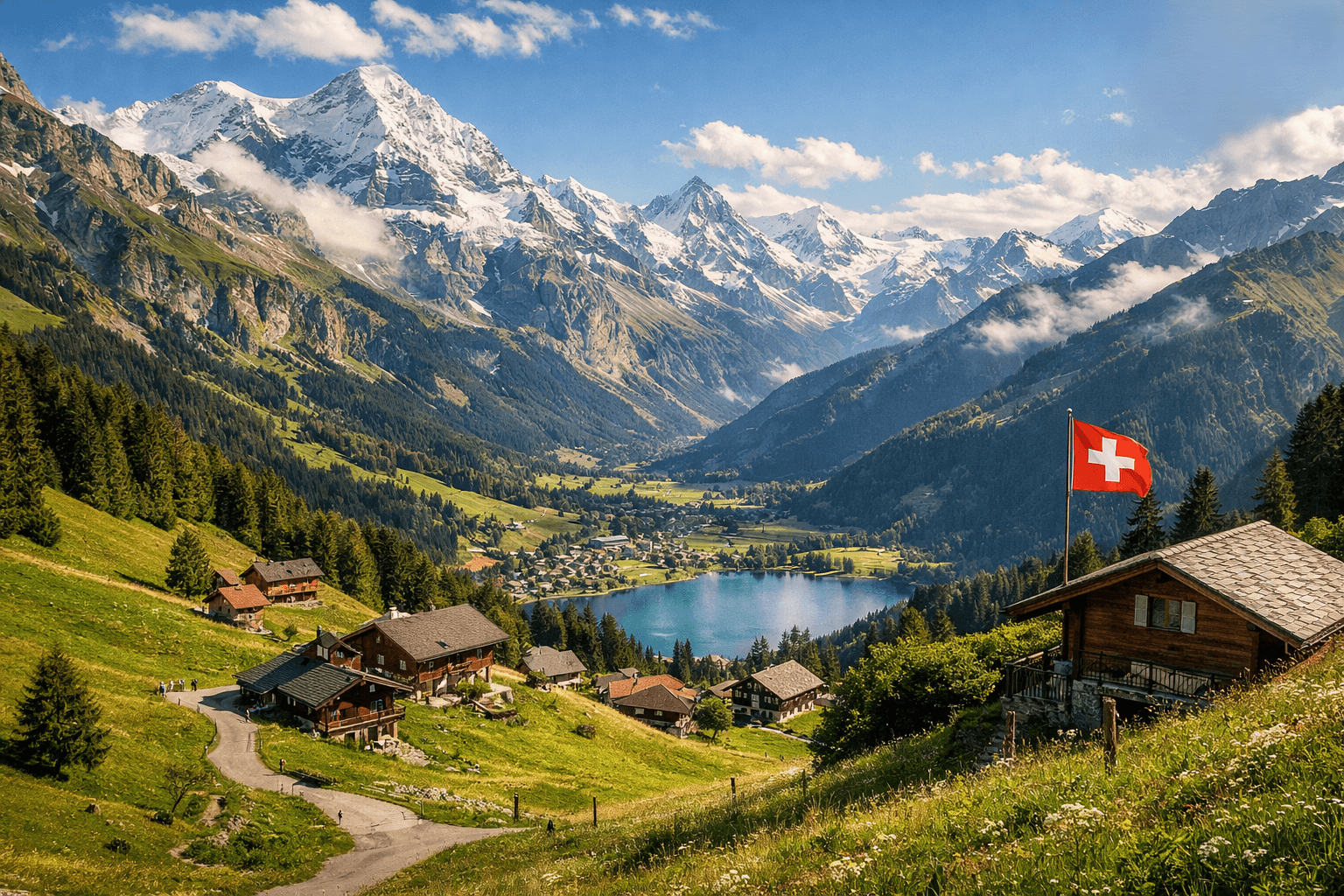
Switzerland has a reputation problem. People hear “Swiss Alps” and assume the price tag automatically means “off-limits unless you’re loaded.” It’s not true. Yes, it’s one of the most expensive countries in Europe. But it’s also one of the most efficient – the trains run on time, the water fountains are drinkable and free, and the hiking (which is arguably the best part of the entire country) doesn’t cost a single franc. This guide is everything I wish someone had handed me before my first trip.
Best Time to Visit Switzerland
There’s no wrong season here, but there is a season that fits your budget and interests best.
Shoulder season – late April to early June, and September to mid-October – is where the real value lives. Prices on accommodation drop, hiking trails are open, the crowds thin out, and the weather is still cooperative. This is genuinely my favorite window, and it’s the one I recommend to almost everyone asking about Switzerland trip planning.
Peak summer (July–August) brings the best weather for mountain hikes and lake swims, but also the highest hotel prices and the busiest trains, especially toward Interlaken and Zermatt.
Winter (December–March) is for skiing, and it’s a different kind of expensive – lift passes and resort towns like Zermatt or St. Moritz aren’t where you go to save money. If skiing isn’t the point, skip winter.
If someone asks me flat out when the best time to visit Switzerland is on a budget, I say: first two weeks of June or the last three weeks of September. Write that down.
How to Get to Switzerland (and Get Around Once You’re There)
Most budget travelers fly into Zurich Airport (ZRH) or Geneva Airport (GVA), both of which have train stations built directly into the terminal – you can be on a train to the city center within 10 minutes of landing. Budget carriers fly into both from most major European hubs, so if you are routing through Europe anyway, it’s worth comparing fares on something like Aviasales before you commit, and running the route through our own guide to finding cheap flights for extra tricks.
For staying connected the moment you land, I just buy a local data eSIM through Airalo before departure – no fumbling for a SIM shop at the airport, and it means you can pull up train times the second you’re off the plane.
If your flight lands late or your connection is tight, a pre-booked airport transfer through GetTransfer is worth the small premium over figuring out a taxi queue at midnight.
Getting Around: The Swiss Travel Pass
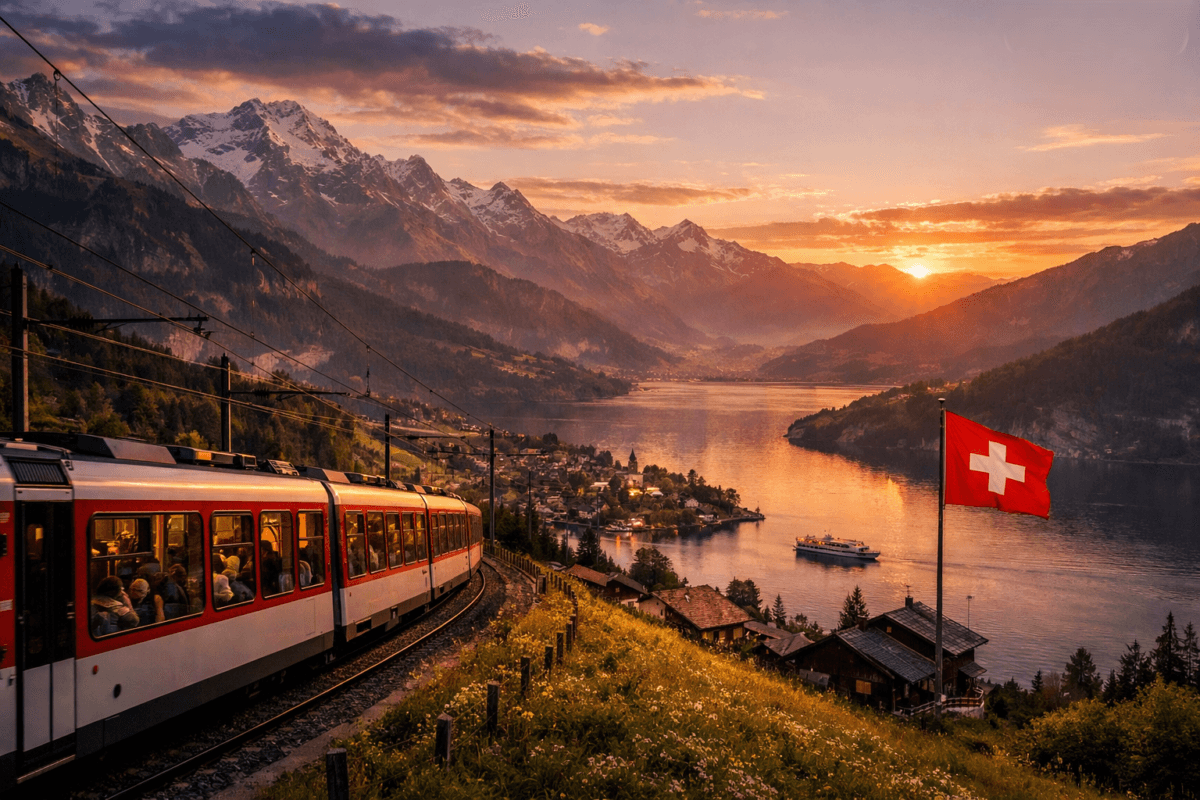
Once you are in the country, the Swiss Travel Pass is the backbone of getting around, and it’s worth understanding properly instead of just buying by default.
second-class pricing looks like this:
- 3 days: CHF 254
- 4 days: CHF 309
- 6 days: CHF 399
- 8 days: CHF 439
- 15 days: CHF 499
The pass covers unlimited train, bus, and boat travel across the entire national network, plus free entry to over 500 museums and a 50% discount on most mountain cable cars and cogwheel railways (like the ones up to Rigi or Schynige Platte). If you are doing multiple long train legs – say Zurich to Zermatt, which alone can run over CHF 78 one-way – the pass pays for itself fast. For the country’s most photogenic rail routes, it’s worth reading our roundup of the most scenic train journeys in Europe before you plan your route.
Insider tip:
Notice how the jump from the 8-day to the 15-day pass is only CHF 60. If your trip runs anywhere from 9 to 15 days, just buy the 15-day pass. You are basically getting a full extra week of free travel for pocket change.
If you’re only traveling occasionally rather than every single day, the Half Fare Card (about CHF 150-190 for a month) might make more sense. And for the odd short hop between towns where a train doesn’t run direct, a ride-hailing option like inDrive can be a cheap, flexible fallback.
Top Destinations Worth Your Time
Zurich
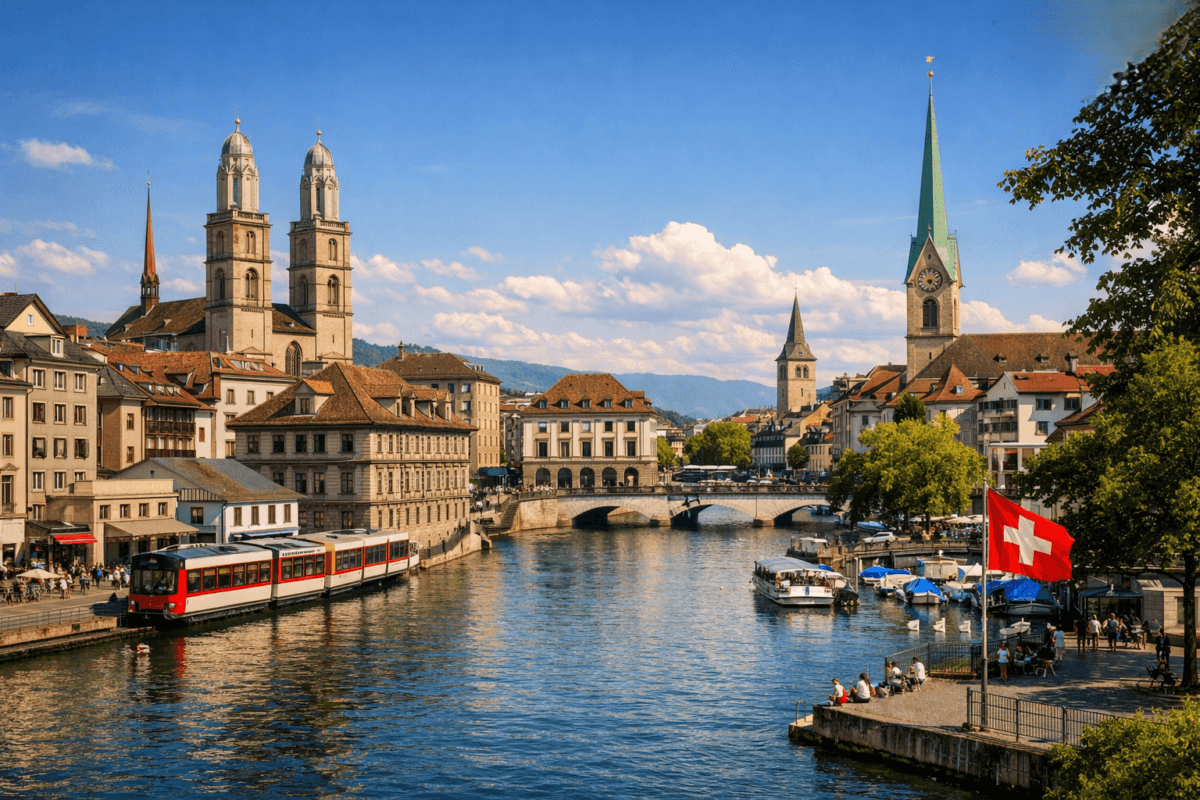
Not just a banking hub – Zurich has a genuinely charming Altstadt (old town), a lake you can swim in for free in summer, and a nightlife scene tucked into former industrial buildings in the Kreis 5 district. It’s your most likely arrival point, so plan at least one full day here before heading toward the mountains.
Lucerne
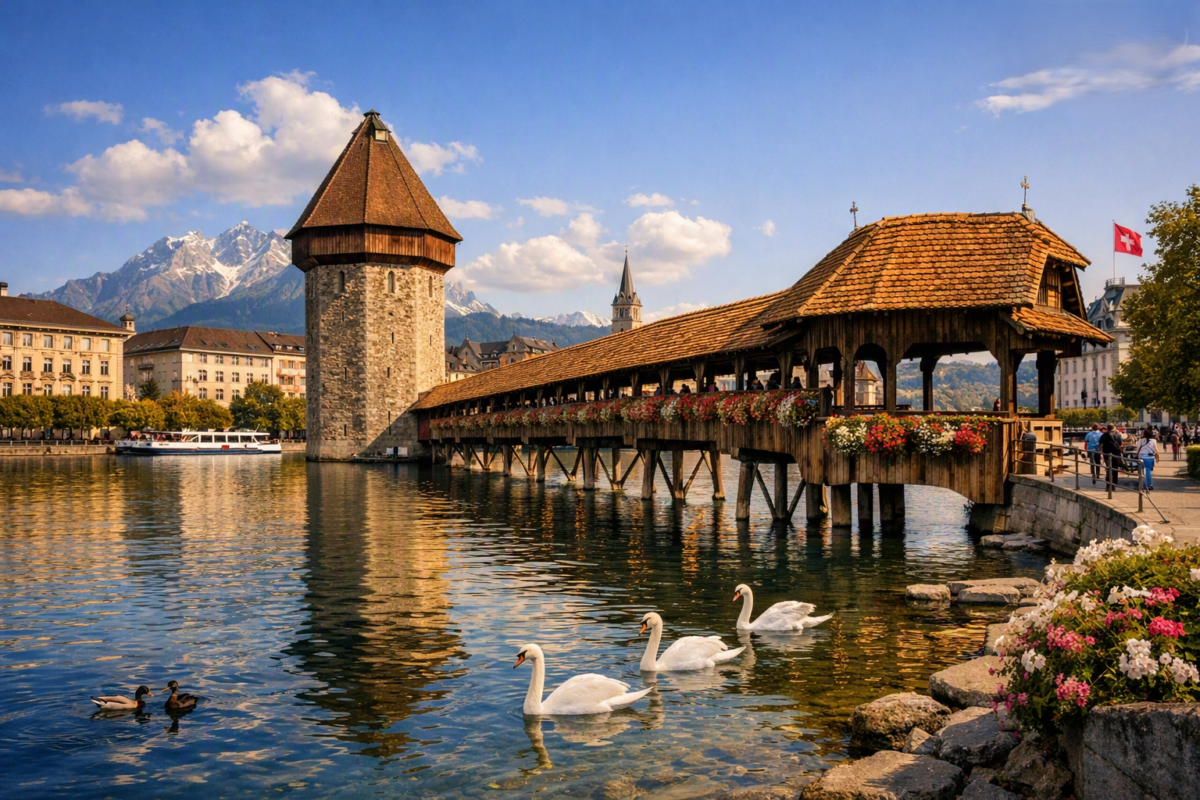
This is the postcard Switzerland people imagine – a covered wooden bridge, a lake ringed by peaks, and an old town small enough to walk in an afternoon. It’s also the easiest jumping-off point for Mt. Pilatus and Mt. Rigi, two of the more affordable mountain excursions in the country.
Interlaken
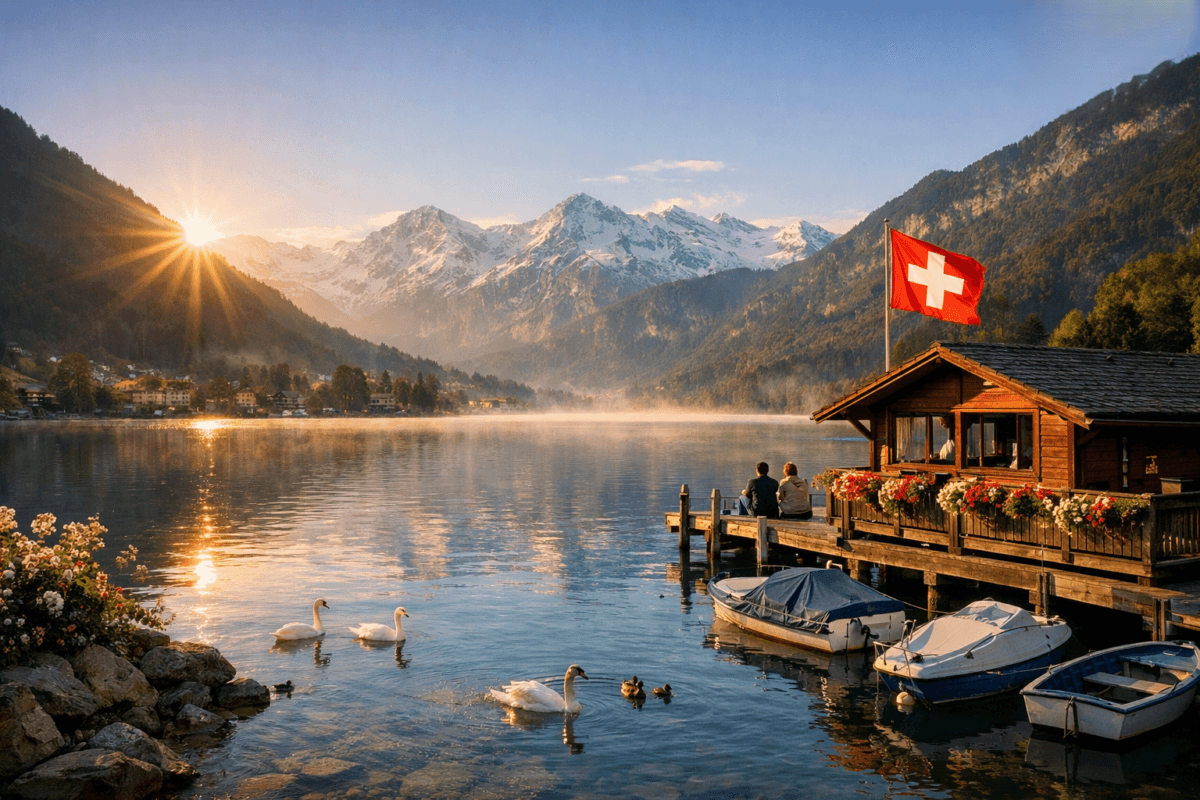
The adventure-sports capital, sitting between Lake Thun and Lake Brienz. This is your base for the Jungfrau region – paragliding, canyoning, and access to Grindelwald and the Schilthorn. It’s touristy, but for good reason. If you’d rather book a guided excursion than plan the logistics yourself, WeGoTrip has a decent range of local, small-group options.
Lauterbrunnen
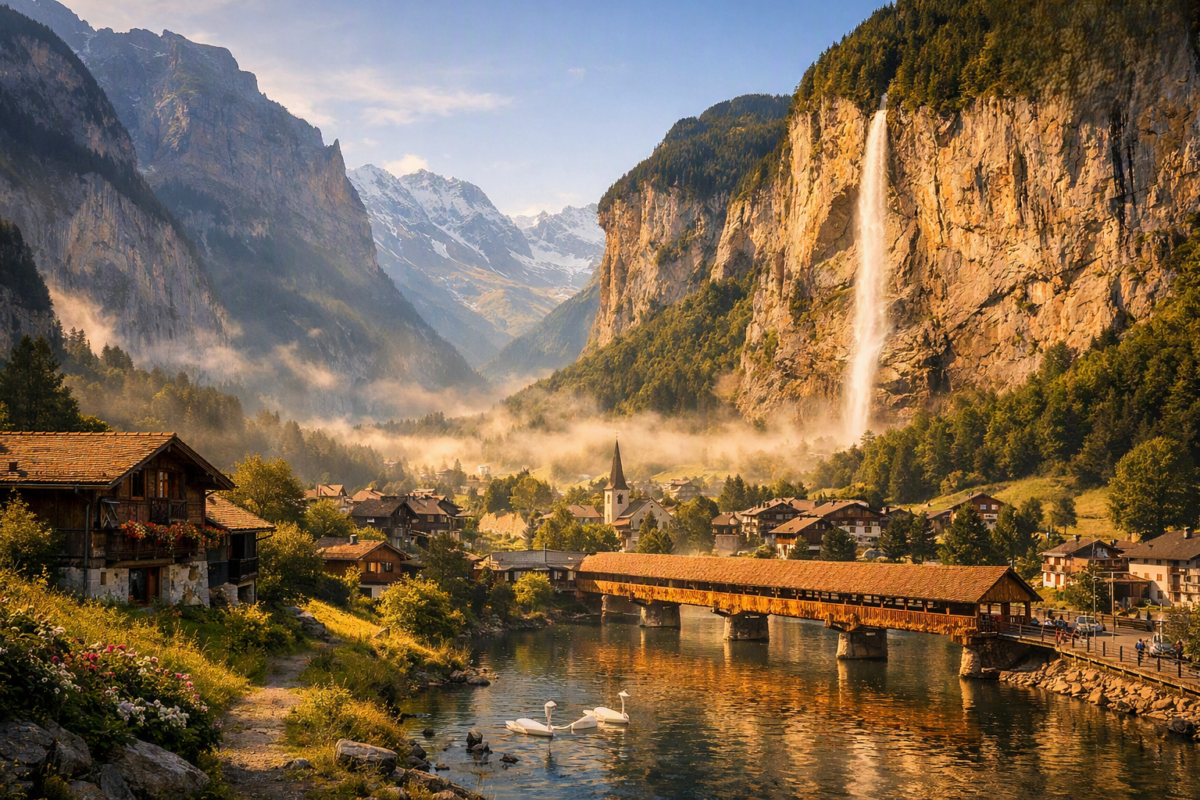
A single valley with 72 waterfalls cascading down sheer cliff faces. It looks unreal in photos and somehow looks even better in person. This is where you go to understand why people fall in love with this country.
Zermatt
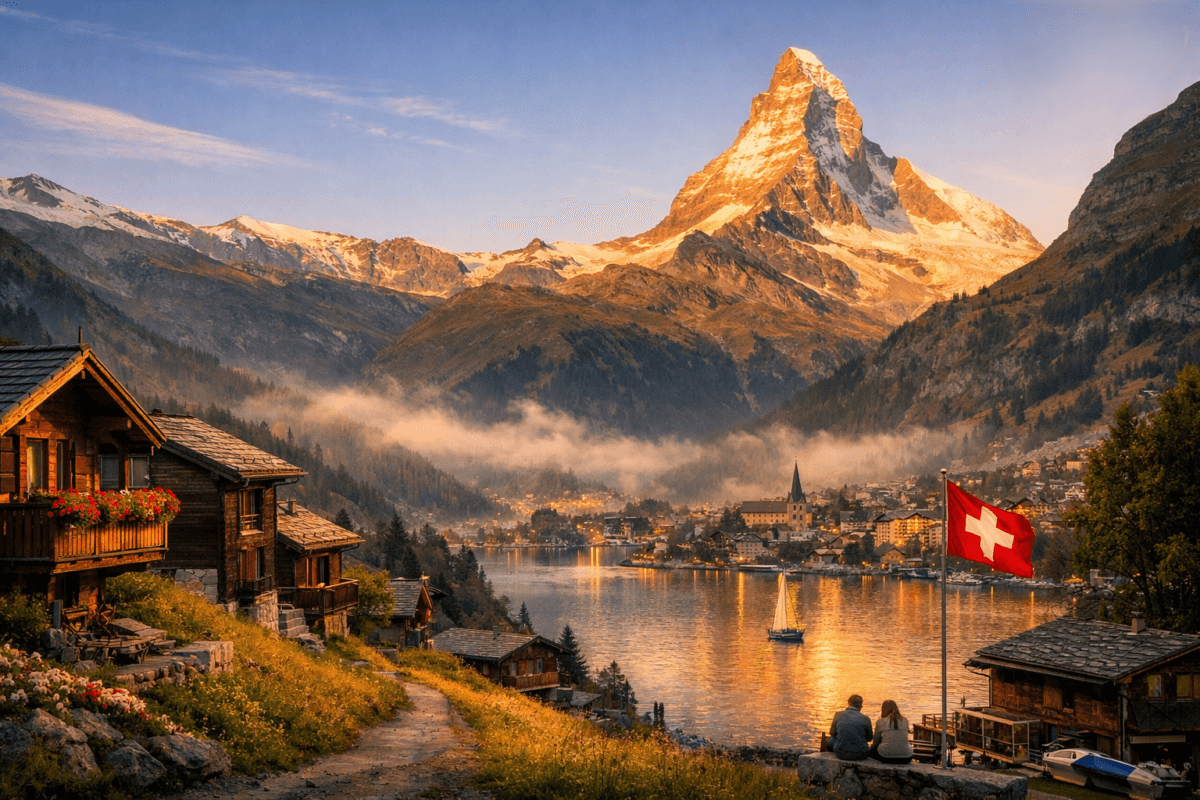
Home to the Matterhorn, and also one of the pricier stops on this list. It’s car-free, so you take a shuttle train in from Täsch. Even on a budget, it’s worth a day trip if the Matterhorn view matters to you – you don’t need to sleep here to see it.
Geneva
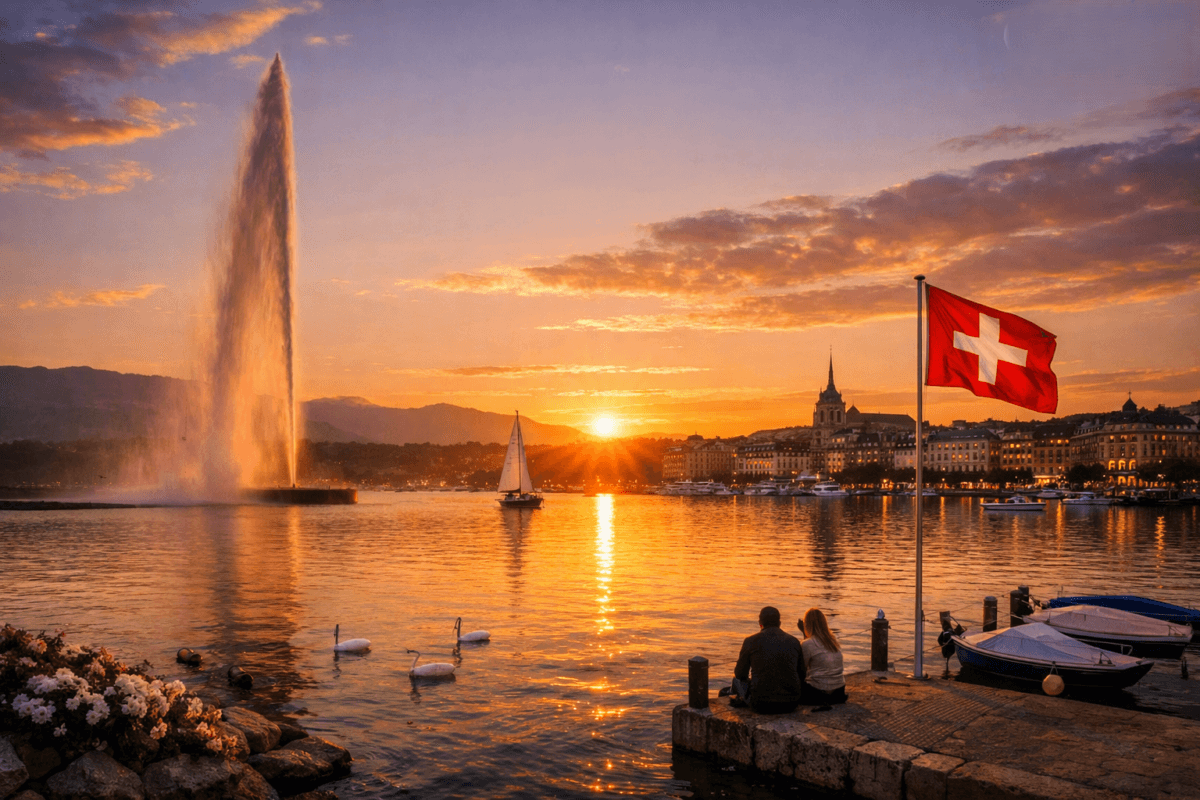
More international, more polished, less “Alps postcard” – but the Jet d’Eau fountain and the old town by the lake are worth a stop, especially if you’re flying in or out of GVA anyway.
Suggested Itinerary
7-Day Switzerland Itinerary
- Day 1–2: Zurich (arrival, old town, lake walk, day trip to Rhine Falls)
- Day 3–4: Lucerne (old town, Mt. Rigi or Pilatus)
- Day 5–6: Interlaken and Lauterbrunnen (waterfalls, cable car up to Grindelwald or Schilthorn)
- Day 7: Return to Zurich or Geneva for departure
10-Day Switzerland Itinerary
- Day 1–2: Zurich
- Day 3: Day trip to Rhine Falls and Stein am Rhein
- Day 4–5: Lucerne (with a day trip to Mt. Pilatus)
- Day 6–8: Interlaken, Lauterbrunnen, and Grindelwald
- Day 9: Zermatt (day trip via Täsch, Matterhorn views)
- Day 10: Geneva before departure
Both itineraries are built around the Swiss Travel Pass windows above – the 7-day trip lines up with an 8-day pass (buy it to start the day before your first travel day), and the 10-day trip fits neatly into the 15-day pass, which as I mentioned is barely more expensive than the 8-day one.
Realistic Daily Budget Breakdown
This is the section everyone actually wants, so here’s the honest number, not a marketing number.
Budget traveler: roughly CHF 120–170 ($150–210) per day
- Accommodation (hostel dorm): CHF 35–55
- Food (grocery breakfast + picnic lunch + budget dinner): CHF 35–50
- Transport: covered by Swiss Travel Pass (averages out to CHF 33–85/day depending on pass length)
- Activities: mostly free (hiking, lakes, old towns) with occasional CHF 20–30 for a cable car discount
Mid-range traveler: roughly CHF 250–350 ($310–440) per day
- Accommodation (3-star hotel or guesthouse): CHF 120–200
- Food (one restaurant meal a day plus casual lunch): CHF 50–80
- Transport: Swiss Travel Pass
- Activities: full-price mountain excursions and the occasional splurge (fondue night, boat cruise)
For a 7-day trip, a realistic total budget traveler spend lands around CHF 900–1,200, not counting flights. For 10 days, expect CHF 1,300–1,700. That’s real money, but it’s a fraction of what most people assume walking in. Before you commit to a route, run your own numbers through our AI travel budget estimator and check current rates on the currency converter so there are no surprises when the franc moves.
Money-Saving Tips That Actually Work
- Grocery stores are your best friend. Migros and Coop are everywhere, and a picnic lunch by a lake beats a CHF 25 sandwich every time.
Insider tip:
Both chains have a “Migros Budget” or “Coop Prix Garantie” line – the orange-and-white packaging. It’s noticeably cheaper than the name-brand stuff right next to it and tastes basically identical. I built entire lunches around this line and never felt like I was missing out.
- Refill your water bottle at public fountains. Switzerland has thousands of them, and unless clearly marked otherwise, the water is drinkable. This alone saves you CHF 3–4 per bottle, multiple times a day.
- Do your “expensive” activities first, free activities as filler. Hiking, lake swimming, and wandering old towns cost nothing and are honestly the highlight of most trips anyway.
- Book hostels with kitchens and actually use them. Cooking even half your meals cuts your food budget by more than half.
- Travel Tuesday–Thursday when possible. Hostel and Airbnb prices dip midweek, especially in touristy towns like Interlaken and Lucerne.
Insider tip:
If you’re doing a day trip from a base city (say, Lucerne to Mt. Rigi), check whether a Saver Day Ticket through the SBB app is cheaper than using your travel pass day for a short hop – sometimes it’s better to save your pass days for the longer legs and buy a cheap point-to-point ticket for the short ones.
- Skip the touristic restaurant strips near train stations. Walk two or three streets back from any main square, and prices drop noticeably for the same quality food.
For more of this kind of thinking, our budget travel hacks hub and our general breakdown of cheap travel in Europe both go deeper than I have room for here, and our list of the best travel apps to save money covers a couple of tools that work particularly well on Swiss trains.
Where to Stay: Hostels vs. Mid-Range
Switzerland’s hostel network is genuinely excellent, not the sketchy backpacker stereotype some countries have. The Swiss Youth Hostels chain (a government-supported network) is reliable across the country, and most cities have at least one solid independent option too. When I’m comparing prices across a few neighborhoods, I usually run everything through Hotellook first, since it pulls rates from several booking sites at once.
Budget hostels in Switzerland
- Zurich Youth Hostel: dorm beds around CHF 55–60, private doubles around CHF 130–140
- Lucerne hostels: dorm beds from CHF 30–45
- Interlaken (Balmers, one of Switzerland’s oldest private hostels): dorm beds from CHF 35–50
- Bern Backpackers: dorm beds around CHF 40, doubles around CHF 100
Most of these include breakfast or at least a usable shared kitchen, which matters more here than almost anywhere else given how food costs stack up.
Mid-range option: if hostels are not your style, look at 3-star hotels or family-run guesthouses just outside city centers – Bern, Basel, and Lausanne run 20–35% cheaper than Zurich or Geneva for comparable quality, and all are well connected by train if you’re using the Travel Pass anyway. And if you’re checking out early but your train isn’t until later, drop your bags at a Radical Storage location near the station instead of paying for a late checkout.
What to Eat (Without Emptying Your Wallet)
Swiss food is heartier than people expect, and it lends itself surprisingly well to budget travel because a lot of the classics are built to be filling and shareable.
- Cheese fondue – best split between two or more people, and worth doing once as a proper sit-down meal
- Rösti – a pan-fried potato dish, often topped with cheese or an egg, and one of the cheapest hot meals you’ll find on a menu
- Raclette – melted cheese scraped over potatoes, another shareable classic
- Älplermagronen – an Alpine mac-and-cheese with potatoes and caramelized onions, usually one of the cheapest items on any mountain restaurant menu
Insider tip:
Mountain restaurants near hiking trails are almost always cheaper than restaurants in the touristy town centers below, because they’re catering to hikers, not tour buses. Order the Älplermagronen at a trailside hut and you’ll pay half of what the same dish costs in a Lucerne restaurant window.
Also – bakeries. A fresh pastry and coffee from a Swiss bakery for breakfast runs about CHF 6–8 and beats a sit-down café breakfast at triple the price.
Common Mistakes First-Time Visitors Make
- Buying the Swiss Travel Pass without mapping out actual travel days first. If you’re mostly staying in one city with a couple of day trips, a shorter pass or the Half Fare Card might serve you better.
- Underestimating how much walking is involved. Old towns are cobblestone, and hikes can be longer than they look on a map. Comfortable shoes are not optional here – check our packing list generator or our ultimate packing list for budget travelers before you leave.
- Assuming every restaurant meal will be brutal. Plenty of casual lunch spots and bakeries are genuinely affordable – it’s the tourist-strip restaurants that inflate the average.
- Skipping flight protection to save money. If your flight into Zurich or Geneva gets delayed or cancelled, a service like AirHelp can help you claim compensation you are often entitled to anyway.
- Not booking popular hostels early enough, especially in Interlaken and Lucerne during peak summer, when the good budget beds sell out weeks ahead.
FAQs
Is Switzerland expensive to visit?
Yes, it’s consistently ranked among the priciest countries in Europe. But “expensive” mostly applies to hotels and restaurants – transport (with a pass), hiking, lakes, and public spaces are either flat-rate or completely free, which is what makes budget travel here more realistic than people assume.
How many days are needed in Switzerland?
Seven days gives you a solid taste of the country’s highlights. Ten days lets you add Zermatt and Geneva without feeling rushed. Anything under five days means picking one region and sticking to it.
What is the best time to visit Switzerland on a budget?
Late April to early June, or September into mid-October. You get good weather, open trails, and noticeably lower accommodation prices than peak summer.
Is the Swiss Travel Pass worth it?
If you are taking more than two or three long train journeys, almost always yes. Map your route first — for short, single-city stays, the Half Fare Card can work out cheaper.
How much does Switzerland cost per day?
Budget travelers can expect CHF 120–170 ($150–210) per day. Mid-range travelers should plan for CHF 250–350 ($310–440) per day, not including flights.
Are there budget hostels in Switzerland?
Yes – the Swiss Youth Hostels network plus independent hostels in Zurich, Lucerne, Interlaken, and Bern offer dorm beds from roughly CHF 30–60 a night, often including breakfast or kitchen access.
Final Thoughts
Switzerland travel guide content out there tends to make the country sound like it’s reserved for a certain budget bracket, and that’s just not the full picture. Yes, you’ll spend more per day here than in most of Europe. But between the free hiking, the drinkable public water, the grocery store picnics, and a well-planned Swiss Travel Pass, this is one of those places where a modest budget still buys you an enormous amount of experience.
Have you done Switzerland on a budget before? I’d genuinely love to hear what worked for you – drop your own tips, favorite hostels, or questions in the comments below, or get in touch directly if you’re mid-planning and stuck on something specific.
More Budget Travel Guides
- 10-Day Italy Itinerary on a Budget
- Norwegian Fjords Travel Guide
- Portugal Budget Travel Guide
- Browse all Destination Guides
Hidden Travels Team | @hiddentravels.site