
Affiliate Disclosure: Some links in this post are affiliate links. We earn a small commission if you book through them, at no extra cost to you. We only recommend services we’ve actually used or genuinely trust.
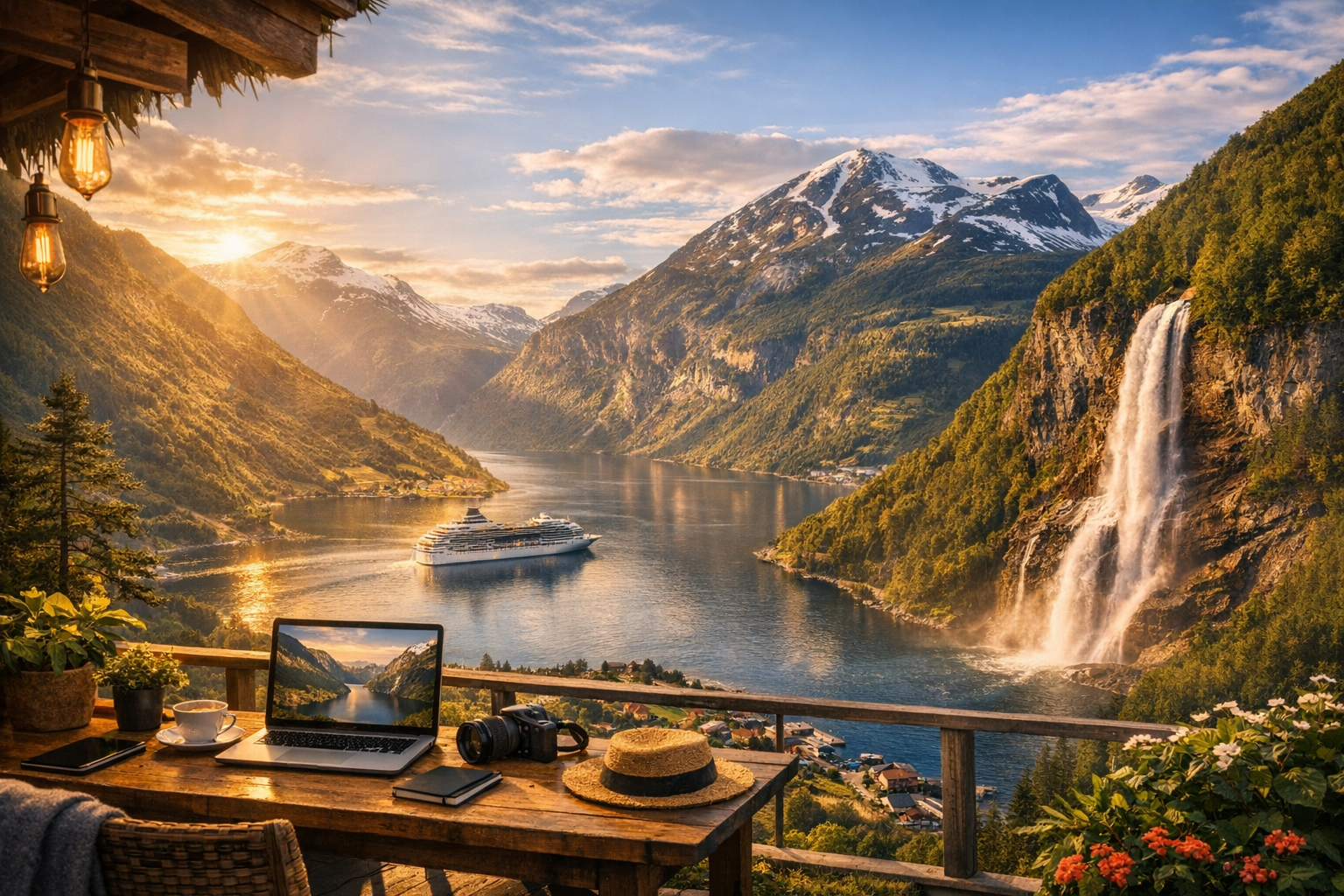
The ferry left Geiranger at 7am, when the valley was still sitting in shadow and the walls of the fjord rose 1,400 metres on both sides to summits that the sun had not reached yet. The Seven Sisters waterfall was running hard from the snowmelt above, seven separate streams dropping 250 metres into the fjord, catching the early light and turning briefly iridescent before they fell.
There were maybe thirty people on the upper deck, and none of them were talking. We had been talking when we boarded, the way people do when they are waiting for something to start. Then the fjord happened, and the talking stopped, and it did not really start again until we rounded the first bend and the valley opened further and the whole scale of the thing made conversation feel like the wrong response.
That’s the Norwegian fjords in one sentence: a scale that stops conversation. Not scale in the abstract, statistical sense, though the numbers are genuinely extraordinary (Sognefjord runs 204 kilometres inland and drops to 1,308 metres in places; Nærøyfjord narrows to just 250 metres across at its tightest point). It is scale in the physical sense, the kind that quietly resets how large you think you are.
Norway has 1,190 fjords by official count, spread along a coastline that, unfolded, would stretch about halfway around the equator. They are UNESCO World Heritage Sites, records of the last ice age, working ferry routes, fishing communities, and some of the best hiking terrain in Europe. All of it is reachable by train, ferry, and coastal road if you are willing to make the trip north.
This guide covers what you actually need to plan a trip: the Norwegian fjords worth prioritising, the best routes between them, what things really cost, and a few of the moments that make Norway worth the expense. Before you get into the planning, it’s worth checking conditions at your specific destinations with a weather checker and getting a sense of what Norway’s notoriously high prices will mean in your own currency with a currency converter.
What actually makes these fjords different
A fjord is a glacially carved valley that flooded when the ice retreated at the end of the last ice age. In Norway, where the ice sheets were kilometres thick and the coastal mountains were already steep, the glaciers cut with unusual force, carving U-shaped valleys so deep that in places they exceed the height of the peaks around them. The result is a landscape of vertical walls, hanging valleys, and mountain lakes that drain straight into salt water as waterfalls.
What that means in practice: you can be looking at water 600 metres deep, with mountains rising 1,400 metres on either side, in a channel only 250 metres wide. The water carries the colour of glacial melt, green near the surface, black in the depths, streaked with reflections of the walls above. And everything feels close. Unlike most mountain landscapes, which you view from a distance, fjords put you inside the geography. You’re on a ferry between walls too high to comfortably look up and see the top of, and there’s nothing in Europe quite like it.
The thing photos never capture is the quiet. Between the waterfalls and the ferry engines, the fjords have a stillness that belongs to very enclosed spaces. The walls seem to absorb sound rather than bounce it back, and even on a busy summer day the ferry moves through a kind of silence that the mountains simply impose.
Local note: the fjords themselves were carved during the last ice age, roughly 110,000 to 10,000 years ago, but the rock on either side is far older. Much of it is Precambrian basement rock, somewhere between 900 million and 1.6 billion years old. Standing at the edge of a fjord, you are looking at walls older than the first complex multicellular life on Earth. Norway has a way of making geological time feel physical, which is unusual even for a country full of ancient landscapes.
The Fjords Worth Building a Trip Around
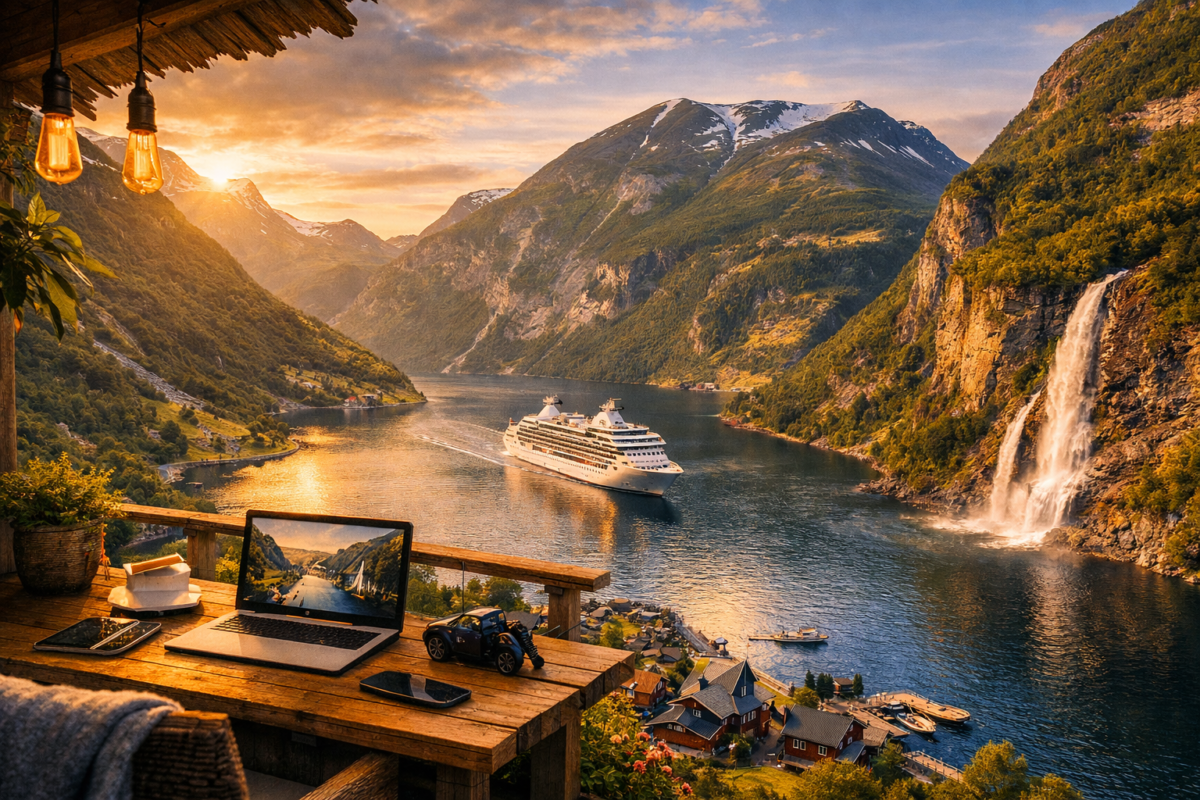
Geirangerfjord, Western Norway (UNESCO World Heritage)
Geirangerfjord is Norway’s most visited fjord, and the one that most reliably produces genuine disbelief in first time visitors. It runs fifteen kilometres, drops to 500 metres deep, and is flanked by walls rising 1,400 metres, with three of Scandinavia’s most photographed waterfalls (the Seven Sisters, the Suitor, and the Bridal Veil) falling from hanging valleys at heights of 250 to 410 metres.
The village of Geiranger has around 250 permanent residents and takes in roughly 700,000 visitors a year, which tells you most of what you need to know about the summer crowds. The fix is simple: go early. The morning ferry from Hellesylt to Geiranger takes 75 minutes, costs about NOK 250 per person, and leaves at 7:30am, well before the cruise ships have raised anchor.
Above the village, two roads offer very different views. The Ørnesvingen (Eagle’s Road) climbs eleven hairpin bends to a plateau with the whole fjord visible below. The Nibbevegen toll road climbs to 1,476 metres, the highest fjord viewpoint in the region, where you can see both Geirangerfjord and Sunnylvsfjord at once, with the Sunnmøre Alps behind them.
The best sequence, if you only have one day: catch the 7:30am ferry from Hellesylt, watch the waterfalls in morning light from the forward deck, spend a couple of hours in the village, then drive up to the Ørnesvingen viewpoint before the day-trippers arrive around noon.
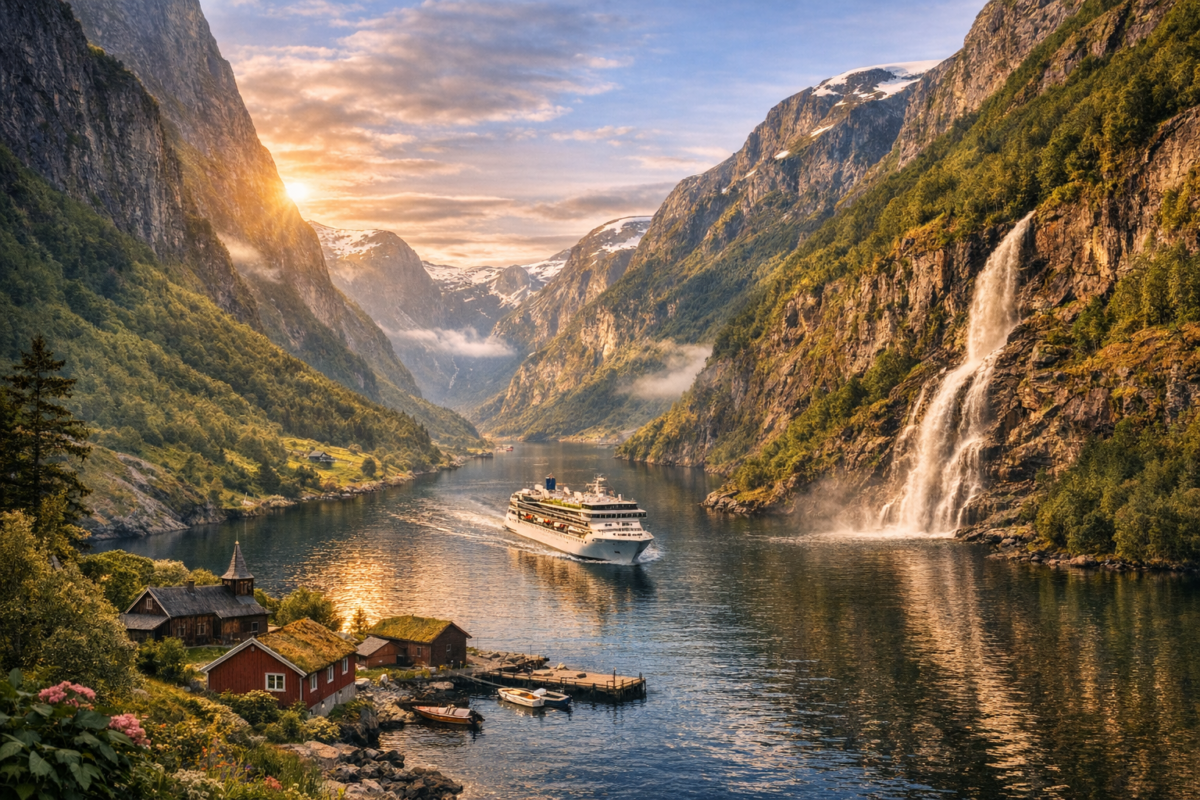
Nærøyfjord, Western Norway (the narrowest UNESCO fjord)
Nærøyfjord is a seventeen kilometre arm of Sognefjord, and UNESCO considers it the most scenically outstanding fjord in the world. Its defining feature is narrowness. At the tightest point, the walls are 250 metres apart and rise 1,700 metres on both sides. The small passenger ferry between Gudvangen and Flåm is the most enclosed fjord experience in Norway, more like moving through a slot canyon filled with cold water than anything resembling open sea.
Nærøyfjord is the centrepiece of the Norway in a Nutshell route, the classic combination of the Bergen Railway, the Flåm Railway, this ferry, and a connecting bus that gives most first time visitors their introduction to fjord Norway in a single day. The Flåm Railway alone, a 20km rack railway descending 866 metres through 20 tunnels past the Kjosfossen waterfall, is worth the trip on its own.
Sit on the deck rather than inside if you can. The fjord walls close in gradually, and watching that happen at water level, rather than through a window, is most of the point.
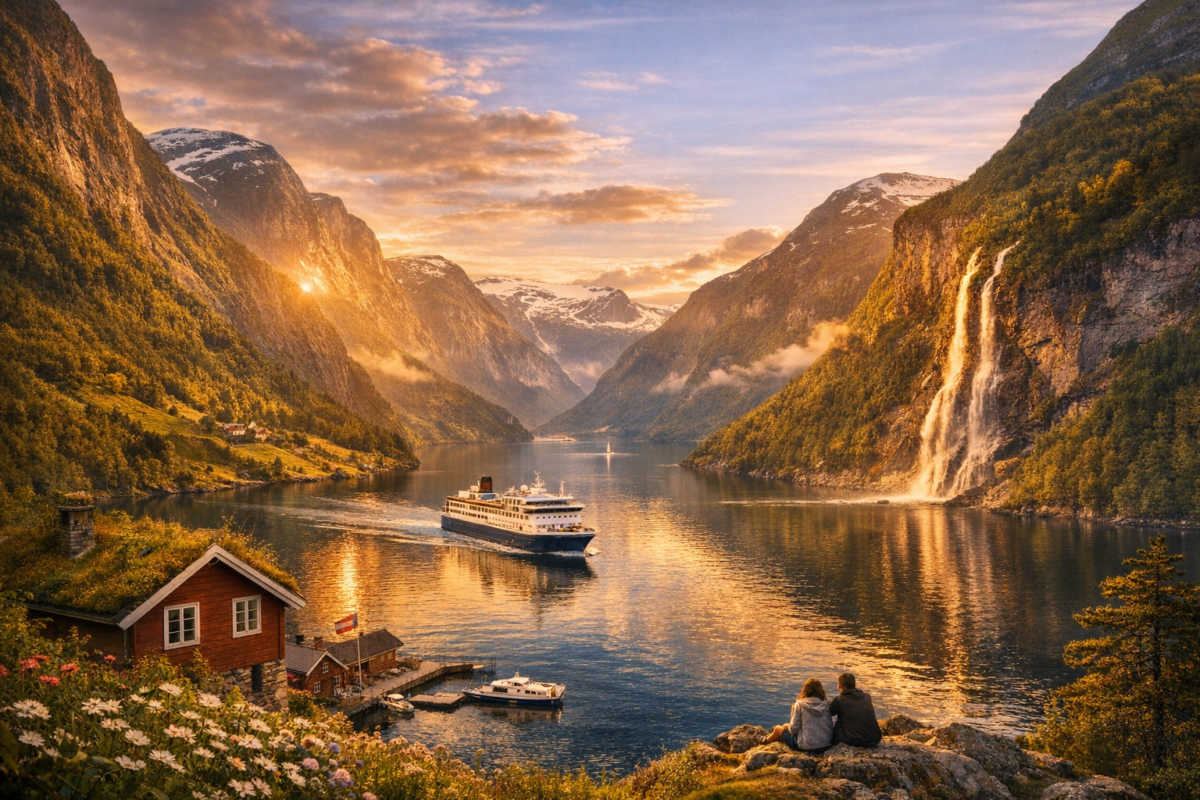
Sognefjord, Western Norway (the longest fjord)
Sognefjord is Norway’s longest fjord and the second longest in the world, 204 kilometres from the North Sea to the inland town of Skjolden, with depths reaching 1,308 metres. The scale here is continental rather than local. This is a body of water with its own weather systems, one the Vikings used as an inland highway for a thousand years.
It’s better explored over several days than as a single crossing. The inner arms (Lusterfjord towards the Jotunheimen mountains, Aurlandsfjord and Nærøyfjord where things narrow dramatically, and the orchard-lined shore near Sogndal and Leikanger) each have their own character. If you have a car, driving the Sognefjellet road from Skjolden to Lom, which climbs to 1,434 metres and is the highest mountain pass road in Norway, gives you the full transition from fjord to alpine plateau in one drive.
Kayaking on Sognefjord is one of the better paddling experiences in Europe. The water is sheltered and still in most sections, sea eagles circle overhead, and guided tours run out of Flåm and Aurland from May through September with no experience required.
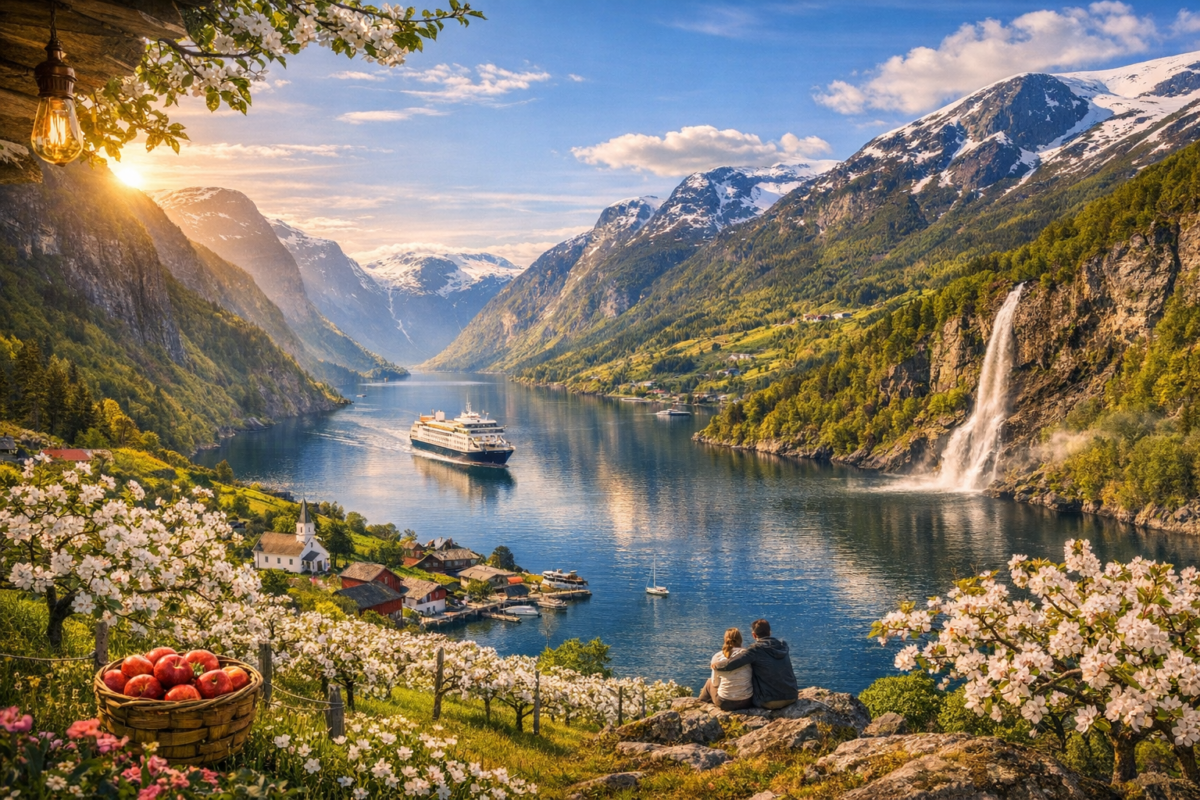
Hardangerfjord, Western Norway (the orchard fjord)
Hardangerfjord is Norway’s second longest fjord at 179 kilometres, and its most agriculturally productive. The warm microclimate the fjord walls create supports one of the country’s main fruit growing regions, and in late April and early May the apple and cherry blossoms along the water draw visitors just for that.
The character here is softer than Geiranger or Nærøyfjord: lower walls, a wider valley, more accessible villages, which makes it a good base for multi-day hiking. Above it sits the Hardangervidda, Europe’s largest mountain plateau at 8,000 square kilometres, crossed by the Bergen Railway.
The Trolltunga hike, a ten hour, 28km round trip to a rock outcrop jutting 700 metres above Ringedalsvatnet lake, starts from Skjeggedal on the Sørfjord arm and is one of Norway’s three great hikes, alongside Preikestolen and Kjerag. The view from the plateau, fjord system stretching below and the Folgefonna glacier on the horizon, is genuinely worth the effort.
A serious caution here: Trolltunga has caused multiple fatalities among unprepared visitors. It’s an 8 to 12 hour round trip with 800 metres of elevation gain on terrain that turns steep and rocky in places, and weather can change fast. Do not attempt it without proper gear, food, and water, and book a guided hike if you are new to this kind of trail.
Lysefjord and Preikestolen, Western Norway (the pulpit rock)
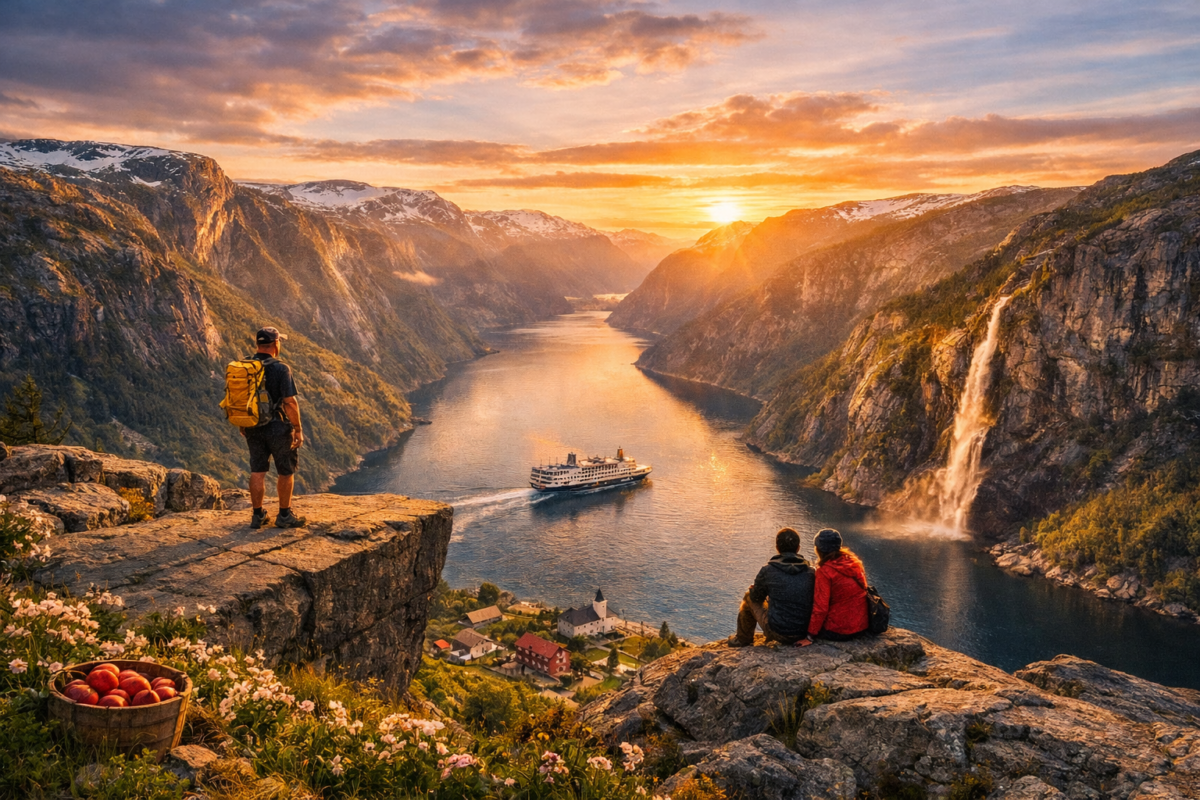
Lysefjord does not have the length or depth of the western fjords, but it has Preikestolen, a flat topped granite cliff 604 metres above the water and Norway’s most visited natural attraction. The hike is 8km round trip with 330 metres of elevation gain, two to three hours each way on a well maintained but rocky trail, ending on a bare rock platform roughly 25 by 25 metres.
There is no fence and no barrier. The drop is genuinely vertiginous, and most people who reach the top stay far longer than they planned to. Preikestolen is reachable by ferry from Stavanger to Tau (45 minutes), then a bus to the trailhead. Go early. The trail gets crowded by mid morning in summer, and the viewpoint itself can hold over a hundred people at peak times.
For something less crowded and harder, Kjerag, in the same fjord system, has a boulder wedged in a crack 984 metres above the water. The photo of someone standing on it is one of the most recognisable outdoor shots in Norway, and the hike to reach it is a ten hour round trip.
Hjørundfjord, Western Norway (the one most people drive past)
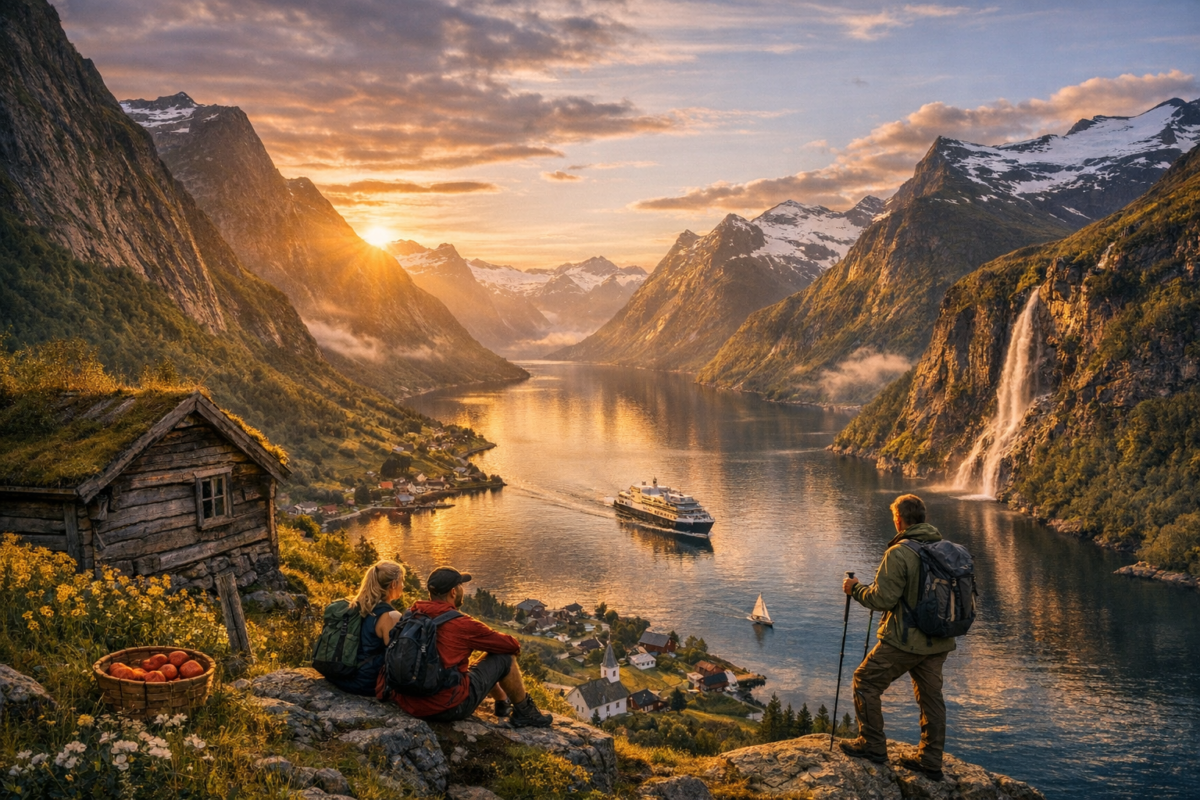
Hjørundfjord sits within thirty kilometres of Geiranger, and most visitors never turn off toward it, which is a mistake. The Sunnmøre Alps rising above it are Norway’s most dramatic alpine range, and the fjord sees a fraction of Geiranger’s visitor numbers, with no cruise ships and a ferry service used mainly by locals.
The Stårheim ferry from Hellesylt runs into the fjord and delivers the walls, the waterfalls, and the silence without the managed crowd experience. Above it, the hike to Slogen (six hours round trip, 1,564 metres) is one of Norway’s finest ridge walks and is rarely done by anyone who isn’t Norwegian.
Worth knowing: Hjørundfjord was a filming location for the second season of HBO’s The Last of Us, chosen specifically because it looked like untouched wilderness rather than a known destination. That’s likely to change as word gets out, so it is worth visiting sooner rather than later.
Activities beyond the Ferry Deck
Norway’s three signature hikes (Preikestolen at 604 metres, Trolltunga at 700 metres, and Kjerag at 984 metres) all require no technical climbing and reward you with some of the finest mountain views in Europe on a clear day. Beyond those three, the Romsdalseggen Ridge (a 10km, seven hour ridge walk with 360 degree views), Reinebringen above Reine in Lofoten, and the Besseggen Ridge in Jotunheimen are all extraordinary and considerably quieter.
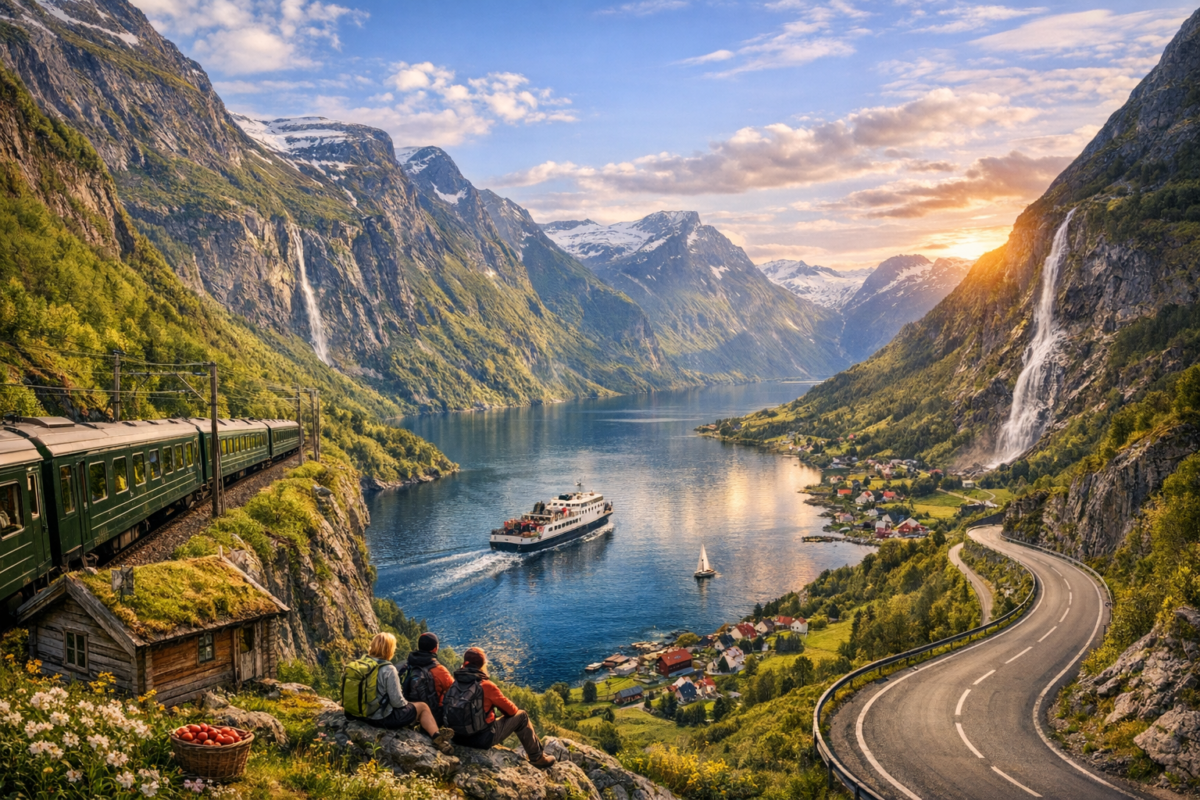
The Norway in a Nutshell route remains the most efficient way to see a lot of this in a short time: Bergen Railway to Myrdal, the Flåm Railway down to Flåm, the Nærøyfjord ferry to Gudvangen, then a bus onward. The full Oslo to Bergen version takes two days and runs roughly NOK 1,200 to 2,000 including the ferry, and can be booked directly through Norway’s rail operator.
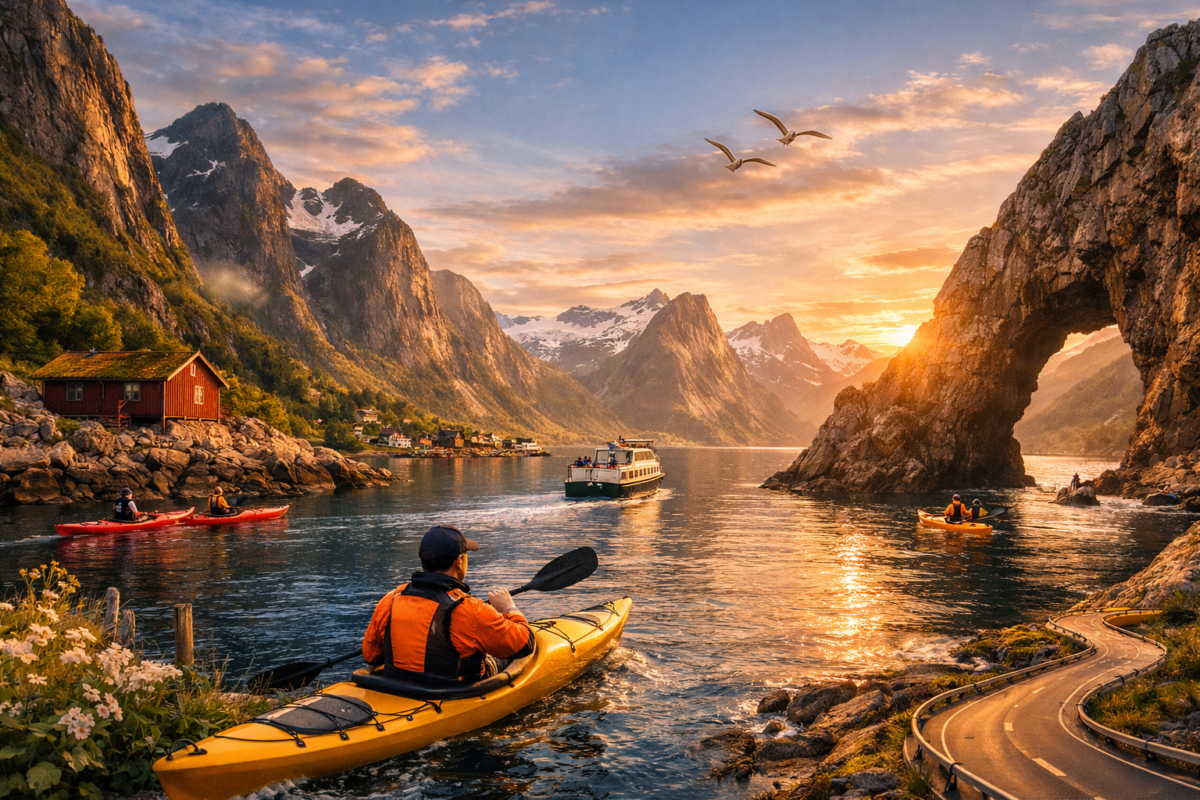
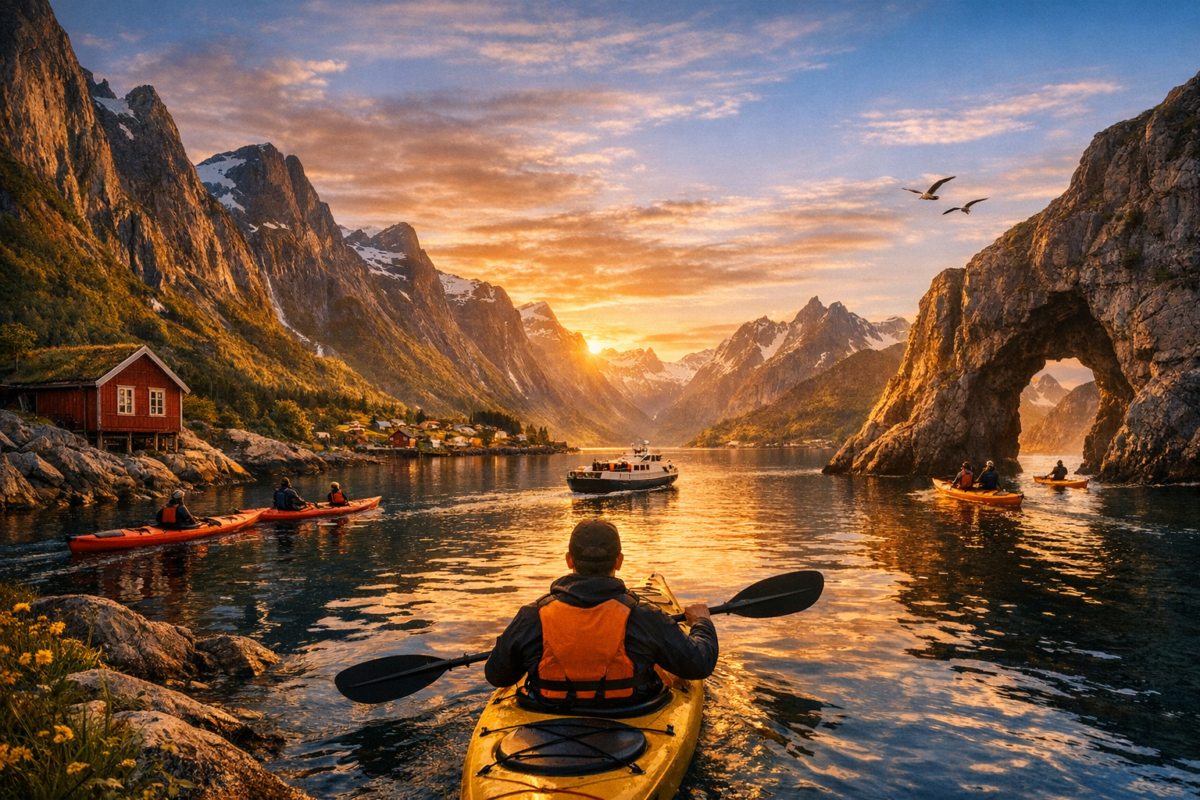
Sea kayaking gives you a completely different vantage point, at water level with the walls a metre away and waterfall spray reaching the boat. Guided tours run out of Flåm, Geiranger, and Aurland, with sheltered inner sections suitable for complete beginners.
For northern lights, the fjord region sits just below the main auroral zone, so Tromsø, Lofoten, or Svalbard are better bets for reliable viewing. That said, strong solar activity occasionally brings the aurora as far south as Bergen, and the fjord villages’ lack of light pollution makes them decent viewing spots when conditions align, particularly in September and October.
Anyone looking for something unusual should consider the Via Ferrata at Loen in the Nordfjord area, a guided climbing route on the cliff face above Loenvatnet lake with the fjord and glacier visible below. No experience needed, all equipment provided, and it runs three to four hours for around NOK 900 per person.
The Hurtigruten coastal voyage
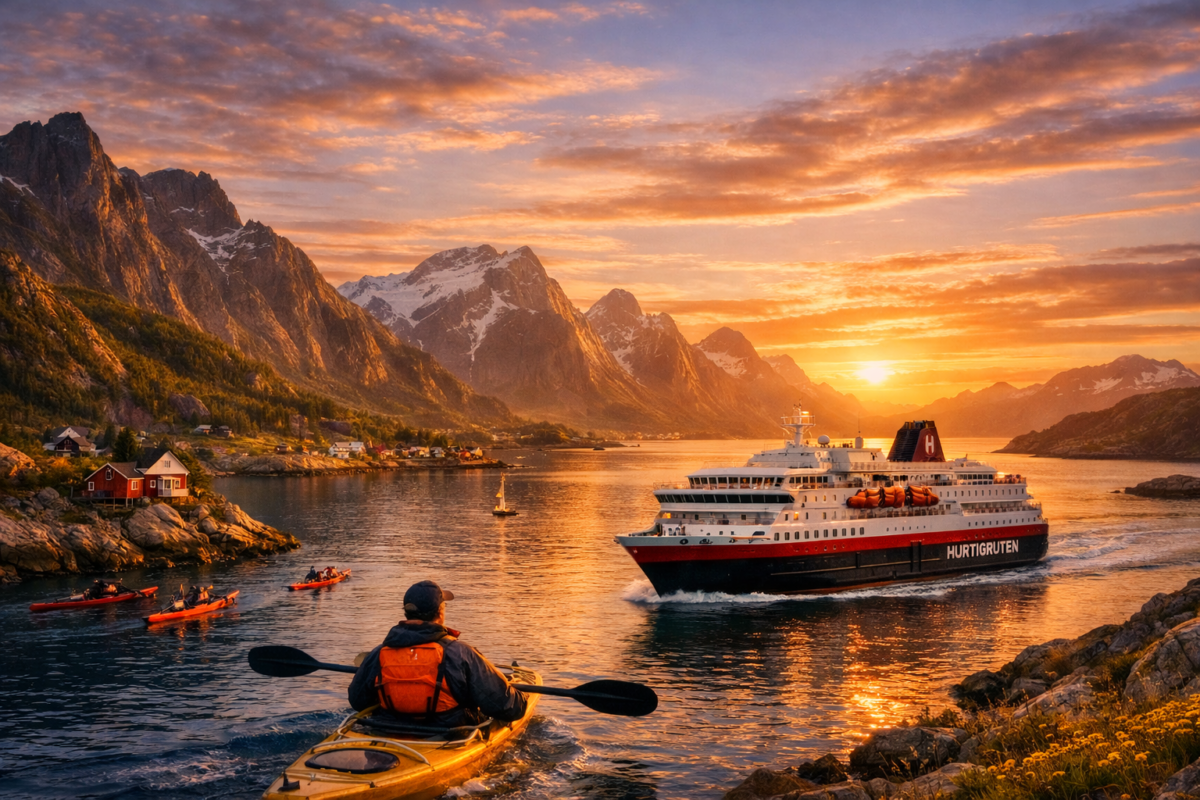
The Hurtigruten has connected Bergen to Kirkenes, near the Russian border above the Arctic Circle, since 1893. It’s a 2,500km, twelve day voyage stopping at 34 ports, passing through dozens of fjords, and crossing the Arctic Circle. It is not a cruise ship in the usual sense. It still carries mail, cargo, and Norwegian passengers alongside tourists, which gives it a working vessel character that’s hard to find elsewhere.
The full Bergen to Kirkenes voyage runs NOK 15,000 to 30,000 or more per person including cabin and meals. Shorter segments, like Ålesund to Bergen or Tromsø to Bergen, offer the same fjord and coastal scenery at a fraction of the cost. Winter sailings (December to February) are best for the aurora, and summer sailings (June to July) bring the midnight sun.
Getting there, getting around, and what it actually costs
Getting to Norway
Bergen is the main entry point for the southern fjords, with direct flights from London, Amsterdam, Frankfurt, and several other European cities. Oslo has more options for transatlantic routes. We usually check Aviasales first for fares into either city, since it pulls from a wide range of airlines rather than just the big names. For the northern fjords and Lofoten, Ålesund, Trondheim, and Tromsø are the regional airports to look at.
Getting Around the Fjords
The fjord region runs on a mix of car ferries, passenger ferries, express boats, and buses. A rental car opens up a lot more, especially the scenic mountain passes like Sognefjellet, Trollstigen, and Ørnesvingen, which aren’t accessible any other way. We have generally had good luck comparing prices through GetRentACar rather than booking directly with one provider. Keep in mind that car ferry crossings typically run NOK 80 to 200 per vehicle, and that adds up over a multi-fjord itinerary.
What Norway Costs
Norway is genuinely one of the more expensive countries in Europe to visit, but the costs are manageable with the right approach.
- Accommodation: hostel dorm NOK 250 to 450 a night; guesthouse NOK 800 to 1,400; hotel NOK 1,200 to 2,500
- Food: a restaurant lunch runs NOK 180 to 300, dinner NOK 300 to 600 without wine
- Self-catering from Rema 1000 or Kiwi, the two budget supermarket chains, costs about 1.5 to 2 times UK grocery prices but keeps daily spending down considerably
- Bergen to Oslo train, booked ahead: NOK 299 to 799
- Nærøyfjord ferry: NOK 350 to 500 per person
- Preikestolen hike: free, aside from the NOK 170 ferry from Stavanger to Tau
The reputation for expense mostly comes down to restaurants, hotels, and alcohol. Self-catering, staying in hostels or guesthouses, and buying wine from Vinmonopolet (the state off licence, noticeably cheaper than restaurant prices) brings daily costs down to something reasonable. If you want a clearer sense of what a full trip will run you, our AI travel budget estimator is worth running your dates through before you book anything.
Connectivity in the Fjords
Coverage is solid across most fjord villages and main roads but drops out inside some of the deeper valleys and on remote trails, so it’s worth downloading offline maps in advance for anywhere off the beaten path. For a Norway or wider Scandinavia eSIM, we’ve used Airalo without any issues.
Travel Insurance
Hiking, kayaking, and ferry travel all warrant proper adventure activity cover, and medical costs for uninsured visitors in Norway aren’t cheap. We’d recommend checking a policy like Ekta Travel Insurance that explicitly covers hiking and water activities before you commit to anything like Trolltunga or a kayak tour.
Accommodation Booking
Pricing for the same room can vary a fair amount between booking platforms in Norway, so it’s worth comparing before you commit, which is generally where we start when looking at options across the region.
Best Time to Visit Norwegian Fjords
May to June, ideally: waterfalls running at full force from snowmelt, fewer crowds than July, wildflowers in the valleys, and long daylight hours. The Hardangerfjord blossom season, late April into mid-May, is spectacular on its own.
July, peak season: the best weather statistically, maximum daylight including the midnight sun north of the Arctic Circle, and the highest crowds and prices. Book ferries and accommodation months in advance if you’re going this time of year.
August to September, a good compromise: crowds start thinning from mid-August, autumn colour begins in September, and aurora sightings start becoming possible. Still warm enough for hiking and kayaking.
October to November: aurora viewing improves in the north, the light on the fjords turns dramatic, and most tourist infrastructure shuts down for the season. Best suited to dedicated aurora chasers.
Winter (December to March): the snow-covered villages are beautiful in their own right, with skiing, aurora viewing, and winter hiking as the main draws. Ferry schedules shrink considerably, and this isn’t a season for underprepared travellers.
Whichever season you’re aiming for, it’s worth checking a weather checker specifically for the days you plan to hike Trolltunga or Preikestolen. Both require clear conditions to be worthwhile, since cloud and rain at the top cut visibility to almost nothing and make the exposure genuinely risky. Building in two or three potential hiking days gives you room for weather delays.
A few common questions
Which Norwegian fjord is the most beautiful?
Nærøyfjord has the most dramatic narrow-fjord geometry and the UNESCO recognition to go with it. Geirangerfjord has the most iconic waterfalls. Hjørundfjord has the best mountain backdrop. Honestly, they’re each extraordinary in different ways, and most experienced Norway travellers have this exact conversation without ever agreeing on an answer, which says something about the region as a whole.
How many days do you need for the Norwegian fjords?
Five days covers the Norway in a Nutshell route plus Preikestolen and a day in Bergen. Seven adds Geiranger and the Trollstigen road. Ten gives room for a serious Trolltunga attempt and time in Hardangerfjord or Hjørundfjord. Two weeks opens up the Lofoten islands, which many well-travelled visitors consider the single most beautiful part of the country, and deserve at least four days on their own.
Is Norway realistic on a budget?
More than the reputation suggests, if you plan around it. The Norway in a Nutshell route booked ahead runs about NOK 1,500 to 2,000 per person including all transport. Preikestolen is free to hike. The Geiranger ferry is NOK 250. The real expenses are accommodation and restaurants, both of which you can manage by staying in hostels, self-catering, and treating restaurant meals as occasional rather than daily. Budget around NOK 800 to 1,200 a day for frugal travel in the fjord region.
Do I need a visa for Norway?
Norway is in the Schengen Area but not the EU. US, Canadian, UK, Australian, and EU passport holders can visit visa-free for 90 days. UK travellers post-Brexit fall under the general Schengen visa-free rules rather than a separate bilateral agreement, so check current requirements with Norway’s immigration directorate before you travel.
What should I actually eat in Norway?
Brunost, a sweet, caramel-like brown goat’s cheese eaten on bread at breakfast, is worth trying even if it sounds odd on paper. Gravlaks, cured salmon with dill and mustard sauce, is some of the best you’ll find anywhere. Rakfisk, fermented trout, is a deeply traditional dish that isn’t for everyone. And vafler, heart-shaped waffles with brunost and sour cream, sold at nearly every fjord café for NOK 40 to 60, are reliably excellent.
Can I see the northern lights from the fjord region?
Occasionally, during strong solar activity, the aurora is visible around Bergen. For anything reliable, you’d want to head north to Tromsø, Lofoten, or Svalbard, where the polar night even makes daytime aurora sightings possible in midwinter. September through March covers the season, with the equinox months often producing the strongest displays.
The Fjords Change What You Think Scenery is Capable of
There is a specific thing that happens to most people the first time they see a Norwegian fjord. It happens on a ferry, or from a viewpoint, or at the start of a hike when the fjord first appears below the ridge, and it is not quite what they expected. They expected to be impressed. Instead, they find themselves put in their place.
The scale does that on its own. The walls are 1,400 metres high, you’re standing at the bottom of them, and they don’t care about you at all, in the specific way that very old, very large things simply don’t. The fjord has been there since before humans existed and will be there long after we’re not. The waterfall dropping 250 metres into the water has been falling since the ice age ended and will keep falling long after everyone reading this is gone.
That’s not a depressing thought. For most people it’s one of the more clarifying things travel can offer. You show up with all the usual concerns of an ordinary life, and the landscape sets them aside for a while and shows you the longer view. That’s worth quite a lot, and it’s why people put this trip on a list and actually mean it.
If you are planning your own Norway trip, our weather checker and packing list generator are worth a look before you go, and our guide to Europe’s most scenic train journeys covers the Flåm Railway and a few others in more depth if rail travel is part of your plan.
Frem og tilbake er like langt. There and back is the same distance.
Hidden Travels Team