
⚠️ Affiliate Disclosure: Some links in this post are affiliate links – we earn a small commission if you book through them, at no extra cost to you. We only recommend services we personally use and trust.
Let me tell you the thing that took me three visits to Vancouver to figure out. Every travel guide to this city tells you the same six things: Stanley Park, Granville Island, Capilano Suspension Bridge, Grouse Mountain, the seawall, and Gastown. All of them are perfectly decent. None of them are the reason Vancouver’s residents love this city with the kind of specific, proprietorial affection that makes them slightly annoyed when you suggest anywhere else might be better.
The reason they love it – the actual reason – is the version of Vancouver that sits between those famous attractions. The mountain trail that starts at the end of a residential street in North Vancouver and climbs through old-growth Douglas fir to a ridge with views that make your chest feel too small. The dim sum restaurant in Richmond that has been there for thirty years and has a queue every Sunday morning even though it’s fifteen minutes from the nearest tourist neighbourhood. The night market on a Friday in summer where three hundred vendors sell hand-pulled noodles and mango with chilli and phone cases and knock-off trainers and the whole thing smells of grilled corn and rain.
I’ve lived in Vancouver for long stretches and visited more times than I can count, and I’ve never once heard a Vancouverite say that Capilano Suspension Bridge is their favourite thing in the city. This guide is my attempt to give you the Vancouver that locals actually love – the 15 things that most travel blogs either miss entirely or bury under the same recycled list of obligatory attractions.
Some of the famous things are here too, because they are worth doing. But with the specific, slightly subversive angle that makes them actually worth the visit rather than a box to check.
Pro Tip: Build your Vancouver trip budget and convert CAD to your home currency using our AI Travel Budget Estimator and Live Currency Converter before you book flights.
Why Vancouver Deserves More Than a Long Weekend
Vancouver is a city that most international visitors underschedule. They arrive with three days between connecting flights or on the way to Whistler, see the harbour, eat some salmon, and leave with a polite impression of a pleasant city. They’ve missed everything.
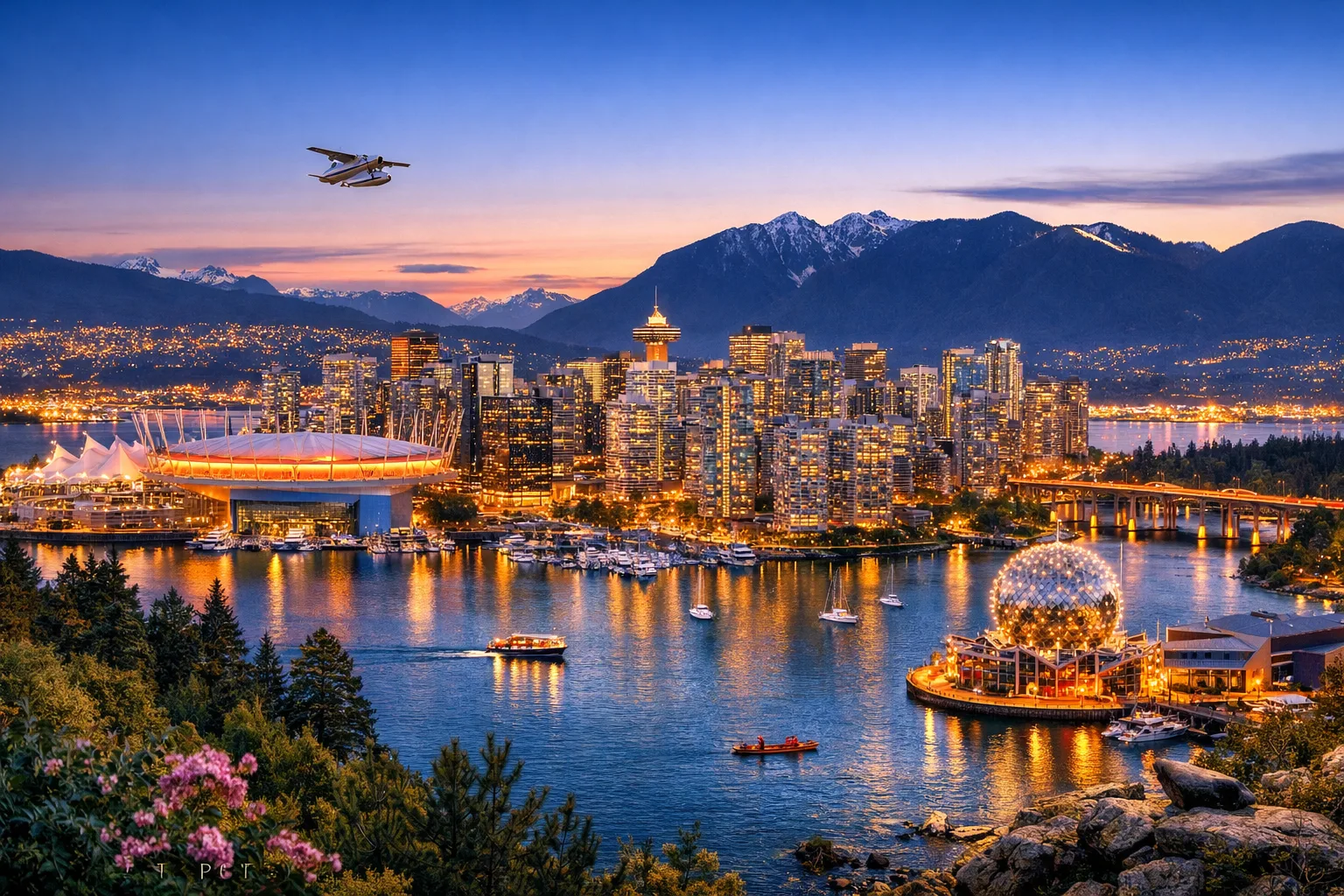
What Vancouver actually is: a city of 600,000 people (2.5 million in the metro area) squeezed between the Pacific Ocean to the west, the Coast Mountains to the north, and the Fraser River to the south – a geography so relentlessly dramatic that the backdrop of every neighbourhood is either mountain or water or both. The mountains are not decorative. They are genuinely, immediately accessible: the ski runs at Cypress Mountain are visible from downtown; the hiking trails on the North Shore can be reached by bus from the city centre in 40 minutes.
The food is outstanding and diverse in a way that reflects a city where over half the population was born outside Canada. The best dim sum in North America is in Richmond. The best Japanese ramen outside Japan is on Robson Street. The best Vietnamese noodles on the continent are in a strip mall in East Vancouver that has no English-language sign. The Indigenous cultural institutions – the Museum of Anthropology, the cultural centres of the First Nations communities of the region – are among the finest in the world.
Five days is the minimum to scratch the surface. A week is better. Two weeks opens the city fully, and by then you will understand why so many people who come for a year end up staying for the rest of their lives.
Local Insight: Vancouver has a distinctive expression for the low overcast that sits over the city for much of November through March: the grey. Locals don’t talk about it much because complaining about the weather is considered mildly embarrassing. But if you are visiting in winter, dress accordingly – the city is not cold (rarely below 5°C at sea level) but it is wet and grey in a way that rewards waterproofs and discourages optimism about what the sky is going to do next.
15 Things to Do in Vancouver That Actually Reflect the City
1. Hike the BCMC Trail to the Top of Grouse Mountain – Skip the Gondola
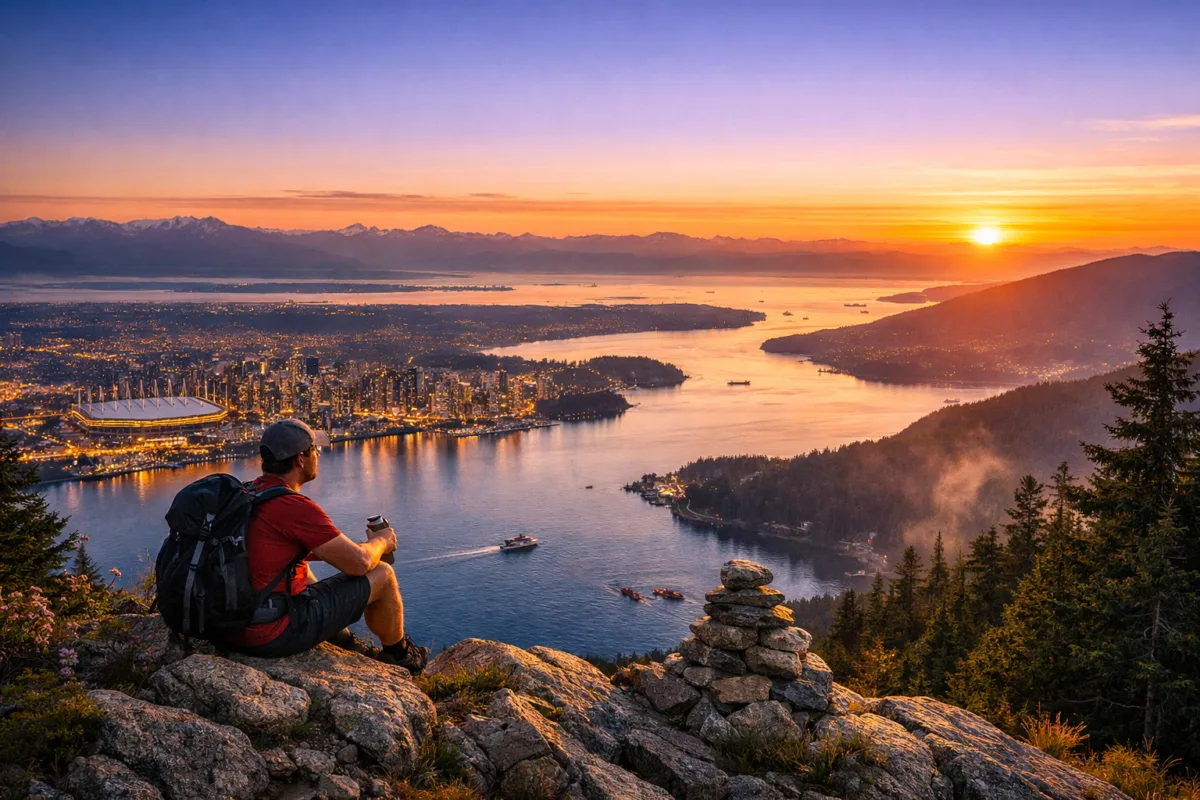
Every guidebook tells you to take the Skyride gondola up Grouse Mountain (CA$75+). Almost none of them mention that you can hike to the same summit on the BCMC Trail (Baden-Powell Mountaineers Club Trail) for free in about 90 minutes. The trail gains 844 metres of elevation through Douglas fir and cedar forest on the southern face of Grouse Mountain – steep, relentless, and completely satisfying in the way only a climb that costs you something can be.
At the top, the summit facilities (skating rink, lumberjack show, grizzly bear habitat) require the gondola ticket to access. But the views from the summit ridge – over Burrard Inlet, the city, and the Gulf Islands – are yours for free. Bring a packed lunch and take the gondola down (CA$30 for the descent-only ticket) if your knees need it.
Pro Tip: The BCMC trailhead is at the Grouse Mountain base station, a short bus ride from Lonsdale Quay in North Vancouver (SeaBus from Waterfront Station, then Bus 236). The trail is well-marked and popular with locals – you’ll see Vancouverites on their third lap of the week in running shoes that make you feel appropriately humble.
2. Eat Dim Sum in Richmond – Not in Vancouver
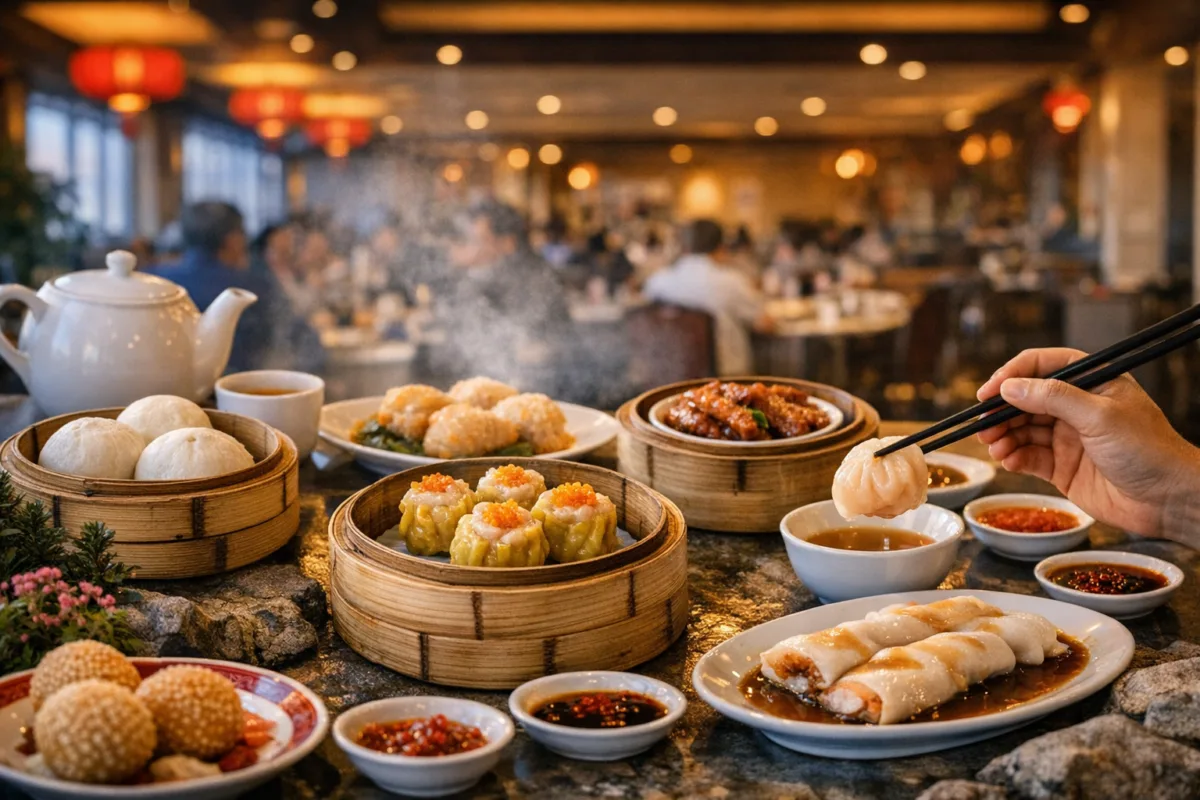
There is a dim sum restaurant on No. 3 Road in Richmond – a suburb 20 minutes south of downtown by Canada Line SkyTrain – that has been serving Hong Kong-style dim sum since the 1980s. It opens at 9am on weekends. By 9:30 there is a queue down the street. By 10am every table is full and the carts are moving at a pace that requires strategic positioning and a willingness to commit. The har gow is made by hand. The char siu bao comes from a kitchen steamer you can see from your seat.
Richmond has the largest concentration of authentic Hong Kong and Cantonese restaurants outside of Hong Kong and Guangdong province. The Aberdeen Centre food court alone has more genuine regional Chinese cuisine options than most cities in the world. Golden Swan, Kirin Seafood, and Sun Sui Wah are names that Vancouver food writers have been arguing about the relative merits of for thirty years. Come on a Sunday. Come hungry. Come early.
Local Insight: Take the Canada Line SkyTrain to Lansdowne or Aberdeen stations for central Richmond. The No. 3 Road corridor between these two stations is the heart of the restaurant district. Walk up and down both sides and pick the restaurant with the longest queue of Chinese families – that is always, without exception, the right choice.
3. Walk the Baden-Powell Trail from Deep Cove to Quarry Rock
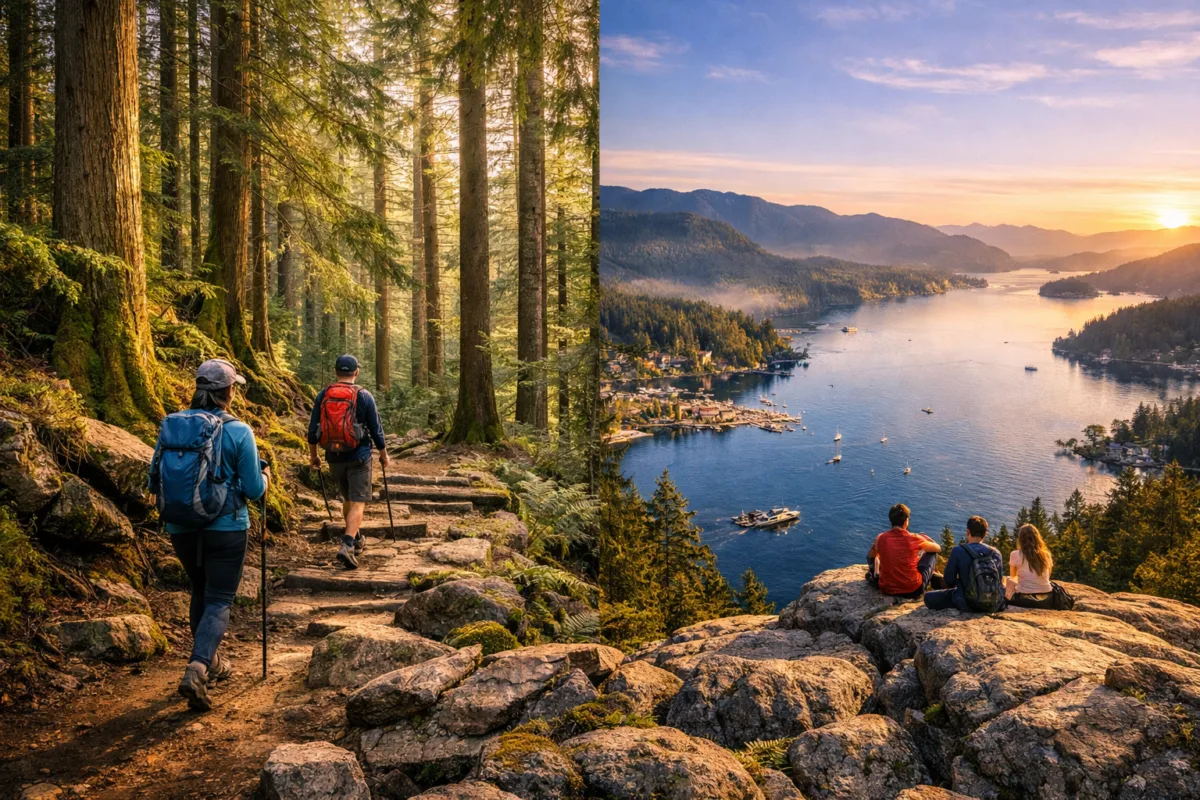
The Deep Cove neighbourhood in North Vancouver is the kind of place that makes people who discover it feel slightly betrayed that nobody told them sooner. A small inlet community at the end of Indian Arm fjord, surrounded by mountains on three sides, with a kayak rental dock, a bakery that makes cinnamon knots that have their own cult following, and a trail system that starts at sea level and climbs into alpine wilderness within an hour.
The Quarry Rock Trail (2.7km return from Deep Cove, about 45 minutes each way) climbs through second-growth forest to a granite outcrop above the inlet with views up Indian Arm that stop people in their tracks. It is, by most measures, the best short hike in Greater Vancouver, and the combination of the hike and the cinnamon knot from Honey Doughnuts on the way back is one of the most satisfying two-hour mornings the city offers. The trail is free. The doughnut is CA$4. Both are essential.
Pro Tip: Go on a Tuesday or Wednesday morning – Quarry Rock is famous enough that weekend afternoons bring a traffic jam on the trail. The view is worth seeing at any time but it’s worth less when you’re queuing to stand on the rock. Weekday mornings, it belongs entirely to you.
4. Explore Granville Island on a Tuesday Morning
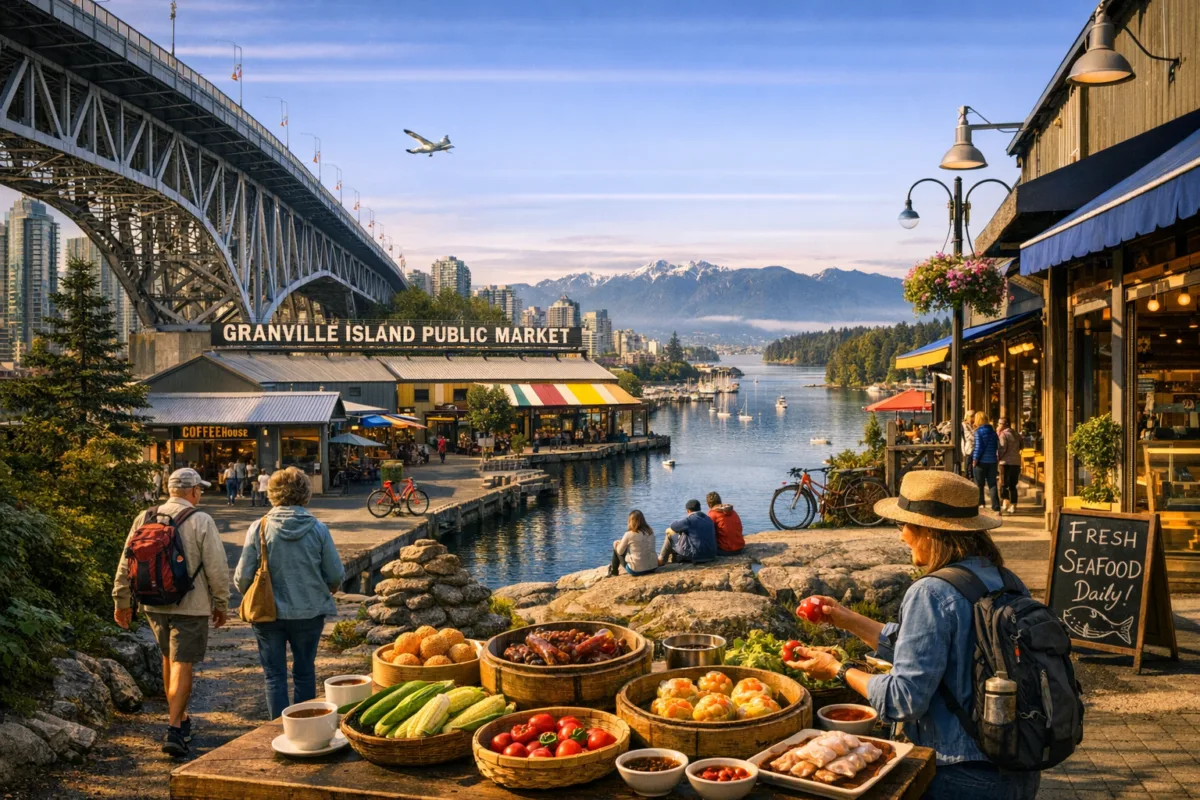
Every guidebook sends you to Granville Island. The guidebooks are right – but almost nobody tells you that Tuesday morning is the only time it resembles the genuine working-market experience it was designed to be rather than a tourist feeding operation.
Granville Island Public Market opened in 1979 on a former industrial peninsula under the Granville Street Bridge, and at its best it is one of the finest urban public markets in North America. On a Saturday in July, it is also shoulder-to-shoulder crowds and CA$9 for a coffee. On a Tuesday at 9am in October, it’s fishmongers restocking their cases, cheese vendors slicing samples, the olive oil woman who has been at her stall since the market opened and knows everything about where everything comes from, and a Korean bakery counter selling the best cream-filled choux pastry you’ll eat outside Paris.
Come for the food hall. Stay for the artisan studios where working potters, glassblowers, and jewellery makers have their workshops open to watch. The Emily Carr University of Art + Design (now on Great Northern Way, but the original building was here) shaped the creative culture of the island, and the work sold in the studios reflects that heritage.
5. The Richmond Night Market
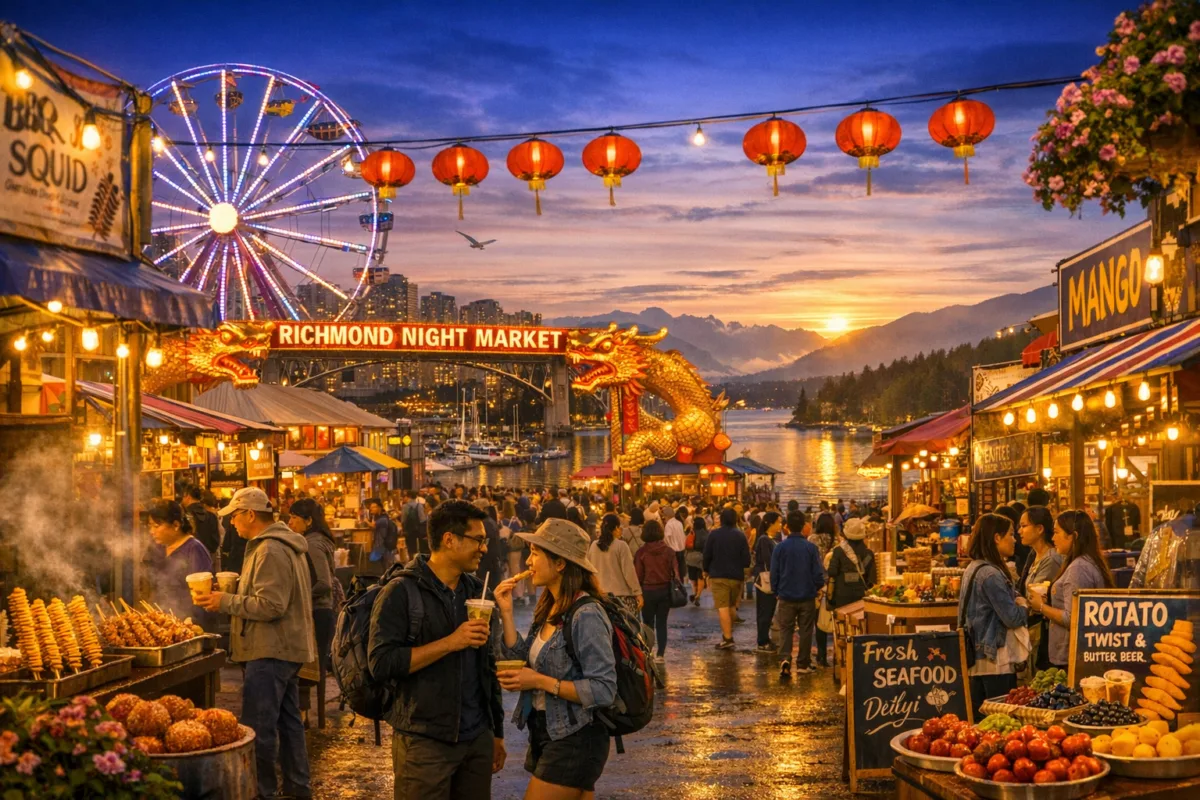
The Richmond Night Market runs Thursday to Sunday evenings from May through October in a parking lot near the Bridgeport SkyTrain station, and it is – without qualification – one of the best night markets in North America. Over 100 food stalls serving Taiwanese scallion pancakes, Japanese takoyaki, Korean corn dogs, Filipino halo-halo, Chinese hand-pulled noodles, and desserts in formats that don’t yet have English names. All of it good, most of it under CA$10 per dish.
The market also has a merchandise section with the specific energy of a Taiwanese night market transplanted to a British Columbia parking lot – phone cases, sunglasses, cartoon character merchandise, bubble tea in forms that shouldn’t exist but do. It’s chaotic, it smells extraordinary, and it’s one of the most genuinely multicultural food experiences available anywhere in the world. Entry is CA$3-5 per person. A full dinner here costs CA$15-20.
Heads Up: The Richmond Night Market gets extremely crowded on Saturday evenings in July and August – the queue for popular stalls can be 30+ minutes. Go on a Thursday or Sunday evening for a noticeably better experience. Arrive by 6pm to get ahead of the main rush.
6. Walk the Spirit Trail from North Vancouver to Deep Cove
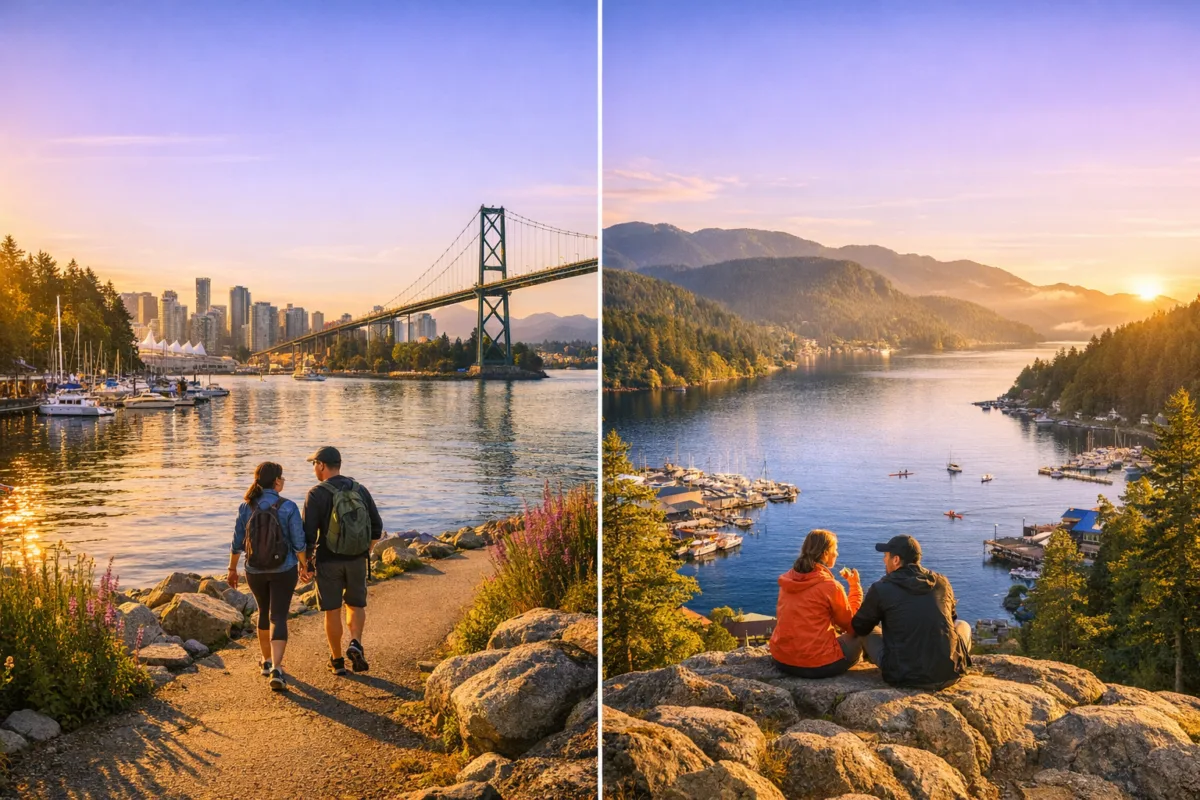
The Spirit Trail is a 33-kilometre multi-use path along the North Vancouver waterfront that most visitors to Vancouver have never heard of. It runs from the Lions Gate Bridge at the western end of North Vancouver all the way to Deep Cove in the east, following the shoreline of Burrard Inlet with unobstructed views across the water to downtown Vancouver and the North Shore mountains above.
You don’t need to walk the whole thing. A 6-8km section from Lonsdale Quay (end of the SeaBus from downtown) east toward Deep Cove covers most of the best views, passes through the charming Lower Lonsdale neighbourhood, and ends in a series of parks and wetlands that feel completely disconnected from urban life. The entire trail is paved, flat, and free. On a clear day – which in Vancouver means any day between June and September when the cloud lifts – the views are some of the most dramatic of any waterfront walking trail in North America.
7. The Museum of Anthropology at UBC
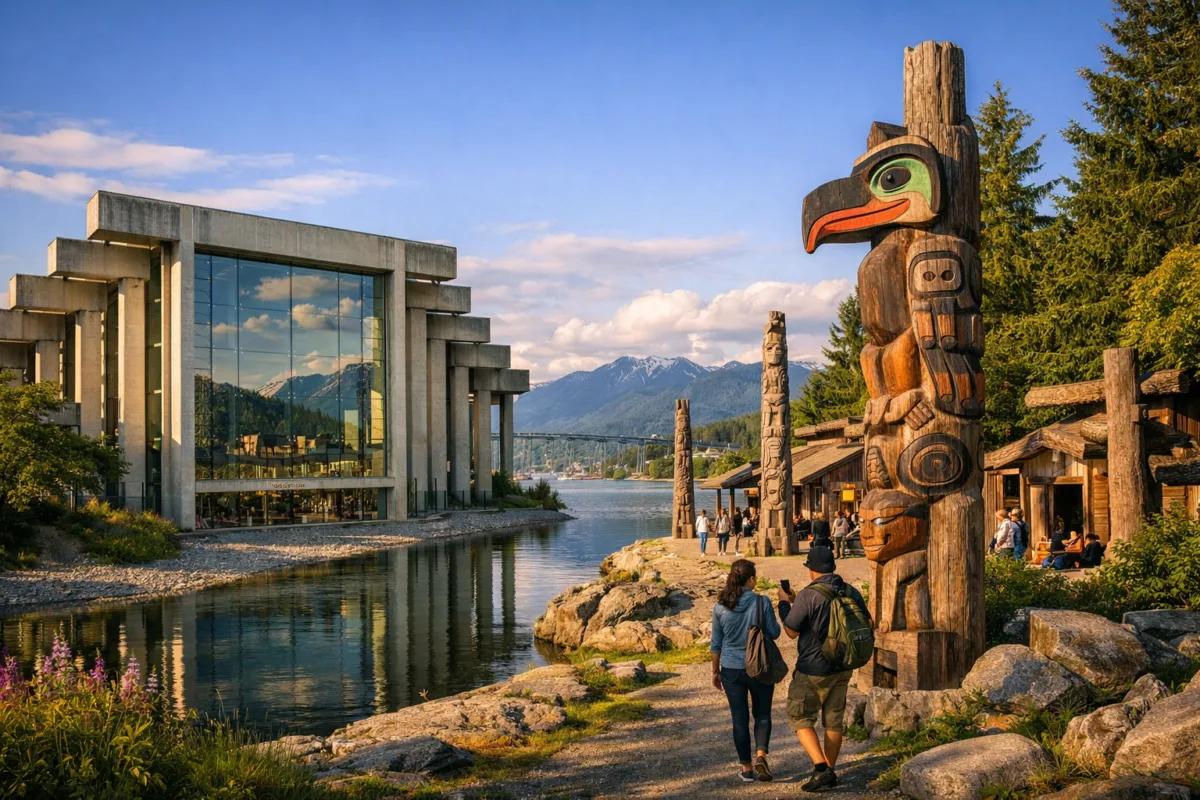
The Museum of Anthropology on the University of British Columbia campus is, in the opinion of almost every serious museum visitor who sees it, one of the finest ethnographic museums in the world. The building – designed by Arthur Erickson in 1976 as a concrete interpretation of Northwest Coast Indigenous post-and-beam architecture – is extraordinary in itself. What it contains is more so.
The Great Hall houses a collection of Northwest Coast Indigenous totem poles, canoes, and monumental carvings so large and so well-lit that walking through it feels like entering a sacred space rather than a museum gallery. The Bill Reid Rotunda contains The Raven and the First Men, Reid’s massive yellow cedar sculpture depicting the Haida creation myth, carved with a level of technical and artistic mastery that makes everything else in the room seem tentative by comparison. The permanent collection covers Pacific, Asian, and European ceramics in a visible storage system that alone is worth a visit.
Admission is CA$23 for adults; UBC students and Indigenous peoples are free. Tuesdays are half-price after 5pm. The campus itself – perched on a peninsula above the Strait of Georgia, surrounded by old-growth forest – is worth half a day of wandering beyond the museum.
Pro Tip: Book tickets for the Museum of Anthropology online in advance on busy summer weekends – it is a genuinely popular destination with school groups and tours and the Great Hall can feel crowded. A weekday afternoon in spring or autumn is the ideal time: quiet enough to spend as long as you want with each piece.
8. Cycle the Seawall at 7am
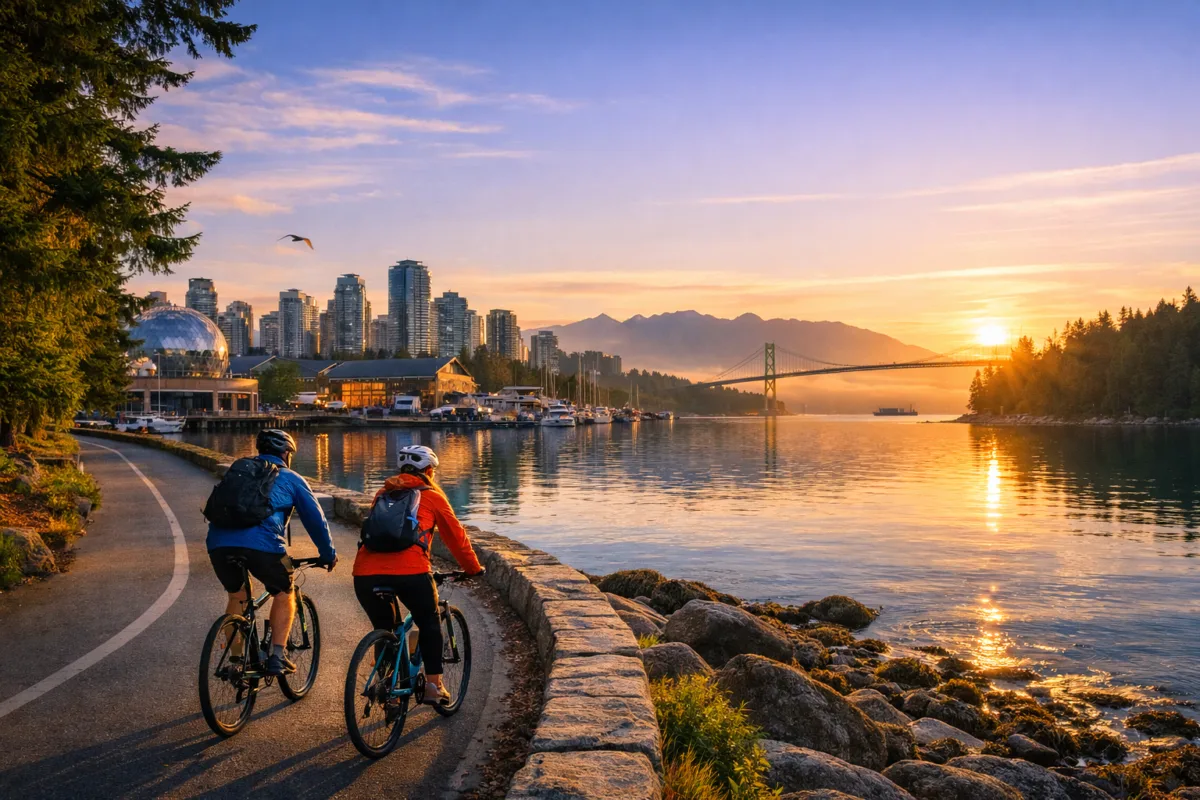
Everyone in Vancouver will tell you to walk the seawall. They’re right. But cycling the seawall at 7am on a summer morning – when the only people out are the people who live near it and use it every day – is a different and better experience than the midday tourist experience the guidebooks describe.
The Stanley Park Seawall loop is 8.8km of separated cycling and pedestrian path around the circumference of the park, with views at various points of the downtown skyline, the Lions Gate Bridge, Burrard Inlet, and the North Shore mountains. In the early morning, the light on the water is low and gold and the cyclists you pass are commuters and regulars who nod briefly and keep moving. The park smells of salt water and cedar. The herons are fishing in the shallows.
Bike rental is available from multiple shops on Denman Street (the street closest to the park’s west entrance) from around CA$9-15 per hour. Alternatively, the Mobi bike-share system covers most of central Vancouver at CA$3.99 per 30 minutes or CA$7.99 for a day pass – excellent value for exploring the seawall and the neighbourhood connectors.
9. The Punjabi Market – A Neighbourhood Most Tourists Miss Completely
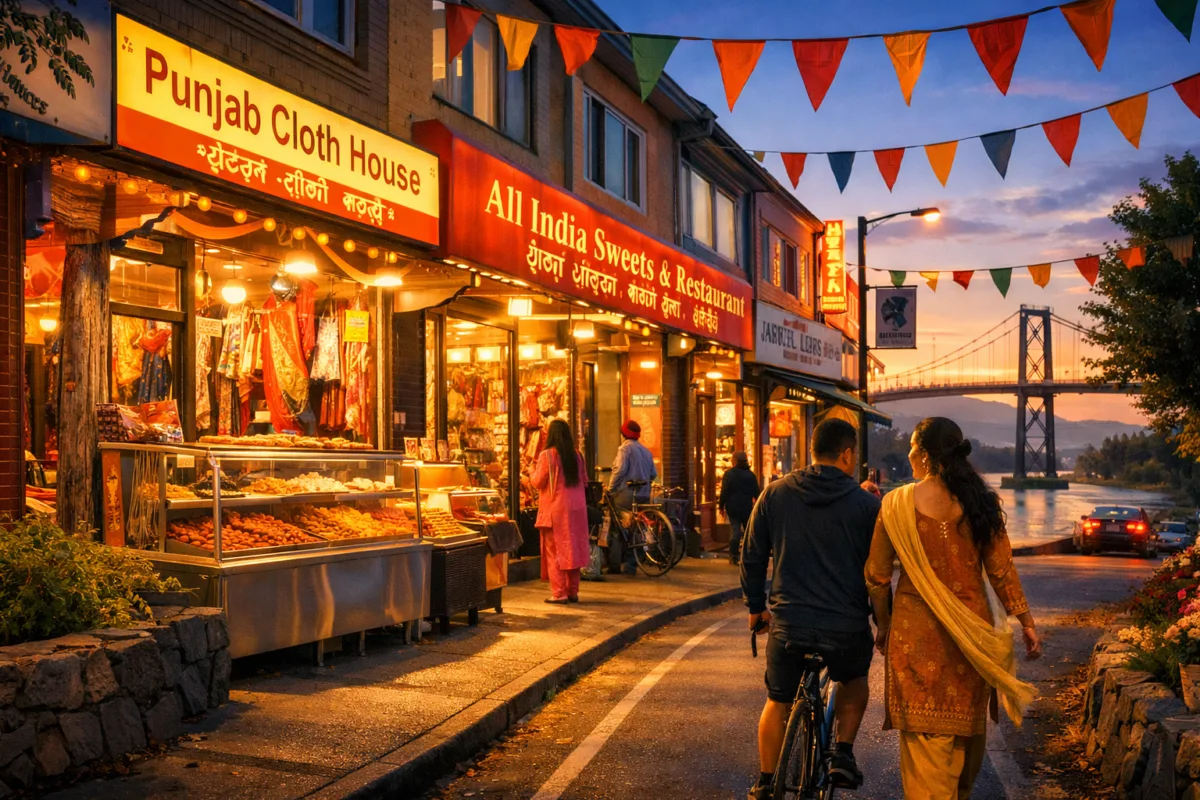
The stretch of Main Street between 48th and 51st Avenues in South Vancouver is Little India – a neighbourhood of sari shops, gold jewellery dealers, Punjabi grocery stores, and restaurants serving the kind of butter chicken and garlic naan that exists in a category entirely separate from the homogenised Indian restaurant food of most Western cities.
Bombay Kitchen on Main Street. Singh’s Sweets. The Himalayan Restaurant. None of these are on any tourist map. All of them are full of South Asian families on weekends, which is always the clearest possible indicator that the food is real. A full dinner at a neighbourhood Punjabi restaurant in the Main Street district costs CA$15-25 per person with drinks – a fraction of what comparable food quality costs elsewhere in the city.
The neighbourhood is also home to one of Vancouver’s best Diwali celebrations each October – free, public, overwhelming in the best way, and a reminder that Vancouver’s diversity is not a statistic but an actual, lived, delicious reality.
Local Insight: The Main Street–Science World SkyTrain station (on the Expo Line) puts you within walking distance of the Punjabi Market. The neighbourhood also connects south to Fraser Street’s Vietnamese restaurants and east to Commercial Drive’s Italian-Latin-hipster hybrid, making this stretch of South/East Vancouver one of the most rewarding food walking routes in the city.
10. Take the Sea-to-Sky Highway to Squamish (Not Whistler)
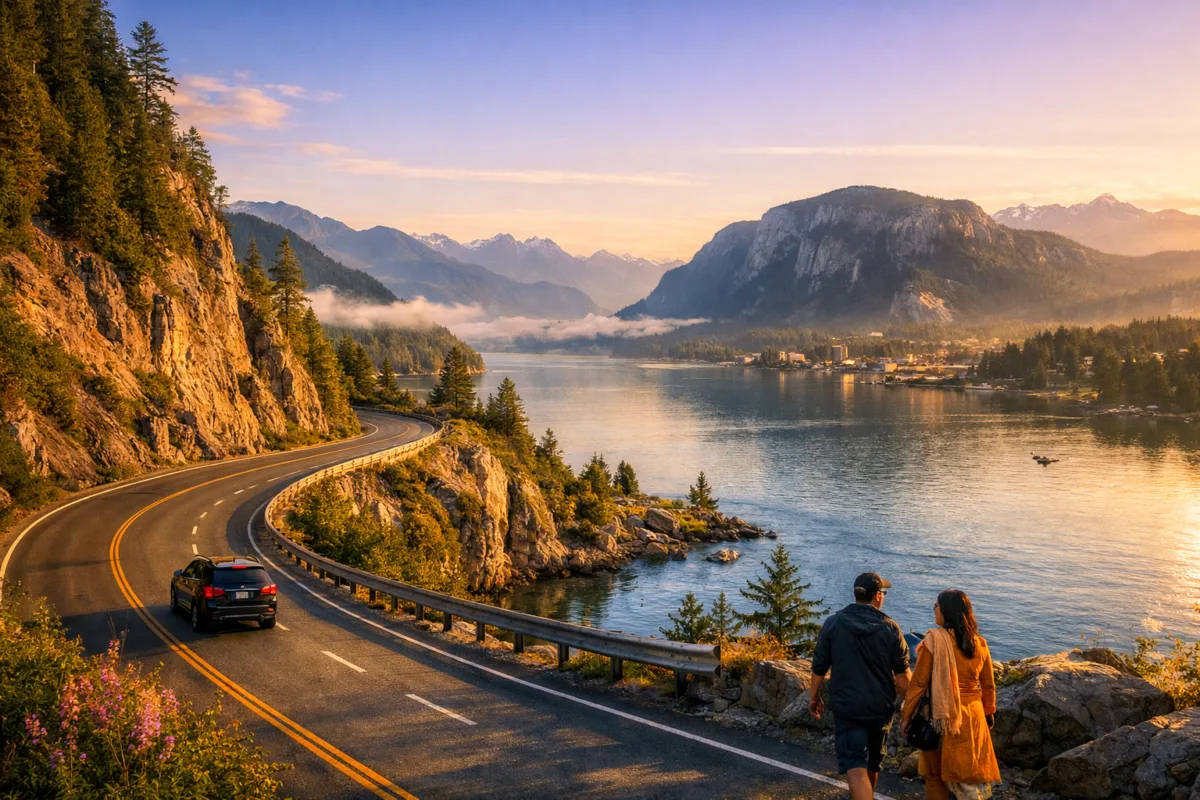
Every visitor to Vancouver has heard of Whistler – the ski resort two hours north on the Sea-to-Sky Highway. Far fewer have heard of Squamish, 45 minutes north, and that is a significant oversight. Squamish is the outdoor adventure capital of British Columbia that doesn’t market itself as one. It has world-class rock climbing (the Stawamus Chief – a 700-metre granite monolith – is one of the most famous climbing destinations in North America), mountain biking, windsurfing on the estuary, and the Sea to Sky Gondola (CA$59 per person) which delivers you to an alpine ridge with suspension bridge views over the fjord below.
The drive itself on the Sea-to-Sky Highway (Highway 99) north from Vancouver is one of the great coastal mountain drives in North America – the road clings to cliff faces above Howe Sound, with fjord views to one side and forested mountains above. Shannon Falls Provincial Park (12km south of Squamish) has BC’s third-highest waterfall accessible on a flat 15-minute walk from a free roadside car park. The Stawamus Chief Provincial Park trails are free. The climbing is free. The views from the Chief’s summit – after a 2-3 hour ascent on well-maintained switchback trails – are extraordinary and cost nothing.
Pro Tip: Rent a car for the day trip to Squamish – public transport exists but the best stops (Shannon Falls, Stawamus Chief trailhead, the estuary) require a vehicle or very long walks between them. Compare rental prices at GetRentACar and budget CA$45-70 for a full-day economy rental.
11. Commercial Drive – The Most Interesting Street in Vancouver
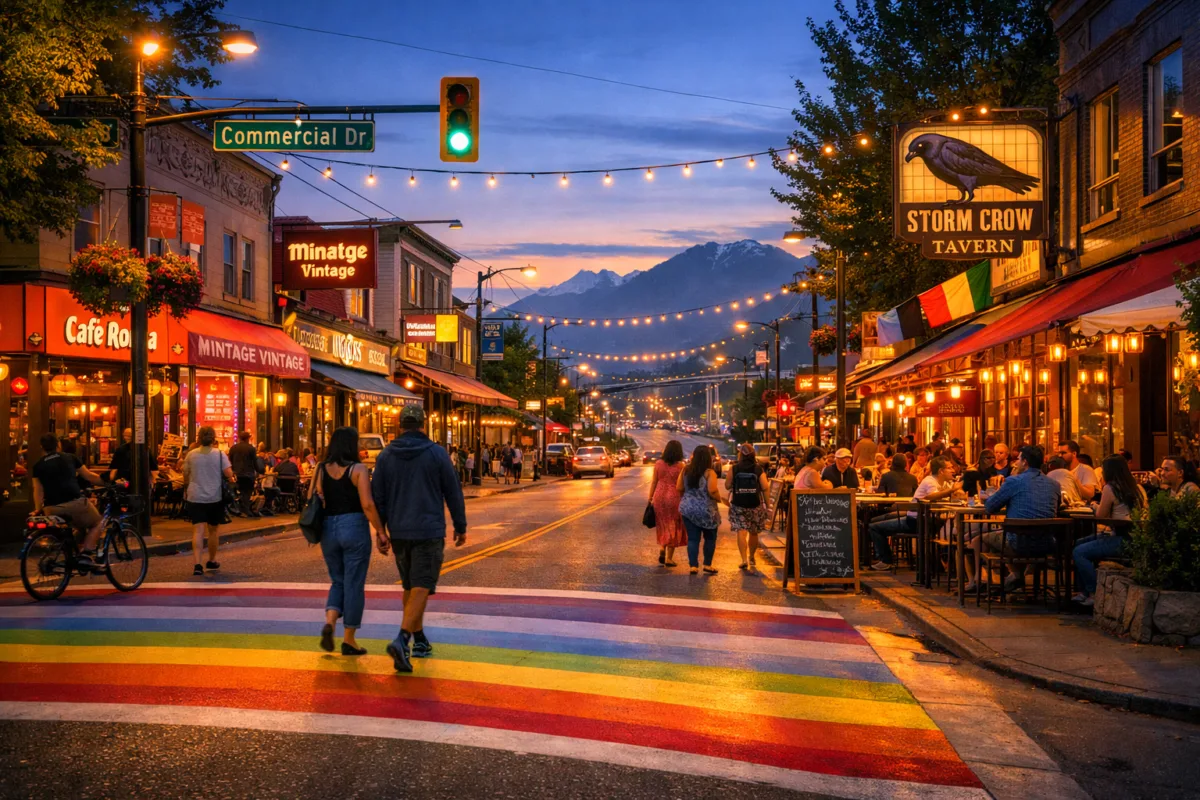
Commercial Drive in East Vancouver is the city’s most interesting street, and a convincing argument for the idea that the best neighbourhoods are the ones that haven’t quite been gentrified yet. The Drive has been the counterculture heart of Vancouver since Italian immigrants built their community here in the mid-20th century and left behind a legacy of espresso culture, bocce, and a suspicion of pretension that still shapes the street’s character today.
Today it’s a mix of Italian cafés (Prado, JJ Bean, Cafe Calabria – the last of these has been serving a 75-cent espresso since before most of its current customers were born), Vietnamese grocery stores, vintage clothing shops, activist bookshops, and neighbourhood bars where the tap list changes monthly and nobody is pretending anything. Grandview Park at the top of the Drive has views of the North Shore mountains and, on summer evenings, functions as a neighbourhood gathering point in the specific way that suggests a community that actually knows each other.
The Drive’s Farmers Market runs every Saturday May through October at Grandview Park – small, local, with better prices than the famous Granville Island and a more genuinely neighbourhood feel. Stop at La Grotta del Formaggio, an Italian deli on the Drive that has been selling imported cheeses, charcuterie, and olive oils since 1968 and where the staff will argue passionately about the correct use of truffle oil.
12. Kayak Indian Arm Fjord from Deep Cove
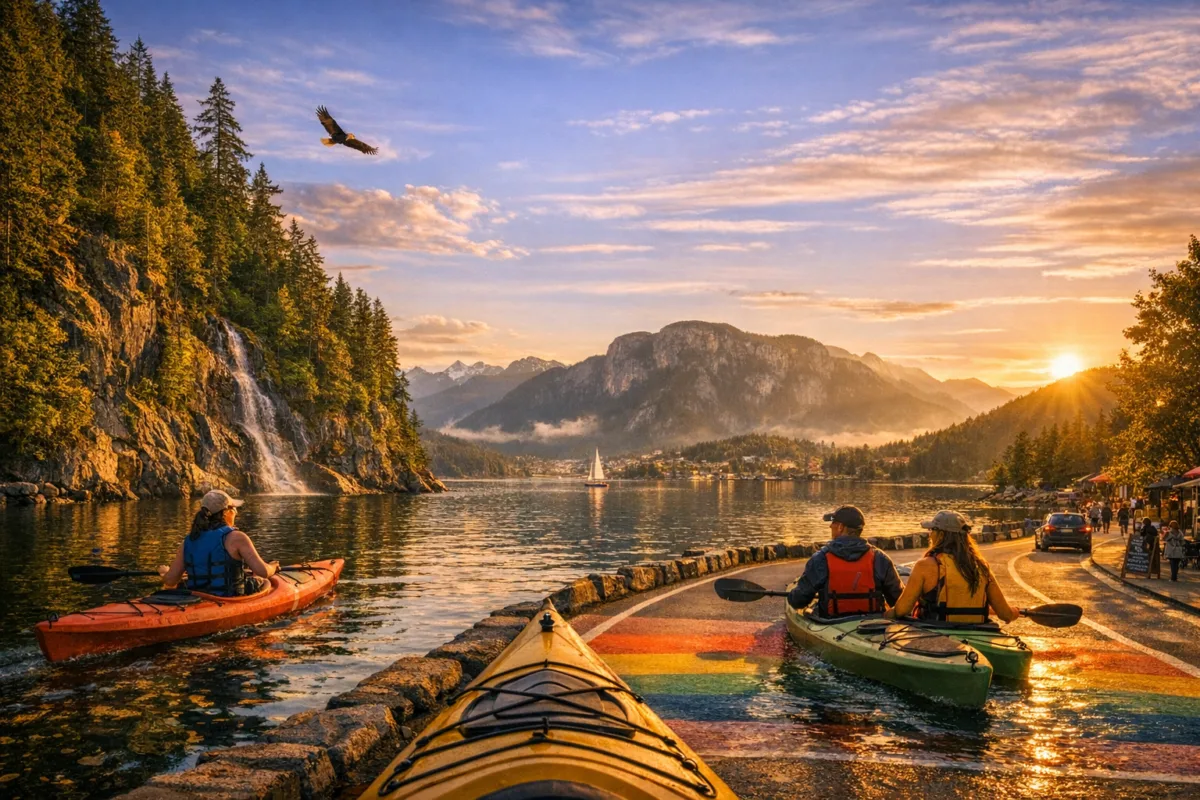
Indian Arm is a 24-kilometre fjord that stretches north from Deep Cove into the Coast Mountains, with walls rising 1,000 metres on both sides and waterfalls feeding into the water from snowmelt above. It is one of the most dramatic kayaking environments in North America, and it starts literally in the village of Deep Cove – 45 minutes from downtown Vancouver by car or public transport.
Deep Cove Canoe and Kayak rents single kayaks from CA$30 per hour or CA$80 for a full day – the full day option is by far the better value, allowing you to paddle several kilometres up the fjord to where the walls close in and the waterfalls begin. Guided tours are available from CA$95 per person for a 3-hour introduction to the arm’s main features. No experience is required for the sheltered waters of the lower arm; the fjord is calm except in strong winds.
The combination of Deep Cove in a single day – morning kayak, lunch at the Honey Doughnuts bench above the inlet, afternoon Quarry Rock hike – is one of the finest full days Vancouver offers, and the total cost can be kept under CA$60 per person if you are self-catering lunch.
13. Chinatown – The Historic Core and Its Night Vendors
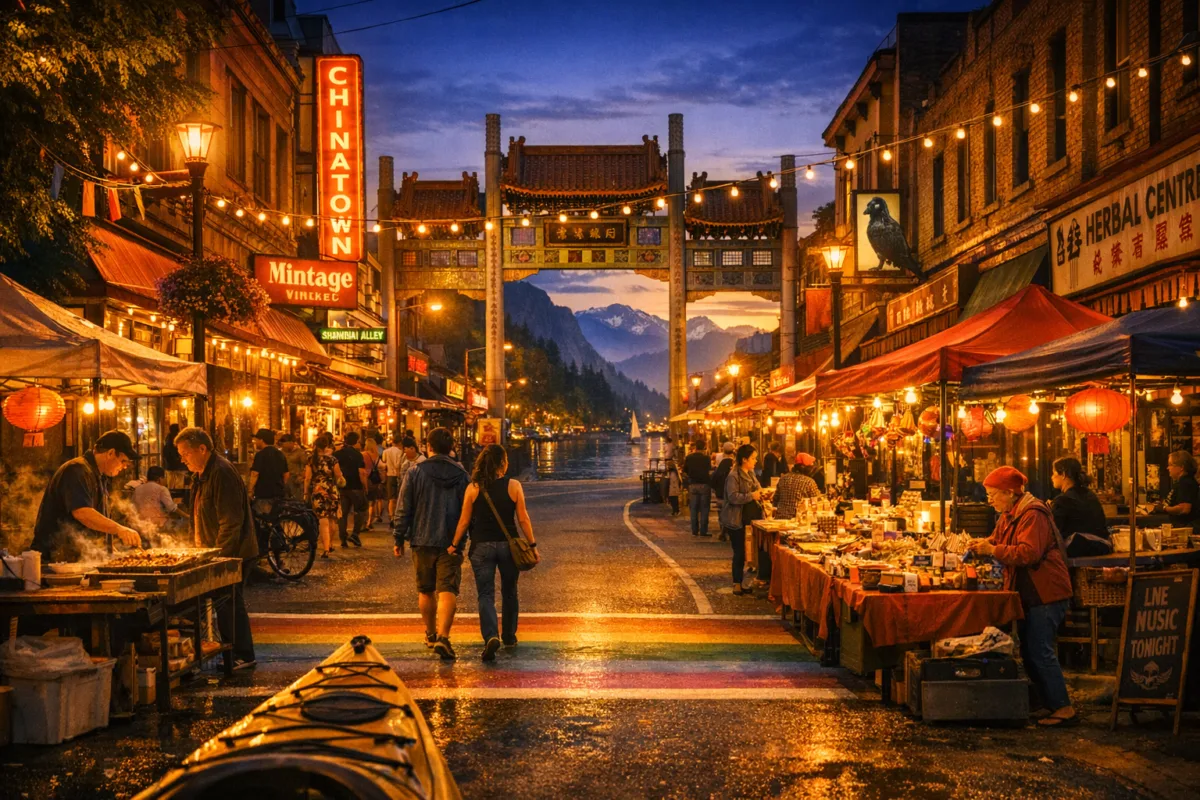
Vancouver’s Chinatown is the third-largest in North America after San Francisco and New York, and it has been at the geographic and cultural heart of the city’s Chinese community since the 1880s. The neighbourhood has gone through difficult times in recent decades – demographic shift, development pressure, the complex effects of gentrification – but it retains a character and a physical fabric that are irreplaceable.
The Dr. Sun Yat-Sen Classical Chinese Garden (CA$18 entry) is the finest Classical Chinese garden outside of China – a scholar’s garden built by craftspeople from Suzhou using only traditional techniques and materials, set in the middle of a downtown urban block. The Chinese Freemasons Building and the Wing Sang Building (the oldest building in Vancouver, built in 1889) are on the same block. The Chinatown Night Market runs Friday to Sunday evenings in summer on Keefer Street – smaller and more local in character than the Richmond Night Market, with more focus on traditional food and crafts.
The neighbourhood immediately around Chinatown has also become home to some of Vancouver’s most interesting new restaurants and coffee bars – a gentrification story that is genuinely complicated but produces, alongside its problems, excellent ramen and extraordinary craft chocolate shops in 1920s heritage buildings.
14. Hike to Norvan Falls in Lynn Headwaters Regional Park
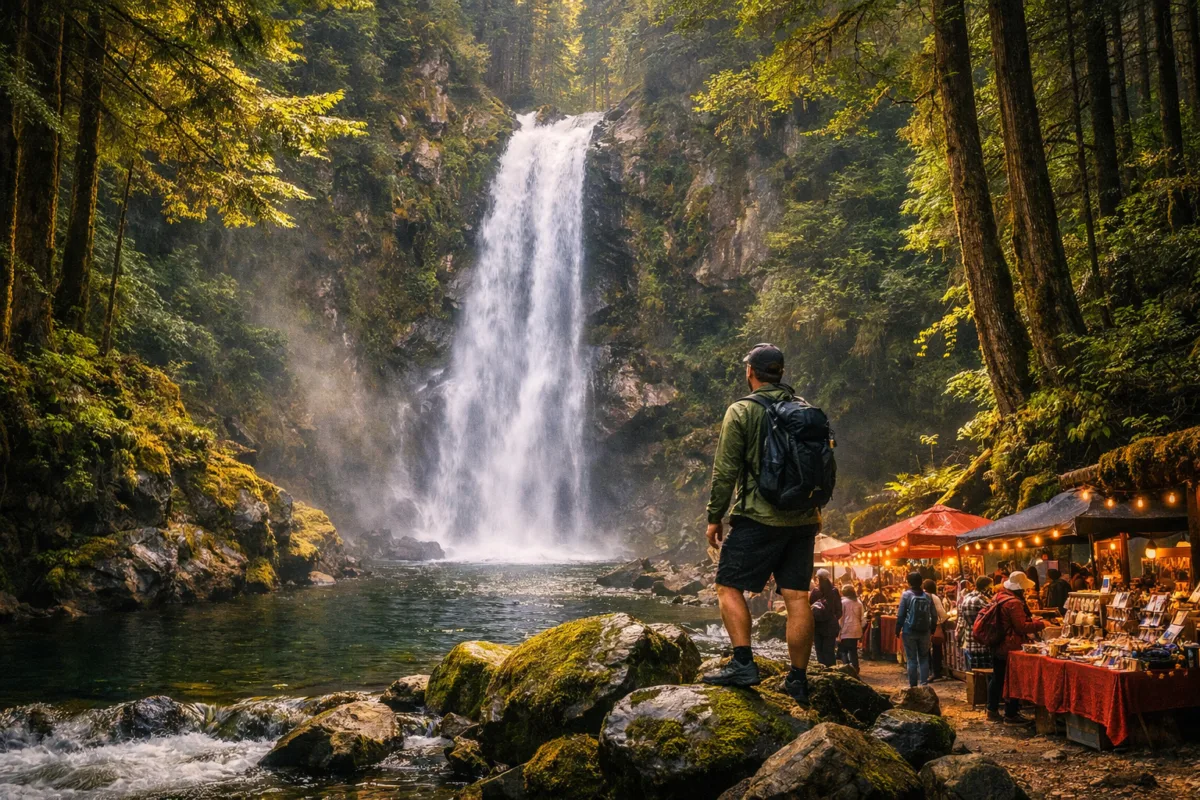
Most visitors to North Vancouver who hike at all go to the Capilano Canyon or Grouse Mountain. Lynn Headwaters Regional Park – 10 minutes further east on the North Shore – is where the Vancouverites who take hiking seriously actually go, and the reason is Norvan Falls: a powerful waterfall at the end of the 14-kilometre return Norvan Falls Trail, set in old-growth cedar and fir forest so dense that sunlight only reaches the path in patches.
The trail follows Lynn Creek upstream for 7km through forest that has never been logged – a rare thing on the North Shore, where most of the accessible old-growth was cleared in the early 20th century. The falls themselves drop about 15 metres into a jade-green pool surrounded by vertical walls of basalt. The whole hike takes 4–5 hours return at a moderate pace, gains very little elevation (it is a valley trail), and is technically accessible to most people with basic hiking fitness. It’s free. It’s magnificent. Almost nobody from outside Vancouver has heard of it.
Pro Tip: Lynn Headwaters is bear country – both black bears and, occasionally, grizzlies from further up the valley. Make noise on the trail, carry bear spray if you have it, and follow the park’s wildlife advisory board at the trailhead. The park also has a history of cougar encounters in the upper valley – stay on marked trails.
15. Watch the Sunset from Wreck Beach
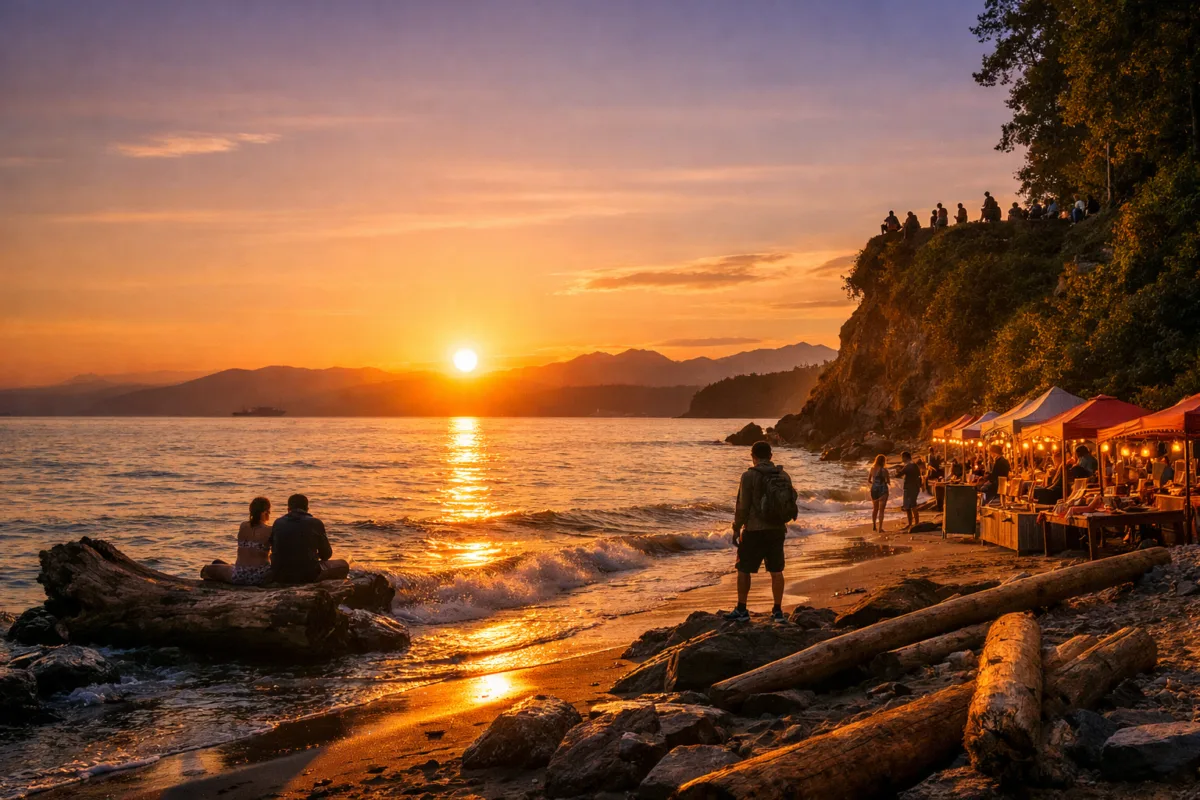
Wreck Beach is Vancouver’s clothing-optional beach, a kilometre of sand and driftwood logs at the base of 100-metre cliffs below the UBC campus, accessible by a staircase of 473 wooden stairs (Trail 6 from the cliff edge above). It has been clothing-optional since 1976 and is one of the few genuinely countercultural institutions in a city that has become increasingly expensive and mainstream. You are not required to be clothing-optional – many people come fully dressed. The beach vendors who walk the sand selling cold drinks, watermelon slices, and occasionally things the beach has been selling since the 1970s are fixtures.
But what Wreck Beach is actually about – beyond the nudity and the vendors and the gentle anarchic atmosphere – is the sunset. Facing southwest across the Strait of Georgia toward Vancouver Island, Wreck Beach gets the full Pacific sunset, unobstructed, every clear evening. The sun goes down behind the mountains on the Island across the water. The sky turns colours that have no names in daylight. The driftwood logs fill up with people sitting quietly, and the water goes from blue to bronze to black.
It is, by common agreement of the people who know about it, the finest free sunset view in the city. The stairs back up are a significant cardiovascular event that also functions as a natural filter on the crowd.
Local Insight: Trail 6 to Wreck Beach is at the end of University Boulevard on the UBC campus, near the Museum of Anthropology (combine both in one afternoon trip). The stairs are genuine – 473 of them – and are steep going down and steep coming back up. People with knee problems should note this before committing to the descent.
Practical Vancouver: Getting There, Getting Around, and What It Costs
Getting to Vancouver
Vancouver International Airport (YVR) is the main gateway, with direct flights from London Heathrow, Amsterdam, Frankfurt, Tokyo, Seoul, Sydney, and all major North American cities. It is one of the best-connected airports in North America for transatlantic and transpacific routes.
Search for the best available fares on Aviasales – particularly useful for finding competitive prices on the transatlantic routes from London and European hubs where multiple airlines compete. Earn cashback on every flight booking with WayAway. If your flight is disrupted, AirHelp handles compensation claims on a no-win-no-fee basis – always worth registering a disrupted flight.
Getting Around Vancouver
Vancouver’s TransLink public transport network – SkyTrain metro, buses, SeaBus ferry to North Vancouver – is excellent and covers the city and major suburbs comprehensively. A day pass costs CA$11.25. The Compass Card (reloadable tap card) is the easiest way to use the system and gives slightly better per-journey rates than single tickets.
The Canada Line SkyTrain connects downtown Vancouver to Richmond and the airport (25 minutes, CA$4.55 from downtown). The SeaBus runs every 15-30 minutes between Waterfront Station and Lonsdale Quay in North Vancouver (included in standard transit fare).
For day trips to Squamish, the Sunshine Coast, or the Fraser Valley, a rental car is necessary. Compare prices at GetRentACar. For airport transfers with luggage, GetTransfer offers pre-booked private cars at competitive fixed prices. For rides within the city, InDrive operates in Vancouver alongside Uber and Lyft.
What Vancouver Costs
Vancouver is one of the most expensive cities in Canada – accommodation in particular reflects a housing crisis that has made rental prices among the highest in North America. Budget accordingly:
- Budget hostel dorm: CA$35-55 per night in central locations (HI Vancouver Downtown, Samesun Vancouver)
- Budget guesthouse or Airbnb private room: CA$80-130 per night
- Mid-range hotel: CA$160-250 per night
- Budget daily food (self-catering breakfast, café lunch, casual dinner): CA$35-55
- Transit day pass: CA$11.25
- Free activities: Stanley Park, seawall, all North Shore trails, beaches, neighbourhood walks – extensive and genuinely excellent
- Paid activities: Museum of Anthropology CA$23, Sea to Sky Gondola CA$59, Grouse Mountain gondola CA$75+
Pro Tip: Compare hotel and hostel prices across all booking platforms simultaneously at Hotellook – Vancouver accommodation pricing varies enormously between platforms and booking 3-4 weeks ahead typically gives the best available rates.
Staying Connected in Vancouver
Canada has good 4G/5G coverage in all urban areas. International visitors should pick up a Canada eSIM before departure – Airalo and Yesim both offer Canada-specific and North America-wide data packages. Activate before flying and connect from the moment you land. For geo-restricted streaming while in Canada, NordVPN works reliably on Canadian networks.
Travel Insurance
Canada’s healthcare system is publicly funded for Canadian residents but entirely private for international visitors – a hospital visit without insurance is extraordinarily expensive. Comprehensive travel insurance including emergency medical is non-negotiable for any trip to Canada. Ekta Travel Insurance offers flexible single-trip and annual policies covering adventure activities, medical emergencies, and trip cancellation.
Tours and Events
For guided food tours of Commercial Drive, Chinatown, and Richmond (the best way to navigate the latter’s restaurant landscape on a first visit), WeGoTrip has a strong Vancouver catalogue with English-language booking. For concerts, sporting events (Canucks hockey, Vancouver FC, BC Lions), and live performance, Ticket Network covers major Vancouver venues. If you need luggage storage between accommodation check-out and a late flight, Radical Storage has locations across central Vancouver.
Best Time to Visit Vancouver
Check the
- Weather Checker for current and upcoming Vancouver conditions before setting your dates.
- June-September (Summer): The definitive Vancouver season – long days, warm temperatures (22-28°C), all outdoor activities accessible, farmers markets running, outdoor festivals. Also peak prices for accommodation. July and August are the most reliable months weatherwise.
- April-May (Spring): Cherry blossoms in late March and April (Vancouver has over 40,000 cherry trees – the blossom season is extraordinary), improving weather, lower accommodation prices, trails drying out after winter.
- October (Autumn): The best shoulder season – accommodation prices dropping, hiking trails quiet, the North Shore forests turning colour, Diwali on Punjabi Market. Weather variable but often warm and clear through October.
- November-March (Winter): The grey season. Skiing at Cypress, Grouse, and Seymour mountains (all 40-60 minutes from downtown – extraordinary for an urban ski trip). City tourism prices at their lowest. Indoor Vancouver – the museums, the food scene – at its most enjoyable without the crowds.
Plan Your Vancouver Trip with These Free Tools
- AI Travel Budget Estimator – build your complete Vancouver trip budget based on duration, travel style, and activities
- Packing List Generator – custom packing list for Pacific Northwest weather, city hiking, and waterfront activities
- Travel Planning Services – need a custom Vancouver + BC itinerary? Our team builds bespoke plans around your budget
- More Destination Guides – our full library of North America, Europe, Asia, and Pacific destination guides
- Budget Travel Hub – money-saving strategies that work across all our destinations globally
Frequently Asked Questions
Q1: How many days do you need in Vancouver?
Five days is the minimum to cover the city properly – one day for Stanley Park and the seawall, one for North Shore (Deep Cove, Quarry Rock, Lynn Headwaters or Grouse Mountain), one for Richmond and the food experience, one for UBC and the Museum of Anthropology, and one for neighbourhood wandering (Commercial Drive, Chinatown, Main Street). A week allows day trips to Squamish and more time in the neighbourhoods. Two weeks starts to feel like you’re living here, which is the best feeling of all.
Q2: Is Vancouver safe for solo travellers?
Yes, with a nuance. Vancouver is a safe city for the vast majority of visitors and the outdoor activities, public transit, and tourist areas are all genuinely safe for solo travellers of any gender. The Downtown Eastside neighbourhood (around Hastings and Main) has a significant open drug use and homelessness crisis that can be confronting for visitors – it is not a dangerous neighbourhood in terms of physical threat to passers-by, but it requires awareness and empathy. Walking through it is fine; lingering alone at night is not recommended.
Q3: Do I need a car in Vancouver?
Not for the city itself – the SkyTrain, buses, SeaBus, and Mobi bike-share cover all the city’s main attractions effectively. You do need a car for day trips to Squamish, the Sunshine Coast, and the Fraser Valley. A car is useful but not essential for North Vancouver if you’re comfortable with the bus and SeaBus connections. If you’re doing a broader British Columbia road trip beyond Vancouver, a rental car is obviously essential.
Q4: What is the best neighbourhood to stay in for first-time visitors?
The West End (near Stanley Park, Denman and Davie streets) is the most convenient base for first-timers – walking distance from the park, the seawall, English Bay beach, and the Granville Street entertainment district. It has the widest range of accommodation options at all price points. Gastown (Downtown East) is a slightly grittier but very central option with excellent hostels, good restaurants, and the Steam Clock. Kitsilano (across the Burrard Bridge) is a residential neighbourhood that feels more local and has excellent coffee, good beaches, and access to the Point Grey/UBC area.
Q5: Is Vancouver expensive?
Vancouver is one of Canada’s most expensive cities, reflecting a housing and cost-of-living crisis that has made it genuinely challenging to live in affordably. For visitors, accommodation is the main pressure point – budget hostels from CA$35-55 per night, mid-range hotels from CA$160+. Food costs are lower than accommodation suggests if you eat at neighbourhood restaurants and markets rather than tourist-facing venues: a full dinner at a Vietnamese restaurant on Commercial Drive costs CA$15-20; the same meal at a tourist restaurant on Robson Street costs CA$40-50. Use our AI Travel Budget Estimator for a personalised budget.
Q6: What is the weather like in Vancouver?
Vancouver has a temperate oceanic climate – mild winters, warm summers, and a lot of rain from October through April. Summer (June-September) is genuinely excellent: temperatures 20-28°C, low humidity, minimal rain, long days. The rest of the year involves varying degrees of grey and wet. Locals are philosophical about this. The mountains above the city get heavy snowfall from November through April – creating an extraordinary urban skiing situation – while the city itself rarely sees meaningful snow. Check our Weather Checker for current and upcoming conditions.
Final Thoughts: Vancouver Is Better Than Its Tourist Brochure
The version of Vancouver that gets photographed and shared and put in guidebooks – the harbour, the mountains, the glass towers reflecting the peaks – is real. It is genuinely beautiful. But it’s also, in a specific way, a distraction from the version that actually makes the city what it is.
The real Vancouver is the city where you can be standing in front of a Hong Kong dim sum cart in Richmond at 10am on a Sunday, surrounded by four generations of a family all arguing cheerfully about who gets the last siu mai, and then drive 45 minutes north and be walking through old-growth forest above a fjord with nobody else in sight. That range – from the most culturally dense urban experience to genuine wilderness within a single afternoon – is what no other city I’ve visited offers in quite the same way.
The 15 things in this guide are the ones that give you both ends of that range. Go with all of them in mind. Deviate when something unexpected presents itself. Ask the person at the deli counter at La Grotta del Formaggio what they would cook for dinner tonight with whatever’s best. Follow the answer. That is always, in Vancouver as everywhere, the right approach.
Start planning your Vancouver trip today. Find the best flights on Aviasales, earn cashback with WayAway, compare car rentals at GetRentACar, compare accommodation at Hotellook, activate your eSIM with Airalo or Yesim, sort city rides with InDrive, and protect your trip with Ekta Travel Insurance. Browse all our North America destination guides for the bigger BC picture.
See you at Quarry Rock.
Hidden Travels Team | hiddentravels.site