
⚠️ Affiliate Disclosure: Some links in this post are affiliate links – we earn a small commission if you book through them, at no extra cost to you. We only recommend services we genuinely trust and use ourselves.
I want to tell you about a morning on the Kepler Track in Fiordland, New Zealand, when I had been walking for two hours and had not seen another person and the path ahead was cutting through a forest so dense and old that the light coming through the canopy was green. The beech trees on either side had trunks wider than my armspan. The birdsong – tui, bellbirds, kea – was so layered and continuous that it took a while to realise it was bird calls and not the forest itself making noise.
That morning cost me nothing beyond the permit fee I had paid to walk one of the Great Walks. The campsite the night before had cost NZ$15. Breakfast had been oats I had bought at a Pak’nSave supermarket in Te Anau for less than a dollar per serving. It was, without question, one of the finest mornings of my travelling life.
New Zealand has a reputation for being an expensive destination, and the reputation is not entirely undeserved. The flights are long and costly. The infrastructure, given the country’s remoteness and small population, is priced accordingly. Petrol is expensive. Activities like skydiving, bungee jumping, and scenic helicopter flights can cost hundreds of dollars each.
But here is the thing about New Zealand that most expensive-reputation articles miss: the best things the country has to offer are almost entirely free. The Great Walks. The national parks. The beaches. The geothermal landscapes. The drives. The sunsets over Cook Strait. The stars from a dark-sky reserve at midnight. None of these cost anything beyond getting yourself there – and with the right approach to accommodation, transport, and food, getting yourself there doesn’t have to cost very much either.
This is your complete guide to exploring New Zealand on a shoestring budget – with honest costs, specific money-saving strategies, and a framework for getting the best the country has to offer without spending like a luxury resort guest.
Pro Tip: Build your New Zealand trip budget before you book using our AI Travel Budget Estimator, and check the current NZD exchange rate at the Live Currency Converter.
Why New Zealand Is Worth Every Cent – Even on a Tight Budget
New Zealand is a country roughly the size of the United Kingdom but with a population of just five million people. What that means in practical terms is that most of it – the mountains, the fiords, the ancient native bush, the geothermal valleys, the glaciers, the wild coastlines – is empty. Not just quiet. Empty. You can drive for thirty minutes from Queenstown, one of New Zealand’s most tourist-heavy towns, and be completely alone in a landscape that looks like a film set for the end of the world.
The country is home to 14 national parks covering nearly a third of the total land area, administered by the Department of Conservation (DOC), which maintains an extraordinarily extensive network of huts, campsites, and walking tracks. Over 3,000 kilometres of marked walking tracks are free to access. The Great Walks – nine of New Zealand’s finest multi-day hikes – require booking and permit fees (NZ$22-75 per person per night) but are some of the greatest walking experiences on Earth at any price.
Add world-class surfing, wild swimming, stargazing at Aoraki Mackenzie International Dark Sky Reserve, kayaking through Marlborough Sounds, and wine tasting in Hawke’s Bay and Central Otago – much of it free or very low cost – and New Zealand’s value proposition becomes clear. The experience is extraordinary. The question is only how you manage the logistics.
Local Insight: The DOC (Department of Conservation) website at doc.govt.nz is the single most useful resource for budget travel in New Zealand. It lists every free campsite, every hut, every track condition, and every conservation area in the country. Bookmark it before you go. Check it every day you’re there.
What New Zealand Actually Costs: A Realistic Budget Breakdown
Let’s get specific, because vague statements about New Zealand being expensive are not useful. Here are the actual daily costs for a solo budget traveller:
Accommodation: NZ$20-60 per night
This is the most variable cost and the one where smart planning saves the most money. The options from cheapest to most expensive:
- DOC freedom camping sites: Free to NZ$8 per night – basic, often spectacularly located (river valleys, lake shores, coastal cliffs). Require a self-contained vehicle or tent. Check the Campermate app for locations.
- DOC hut stays: NZ$5-55 per night depending on hut category. Great Walks huts are NZ$22-75. Standard huts with a bunks-and-toilet-only setup are NZ$5-15. Some serviced huts with stoves and heating are NZ$15-55. The quality-to-price ratio is extraordinary.
- Budget hostels (YHA and independents): NZ$25-45 per night for a dorm bed. Private rooms NZ$65-100. Christchurch, Wellington, and Auckland hostels are reliably good value.
- Holiday parks: NZ$20-35 for a powered site (for campervan or tent). Most have shared kitchens, toilets, and showers. Standard of facilities is generally high.
Food: NZ$30-60 per day
New Zealand’s supermarket chains – Pak’nSave (cheapest), Countdown (now Woolworths NZ), and New World – are excellent and well-stocked. Self-catering from a Pak’nSave reduces food costs dramatically: oats for breakfast (NZ$0.50 per serving), bread and peanut butter for lunch (NZ$3-4 total), pasta with vegetables for dinner (NZ$3-5). Eating every meal out in New Zealand will cost you NZ$50-100 per day. Self-catering with the occasional restaurant meal brings this to NZ$20-40.
- Pak’nSave: The budget supermarket chain. Yellow branding, warehouse style, no frills, genuinely cheap. There is no better single decision a budget traveller in New Zealand can make than shopping at Pak’nSave.
- Bakeries: Every New Zealand town has a bakery selling filled rolls, pies, and sausage rolls for NZ$3-6 each. These are the budget traveller’s lunch.
- Fish and chips: A New Zealand institution. A generous portion of fish and chips from a takeaway costs NZ$8-14 and is genuinely excellent quality. Beach fish and chips at sunset is one of the experiences of New Zealand.
- Farmers markets: Most main towns have a Saturday farmers market with cheap, high-quality local produce. The Christchurch Farmers Market, Wellington Harbourside Market, and Dunedin Otago Farmers Market are all excellent.
Transport: NZ$30-80 per day
Transport is the biggest budget variable in New Zealand, and the decisions you make here will define your trip more than almost anything else.
Activities: NZ$0-30 per day
Most of New Zealand’s best experiences are free. The exceptions – Great Walks permits, inter-island ferry, specific paid attractions – are the ones worth paying for. Budget NZ$15-20 per day on average for a mix of free and occasionally paid experiences.
Total Daily Budget
A realistic daily budget for a solo backpacker in New Zealand:
- Shoestring (camping, self-catering, free activities): NZ$50-80/day (US$30-50)
- Budget (holiday parks, occasional eating out, one paid activity): NZ$100-140/day (US$60-85)
- Mid-range (hostels/motels, restaurant dinners, Great Walks): NZ$180-250/day (US$110-155)
Pro Tip: Convert your home currency to NZD in real time at our Live Currency Converter before and during your trip. The NZD fluctuates against USD, GBP, and EUR – knowing the current rate helps you spot overpriced tourist activities and poor exchange bureau rates.
Getting to New Zealand and Getting Around: The Transport Strategy
Flights to New Zealand
New Zealand is a long way from everywhere. From London, the flight is 24-28 hours with a connection. From Los Angeles, it’s 12-13 hours non-stop. From Singapore, 10 hours. The flights are the single biggest expense on any New Zealand trip, and where you book them matters enormously.
Search for the best available fares on Aviasales – it compares prices across dozens of airlines simultaneously and is particularly good at surfacing deals on long-haul routes where pricing varies significantly. Earn cashback on every booking with WayAway.
Key tips for cheaper New Zealand flights:
- Fly into Auckland, depart from Christchurch (or vice versa): An open-jaw ticket lets you do the North Island → South Island journey overland without backtracking. This saves money and makes geographical sense.
- Book 3-4 months ahead for shoulder season (March-May, September-November): Long-haul prices fluctuate widely and rewarding booking windows exist.
- Consider flying via Southeast Asia: Singapore Airlines, Cathay Pacific, and Malaysia Airlines routes via their hubs often significantly undercut direct routings, particularly from Europe.
- Check Air New Zealand sale fares: Air NZ runs regular ‘GrabASeat’ sales with deeply discounted domestic and international fares – sign up for their alerts.
Heads Up: If your flight to or from New Zealand is disrupted, AirHelp handles compensation claims on a no-win-no-fee basis. Long-haul disruptions can qualify for significant compensation under various international aviation agreements – always file a claim.
The Great New Zealand Road Trip Question: Campervan vs Rental Car
This is the most important transport decision you will make for a New Zealand trip, and the right answer depends entirely on your travel style, group size, and budget.
Rental car + camping gear is the most flexible and often cheapest option for solo and duo travellers. You have the freedom of a car without the daily hire cost of a campervan. Pair it with a lightweight tent, a camp stove, and free or cheap DOC campsites and the daily accommodation cost drops dramatically.
Budget campervans (Jucy, Spaceships, Wicked Campers, Escape Campervans) offer a bed and basic kitchen in a van, eliminating accommodation costs entirely. Prices from NZ$50-80/day for a basic two-berth. The main trade-off is that they’re slow on mountain roads, expensive to fuel, and often require a self-contained certification for freedom camping.
Intercity buses (InterCity, Naked Bus) connect the main towns affordably – Christchurch to Queenstown costs NZ$25-45 booked in advance. The Kiwi Experience hop-on-hop-off bus network is popular with backpackers, with flexible passes from NZ$500-800 covering the whole country. Not for everyone, but useful if you don’t want to drive.
Compare rental car prices across all major NZ providers at GetRentACar. For city-to-city transfers where driving yourself isn’t practical, InDrive operates in Auckland and Wellington, and GetTransfer covers private airport transfers between all major New Zealand airports and city centres.
North Island vs South Island: Which First?
Most visitors fly into Auckland and spend time on the North Island before crossing to the South via the Interislander or Bluebridge ferry across Cook Strait (NZ$50-90 per person, NZ$130-200 with a vehicle). Some fly directly into Christchurch on the South Island if the South is their primary interest.
The standard advice is North Island for culture and geothermal landscapes; South Island for mountains, fiords, and glaciers. Both are true. If you only have two weeks, most first-time visitors find the South Island more immediately dramatic. If you have a month, do both properly.
North Island: Budget Highlights
1. Auckland & Surrounds – New Zealand’s Largest City
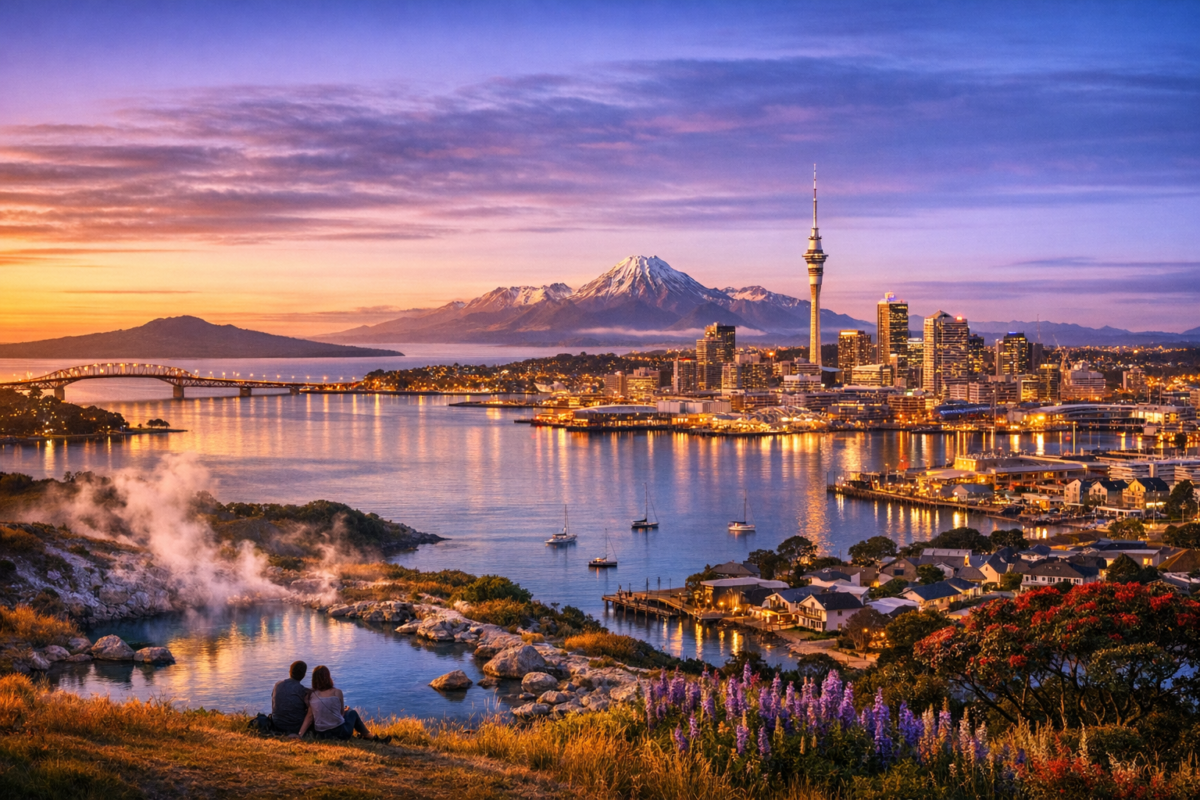
Auckland has a reputation among New Zealanders themselves as being expensive and not very interesting. Both parts of this are slightly unfair. The city has a spectacular harbour setting, a genuinely good food and coffee scene, and easy day trips to places that are extraordinary.
Rangitoto Island – a 600-year-old volcanic island in the Waitemata Harbour, accessible by ferry (NZ$28 return) – has a summit walk through lava fields and pohutukawa forest with panoramic harbour views that take about two hours return. It’s one of the finest easy half-day hikes in New Zealand and barely makes the tourist brochures. Waiheke Island (ferry NZ$40 return) is famous for wineries, but its walking tracks and beaches are free and spectacular. Piha – the black sand surf beach on the Waitakere Ranges coast, 40 minutes west of the city – is where Aucklanders actually go at weekends, costs nothing, and has some of the most dramatic coastal scenery in the country.
Local Insight: Auckland has an excellent public library system – all branches offer free WiFi and comfortable working space, useful for planning legs of your trip. The Auckland War Memorial Museum also has free entry for New Zealand residents and concession rates for visitors; the Maori and Pacific collections are genuinely outstanding.
2. Rotorua & the Waikato – Geothermal Heartland
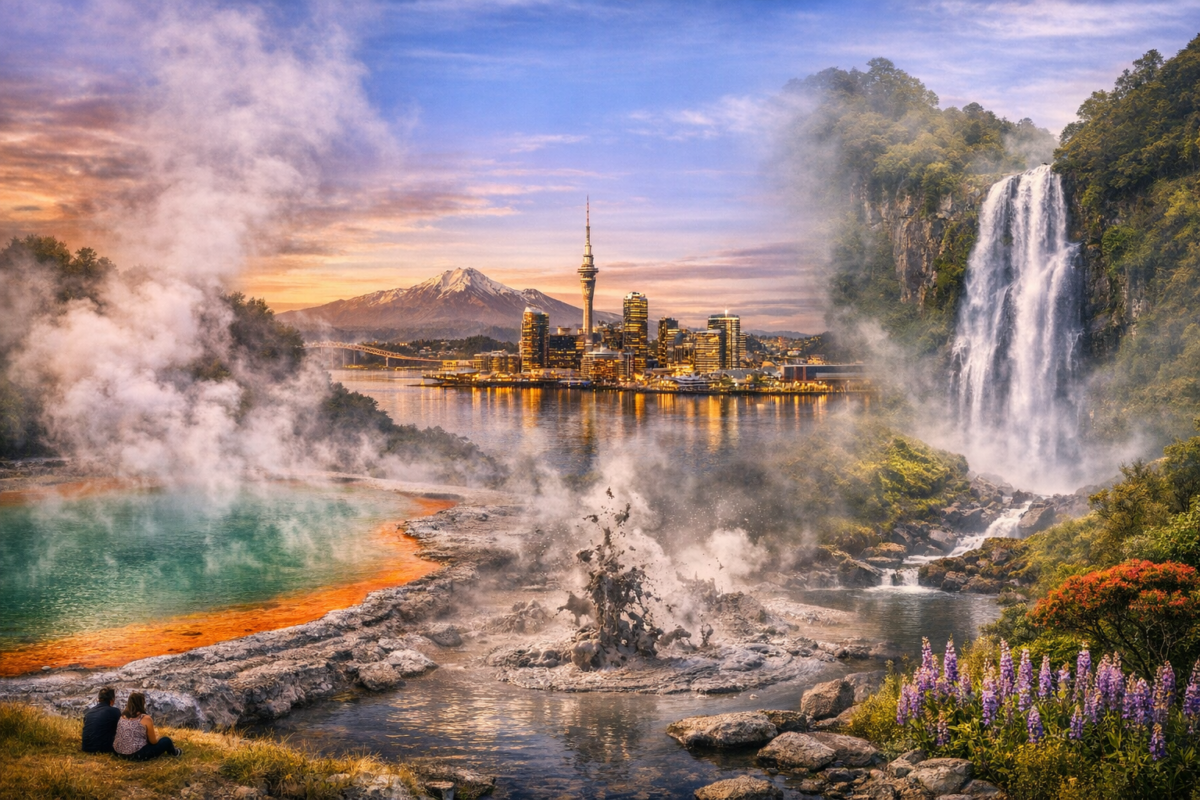
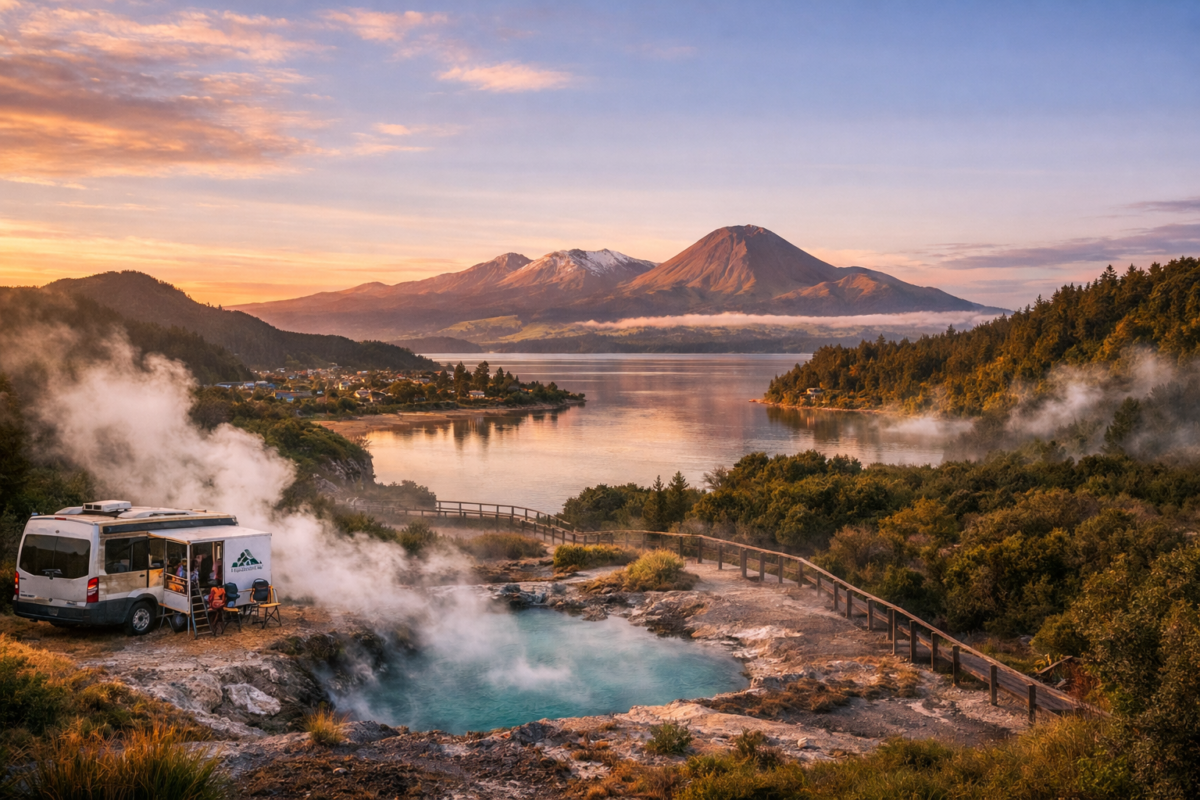
The Rotorua region is where New Zealand’s volcanic geology is most visibly and dramatically expressed. Geysers erupt on a schedule. Mud pools bubble at boiling point. The ground steams in the early morning. Hot springs run into cold rivers. The smell of sulphur is constant and inescapable and, after a day or two, entirely unnoticeable.
Most of the famous thermal attractions here – Wai-O-Tapu, Waimangu, Te Puia – charge NZ$30-50 entry. Worth it for one, not necessary for all. What people miss is that you can walk freely through several active geothermal areas for little or no cost. Kuirau Park in the centre of Rotorua is a public park with free access to bubbling mud pools and steam vents. Lake Waimangu has free road access and viewpoints from the perimeter. And the thermal hot pools at Kerosene Creek – a wild hot stream south of Rotorua where geothermal water runs over rocks through native bush – are completely free and one of the best experiences in the region.
The Huka Falls near Taupo, where the entire Waikato River is compressed into a 15-metre wide channel before dropping 11 metres in a churning turquoise rush, are free to view from a DOC walkway. They are, by volume of water, one of the most powerful waterfalls in New Zealand, and one of the most visited – for good reason.
Pro Tip: The Kerosene Creek hot stream is free, genuinely wonderful, and almost entirely unknown to package tourists. It is a 30-minute drive from Rotorua on SH38. Bring a towel, a cold drink, and at least two hours. Go on a weekday morning and you may have it to yourself.
3. Wellington – The Capital That Punches Above Its Weight
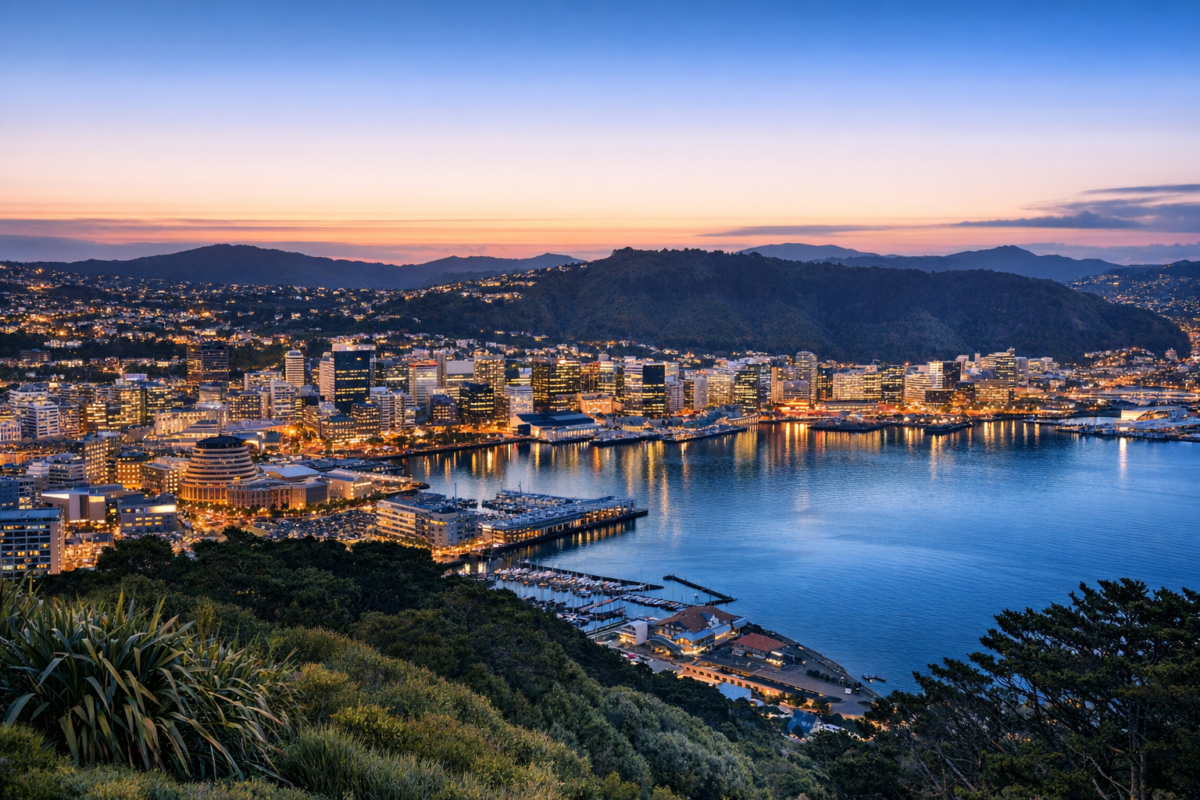
Wellington is the best-value city in New Zealand for travellers. It’s compact, completely walkable, has the country’s finest food and coffee culture, and contains an extraordinary concentration of free cultural institutions.
Te Papa Tongarewa, the national museum of New Zealand, is free entry and genuinely one of the finest museums in the Southern Hemisphere – the Maori and Pacific collections, the natural history displays, and the interactive New Zealand history exhibitions are all exceptional. Wellington Botanic Garden (free, cable car up from the city for NZ$6 return) has views over the harbour and city that are worth the small fare. The Cuba Street precinct offers some of the best cheap eating in New Zealand – the capital’s café culture is dense and competitive, meaning excellent flat whites and good food at competitive prices.
The Zealandia Ecosanctuary at the edge of the city (NZ$23 entry) is one of New Zealand’s great conservation achievements – a predator-free fenced sanctuary where native birds extinct from the mainland for over 100 years have been reintroduced. Kākāpō, tuatara, kōkako, little spotted kiwi. It’s one of the most moving wildlife experiences in the country.
South Island: Where the Budget Drama Really Lives
4. Nelson & the Abel Tasman – Golden Bays and Sea Kayaking
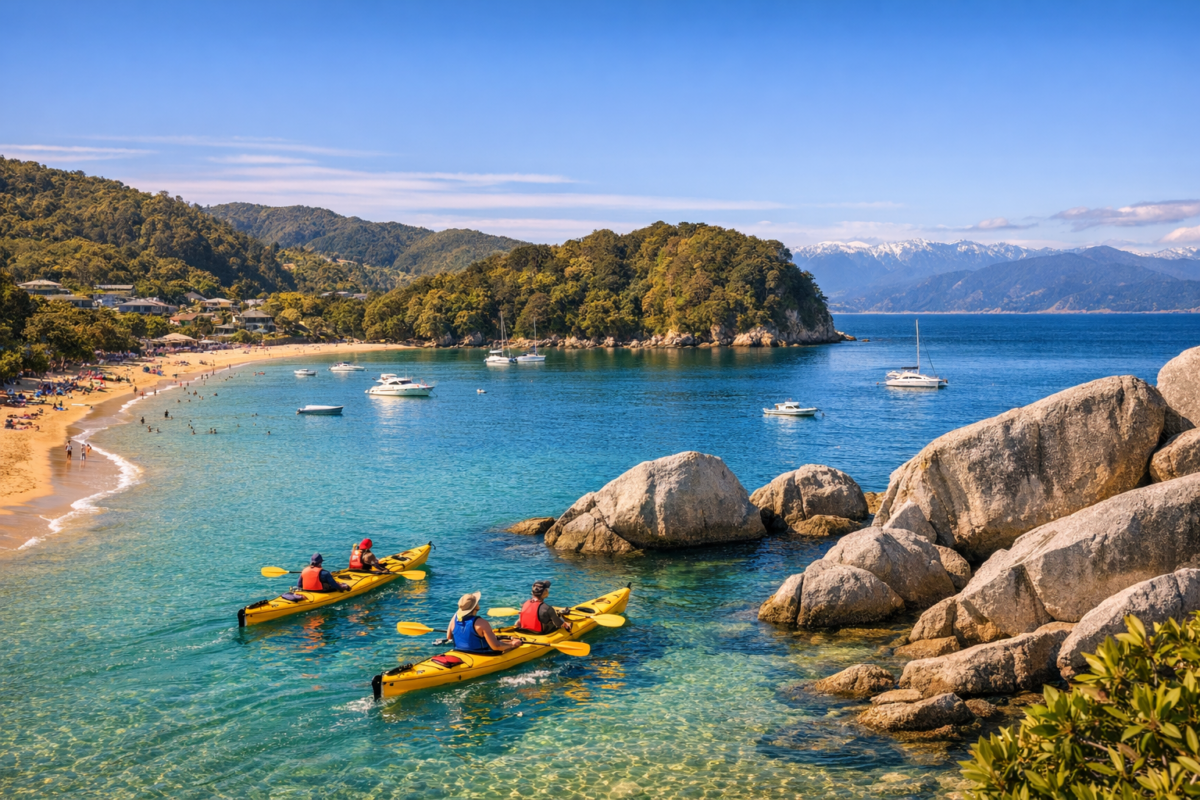
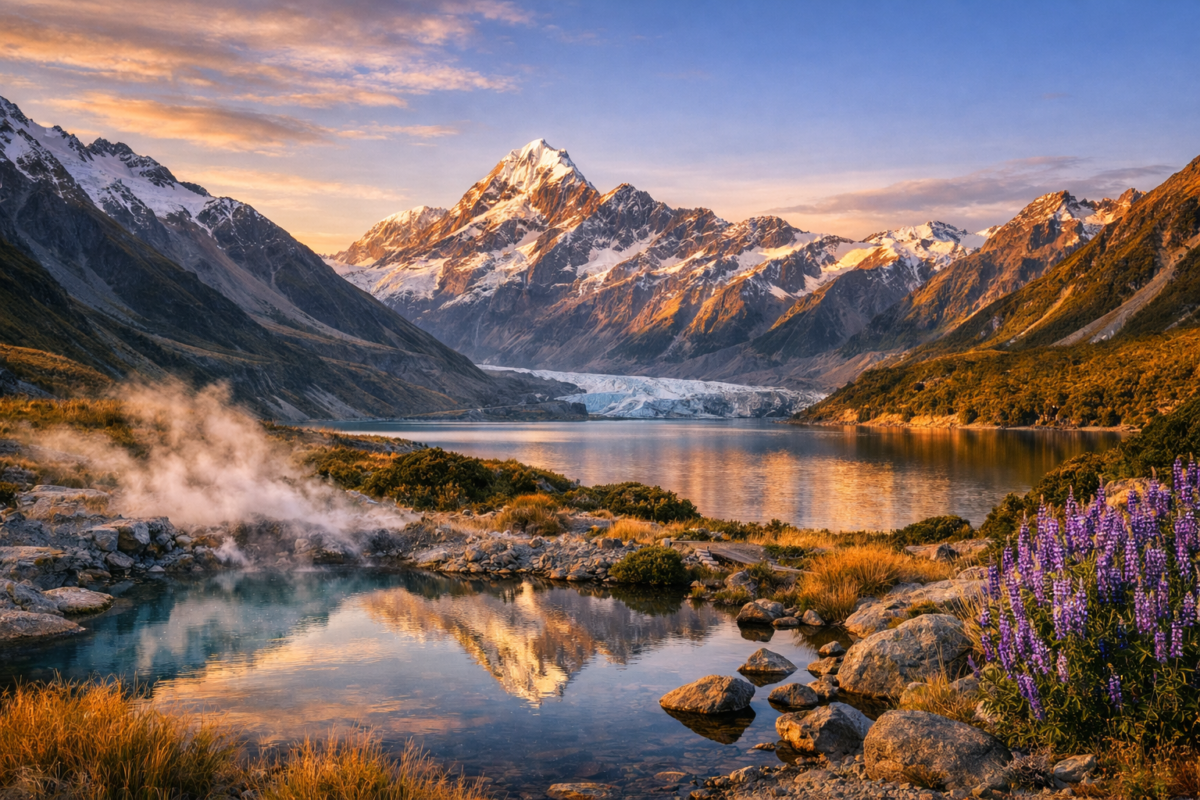
The top of the South Island – the Nelson/Tasman region – has the most sunshine hours in New Zealand, golden sandy beaches that face a calm inner sea, and the Abel Tasman National Park, which protects a 51-kilometre coastal track through bush above granite-fringed beaches.
The Abel Tasman Coast Track is one of New Zealand’s Great Walks and one of the most beautiful multi-day walks in the world. The full track takes 3-5 days; the Great Walks permit costs NZ$46-75 per night for hut accommodation. Budget option: the Wilsons Abel Tasman water taxi allows you to walk sections of the track and shuttle out, paying only for the days you walk. Sea kayaking in Abel Tasman – through golden coves and around fur seal colonies – costs NZ$80-130 per day for a guided experience, less for self-guided rental.
The beaches around Kaiteriteri and Marahau are free and beautiful and require nothing beyond getting yourself there.
5. Kaikōura – Whale Watching on a Budget
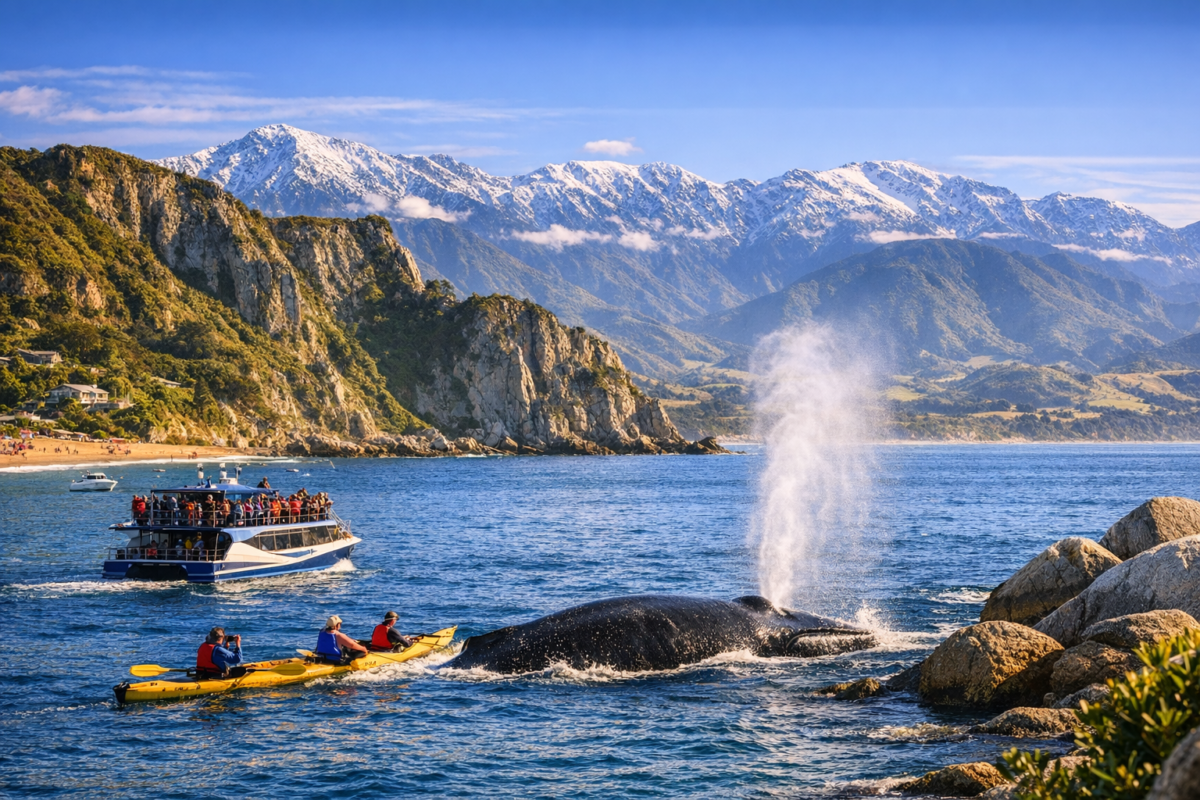
Kaikōura sits where the Kaikōura Canyon – a deep-sea trench – comes close to shore, creating an upwelling of nutrients that supports an extraordinary marine ecosystem. Sperm whales are present year-round. Dusky dolphins in their thousands. New Zealand fur seals on every rock. And a mountain range rising abruptly from the sea behind the town that makes the whole setting look completely implausible.
The whale watching boat tours cost NZ$150-175 per person and are worth doing once – but even from shore, marine life encounters are remarkable. The Kaikōura Seal Colony is free to walk through (keep the required 10-metre distance). Dolphins frequently ride the bow waves of the car ferry between Picton and Wellington, visible for free. And the Kaikōura Peninsula Walkway – a 12-kilometre free DOC track – covers seal colonies, coastal geology, mountain views, and rock pool life that would cost a significant sum to see anywhere else in the world.
6. Christchurch & Akaroa – Garden City and French Harbour

Christchurch was devastated by the 2010 and 2011 earthquakes and has been rebuilding ever since. The result – somewhat paradoxically – is one of the most interesting and creative cities in New Zealand: new architecture, inventive public art, a vibrant hospitality scene that grew up in shipping containers and stayed interesting, and the Botanic Gardens (free, 180 acres, genuinely stunning) as the centrepiece of a city that has rebuilt its green spaces with evident care.
A 75-kilometre drive south of Christchurch, Akaroa sits inside an ancient volcanic crater that forms a deep harbour on the Banks Peninsula. The town has a French colonial heritage – it was settled by French emigrants in 1840, just weeks after the Treaty of Waitangi was signed – and a character unlike anywhere else in New Zealand: stone French-style buildings, small art galleries, and the only colony of Hector’s dolphins in the world accessible by a short harbour cruise. The drive over the crater rim on the Summit Road is free and extraordinary.
Pro Tip: The free Christchurch Art Gallery is genuinely world-class – don’t skip it because it’s free. The permanent collection alone justifies a half-day visit. The temporary exhibition programme is consistently excellent.
7. Queenstown & the Southern Lakes – Adventure Capital on a Budget
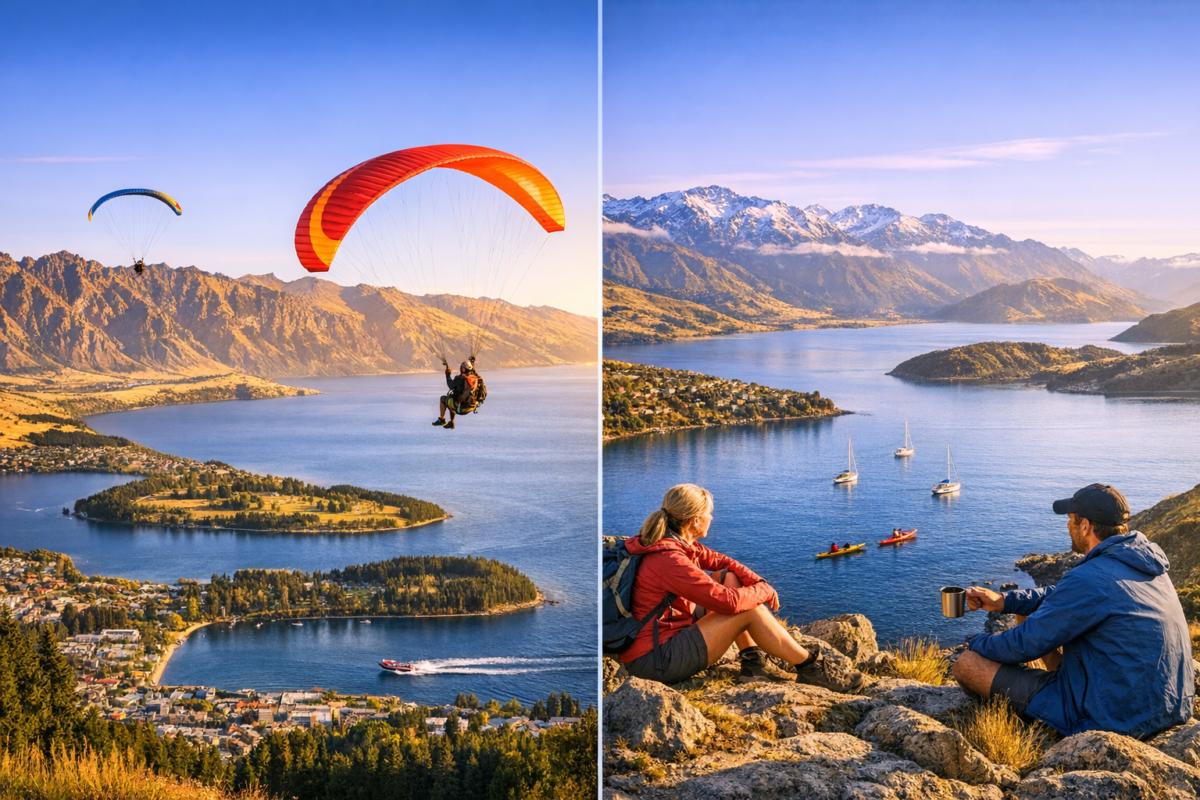
Queenstown is New Zealand’s adventure capital and one of its most expensive towns. The famous activities – bungee jumping (NZ$165+), skydiving (NZ$270+), jet boating (NZ$125+), helicopter flights (NZ$250+) – are genuinely spectacular and genuinely costly. But Queenstown sits in a landscape so dramatic that an enormous amount of the experience is available for free.
The Queenstown Hill Walkway (2-3 hours return, free) gives panoramic views over the lake and the Remarkables mountain range that rival anything you’d see from a helicopter at 1/200th of the cost. The Routeburn Track (Great Walk, NZ$22–55 per night) is one of the finest mountain walks in the Southern Hemisphere and offers scenery that no skydive can match for sustained duration.
Wanaka, an hour north of Queenstown, is everything Queenstown is before it got famous – a lakeside town with the same mountain backdrop, better coffee, lower prices, and the Roys Peak Track (one of the best day hikes in New Zealand, free, 16km return, 5–6 hours, extraordinary ridge walk above Lake Wanaka).
Heads Up: Queenstown accommodation in July (ski season) and January (New Zealand summer peak) reaches its highest prices. A hostel dorm that costs NZ$28 in April can be NZ$55 in January. Book early for summer dates or consider basing yourself in Wanaka (cheaper) and day-tripping into Queenstown.
8. Fiordland & Milford Sound – The Most Dramatic Landscape in New Zealand
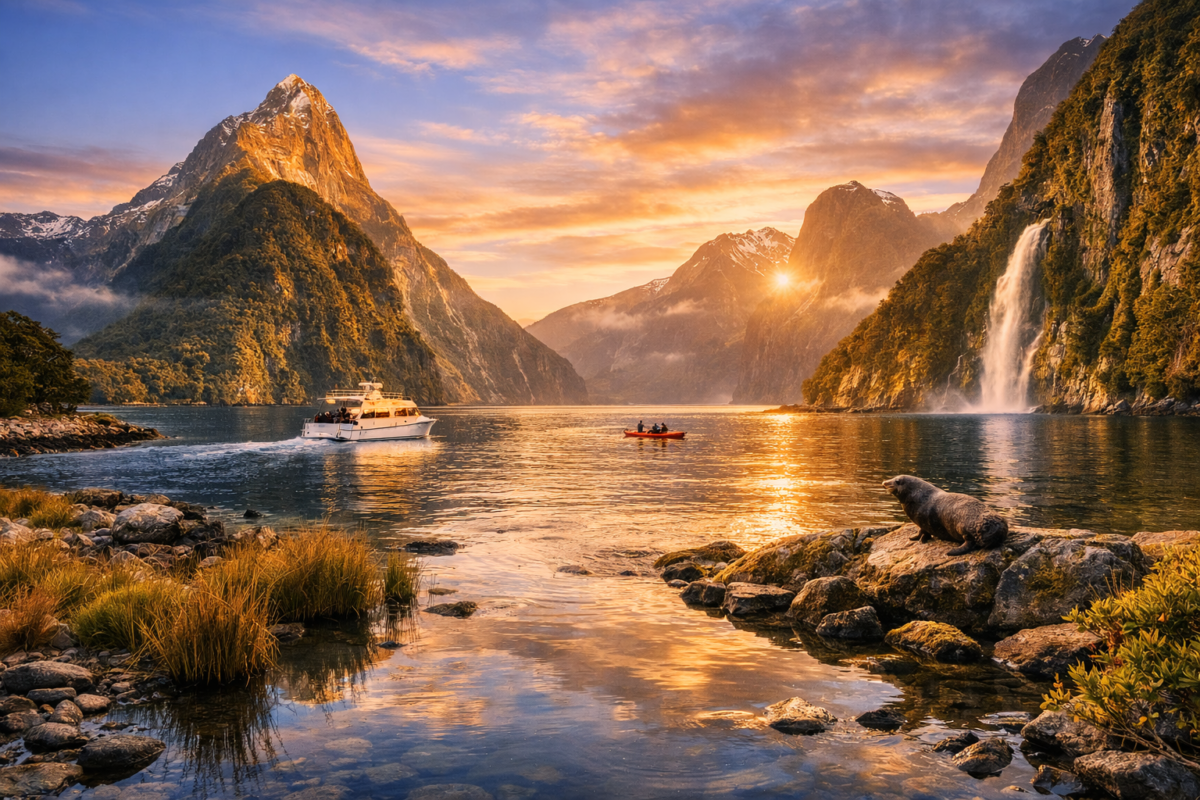
Fiordland National Park covers 1.2 million hectares of the south-west corner of the South Island – glacially carved fiords, mountain walls rising 1,500 metres directly from black water, ancient beech forest, and waterfalls that appear after rain in their hundreds. It is, by most measures, the most spectacular national park in New Zealand. Possibly in the Southern Hemisphere.
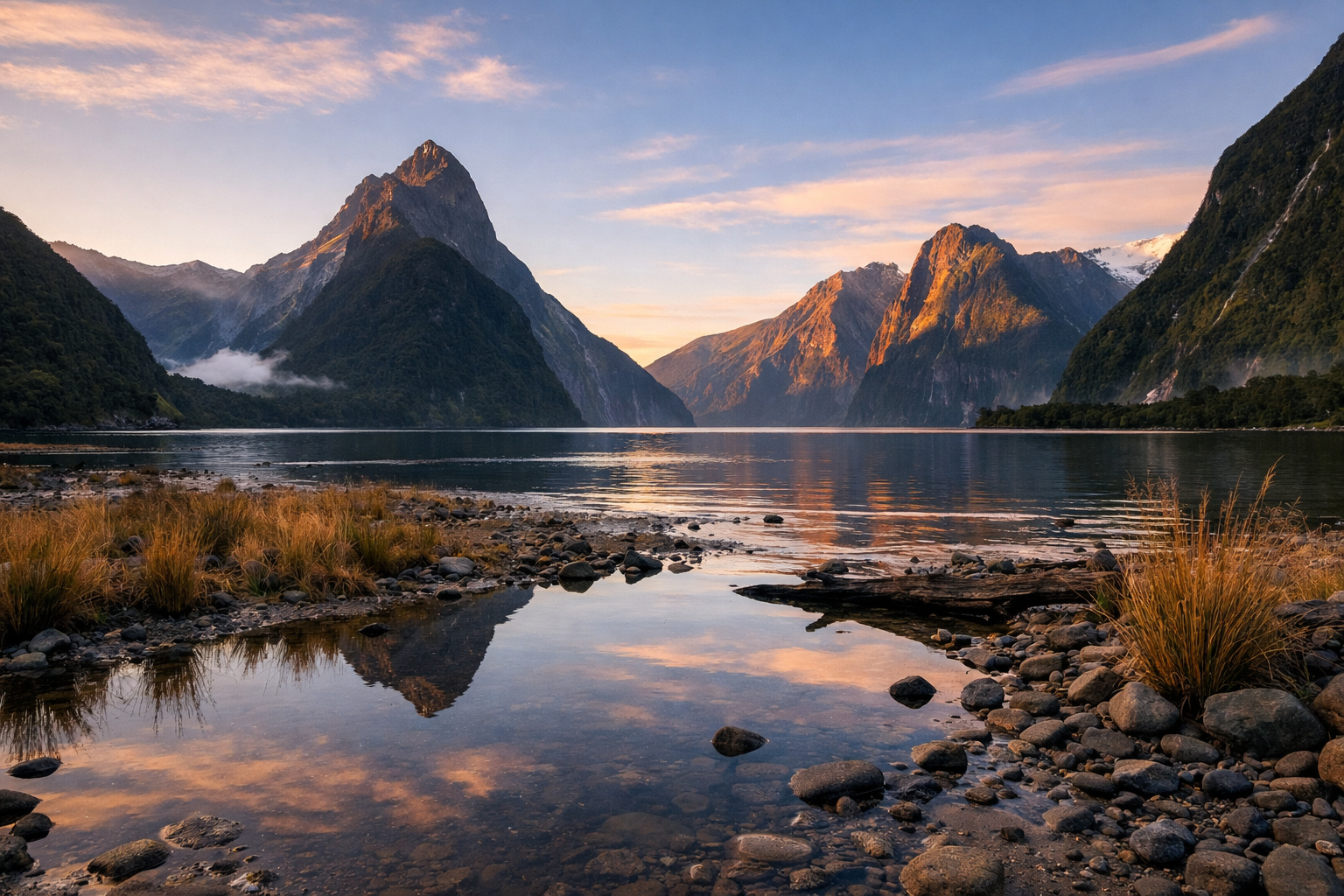
Milford Sound – the most famous of the fiords – is a two-hour drive from Te Anau on one of the most beautiful mountain roads in the world. The drive itself is free. The view of Mitre Peak reflected in the still water of the sound at dawn is free. A boat cruise into the fiord costs NZ$60-90 and is worth doing once – the scale of the walls is impossible to grasp from shore. The kayaking is spectacular at NZ$120-150.
Doubtful Sound is three times the size of Milford Sound, receives a fraction of its visitors, and requires a boat crossing of Lake Manapouri to access. The full day trip costs NZ$220-280 per person – expensive, but one of the most genuinely remote and overwhelming natural experiences available in New Zealand.
The Kepler Track and Routeburn Track both begin near Te Anau and offer multi-day walking through Fiordland scenery at Great Walks permit prices. The DOC’s Luxmore Hut on the Kepler Track – a 15km walk from the trailhead -is NZ$55 per night and has views over Lake Te Anau and the Murchison Mountains that make it, mile for mile, some of the best value sleeping in New Zealand.
Local Insight: Book Great Walks permits as early as possible – ideally when the booking window opens in June for the following summer season. The Milford Track (NZ’s most famous walk), Routeburn, and Kepler all book out completely within hours of opening for January-February dates. Missing out means waiting a year.
9. The West Coast & Franz Josef – Glaciers, Rainforest, and Pancake Rocks
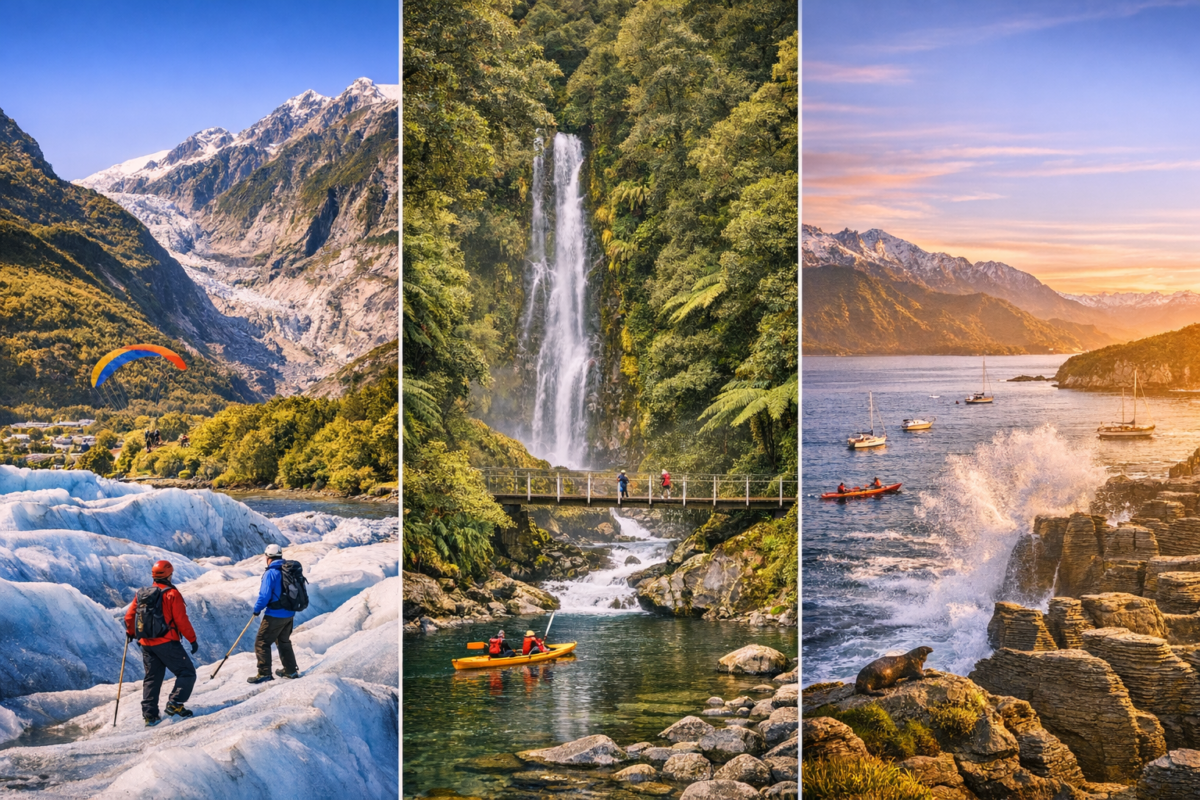
The West Coast of the South Island is the least-visited region of New Zealand and, in terms of raw landscape intensity, one of the most extraordinary. The Southern Alps catch all the moisture coming off the Tasman Sea, dumping 5-8 metres of rain per year on the western slopes and creating temperate rainforest so dense and green and complex that walking through it feels like entering a living thing.
Pancake Rocks at Punakaiki – a coastal geological formation where limestone has been layered and eroded into stacked formations that look exactly as the name suggests – are free to walk through on a 30-minute DOC boardwalk. When the swell is right, blowholes shoot columns of water six metres into the air through the rock. Timing is everything; the DOC website gives blowhole timing predictions based on tide tables.
Franz Josef Glacier was, for most of the 20th century, one of the few glaciers in the world that descended to near sea level into temperate rainforest. Climate change has retreated it significantly; helicopter flights (NZ$250+) or guided heli-hike experiences (NZ$450+) are now the primary way to access the glacier itself. The glacier valley walk (free, DOC track, 1.5 hours return) to the glacier viewpoint is genuinely worthwhile even without getting on the ice – the scale of the carved valley is extraordinary.
Staying Connected in New Zealand
New Zealand has good mobile coverage in cities, main towns, and along major highways, but coverage disappears entirely in the national parks, Fiordland, the West Coast, and many rural areas. For most international visitors, an eSIM is the best connectivity solution.
Airalo and Yesim both offer New Zealand and Oceania-wide data packages. Activate before you fly and you’re connected from the moment you clear customs – no airport SIM shop queues, no physical SIM to keep track of. For remote areas with no coverage, rent a personal locator beacon (PLB) or satellite communicator from DOC visitor centres – this is not optional for multi-day Great Walks in Fiordland.
For access to your home streaming services and banking apps while in New Zealand, NordVPN works reliably on NZ networks and takes minutes to set up.
Check weather conditions for your specific region and upcoming days at our Weather Checker – New Zealand’s weather is famously variable (four seasons in one day) and planning hikes and drives around the forecast is one of the most important budget decisions you can make. Bad-weather days in Fiordland or on the West Coast can derail expensive plans.
Travel Insurance and Trip Protection
New Zealand has a unique no-fault accident compensation scheme (ACC) that covers medical treatment for accidents regardless of who was at fault – which is genuinely reassuring. However, ACC does not cover illness, pre-existing conditions, trip cancellation, lost luggage, or emergency evacuation for non-accident medical issues.
Comprehensive travel insurance is non-negotiable for New Zealand, particularly for anyone planning Great Walks, adventure activities, or remote tramping. Ekta Travel Insurance offers flexible adventure travel policies covering hiking, water sports, and the specific activity types common in New Zealand.
Store luggage during city days without carrying it everywhere using Radical Storage – particularly useful in Auckland and Wellington between accommodation check-out and an evening departure.
20 Money-Saving Tips for New Zealand Travel
- Shop at Pak’nSave exclusively: The cheapest supermarket chain in NZ by a clear margin. Never buy food at petrol stations or tourist cafés when a Pak’nSave is nearby.
- Cook every breakfast and most lunches: Restaurant breakfasts cost NZ$20-30. A camp stove breakfast costs NZ$1-2. Over three weeks this saves NZ$400-600.
- Use DOC freedom campsites: Free or NZ$8 sites scattered throughout the country. The Campermate app lists them with reviews and photos. Many are in spectacular locations.
- Walk every Great Walk you can afford: At NZ$22–75 per night, these are among the most cost-effective world-class outdoor experiences on the planet.
- Avoid Queenstown accommodation: Base in Wanaka (same scenery, 30-40% cheaper) or Cromwell and drive into Queenstown for activities.
- Buy a Naked Passholder discount card: The NZ Discount Card (available at many hostels) gives 5-50% off a wide range of activities and accommodation.
- Fill water bottles from DOC hut taps: Water is safe and free at all staffed DOC huts. Never buy bottled water in NZ – tap water quality is excellent throughout the country.
- Check GrabSeat sales for domestic flights: Air NZ’s domestic fares can be as low as NZ$29-49 on sale. The Auckland-Queenstown hop can save a full day of driving.
- Hitch-hike (seriously): New Zealand has one of the safest hitching cultures in the world. Backpackers report waiting rarely more than 20 minutes outside main towns. Always tell someone your route.
- Do your laundry at holiday parks: Most holiday parks have coin-operated laundry for NZ$3–5 per load – far cheaper than hostel laundry services.
- Book ferries and buses in advance: The Interislander and Bluebridge Cook Strait ferries and InterCity buses all offer early-booking discounts of 20-40%.
- Visit thermal hot pools for free: Kerosene Creek (Rotorua), Wairakei Terraces, and several DOC-managed thermal pools are free. Skip the expensive commercial hot pools.
- Download maps offline before remote drives: Maps.me or Google Maps offline covers all NZ roads. Cell coverage disappears in the national parks – be prepared.
- Time your North Island volcanoes carefully: The Tongariro Alpine Crossing (NZ’s most famous day walk, free) is spectacular in good weather and potentially dangerous in bad. Check the forecast three days ahead and reschedule if necessary – it is worth waiting for.
- Volunteer for a working holiday: WWOOF (Willing Workers on Organic Farms) and HelpX connect travellers with farm and homestead hosts who offer accommodation and food in exchange for 4-5 hours of work per day. Legal on a Working Holiday Visa.
- Stock up on wine in Central Otago: Central Otago pinot noir is world-class and cellar-door prices are 30-50% cheaper than what you’d pay in Auckland or Wellington restaurants.
- Use the AA road trip planner: The New Zealand Automobile Association’s free road trip planner calculates fuel costs for your specific vehicle across any route – essential for budgeting road trips accurately.
- Check iSite visitor centres on arrival: Every town has a DOC or local i-SITE visitor centre with free maps, weather updates, and occasionally last-minute accommodation deals. Always go in.
- Avoid renting a campervan alone: Solo campervan hire is expensive per person. Find a travel partner or use a rental car + DOC campsite combination instead.
- Plan your Great Walks permit purchases for opening day: Great Walks booking opens mid-June for the following season. Put a calendar reminder in now. The popular walks sell out within hours.
Best Time to Visit New Zealand on a Budget
New Zealand’s seasons are the reverse of the Northern Hemisphere: summer runs December–February, winter June-August. The timing that offers the best combination of weather, experience, and value:
- October-November (Spring – Best Budget Season): Weather improving, facilities opening for summer, Great Walks available but not booked out, prices 20-30% lower than peak summer. Wildflowers on alpine tracks. Lambs everywhere (genuinely lovely).
- December-February (Summer – Peak Season): Warmest, most reliable weather. All Great Walks open. Water warm enough for swimming. Also busiest and most expensive. Book everything well in advance.
- March-April (Autumn – Second-Best Budget Season): Beech trees turn golden in the South Island valleys. Weather still often excellent. Crowds thinning from late February. Great Walks still open until late April. Prices beginning to ease.
- June-August (Winter): Ski season in the South Island (Coronet Peak, The Remarkables near Queenstown; Mt Hutt near Christchurch). Some Great Walks close for winter. Cheapest time for non-skiing travel. Fiordland gets its highest rainfall but the waterfalls are extraordinary.
Pro Tip: Check our Weather Checker for New Zealand regional forecasts before setting your travel dates. The South Island’s weather varies dramatically between the east (Christchurch, Wanaka – sunny and dry) and the west (Westland, Fiordland – extraordinarily wet). This has direct implications for where you plan to be and when.
Plan Your New Zealand Trip with These Free Tools
- AI Travel Budget Estimator – build your complete NZ trip budget based on duration, regions, and travel style
- Packing List Generator – build a custom NZ packing list for hiking, camping, and variable alpine weather
- Travel Planning Services – want a custom New Zealand itinerary built around your budget? Our team builds them end to end
- Budget Travel Hub – money-saving strategies that work across all our global destinations
- More Destination Guides – all our Asia-Pacific, Europe, and worldwide destination coverage in one place
Frequently Asked Questions
Q1: Is New Zealand really that expensive to travel?
It’s expensive in some specific areas – flights, petrol, commercial adventure activities, restaurant dining. But the things that define the New Zealand experience – the hiking, the national parks, the beaches, the drives, the scenery – are largely free. A traveller who self-caters, uses DOC campsites, and focuses on the Great Walks and free natural attractions can travel New Zealand for NZ$70-100 per day total. The reputation for expense comes from travellers who eat out three times a day and book every available activity.
Q2: Do I need a visa to visit New Zealand?
Citizens of Australia need no visa and can stay indefinitely. UK, US, Canadian, EU, and most Western European passport holders can visit visa-free for 90 days under New Zealand’s visa waiver scheme. However, NZ introduced a NZeTA (New Zealand Electronic Travel Authority) requirement in 2019 – it costs NZ$17 (online) or NZ$23 (via app) and takes 72 hours to approve. Apply before you fly. An International Visitor Conservation and Tourism Levy (IVL) of NZ$35 applies to most international visitors at the same time.
Q3: What is the best way to get around New Zealand cheaply?
A rental car combined with DOC campsites is the most flexible and often cheapest option, particularly for two or more travelling together (shared costs). For solo travellers, the InterCity bus network covers most of the main routes affordably, and the Kiwi Experience hop-on-hop-off bus is popular for backpackers. Domestic flights (Air NZ on sale) can occasionally undercut driving time and cost. Hitching is genuinely viable between main tourist towns.
Q4: How many days do you need to see New Zealand?
Three weeks is the minimum to see both islands without feeling rushed. Four weeks is better. Six weeks allows you to go deep – to spend three nights on a Great Walk, take the long route to Milford Sound, explore the Catlins, and linger in the places you love rather than checking boxes. New Zealand rewards slow travel. The best moments are rarely the ones you planned.
Q5: Is New Zealand safe for solo travellers?
New Zealand is one of the safest countries in the world for independent travel. Violent crime is rare, the hiking infrastructure is excellent, and locals are genuinely helpful. The main risks are environmental: the weather changes rapidly in alpine areas, river crossings can be dangerous after heavy rain, and some tracks require a level of fitness and equipment that casual walkers underestimate. Always tell someone your intentions before a multi-day walk, register your trip on the DOC AdventureSmart system, and carry emergency communications for remote areas.
Q6: What vaccinations or health preparation do I need for New Zealand?
No vaccinations are required to enter New Zealand. Standard travel health precautions apply: ensure routine vaccinations are up to date, pack a basic first aid kit for remote hiking, and bring adequate sun protection – New Zealand’s UV index is among the highest in the world due to the thin ozone layer above the Southern Hemisphere. Sunscreen, sunglasses, and a hat are genuinely essential, not optional.
Final Thoughts: New Zealand Will Make You Reset Your Expectations
There is a particular quality to New Zealand travel that I’ve struggled to articulate since my first trip and still don’t quite have the words for. It’s something to do with the scale and the silence. The country is large enough that you can get genuinely lost in it, but small enough that within an hour of any city you’re in wilderness. The native bush – the beech forests, the rimu and kahikatea and tōtara – is unlike any temperate forest I have walked in elsewhere. The birdsong in the early morning in Fiordland is some of the most complex and layered natural sound I’ve ever heard.
And the budget version of this – the oats for breakfast and the DOC campsite and the twelve-hour walk and the cold swim in a river that has come from a glacier – is not a lesser version of the New Zealand experience. It is the New Zealand experience. The country was made for people who are willing to walk somewhere to see it.
Start planning your New Zealand trip today. Find the best flights on Aviasales, earn cashback with WayAway, compare car rentals at GetRentACar, activate your eSIM with Airalo or Yesim, and protect every hike and drive with Ekta Travel Insurance. Browse our full destination guide library and budget travel hub for more inspiration. The Southern Alps are waiting.
Ka kite anō — until next time.
Hidden Travels Team | hiddentravels.site