
⚠️ Affiliate Disclosure: Some links in this post are affiliate links. If you book through them, we earn a small commission – at zero extra cost to you. We only recommend services we genuinely use and trust.
I arrived at Narita on a Tuesday morning with a backpack, a pocket of yen I Had changed at the airport (bad idea – more on that later), and the slightly panicked feeling of someone who has just realised that not a single sign in the arrivals hall is in the Roman alphabet.
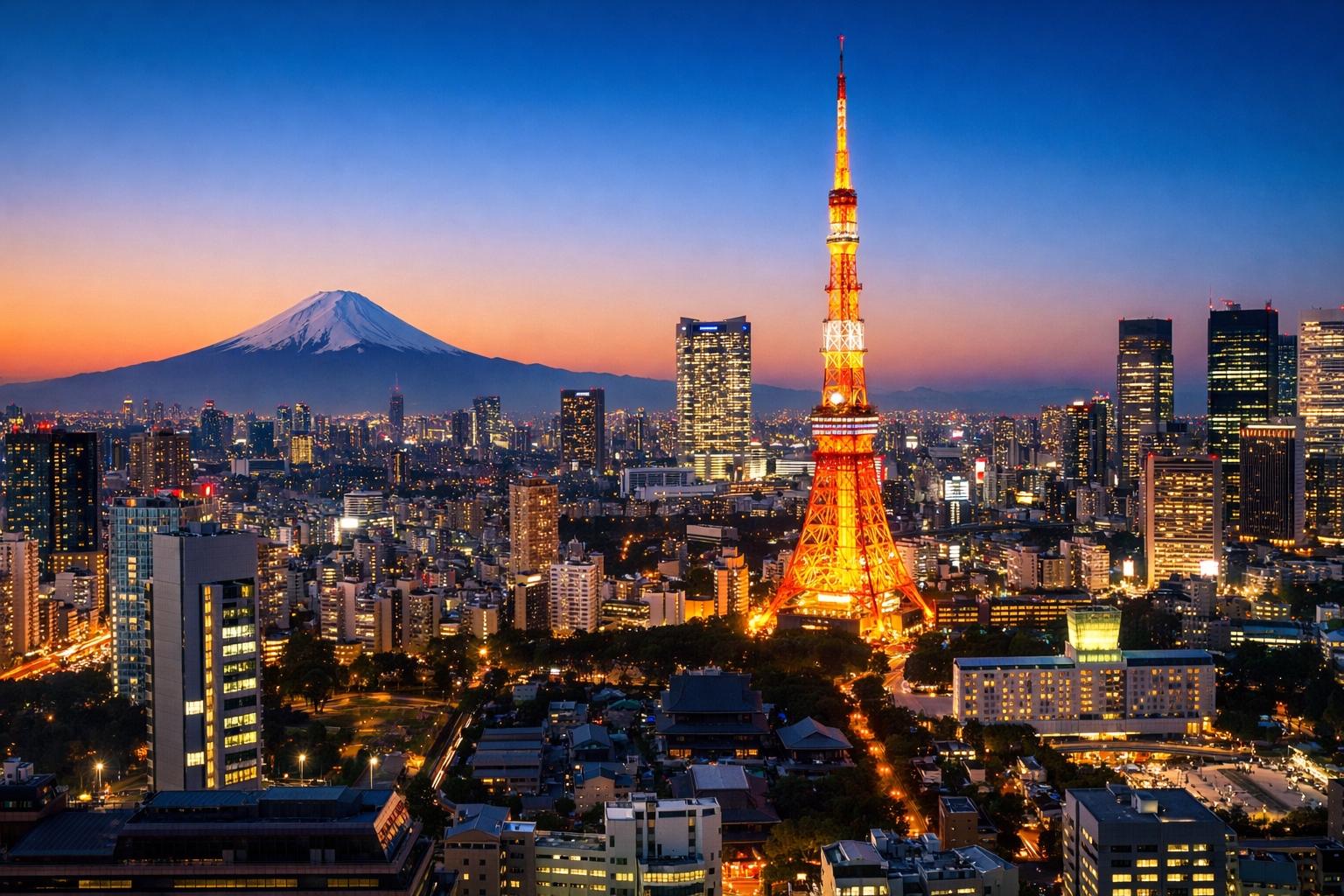
Twenty minutes later, I was on the Narita Express, watching the Tokyo skyline assemble itself on the horizon – towers and temples and expressways layered together like something a city planner dreamed and then decided to build anyway. By the time I got off at Shinjuku Station, the largest railway station in the world, and walked out onto the street into that wall of neon and noise and smell of ramen and a man in a perfectly pressed suit bowing deeply to nobody in particular – I was completely, irreversibly hooked.
Here’s the thing about Tokyo that nobody tells you before your first visit: it looks intimidating from the outside, and from the moment you land, it makes absolute sense. The trains run to the second. Every convenience store is a masterclass in quiet efficiency. People will go out of their way to help you, even when the language gap means pointing, phone maps, and a lot of patient smiling from both sides.
I have been back four times since that Tuesday morning. Solo every time. And this guide is everything I wish I’d known on that first trip – the neighbourhoods, the food, the money, the transport, the places nobody puts in the glossy travel supplements, and the things that will make Tokyo feel less like a foreign city and more like a place you already somehow know.
Whether you’re a first-timer or a returning traveller looking to dig deeper, this is your complete guide to solo travel in Tokyo.
Pro Tip: Before you go, check current weather conditions at our Weather Checker and build your Japan packing list using the Packing List Generator – Tokyo’s seasons vary dramatically and being under- or over-packed matters.
Why Tokyo Is One of the Best Cities in the World for Solo Travel
Solo travel has its complicated cities – places where the social dynamics, the safety considerations, or the language barrier make it genuinely harder to navigate alone. Tokyo is not one of those cities. Tokyo might, in fact, be the best city in the world for solo travel. Here’s why.
Safety is extraordinary. Japan consistently ranks in the top five safest countries globally. Violent crime against tourists is so rare it’s almost theoretical. Women travelling alone in Tokyo report feeling safer than in most Western European capitals – on trains, on streets, at night.
Solo dining is a cultural institution. Many Tokyo restaurants have counter seating designed specifically for single diners – ramen shops, sushi counters, yakitori bars, tonkatsu restaurants. There’s no awkward ‘table for one, please’ moment. Counter seating is the correct way to eat in much of Tokyo.
Navigation is nearly foolproof. Google Maps works perfectly in Tokyo. Train announcements come in English. IC cards (Suica/Pasmo) make public transport frictionless. You never have to ask for directions – the system does the navigating for you.
The city rewards slow, wandering exploration. Tokyo is a city that reveals itself block by block. The best moments are rarely planned – a basement record shop you stumble into, a temple tucked behind a department store, a tiny 6-seat ramen counter that doesn’t have an Instagram page but has a queue of locals out the door.
Local Insight: Japanese culture has a concept called kodawari – a relentless dedication to doing one thing perfectly. You will encounter it everywhere in Tokyo: in the ramen chef who has been perfecting one broth for 30 years, in the temple garden that has been maintained by the same family for six generations, in the convenience store sandwich that somehow tastes better than sandwiches have any business tasting. Pay attention to it. It changes how you travel.
Tokyo’s Best Neighbourhoods: Where to Go and Why
Tokyo is not one city. It’s about 20 distinct neighbourhoods stacked against each other, each with a completely different personality, demographic, and purpose. Understanding this is the key to a great Tokyo trip.
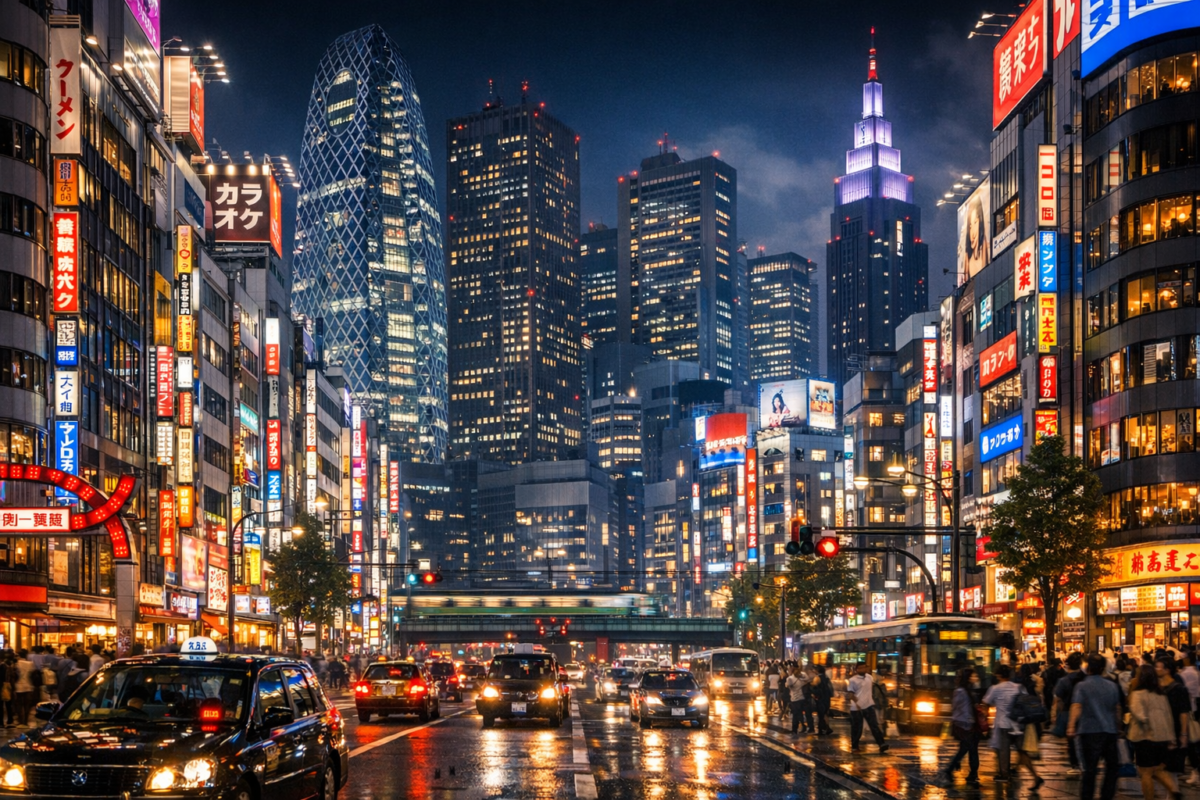
| Shinjuku – The City That Never Sleeps |
| Vibe: Electric, overwhelming, glorious. Neon towers, underground izakayas, the world’s busiest pedestrian area, and the Golden Gai – 200 tiny bars in six narrow alleys, each seating perhaps 8 people.Best for: Night out, people-watching, izakaya dining, Kabukicho neon photographyDon’t miss: Golden Gai after 9pm. Omoide Yokocho (Memory Lane) for grilled skewers under paper lanterns. Shinjuku Gyoen garden for afternoon calm. |
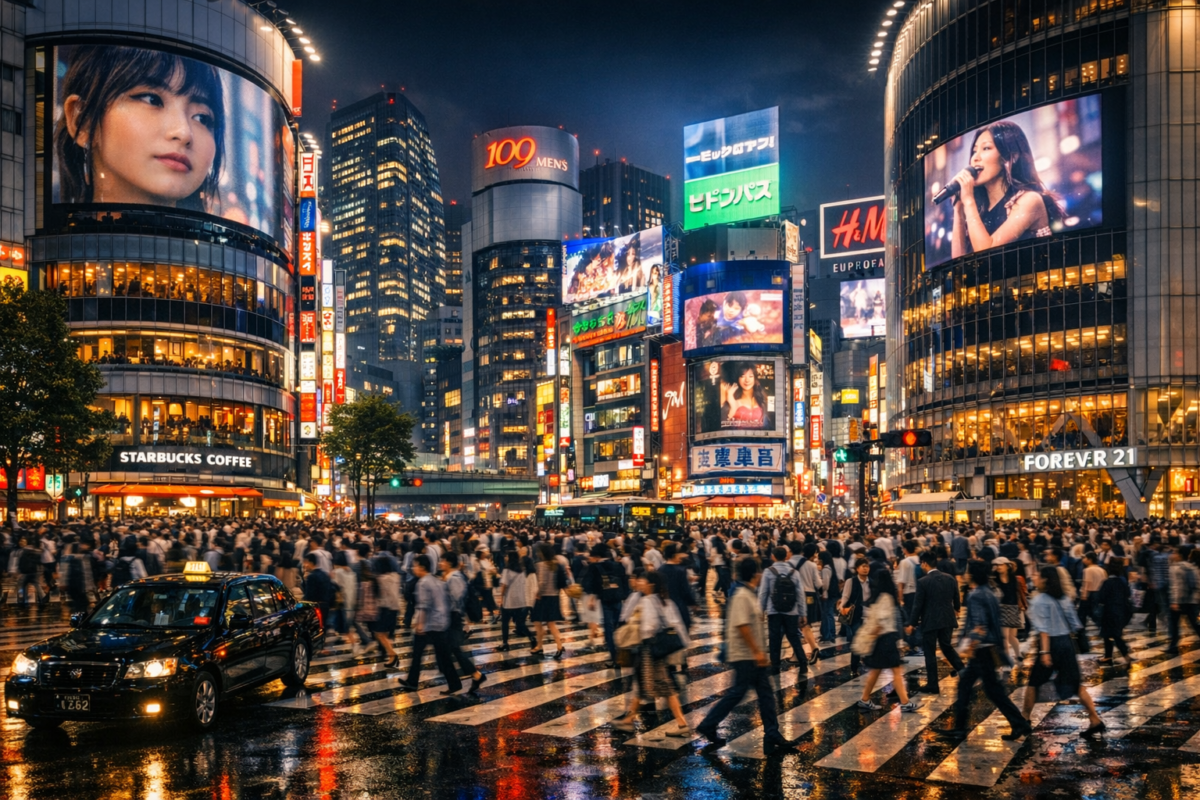
| Shibuya – Where Everyone Meets |
| Vibe: Young, loud, fashion-forward, and home to the most photographed pedestrian crossing on Earth. The Shibuya Scramble Crossing is genuinely mesmerising at peak hour – stand on the second floor of the Starbucks opposite and watch 3,000 people cross from five directions simultaneously.Best for: Shopping, street fashion, nightlife, the Scramble Crossing experienceDon’t miss: Shibuya Sky observation deck at sunset. Nonbei Yokocho – a quieter alley version of the Golden Gai. Daikanyama (a 15-min walk) for the best independent bookshop and café scene in Tokyo. |
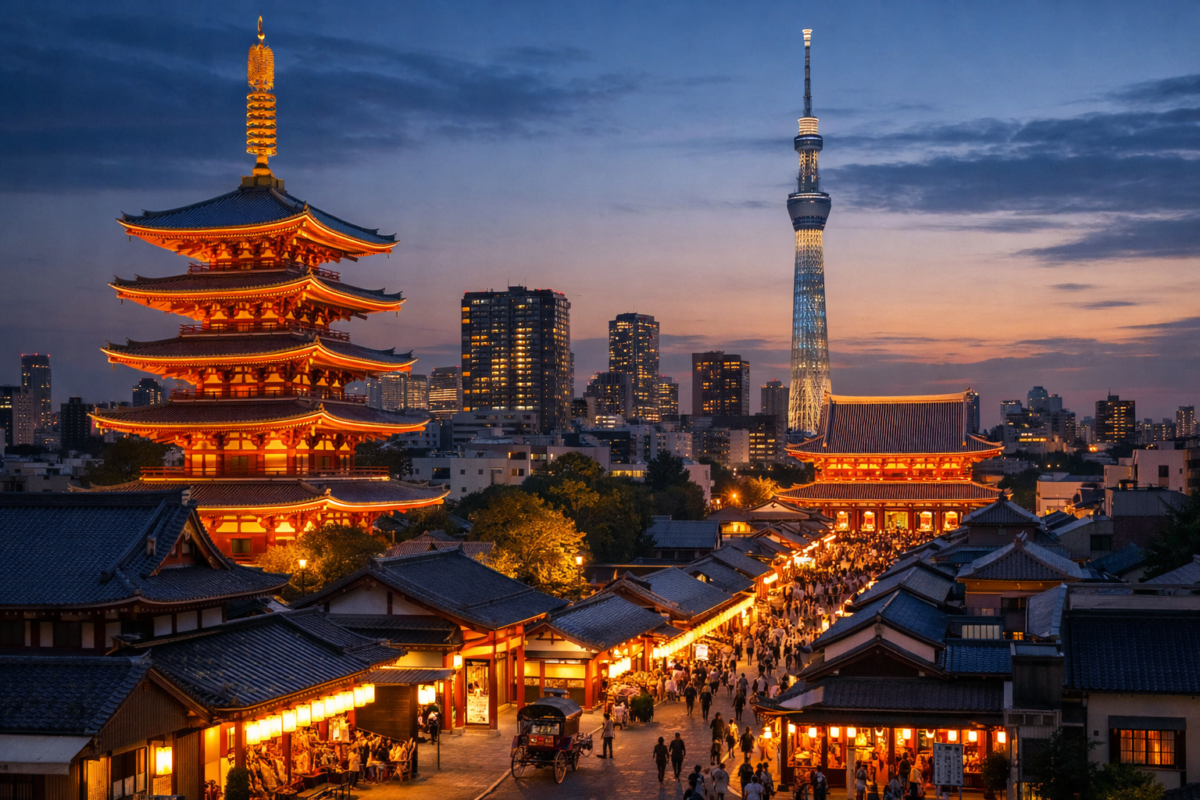
| Asakusa – Old Tokyo Breathing |
| Vibe: The part of Tokyo that feels closest to the pre-war city – Senso-ji temple, rickshaws, traditional craft shops, and narrow lanes that smell of incense and steamed buns.Best for: History, culture, temples, traditional shopping, food photographyDon’t miss: Senso-ji temple at 6am before anyone else arrives. Nakamise Shopping Street for traditional snacks. The view of the Skytree across the Sumida River from Azumabashi bridge. |
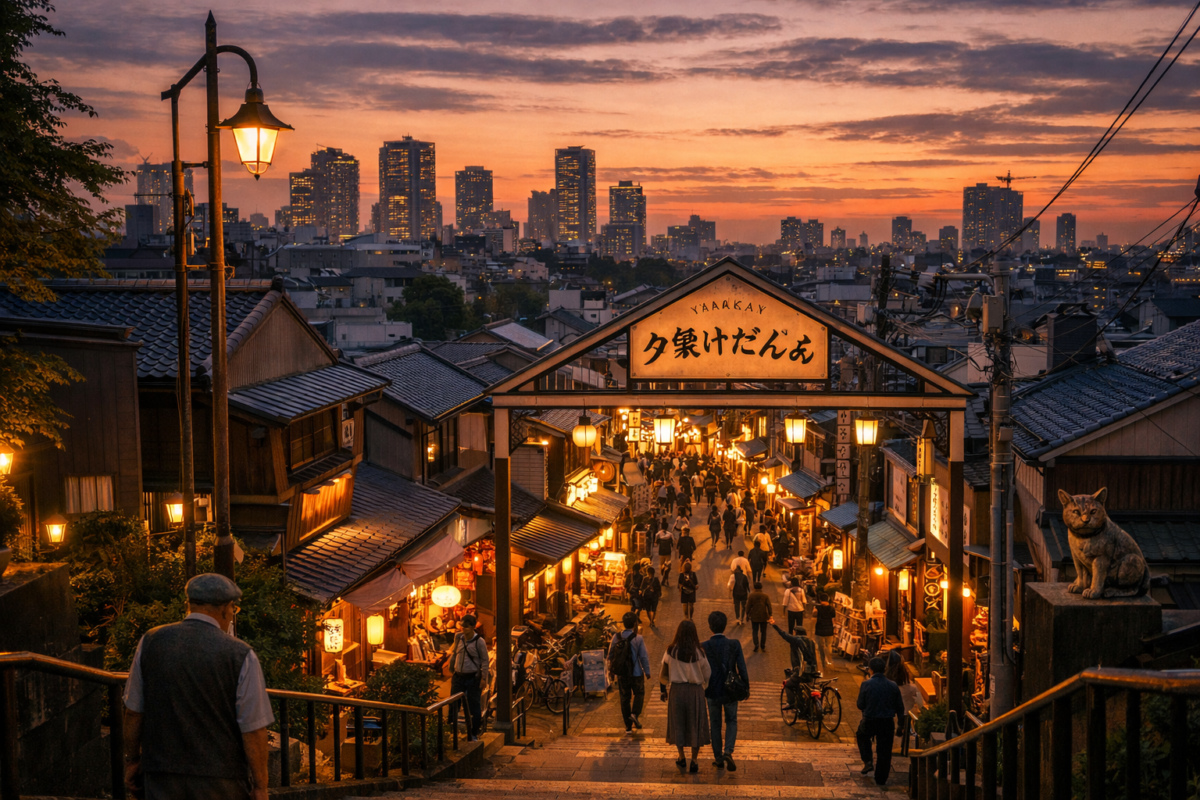
| Yanaka – The Neighbourhood Time Forgot |
| Vibe: One of the only Tokyo districts to survive WWII bombing largely intact – a maze of wooden temples, old shotengai (covered shopping streets), cats on rooftops, and a cemetery so old it has become a park. Completely un-touristy and deeply local.Best for: Wandering without a plan, street photography, local food stalls, cemetery walks (genuinely lovely)Don’t miss: Yanaka Ginza shotengai at lunch for menchi katsu (fried minced meat patty) on a stick. Yanaka Cemetery on a quiet morning. The Scai the Bathhouse gallery – a contemporary art space inside a 200-year-old public bathhouse. |
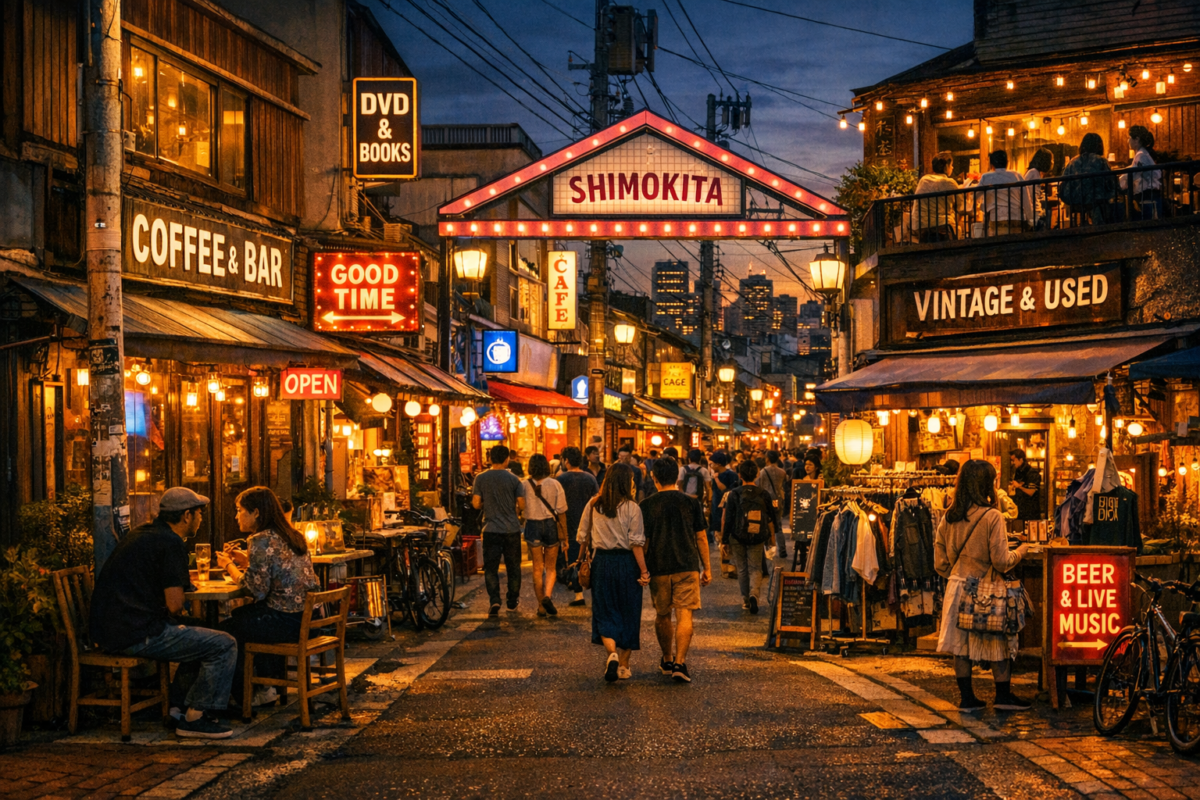
| Shimokitazawa – Tokyo’s Creative Soul |
| Vibe: Vintage clothing, live music venues, independent theatre, coffee shops with handwritten menus and no WiFi passwords. The neighbourhood most loved by the Tokyoites who are most interesting to meet.Best for: Vintage shopping, live music, café culture, meeting locals, afternoon wanderingDon’t miss: Any vinyl record shop on the main drag. The Suzunari theatre for experimental Japanese performance. A coffee at Bear Pond Espresso – cash only, strict no-photography rule, extraordinary espresso. |
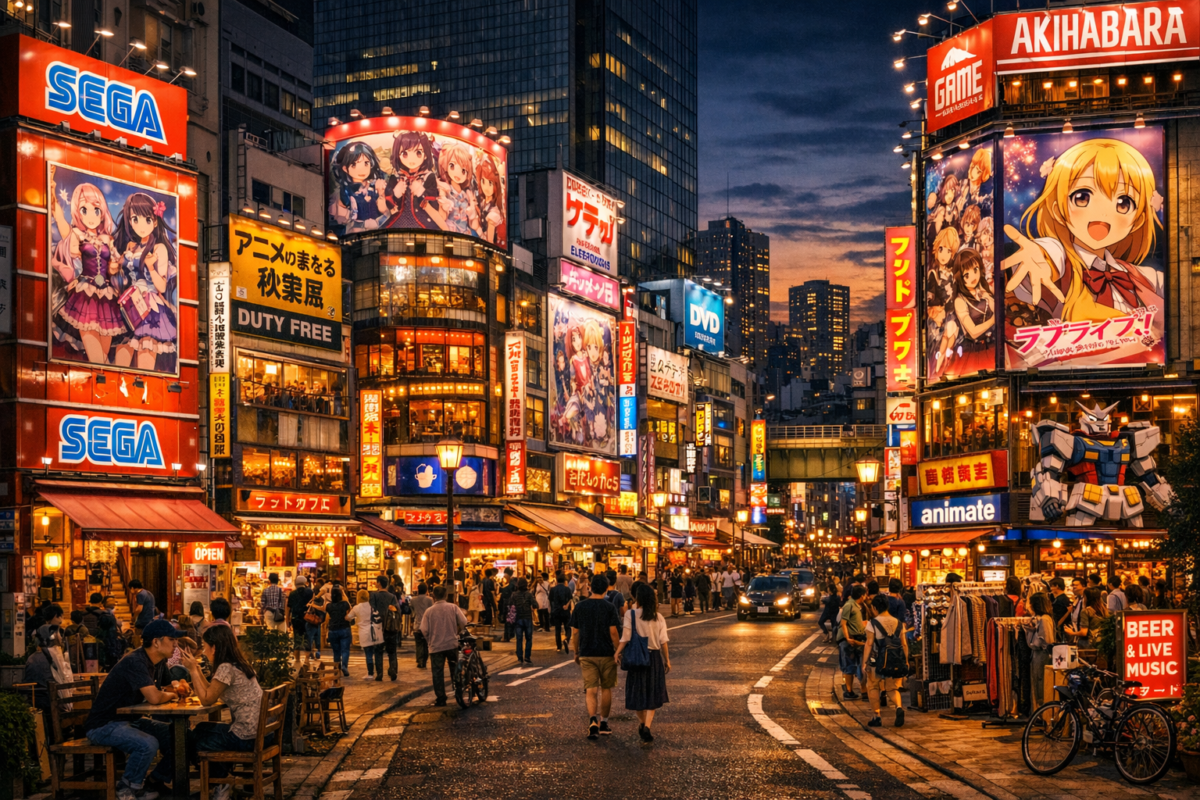
| Akihabara – Electric Town |
| Vibe: The global capital of anime, manga, video games, and electronics. Seven-storey arcades, maid cafés, figurine shops, and vintage game cartridges going back to the Famicom era. Overwhelming and fascinating whether or not you’re into the culture. Best for: Electronics, anime culture, retro gaming, people-watching Don’t miss: Super Potato – four floors of vintage games and consoles, some dating to the 1970s. Yodobashi Camera for electronics at Japanese domestic prices (much cheaper than airports). A maid café experience – even once, just to understand what it is. |
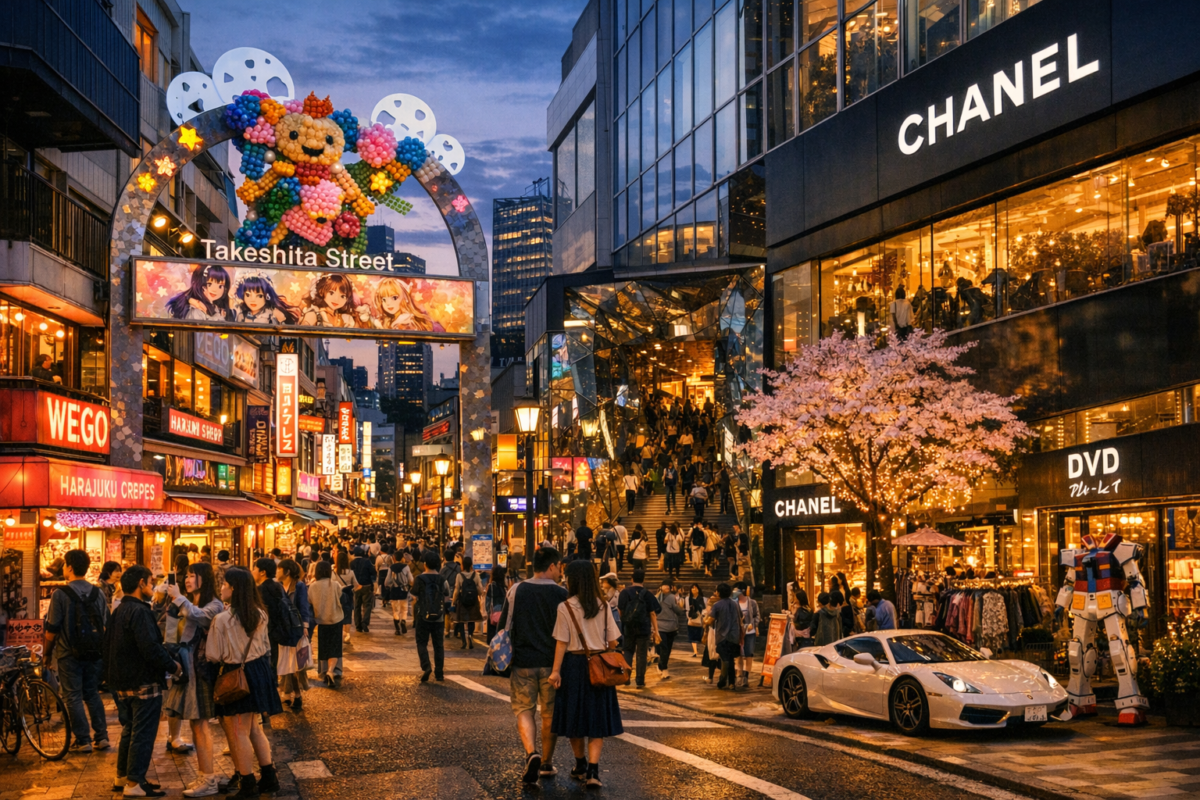
| Harajuku & Omotesando – Fashion’s Two Faces |
| Vibe: Takeshita Street in Harajuku is teenage fashion at maximum volume – crepe stands, gothic lolita, loud everything. Walk five minutes south to Omotesando and it becomes one of the most elegant shopping boulevards in the world, all zelkova trees and Pritzker Prize architecture. Best for: Fashion, architecture, people-watching, the contrast between the two worldsDon’t miss: Meiji Shrine – an ancient forested shrine in the middle of the city, always peaceful. The Omotesando Hills complex by Tadao Ando. Harajuku on a Sunday morning for the full fashion spectacle. |
Getting Around Tokyo: The Transport Guide That Will Save Your Sanity
Tokyo’s public transport system is the finest in the world. Once you understand it, you will never think about city transport the same way again. Here’s everything you need to know.
The IC Card: Your Most Important Purchase
Buy a Suica or Pasmo card the moment you arrive at the airport. It’s a rechargeable contactless card that works on every train, metro, bus, and monorail in the Tokyo metropolitan area – and also at convenience stores, vending machines, and many restaurants. Top it up at any station. Never fumble for change again.
Pro Tip: You can now add a Suica card directly to Apple Wallet or Google Pay before you arrive. Set it up at home, load ¥5,000-10,000, and tap into Tokyo transport from the moment you land without touching a ticket machine.
Understanding the Train System
Tokyo has multiple overlapping train networks – JR lines (covered by the Japan Rail Pass if you have one), Tokyo Metro, Toei Subway, and private lines like Tokyu and Keio. This sounds complicated; in practice, the Suica card works across all of them and Google Maps tells you exactly which line to take, which platform to stand on, and which carriage to board for the best exit.
Heads Up: Tokyo trains have women-only carriages during rush hours (typically the first carriage, marked by pink signage). These exist for a reason – peak-hour Tokyo trains are extremely crowded and harassment has historically been an issue. Respect the signage. Use the correct carriage.
Getting from the Airports
Narita Airport (the main international hub) is 60km from central Tokyo. The Narita Express (N’EX) takes 53 minutes to Shinjuku and costs ¥3,070 – book at the JR ticket office in arrivals. Faster and more comfortable than the Keisei Skyliner (51 min to Ueno, ¥2,570). Both are dramatically better than a taxi – airport taxis to central Tokyo cost ¥20,000-30,000.
Haneda Airport is much closer to the city (30 min to Shibuya by Keikyu Line, ¥470) and increasingly used by international carriers. If you have a choice, fly into Haneda.
For private transfers between the airport and your accommodation – particularly useful if you arrive late at night or have a lot of luggage – GetTransfer offers pre-booked private car transfers with meet-and-greet service at competitive prices.
Getting Around Within Tokyo
For city-to-city travel within Japan, InDrive is an excellent ride-hailing option in Tokyo and other major Japanese cities. For rides across the city when the train isn’t convenient, Japan taxis are metered, honest, and generally reasonable – but always have your destination written in Japanese to show the driver.
Day Trips from Tokyo
Tokyo sits within easy reach of Kyoto (2.5 hours by Shinkansen), Nikko (2 hours by Tobu Railway), Hakone (85 minutes by Romancecar), Kamakura (1 hour by Yokosuka Line), and Yokohama (30 minutes). For Shinkansen tickets, compare prices and routes on Aviasales for the best available fares across Japan.
Eating in Tokyo: The Solo Diner’s Handbook
Tokyo has more Michelin stars than any city on Earth. It also has ¥500 ramen that will make you question every bowl of noodles you’ve eaten before. The extraordinary thing about eating in Tokyo is that the quality curve is almost flat – the convenience store onigiri (rice ball) at 7-Eleven at 7am and the omakase sushi counter at 8pm are both, in their own way, perfect. Getting the food right is the single most important part of any Tokyo trip.
The Essential Tokyo Food Experiences
Ramen. Tokyo has dozens of distinct ramen styles. Start with shoyu (soy sauce broth) at Fuunji in Shinjuku – famous for its tsukemen (dipping noodles), queue outside, cash only, worth every minute of the wait. For a lighter, clear chicken broth shio ramen, Sobahouse Konjiki Hototogisu near Shinjuku is exceptional. Budget: ¥900-1,500 per bowl.
Sushi. Forget the conveyor belt for your first sushi experience. Sit at a counter at Tsukiji Outer Market (the wholesale fish market that moved to Toyosu, but the outer market restaurants remain in the original location) at 7am for the best value sushi in the city. Budget: ¥2,500-5,000 for a counter breakfast set.
Yakitori. Grilled chicken skewers over charcoal, eaten at a counter with beer and a stream of small plates. The best yakitori in Tokyo is in Yurakucho – a row of restaurants under the elevated expressway near Ginza where the trains pass overhead and the smoke from a hundred grills fills the air. Deeply atmospheric, reasonably priced, impossible to book – just queue.
Izakaya dining. An izakaya is a Japanese pub-restaurant – you order small dishes and share them over drinks. Perfect for solo travelers because counter seating is standard, the staff are used to lone diners, and you can order as much or as little as you want. Try Torikizoku for a budget chain where everything on the menu costs ¥330 – genuinely excellent quality for the price.
Convenience store food. This sounds like a joke. It isn’t. Japan’s convenience stores – 7-Eleven, FamilyMart, Lawson – sell fresh food made daily to standards that would embarrass most supermarket delis in the West. The egg salad sandwiches, the onigiri, the chilled karaage chicken, the hot steamed nikuman buns, the purin custard pudding – all outstanding. Budget breakfast: ¥300-600.
Local Insight: Tokyo has vending machines selling hot and cold drinks on virtually every block – ¥120-160 per drink. In summer, they are a lifeline. Look for Boss canned coffee (black, sweet, or milk variants) – it’s a cultural institution.
Navigating Tokyo Restaurants Alone
Many smaller Tokyo restaurants use a ticket machine at the entrance – you select and pay for your meal before you sit down, then hand the ticket to the staff. Signs are often picture-based. If you’re unsure, point at the picture of what the person next to you is eating. Nobody will mind. In fact, the staff will almost certainly help you enthusiastically.
If you’re worried about dietary restrictions, the apps HappyCow (for vegetarian/vegan) and Gurunavi (English restaurant search) are invaluable. Japanese food is heavily meat and fish-based; vegetarian travel is possible but requires more navigation than in most cities.
Tokyo on a Budget: What Things Actually Cost
Tokyo has a reputation for being expensive. It’s partially deserved and largely overstated. Yes, a ryokan (traditional inn) in Ginza will cost you ¥30,000 a night. Yes, a 20-course kaiseki dinner exists for those who want it. But the daily lived experience of Tokyo – eating well, using excellent transport, visiting temples and parks and markets – is genuinely affordable. Here’s what solo travelers actually spend.
| Expense | Typical Daily Cost |
| Hostel dorm bed (Shinjuku / Asakusa area) | ¥2,800–4,500 (~$19–30) |
| Budget guesthouse / capsule hotel (private) | ¥5,500–9,000 (~$36–60) |
| Breakfast (convenience store) | ¥300–600 (~$2–4) |
| Lunch (ramen / teishoku set meal) | ¥900–1,500 (~$6–10) |
| Dinner (izakaya / yakitori counter) | ¥1,500–3,000 (~$10–20) |
| Daily IC card transport (Tokyo Metro) | ¥400–800 (~$3–5) |
| 1 paid attraction / activity | ¥500–1,500 (~$3–10) |
| Snacks, vending machine drinks | ¥400–700 (~$3–5) |
| TOTAL BUDGET DAY (hostel) | ¥7,000–11,000 (~$47–74) |
| TOTAL MID-RANGE DAY (private room) | ¥12,000–18,000 (~$80–120) |
Pro Tip: Convert your home currency to Japanese yen in real time using our Live Currency Converter before and during your trip. Yen exchange rates fluctuate and knowing the real rate helps you spot bad deals at currency booths (airport exchange desks are almost always the worst rate).
Japan Rail Pass – Worth It for Solo Travelers?
The Japan Rail Pass (JR Pass) gives unlimited travel on most JR trains, including Shinkansen, for 7, 14, or 21 days. It’s worth buying if you plan to travel extensively beyond Tokyo – to Kyoto, Osaka, Hiroshima, and Fukuoka on the same trip. For a Tokyo-only trip, it is not worth it – the IC card is cheaper for in-city travel. Search for the best Japan domestic fares on Aviasales for comparison.
Best Places to Exchange Money
The best yen exchange rates in Tokyo are at 7-Eleven ATMs and Japan Post ATMs, which accept most international bank cards and charge minimal fees. If you use a Wise or Revolut card, you’ll get close to the mid-market rate on every transaction. Currency exchange booths in tourist areas have poor rates – avoid them unless it’s an emergency.
Staying Connected in Tokyo: eSIM, Pocket WiFi, and VPN
Having reliable internet in Tokyo isn’t a luxury – it’s how you navigate the train system, translate menus, read QR codes at temples, and book same-day restaurant slots. Here’s what works.
eSIM (Best Option). The simplest solution for international travelers. Buy a Japan eSIM from Airalo or Yesim before you fly, activate it when you land, and you’re connected before you’ve cleared customs. No SIM swapping, no pocket WiFi device to remember and charge, no hunting for a phone shop at the airport. Both services offer Japan-specific data packages and global plans – compare options and pick the one that fits your data needs.
Pocket WiFi (Group Option). If you’re travelling with others, a pocket WiFi device rented from the airport (Ninja WiFi, Global WiFi, and similar services all have airport counters) gives multiple people reliable connection from one device. More hassle than an eSIM for solo travelers, but cost-effective for two or more people sharing.
VPN. Some streaming services and sites are geo-blocked in Japan. If you want access to your home Netflix library, banking apps, or other region-restricted services, NordVPN is reliable, fast, and works seamlessly on Japanese networks.
Local Insight: Japan has strict rules about certain medications and some prescription drugs that are legal elsewhere are controlled substances in Japan. Check the Japanese Ministry of Health, Labour and Welfare website before packing medications, and carry copies of all prescriptions.
Safety in Tokyo: What Solo Travelers Actually Need to Know
Tokyo is one of the safest major cities in the world – and that’s not promotional copy, it’s a consistent statistical reality. In 2023, Tokyo’s violent crime rate was a fraction of London, New York, or Paris. Lost wallets are routinely handed in to police koban (neighbourhood police boxes) with all cash intact. Children travel alone on the metro from the age of six.
That said, here are the specific things worth knowing:
- Petty theft: Rare, but phone snatching has increased slightly in tourist areas. Keep your phone in a pocket rather than dangling from your hand in Shibuya and Shinjuku.
- Chikan (groping on trains): A documented issue on crowded trains during rush hour. Women-only carriages exist specifically to address this. Use them during rush hours. Report incidents to the train staff immediately – Japan takes this seriously.
- Earthquakes: Japan experiences thousands of minor earthquakes each year. Most are imperceptible. Download the NHK World app for English-language emergency alerts. Your hotel will have earthquake procedure information – read it.
- Natural disaster apps: The Yurekuru Call earthquake alert app gives 5–30 seconds of warning before shaking arrives. It sounds dramatic, but Japan’s earthquake early warning system is the best in the world.
- Medical: Japanese hospitals and clinics are excellent. The JNTO (Japan National Tourism Organisation) maintains a 24-hour English-language tourist helpline (+81-3-3201-3331) that can help navigate the medical system.
- Travel insurance: Non-negotiable. Medical costs for foreigners in Japan without insurance can be significant. Ekta Travel Insurance offers flexible single-trip and annual policies covering medical, cancellation, and baggage.
- Flight disruption protection: If your flight to or from Japan is delayed or cancelled, AirHelp helps you claim compensation through the process – they handle the paperwork on a no-win-no-fee basis.
Hidden Tokyo: 10 Things Most Tourists Never Find
The obvious Tokyo is spectacular – and you should absolutely do the obvious Tokyo. But the city layers on itself, and the things below the surface are where the real character lives.
- Harmonica Yokocho (Kichijoji): A tiny warren of bars and restaurants in the shopping district of Kichijoji, less famous than Golden Gai but more local and more atmospheric. Each space seats five people. Some don’t have menus.
- The Intermediate Band at Ueno Park: On weekends, amateur brass bands and jazz groups set up under the trees and play for free. No audience expected, no donations required. Just music and the park.
- Kagurazaka: A hillside neighbourhood in central Tokyo where a Franco-Japanese hybrid culture has quietly evolved – French bakeries next to traditional kappo restaurants, cobblestone lanes, and an atmosphere entirely unlike the rest of the city.
- The Rooftop Gardens of Department Stores: Every major Tokyo department store (Matsuya, Takashimaya, Isetan) has a rooftop garden that almost nobody visits. Admission free, views panoramic, serenely quiet even in busy Shinjuku.
- Yanesen – Three Neighbourhoods in One: Yanaka, Nezu, and Sendagi merge into a single wandering neighbourhood of old temples, shrine festivals, cats sleeping in doorways, and the best tofu shop you’ll ever visit (Yanaka Tofu, open until sold out).
- The Sunamachi Ginza Shotengai: A 250-metre covered shopping street in east Tokyo that has barely changed since the 1950s. Hardware shops, tofu sellers, sweet shops making traditional wagashi by hand, and almost no tourists at all.
- Intermediatheque (Marunouchi): A free museum inside the JP Tower above Tokyo Station – a bizarre, beautiful collection of taxidermy, scientific instruments, architectural fragments, and fossils displayed without labels in a deliberately mysterious way. One of the most unusual museums in Asia.
- Ryogoku: The sumo district. If you’re not in Tokyo during a tournament, you can still watch morning practice at several sumo stables (advance arrangement required) – one of the most unexpectedly moving things you can do in the city.
- Shimokitazawa on a Weekday: The vintage and music neighbourhood is known but busy on weekends. Visit on a Tuesday or Wednesday and you’ll have the record shops and coffee bars almost entirely to yourself.
- The Sidewalk Between Harajuku and Yoyogi Park at 6am: Before anyone else is awake, this stretch of Tokyo – between the park’s great camphor trees and the back streets of Harajuku – has a quality of morning light and silence that stays with you.
Practical Tokyo: Visas, Luggage, Accommodation, and the Things Nobody Mentions
Visa Requirements
Citizens of the USA, UK, Canada, Australia, and most European countries can enter Japan visa-free for up to 90 days. You will need a valid passport and a return ticket. Customs forms ask about cash carried – Japan has limits on undeclared currency. The process is smooth, fast, and staff are helpful in all major airports.
Luggage Storage – A Tokyo Game-Changer
Tokyo is Japan’s greatest convenience: coin lockers are available at virtually every train station – ideal for storing bags for a few hours between check-out and departure. For full-day or multi-day storage, Radical Storage offers luggage storage at hundreds of locations across Tokyo (shops, cafés, hotels) for ¥800-1,000 per day. Perfect for checking out in the morning and spending a full last day exploring unburdened.
Alternatively, the Yamato Transport takkyubin (luggage forwarding) service lets you send your bags ahead to your next hotel or to the airport the day before your flight – ¥1,500-2,500 per bag. Magnificent system.
Best Areas to Stay in Tokyo for Solo Travelers
- Shinjuku: The most convenient base for most visitors – transport hub, 24-hour everything, accommodation at all prices, close to Shibuya, Harajuku, and Shimokitazawa
- Asakusa: Traditional atmosphere, excellent hostel scene, central location, lower prices than Shinjuku – great for first-timers who want Tokyo to feel distinctly Japanese
- Shimokitazawa: For travelers who want to skip the tourist circuit entirely and live temporarily like a young creative Tokyoite. Slower, more intimate, wonderful cafés
- Akihabara: Surprisingly good accommodation value, extremely central, fascinating neighbourhood even if electronics aren’t your thing
Pro Tip: Compare hotel, hostel, and guesthouse prices across all booking platforms at once using Hotellook – it searches dozens of sites simultaneously and consistently finds lower rates than booking direct on individual platforms. For Tokyo especially, where prices vary wildly across platforms, this saves meaningful money.
Best Time to Visit Tokyo
- Late March – Early April (Cherry Blossom Season): The most beautiful Tokyo is this Tokyo – pink sakura canopies over temple paths and river banks. Crowds are high and accommodation books out months ahead, but it is genuinely extraordinary. Check bloom forecasts at the Japan Meteorological Corporation.
- May & June (Early Summer): Green, warm, manageable. The brief rainy season (tsuyu) hits in June but is rarely torrential. Great value.
- October & November (Autumn): The second great foliage season – maple leaves turn crimson and gold across temple grounds and the colours are spectacular. Cooler temperatures make walking all day genuinely enjoyable.
- December- February (Winter): Cold but rarely extreme (average 8-12°C). Christmas illuminations are outstanding (Marunouchi and Roppongi Hills in particular). New Year at Meiji Shrine draws 3 million people – extraordinary and overwhelming.
- July-August (Summer): Hot, very humid (35°C+ with 80% humidity), and crowded. The summer festival (matsuri) season is vivid and culturally rich, but travelling in August heat requires extra hydration and patience.
Flight Tips for Tokyo
Tokyo is served by two airports: Narita (most international flights) and Haneda (closer to the city, growing international routes). Search for the best available fares on Aviasales and earn cashback on every booking with WayAway. Tokyo attracts competitive pricing from airlines – booking 8-12 weeks ahead typically yields the best fares from the USA ($600-900 return from the West Coast, $800-1,100 from the East Coast) and from the UK (£500-750 return).
If your flight is delayed or cancelled on the way to or from Tokyo, remember that AirHelp can help you claim EU261 or equivalent compensation – they work on a no-win-no-fee basis and handle all the airline correspondence.
Tours and Experiences in Tokyo
Tokyo rewards independent exploration, but some experiences are genuinely better with a local guide: the Tsukiji fish market at 5am, a ramen district deep dive, a sake tasting at a traditional izakaya. WeGoTrip offers a curated range of audio guides, small-group food tours, and cultural experiences across Tokyo – you can book in advance or pick something up last-minute. Particularly good: their Yanaka neighbourhood audio walk and the Shibuya night food tour.
For events and shows during your Tokyo visit – anything from sumo tournaments to J-Pop concerts to Kabuki theatre – Ticket Network lists major events with English-language booking. Check it early; popular events sell out months in advance.
If you need sea transport – for a day trip to one of Tokyo Bay’s islands (Odaiba, Enoshima, or the Izu Islands) – Sea Radar covers ferry routes and schedules across Japan’s coastal transport network.
Need a rental car for a day trip outside the city? GetRentACar compares prices across all major Japanese car rental providers – useful if you’re planning a self-drive to Nikko, Fuji, or the Izu Peninsula.
Plan Your Tokyo Trip with Hidden Travels’ Free Tools
Before you go, make use of all the free planning tools on the Hidden Travels site:
- AI Travel Budget Estimator – build a personalised Tokyo daily budget based on your travel style, group size, and dates
- Packing List Generator – generate a complete Tokyo-specific packing list based on your travel dates and activities
- Travel Planning Services – need a fully custom Tokyo itinerary? Our team builds bespoke travel plans for all budgets
Frequently Asked Questions
Q1: Is Tokyo safe for solo female travelers?
Yes – Tokyo is consistently ranked one of the safest cities in the world for women travelling alone. Violent crime is extraordinarily rare. The main issue is the chikan problem on crowded trains, which women-only carriages directly address. Outside peak-hour metro rides, solo female travel in Tokyo is as safe as – or safer than – any major Western city. Hundreds of thousands of women travel Tokyo alone every year without incident.
Q2: How many days should I spend in Tokyo?
A minimum of five days for a first visit – three to understand the basics and two to actually enjoy what you’ve understood. Seven days is the sweet spot: it allows you to explore multiple neighbourhoods deeply, take one or two day trips (Nikko and Kamakura are both outstanding), and eat your way through enough food to start developing preferences. Ten days or more unlocks the deeper layers of the city – and Tokyo has more layers than almost anywhere else on Earth.
Q3: Do I need to speak Japanese to travel Tokyo alone?
No – and you’ll be fine even if you speak not a single word. English signage is widespread on transport. Restaurant menus increasingly have English or picture menus. Google Translate’s camera function handles most remaining gaps. And Tokyoites who encounter a confused-looking tourist almost invariably go out of their way to help, even when the communication involves elaborate mime and phone maps. Learning arigatou gozaimasu (thank you very much) and sumimasen (excuse me / sorry) will earn you disproportionate goodwill.
Q4: What’s the best way to get a SIM card for Japan?
The easiest option is an eSIM purchased before departure from Airalo or Yesim. Both offer Japan data plans and activate automatically when you land. No physical SIM required, no airport kiosk queues. If you prefer a physical SIM, IIJmio and Docomo Tourist SIMs are available at airport kiosks but you’ll need to collect them on arrival.
Q5: Is it cheaper to visit Tokyo now versus a few years ago?
Significantly cheaper in USD, GBP, and EUR terms, yes. The Japanese yen weakened substantially through 2022-2024, making Japan roughly 20-30% cheaper in real terms for international travelers compared to 2019. A trip that would have cost $150/day in 2019 now costs $100-120/day for a similar experience. This has driven a surge in tourism – which is both why some popular sites are crowdier and why it’s an excellent time to visit. Use our Currency Converter to check the current rate before booking.
Q6: What should I absolutely not miss in Tokyo?
The things I’d be most devastated to miss on a Tokyo trip: a bowl of ramen eaten standing at a counter in Shinjuku at midnight, walking through Yanaka at 7am when the temple cats are still out and the tofu shop is just opening, the first time the Shibuya Scramble floods with people from five directions at once and you realise the choreography is entirely unplanned, and the moment somewhere in the city – on a train platform, in a park, at a bar – when Tokyo stops feeling foreign and starts feeling like a place you belong.
Final Thoughts: Tokyo Will Spoil You for Other Cities
There’s a reason people who visit Tokyo come back. And come back again. And start planning the next trip while they’re still on the plane home.
It isn’t the temples, although the temples are beautiful. It isn’t the food, although the food is the best in the world. It’s something harder to name – a combination of the city’s relentless attention to detail, its respect for both the very old and the very new, its absolute indifference to being understood by outsiders paired with its genuine warmth toward anyone who makes the effort to try.
Tokyo will make you feel things about cities you didn’t know you were capable of feeling. It will set a standard that most other places will struggle to meet. And it will leave you, almost certainly, with the quiet, persistent desire to go back.
Start planning your Tokyo solo trip today. Find the best flights at Aviasales, earn cashback with WayAway, compare accommodation at Hotellook, and use our free travel planning tools to put it all together. Tokyo is waiting – and it’s better than you imagine.
See you at the ramen counter.
Hidden Travels Team | hiddentravels.site