
⚠️ Affiliate Disclosure: This post contains affiliate links. If you book through our links we may earn a small commission at no extra cost to you. We only recommend services we personally trust.
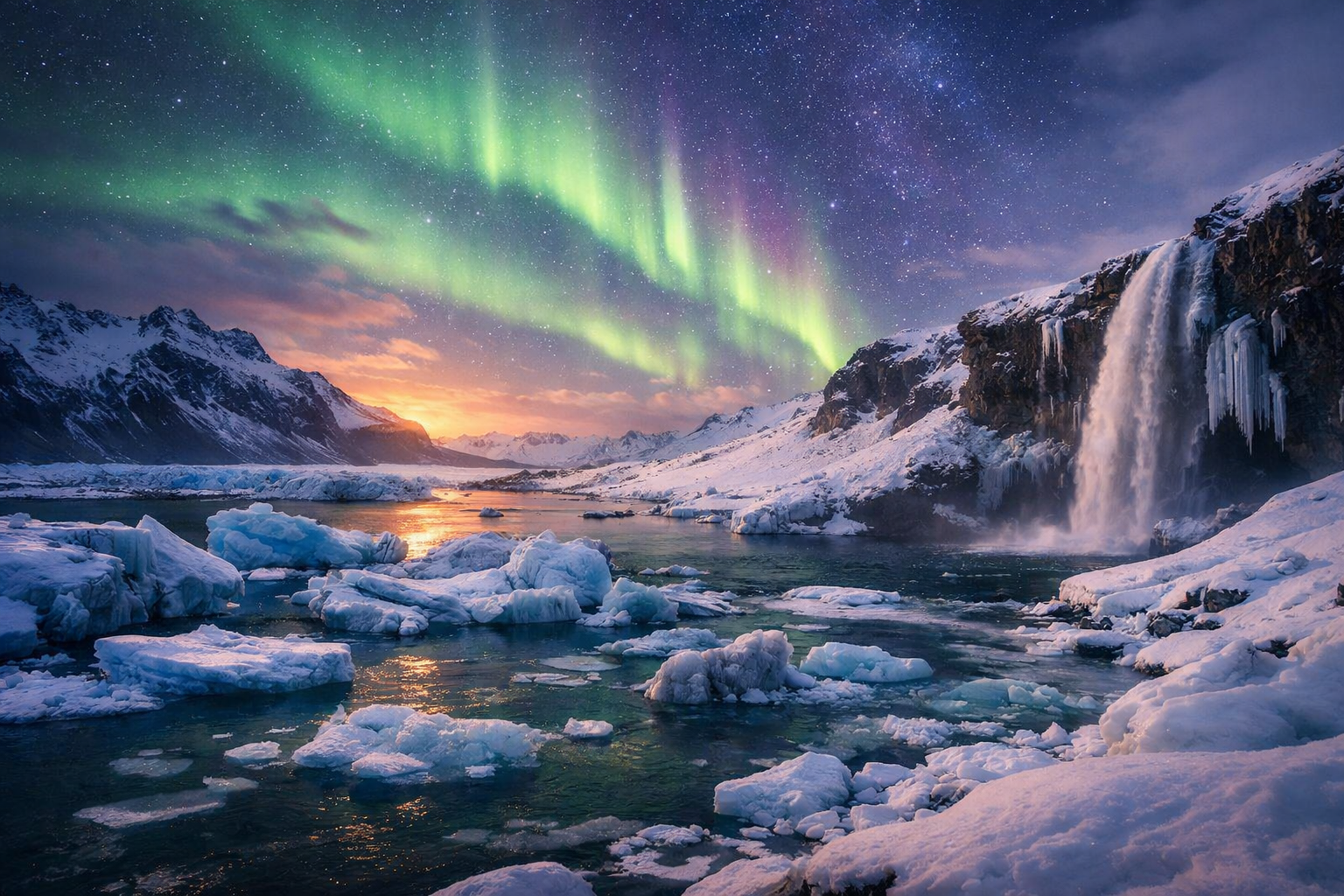
It is 11pm and I am lying on my back in a frozen field in southern Iceland, staring straight up at a sky that has turned completely green.
Not just a shimmer. Not just a glow on the horizon. The entire vault of the sky above me is rippling – curtains of emerald and violet folding and unfolding like silk in slow motion, brighter than the full moon, bright enough to cast shadows on the snow. I have been travelling for twenty years and I have never seen anything like this.
Around me, the landscape of lava rock and snow is lit by the aurora in colours that have no name in daylight. The only sound is the wind moving across the field and, somewhere in the darkness, a distant waterfall still flowing despite the cold.
This is Iceland in winter. And it is the most magical place I have ever been.
Every year, thousands of travelers make the mistake of waiting for summer to visit Iceland – imagining that the short dark days and bitter cold of winter must make the island less appealing. Every year, they are spectacularly wrong. Winter Iceland is a completely different country from the summer version: more dramatic, more intimate, more wild, and – with the northern lights dancing overhead and the entire interior blanketed in snow – more beautiful than anything you’ve seen in a magazine or on a screen.
This is your complete guide to planning a winter Iceland trip: what to see, what to do, when to go, how to stay warm, and why this cold, dark, volcanic island in the North Atlantic should be at the very top of your travel list.
Pro Tip: Before you pack, generate a complete Iceland winter packing checklist using our Packing List Generator – thermal layers and waterproofs are non-negotiable.
Why Winter Is Actually the Best Time to Visit Iceland
The conventional wisdom says Iceland is a summer destination – midnight sun, green meadows, accessible highlands. The conventional wisdom is missing the point.
Here is what winter gives you that summer cannot:
- The Northern Lights: Aurora borealis is only visible in darkness. Iceland’s long winter nights (up to 19 hours of darkness in December) give you the maximum possible viewing window – something you simply cannot experience in the midnight sun of June and July.
- Ice caves: The crystal blue ice caves inside Vatnajokull glacier are only safe and accessible in winter (November-March), when the ice is frozen solid. They are one of the most extraordinary natural environments on Earth and entirely unavailable in summer.
- Snow-covered landscapes: Iceland’s volcanic black lava fields, waterfalls, and coastal cliffs under a layer of snow and ice look genuinely otherworldly – a different planet from the green summer version.
- Fewer crowds and lower prices: Winter is Iceland’s shoulder season. Flight prices and accommodation rates drop significantly compared to the summer peak. Popular sites like Seljalandsfoss and Skogafoss can be visited in near-solitude on a weekday morning.
- Hot springs in the cold: Soaking in a geothermal hot spring while snowflakes fall on your face and steam rises around you is one of travel’s great sensory experiences. It only works properly in winter.
- Authentic Iceland: Icelanders don’t leave in winter – this is their home, their daily reality. The cafés, bookshops, and cosy restaurants of Reykjavik feel genuinely inhabited in winter in a way that tourist-season bustle can obscure.
Good to Know: Iceland in winter is genuinely challenging. Roads close, weather is extreme and unpredictable, daylight is limited (4-5 hours per day in December), and some highland routes are completely inaccessible. Go in with eyes open, plan conservatively, and the rewards are extraordinary.
Chasing the Northern Lights in Iceland: Everything You Need to Know
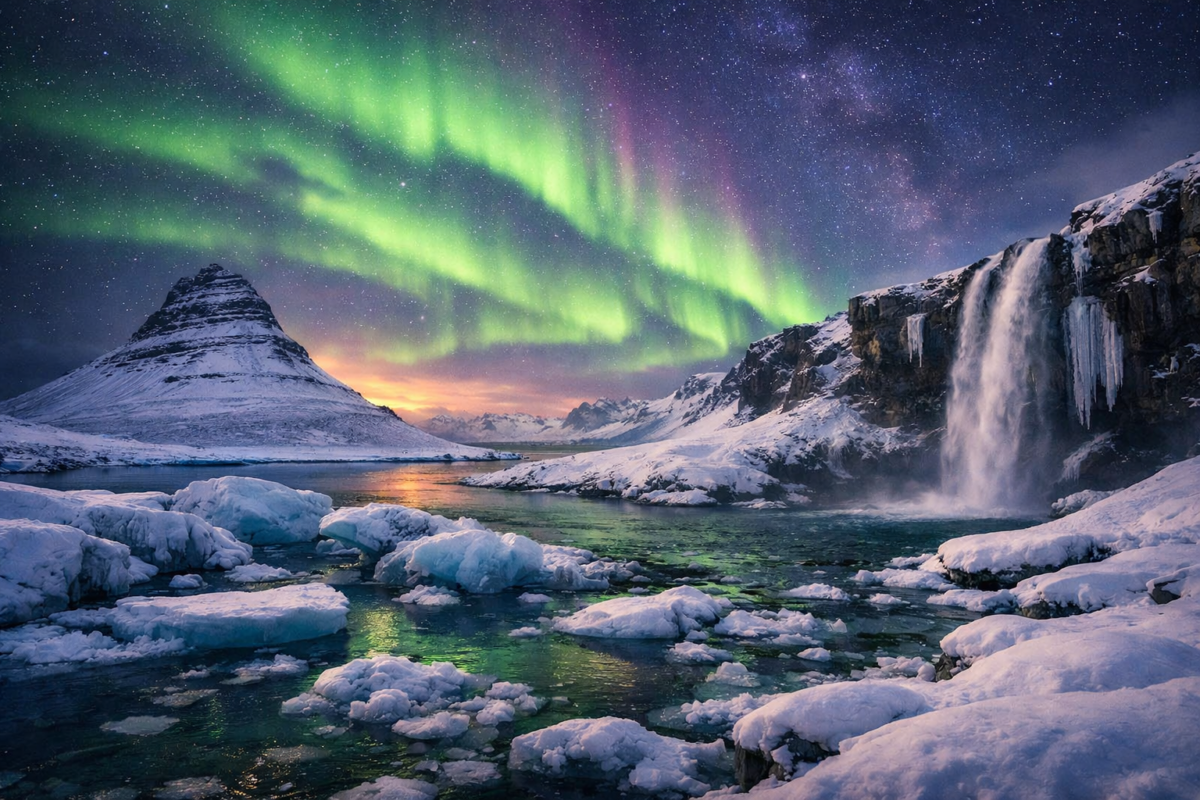
The northern lights are, for most visitors, the primary reason to come to Iceland in winter. And Iceland is genuinely one of the best places on Earth to see them – positioned directly under the auroral oval, with minimal light pollution outside Reykjavik, and enough geothermal activity to keep the air unusually clear on cold nights.
When Are the Northern Lights Visible in Iceland?
Aurora borealis is visible in Iceland from late August through mid-April – any period when the nights are dark enough. The peak months for both darkness and aurora activity are October through February. September and March offer a bonus: the equinox effect, when solar wind interaction with Earth’s magnetic field peaks, often producing the most dramatic aurora displays of the year.
Aurora Alert: Download the Aurora Forecast app (or vedur.is – the Icelandic Meteorological Office) before your trip. The aurora is rated 0-9 on the Kp index – a Kp of 3+ is generally visible to the naked eye in Iceland. Check every evening. The forecast changes hourly.
Best Locations for Northern Lights Viewing in Iceland
- Thingvellir National Park (30 min from Reykjavik): UNESCO World Heritage Site, no light pollution, lake reflections of the aurora on still nights
- Vik and the South Coast: Black sand beaches with sea stacks silhouetted against the aurora – extraordinary photography locations
- Grundarfjordur (Snaefellsnes Peninsula): Kirkjufell mountain reflected in the fjord beneath a curtain of green light – Iceland’s most iconic aurora photograph
- Jokulsarlon Glacier Lagoon: Icebergs lit from above by the aurora, floating in black water – genuinely indescribable
- Anywhere outside Reykjavik on a clear night: Drive 20 minutes from the city centre and you’re under genuinely dark skies
Aurora Photography Tips
- Camera: Any mirrorless or DSLR camera with manual settings. Most modern phone cameras with night mode now capture the aurora reasonably well.
- Settings: ISO 800-3200, aperture f/2.8 or wider, shutter speed 5-15 seconds. Shoot RAW for post-processing flexibility.
- Essential kit: Tripod (the aurora cannot be hand-held), spare batteries (cold kills battery life rapidly), remote shutter release
- Composition: Include a foreground element – a waterfall, a farmhouse, a mountain, an iceberg. A sky of aurora without a frame is less powerful than one with context.
- Patience: The aurora appears and disappears in minutes. Set up your camera, keep it cold and ready, and check the sky every 30 minutes after dark.
Pro Tip: Join a northern lights tour from Reykjavik for your first night – experienced guides monitor cloud cover across multiple locations and drive to wherever skies are clearest. Book through WeGoTrip for small-group aurora tours with expert local guides. If no lights appear, most operators offer a free second tour.
Iceland’s Ice Caves: The Underground Wonder Only Winter Reveals
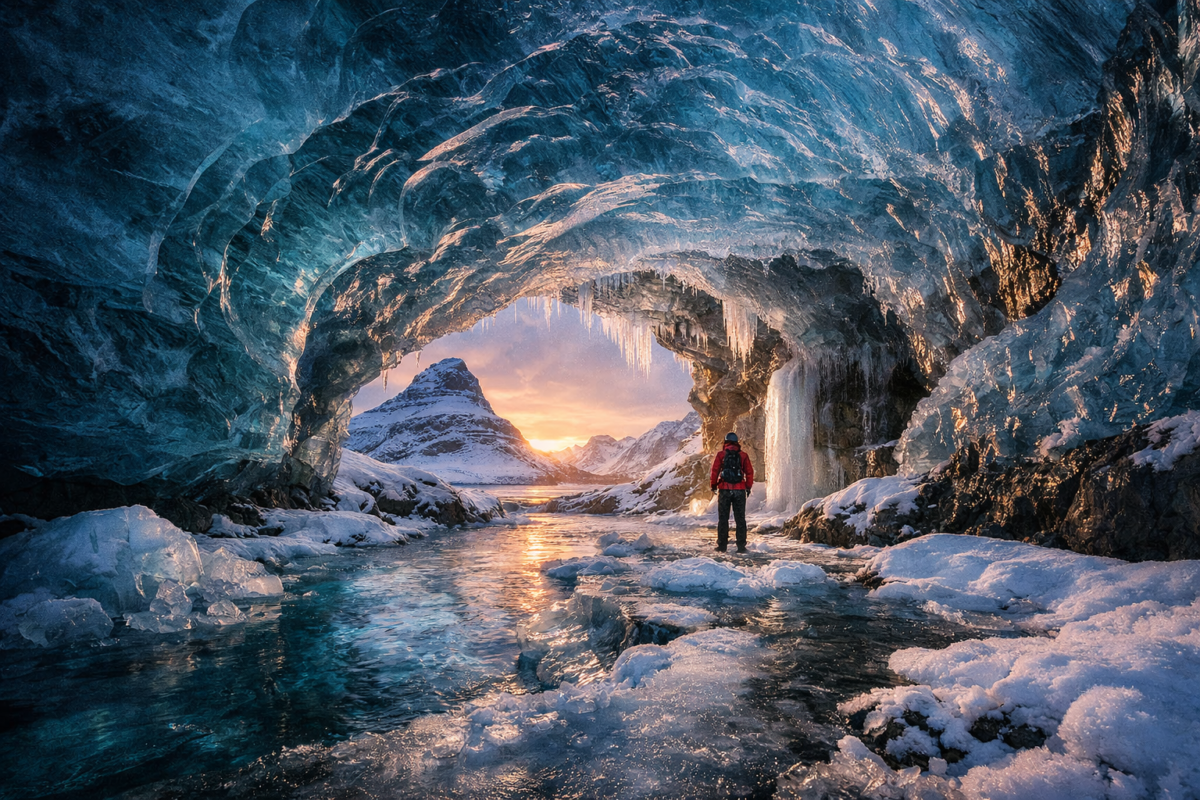
Beneath the Vatnajokull glacier – Europe’s largest ice cap, covering 8% of Iceland’s total land area – lies a network of ice caves that form and reform each winter as meltwater carves new tunnels through the ancient glacial ice.
The colour inside these caves is impossible to describe adequately. It is not blue in any ordinary sense of the word. The ice has compressed over centuries until all air bubbles have been expelled, and the resulting density filters light into a shade that sits somewhere between sapphire and aquamarine – a colour so vivid and so clearly originating from inside the ice rather than reflected from outside that it seems almost radioactive. Walls of it, three storeys high, curving overhead in ribbed vaults like the interior of a cathedral built by geology.
The Best Ice Caves in Iceland
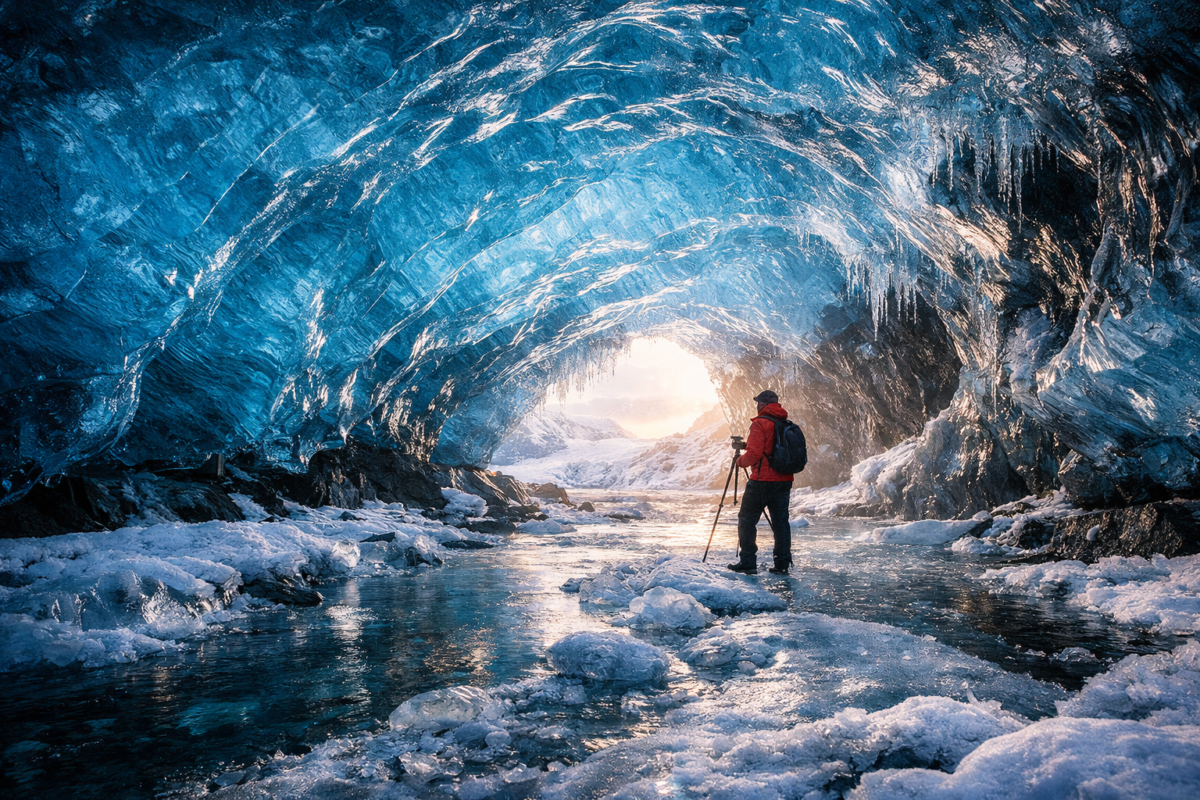
| Crystal Ice Cave – Vatnajokull (Most Famous) |
| The most accessible and spectacular glacier cave in Iceland, located inside the Breidamerkurjokull outlet glacier near Jokulsarlon. A 45-minute hike from the glacier edge leads to chambers of pure blue ice sculpted by meltwater streams. This is the cave that fills Instagram – but no photograph prepares you for the real thing.Cost: €180-220 per person including guide and glacier equipmentDifficulty: Moderate – crampons provided, some uneven ice surfaces |
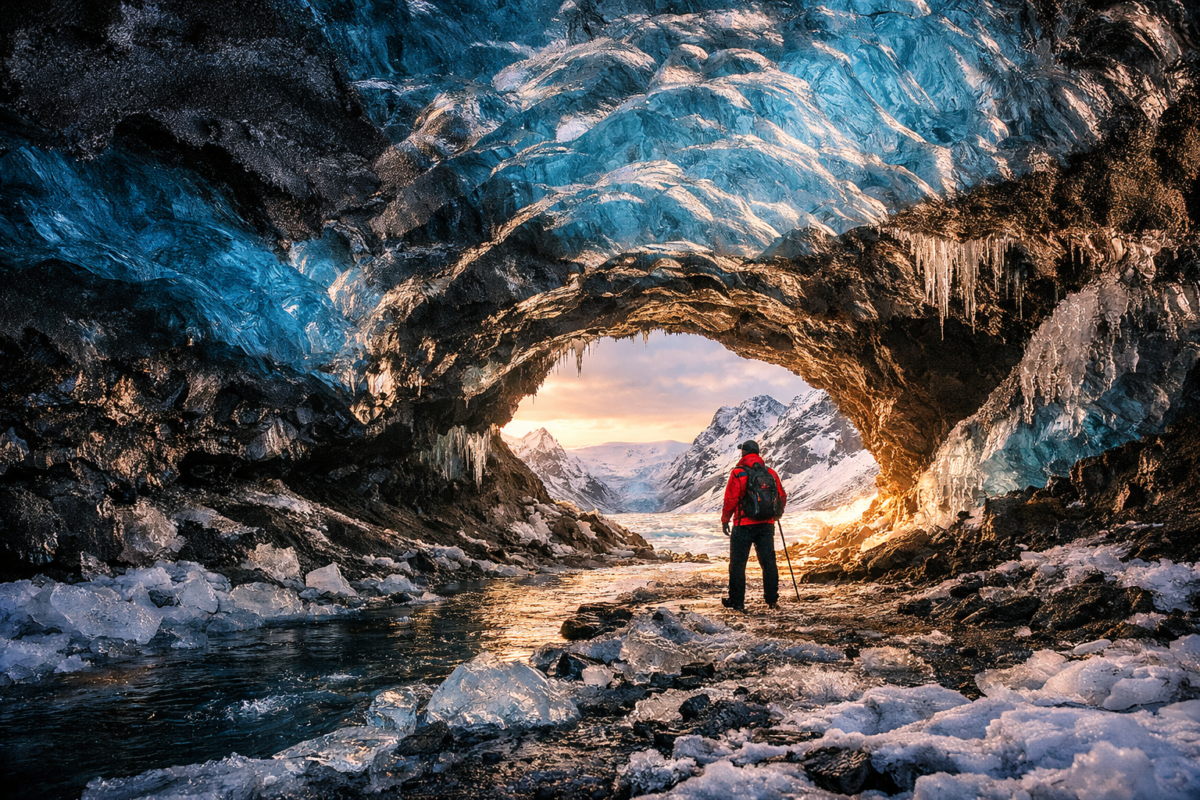
| Katla Ice Cave – Inside a Volcano |
| Formed inside the Katla volcano glacier (Myrdalsjokull), this cave has a different character from the Vatnajokull caves – black volcanic ash layers streak through the blue-white ice, creating patterns that look painted. The knowledge that you are inside an active volcano adds considerable frisson.Cost: €150-180 per person including guide and transport from VikDifficulty: Easy to moderate – accessible for most fitness levels |
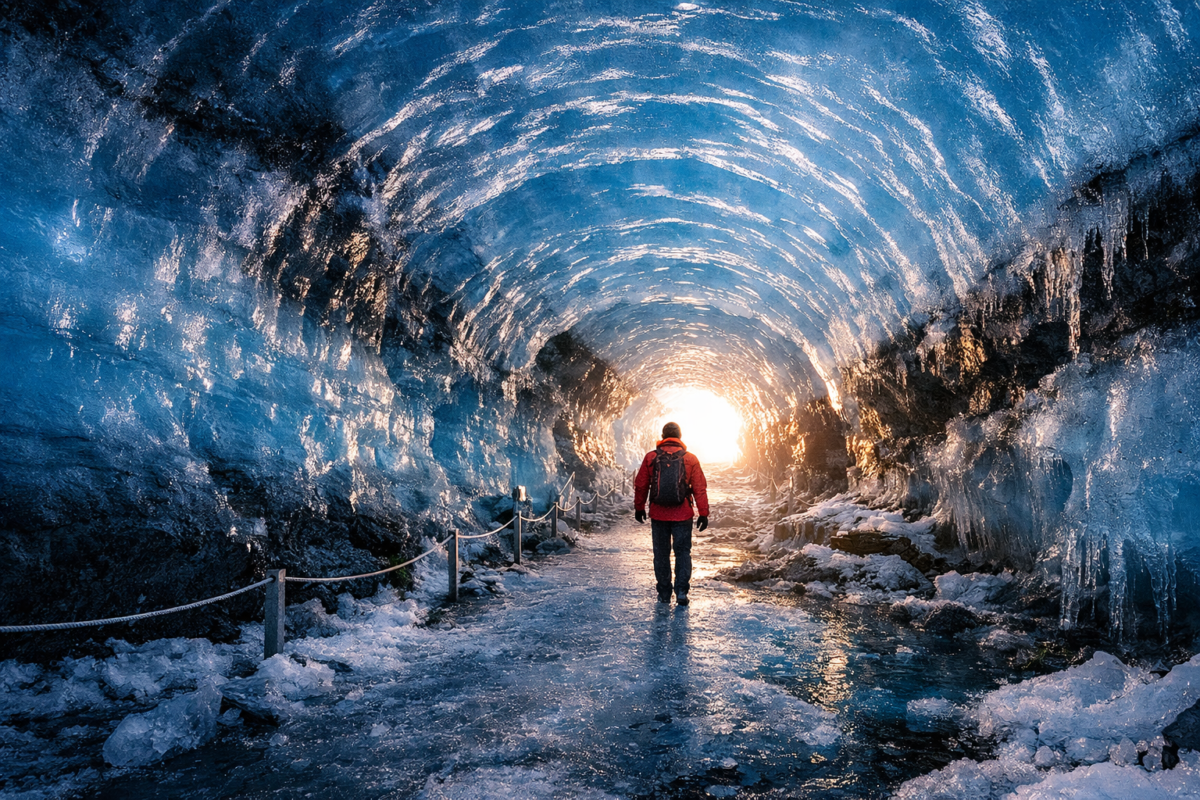
| Langjokull Ice Tunnel – Man-Made Wonder |
| A hand-carved 500-metre tunnel system inside Langjokull glacier, Iceland’s second largest, accessible by modified monster truck from Husafell. Unlike natural caves, the tunnel is stable year-round – but the experience of walking through the interior of a glacier is genuinely awe-inspiring.Cost: €200-240 per person including monster truck transport Difficulty: Easy – wheelchair accessible sections available |
Good to Know: Natural ice caves (Crystal Cave, Katla) are ONLY safe and accessible November through March. After March, warming temperatures make cave ceilings unstable and tours stop running. Always book through a certified glacier guide – entering ice caves independently is illegal and extremely dangerous.
Driving Iceland’s Ring Road in Winter: What You Need to Know
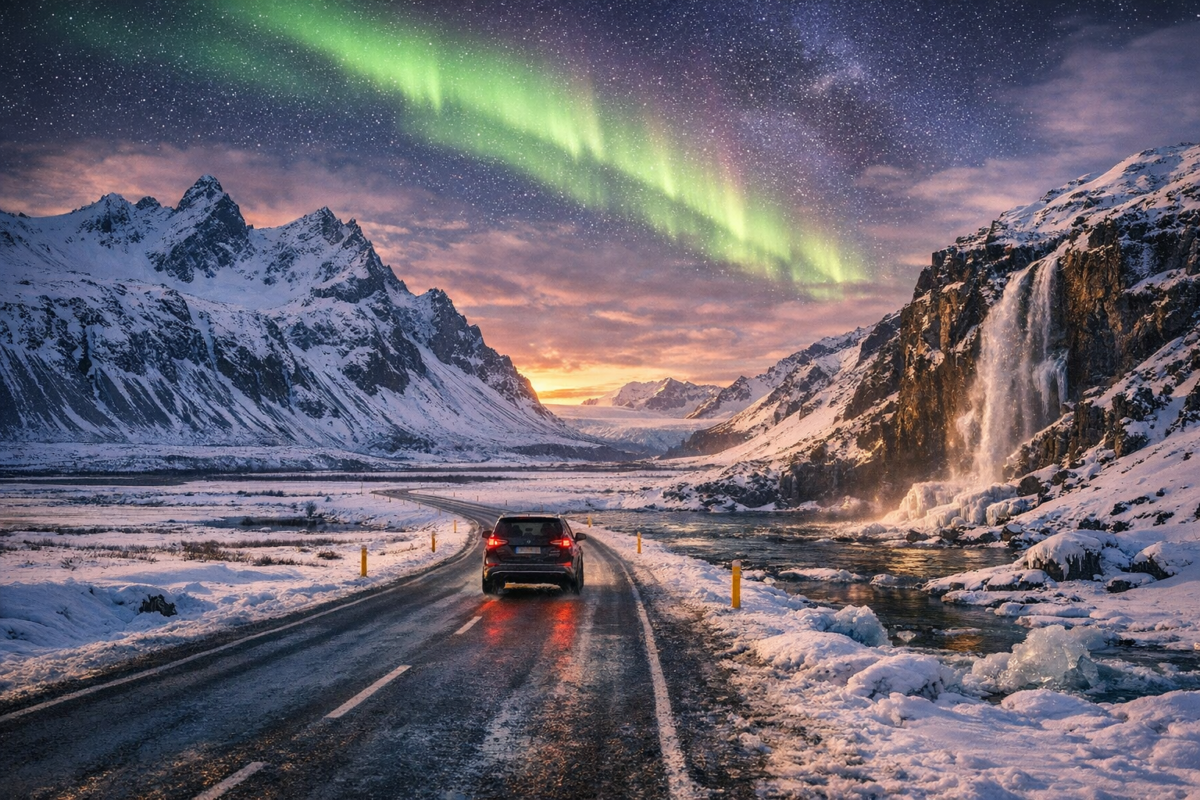
Iceland’s Route 1 – the Ring Road – circles the entire island in 1,322 kilometres. In summer, it’s a busy two-lane highway with campervans and tourist buses. In winter, it becomes one of the most dramatic drives on Earth: snow-covered mountains rising above the road, waterfalls frozen mid-cascade, glaciers reaching to within metres of the asphalt, and the possibility of aurora appearing directly overhead as you drive.
Can You Drive the Full Ring Road in Winter?
The south and west sections of the Ring Road (Reykjavik to Hofn) are generally passable in winter with a suitable vehicle and careful planning. The north and east sections can be more challenging – particularly around Myvatn, Egilsstadir, and the eastern fjords – and may require 4WD with winter tyres during heavy snowfall. The F-roads (interior mountain roads) are completely closed from October to June.
Essential Winter Driving Rules in Iceland
- Rent a 4WD: Non-negotiable for winter travel outside Reykjavik. A 2WD vehicle on an icy Icelandic road is genuinely dangerous. Compare 4WD rental prices at GetRentACar.
- Check road.is daily: The Icelandic Road and Coastal Administration website (road.is) gives real-time road conditions and closures. Check every morning before driving.
- Check weather at vedur.is: The Icelandic Met Office. Colour-coded warnings: yellow = caution, orange = dangerous, red = do not travel. Red means red.
- Never drive off-road: Iceland’s fragile moss and lava landscapes take centuries to recover from vehicle damage. Off-road driving is illegal and fines are substantial (€2,000+).
- Winter tyres are mandatory: All rental cars in Iceland are legally required to have studded or winter tyres November 1 to April 15. Confirm this when booking.
- Inform someone of your route: Always tell your accommodation or a trusted person your planned driving route each day, especially in remote areas.
Aurora Alert: One of the best aurora experiences in Iceland is simply pulling over on a dark stretch of Ring Road when the sky activates. Keep an eye on the northern horizon as you drive after dark – the lights often appear with almost no warning and can be spectacular from roadside laybys.
10 Essential Winter Iceland Experiences
1. Soak in the Blue Lagoon (or Its Less Crowded Alternatives)
The Blue Lagoon geothermal spa – a milky blue pool of 38°C mineral-rich water set in a lava field 40 minutes from Reykjavik – is Iceland’s most famous attraction, and in winter it earns its reputation completely. Steam rising from the surface into cold air, snow falling softly, the surreal blue-white colour of the water against black lava rock. It is genuinely extraordinary.
However, the Blue Lagoon is expensive (€80-120+ per person) and must be booked months in advance. Excellent alternatives: Secret Lagoon in Fludir (€25, one of Iceland’s oldest geothermal pools), Mývatn Nature Baths in the north (€45, similar experience, far fewer tourists), and Krauma near Reykholt in west Iceland (€40, luxurious, rarely crowded).
Pro Tip: If you have your heart set on the Blue Lagoon, book 2-3 months in advance for winter dates. The premium evening slot (after 6pm) is worth paying extra for – the combination of darkness, steam, and potential aurora overhead is something else entirely.
2. Snowmobile on Langjokull Glacier
Strapping on a snowmobile and riding across the vast white expanse of Langjokull – Iceland’s second-largest glacier – at full speed, with the distant volcano Snæfellsjökull on the horizon and absolute silence in every direction, is one of the most exhilarating experiences the country offers. No prior snowmobile experience required.
3. Explore the Golden Circle in Snow
The Golden Circle – Thingvellir National Park, the Geysir geothermal field, and Gullfoss waterfall – is Iceland’s classic day route from Reykjavik, and all three sites are dramatically more atmospheric in winter. Gullfoss waterfall, partially frozen in ice formations, is genuinely one of the most spectacular natural sights in Europe. Geysir erupting against a steel-grey winter sky is hypnotic. And Thingvellir – the rift valley where the North American and Eurasian tectonic plates are visibly pulling apart – under snow is ancient and profound.
4. Whale Watching in Husavik
Winter whale watching from Husavik on Iceland’s north coast is less reliable than summer (fewer hours of daylight, rougher seas) but those who make the effort are sometimes rewarded with humpback whale sightings against a snow-covered coastline backdrop that no summer photograph can match. Book through a reputable operator and wrap up – the North Atlantic in January is cold.
5. Walk Behind Seljalandsfoss Waterfall (Frozen)
The extraordinary Seljalandsfoss waterfall on Iceland’s south coast allows visitors to walk behind the curtain of falling water on a narrow path carved into the cliff. In summer this is wet and crowded. In winter, when the mist freezes on the rock faces and the path is lined with ice formations and icicles several metres long, it becomes a completely different and far more spectacular experience. Check conditions before visiting – the path closes when ice makes it too dangerous.
6. Snorkel in Silfra Fissure
The Silfra fissure at Thingvellir is one of only two places in the world where you can swim directly between two tectonic plates. The glacial meltwater filtered through underground lava for 30-100 years before emerging here is so clear that visibility exceeds 100 metres – some of the highest underwater visibility on Earth. Dry suits keep you warm in the 2°C water. In winter, there are fewer divers, the light through the ice-fringed surface is extraordinary, and the experience is otherworldly.
7. Visit the Westfjords – Iceland’s Most Remote Peninsula
The Westfjords in northwestern Iceland receive fewer visitors in an entire year than Reykjavik receives in a weekend. In winter, this already-remote region becomes genuinely isolated – roads may close for days, the fjords freeze, and the silence and darkness are absolute. The dramatic red cliffs of Latrabjarg (Europe’s largest seabird colony, quiet in winter but still spectacular), the boiling mudpots of Reykjanes in the Westfjords, and the fjord-side hot pot at Drangsnes (three outdoor geothermal tubs by the sea, free, always open) make this one of the most extraordinary detours in Iceland.
8. See Jokulsarlon Glacier Lagoon at Night
During the day, Jokulsarlon – the glacier lagoon where icebergs calve from Breidamerkurjokull and float slowly toward the sea – is already one of the most visually striking places in the world. At night in winter, when the icebergs glow blue and white in the darkness and aurora occasionally appears overhead reflecting in the black water, it ascends to something else. Camp or stay nearby to experience it after dark. Nothing will prepare you.
9. Take a Glacier Hike on Svinafellsjokull
Crampons on boots, ice axe in hand, walking across a living glacier as it creaks and groans beneath your feet – Svinafellsjokull, an outlet glacier of Vatnajokull near Skaftafell, offers some of the most accessible glacier hiking in Iceland. In winter, the blue ice exposed by seasonal freezing creates dramatic formations, and the surrounding landscape of black sandplains and white peaks is extraordinary.
10. Experience Reykjavik’s Cultural Winter Season
Reykjavik in winter is a city that comes alive indoors: its extraordinary density of independent bookshops, design studios, music venues, and restaurants per capita makes it one of Europe’s finest small capitals for cultural immersion. The Iceland Airwaves music festival (November) brings local and international artists to small venues across the city. The Reykjavik Food & Fun festival (February/March) sees top chefs from around the world cook at local restaurants. And the Dark Music Days festival (January) is one of the most distinctive contemporary music events in Europe.
Practical Winter Iceland Information
Getting to Iceland in Winter
Icelandair, Wizz Air, Transavia, and several other carriers fly to Keflavik International Airport from London, Amsterdam, Copenhagen, Paris, Boston, New York, and other major hubs. Winter fares are significantly lower than summer – search for deals on Aviasales or use WayAway for cashback on every booking.
From the UK: Flights from London run from £80-180 return in winter. From the USA: Boston and New York see regular return fares of $350-550. From Canada: Toronto and Halifax connect via the Icelandair hub.
Getting Around Iceland in Winter
A rental car is absolutely essential for exploring Iceland beyond Reykjavik. In winter, you must book a 4WD vehicle with winter tyres. Compare prices and availability across all providers at GetRentACar – book early as winter 4WDs sell out fast.
For airport transfers from Keflavik to Reykjavik, pre-book a shared shuttle or private transfer rather than renting a car for Day 1 when you are jet-lagged – GetTransfer offers reliable Keflavik airport transfers at competitive prices.
What to Pack for Winter Iceland
- Base layer: Merino wool thermal top and bottoms – the single most important investment
- Mid layer: Fleece or down jacket for insulation
- Outer layer: Waterproof and windproof shell jacket and trousers – Gore-Tex or equivalent
- Extremities: Waterproof gloves (bring two pairs – one will get wet), wool hat covering ears, buff/balaclava for extreme wind
- Footwear: Waterproof insulated boots with ankle support. Yaktrax or microspikes for icy paths
- Sunglasses: Essential – snow glare and low winter sun are blinding
- Camera kit: Spare batteries (cold kills them fast), memory cards, cleaning cloth for lens condensation
- Navigation: Offline maps downloaded before arrival – cell coverage is patchy outside populated areas
Pro Tip: Pack everything in waterproof dry bags inside your main bag. Icelandic weather can change from sunshine to horizontal sleet in 20 minutes — waterproofing your kit before you need to is far better than discovering you need to after.
Stay Connected in Iceland
Iceland has excellent LTE coverage in populated areas and along the Ring Road, but it disappears entirely in remote highlands and fjords. International travelers should get an eSIM before departure – Airalo offers Europe-wide data packages that activate on landing and cost a fraction of roaming rates.
Travel Insurance – Essential for Iceland
Iceland is a country where adventure activities, extreme weather, and remote driving create genuine risk. Medical evacuation by helicopter from a remote part of Iceland costs tens of thousands of euros without insurance. Always travel with comprehensive adventure travel coverage including emergency evacuation. Ekta Travel Insurance offers policies covering winter driving, glacier activities, and extreme weather cancellations.
Iceland Budget Guide for Winter
- Budget traveler ($120-160/day): Hostel dorm, self-catering meals (Bonus or Kronan supermarkets), 1 free/low-cost activity daily, petrol shared with car companions
- Mid-range ($200-280/day): Guesthouse or Airbnb, mix of self-catering and restaurants, 1 paid tour per day (ice cave, glacier hike)
- Comfort ($350+/day): Boutique hotel, restaurant dinners, Blue Lagoon, premium guided tours, private transport
Good to Know: Iceland is expensive – one of the most expensive countries in Europe. Budget travelers who self-cater using supermarkets (Bonus is the cheapest chain, identifiable by the yellow pig logo) can reduce food costs dramatically. Restaurant meals average €25-40 per person for mains. A beer costs €10–14 in a Reykjavik bar.
Use our AI Travel Budget Estimator to build a personalised Iceland winter budget, and check our Weather Checker to monitor Iceland’s conditions before and during your trip.
Suggested 7-Day Winter Iceland Itinerary
Day 1 – Arrive Reykjavik, Golden Circle
Arrive at Keflavik, transfer to Reykjavik, pick up your rental car. Afternoon: Golden Circle (Thingvellir, Geysir, Gullfoss) – all within 90 minutes of the airport. Evening: Aurora hunt from Thingvellir or drive 20 minutes east of Reykjavik.
Day 2 – South Coast: Waterfalls and Black Sand
Drive the south coast east: Seljalandsfoss (walk behind the waterfall), Skogafoss (60-metre curtain of water), the D-plane wreck on Solheimasandur black sand beach (45-minute walk each way), and Vik’s black sand beach with sea stack silhouettes at sunset.
Day 3 – Ice Cave and Jokulsarlon
Morning: Book an ice cave tour inside Vatnajokull glacier – the Crystal Cave from Jokulsarlon is the most accessible option. Afternoon: Jokulsarlon glacier lagoon and Diamond Beach (where ice chunks wash ashore on black sand). Evening: Aurora watch from the lagoon.
Day 4 – Skaftafell and East Iceland
Glacier hike on Svinafellsjokull at Skaftafell. Drive through the dramatic East Fjords – a slow, winding coastal road between steep mountains and the sea, almost completely tourist-free in winter.
Day 5 – Myvatn and the North
North Iceland: the surreal lava formations of Dimmuborgir, the boiling mudpots of Hverir, the Myvatn Nature Baths at sunset. Evening: Northern lights above the Myvatn lake if conditions allow.
Day 6 – Snaefellsnes Peninsula
West Iceland: the Snaefellsnes Peninsula is a 90km-long finger of land capped by the Snaefellsjokull glacier (Jules Verne’s ‘Journey to the Centre of the Earth’ begins here). Kirkjufell mountain, Djupalonssandur black beach, Londrangar basalt cliffs. One of Iceland’s most photogenic regions with a fraction of the south coast crowds.
Day 7 – Reykjavik and Departure
Morning: Reykjavik city – Hallgrimskirkja church, Harpa Concert Hall, Laugavegur shopping street. Afternoon: Blue Lagoon on the way to the airport (pre-book essential). Evening departure.
Pro Tip: This itinerary is a guide, not a contract. Iceland’s winter weather will reshape your plans – build in flexibility and check road.is every morning. The best Iceland trips are the ones that bend gracefully around what the weather allows.
Frequently Asked Questions
Q1: Is Iceland safe to visit in winter?
Yes – with preparation. Iceland is a safe country with excellent infrastructure. The risks are environmental, not social: icy roads, sudden weather changes, and the consequences of being stranded in a remote location without proper equipment. Follow road closures, check forecasts, carry emergency supplies in your car (sleeping bag, food, water, torch, first aid kit), and never underestimate how quickly conditions can change. The vast majority of winter Iceland visitors have trouble-free trips.
Q2: What are the chances of seeing the northern lights in Iceland?
Higher than almost anywhere else in the world – but never guaranteed. The aurora requires three conditions simultaneously: solar activity (Kp 3+), clear skies, and darkness. Iceland’s weather is highly variable, and cloud cover is the most common reason for missed sightings. On a 7-night trip to Iceland in winter, statistically you should get 2-4 clear nights. On those clear nights, with Kp 3+, aurora sightings are near-certain outside Reykjavik. Extended trips and flexibility dramatically improve your odds.
Q3: How many days do you need in Iceland in winter?
A minimum of 5 days for the south coast highlights, ice cave, and aurora. Seven days allows a more relaxed circuit covering south coast, east, north, and Snaefellsnes. Ten days or more opens up the Westfjords, the complete Ring Road, and multiple aurora attempts. Given the cost of getting to Iceland, staying longer always gives better value.
Q4: Is it cheaper to visit Iceland in winter?
Yes – significantly. Winter (November-February, excluding Christmas and New Year) is Iceland’s low season. Accommodation prices drop 30-50% compared to July and August peaks. Flight prices fall sharply. Popular sites are quieter. The exceptions are Christmas week (Dec 23-Jan 2) and New Year’s Eve – Reykjavik’s New Year fireworks are famous and accommodation prices spike dramatically.
Q5: Do I need a visa for Iceland?
Iceland is a member of the Schengen Area but not the EU. US, Canadian, UK, Australian, and EU citizens can visit without a visa for up to 90 days. Most nationalities with visa-free access to the Schengen Area can visit Iceland without a separate visa. Check the Icelandic Directorate of Immigration website (utl.is) for the current visa-exempt country list.
Q6: What is the best month to visit Iceland in winter?
September and October for the combination of autumn colours, accessible roads, active aurora, and manageable weather. February and March for peak aurora activity (equinox effect), ice caves still open, and daylight hours increasing noticeably. December is magical for atmosphere (Christmas markets, cosy vibes, potential aurora) but has only 4-5 hours of daylight. January is the coldest, darkest, and cheapest month – for serious aurora chasers and those who want Iceland to themselves.
Final Thoughts: Iceland in Winter Will Change What You Think Is Possible
There is a particular quality to Iceland in winter that I have been trying and failing to articulate since I first visited. It’s something to do with the contrast – between the absolute cold outside and the warmth of a guesthouse kitchen at midnight. Between the darkness and the sudden, impossible green fire in the sky. Between the violence of the landscape (volcanoes, glaciers, geysers, geothermal fields all in one small island) and the profound stillness of standing alone on a black sand beach at 4pm with the last light draining out of the clouds over the Atlantic.
Iceland in summer is spectacular. Iceland in winter is transformative. It is one of those rare trips that doesn’t just give you new memories – it gives you a new sense of what the world is capable of being.
Start planning your winter Iceland adventure today. Find the best flights at Aviasales, earn cashback with WayAway, book your 4WD at GetRentACar, activate a data eSIM with Airalo, and protect every moment with Ekta Travel Insurance. The aurora is waiting.
Go north. Go dark. Go winter.
Hidden Travels Team | hiddentravels.site