
⚠️ Affiliate Disclosure: Some links in this post are affiliate links – we earn a small commission if you book through them, at no extra cost to you. We only recommend services we genuinely trust.
My first camping trip in the United States was to a site in the Smoky Mountains that I’d booked two days ahead without really knowing what I was doing, in a tent I’d assembled in my living room the night before to check that all the poles were there. It rained for four hours starting at 11pm. The tent held. The sleeping bag didn’t. By 3am I was in a dry-fit layer, a wool hat, and my entire supply of coffee hot from a camp stove, reading by headlamp and listening to the forest settle back into quiet after the rain.
I have never in my adult life felt more awake to the fact of being somewhere specific. Not where I was going, not where I’d been – just here, in this forest, in this rain-washed night air, with coffee.
That trip converted me to camping in a way that no amount of reading about it had managed. And the USA – which has the most extensive national park and public land system in the world, with over 400 national parks, monuments, and recreation areas, plus hundreds of millions of acres of national forest, Bureau of Land Management land, and state parks – is, simply, the greatest camping country on Earth.
This guide is for people at the beginning of that relationship. First-timers who have been vaguely meaning to try camping and haven’t quite committed. International visitors from the UK, Europe, Canada, or Australia who want to understand how the US camping system works. Experienced hikers who haven’t yet discovered how different overnight camping is from day walks. This guide covers the 12 best camping destinations in the USA for beginners – chosen for accessibility, scenery, campsite quality, and the specific qualities that make a first camping experience become a permanent habit.
Pro Tip: Before you plan, check real-time weather conditions at your destination using our Weather Checker, build your camping gear checklist using the Packing List Generator, and estimate trip costs at the AI Travel Budget Estimator.
How US Camping Works: A Quick Primer for First-Timers and International Visitors
Before the destination list, a brief explanation of the US camping system for those unfamiliar with it – because it works differently from European camping and the specifics matter for planning.
National Parks vs National Forests vs State Parks
The USA has multiple overlapping tiers of protected public land, each with different management agencies, fee structures, and camping rules:
- National Parks (NPS): The most famous and most visited – Yellowstone, Grand Canyon, Yosemite. Campsite reservations are almost always required (book at Recreation.gov). Entry fees apply ($20-35 per vehicle per week). Campground facilities vary from full hookups to primitive tent-only sites.
- National Forests (USFS): Less famous, often more accessible, frequently adjacent to National Parks. Many National Forest campgrounds are first-come-first-served and significantly cheaper ($10-25/night). Some allow dispersed camping (camping anywhere except near roads and waterways) for free.
- Bureau of Land Management (BLM) Land: Enormous areas of western US public land. Free dispersed camping is allowed almost everywhere on BLM land – no reservation, no fee, pack-in/pack-out. Some of the most spectacular camping in the USA is on BLM land.
- State Parks: Each state manages its own system. Quality, cost, and reservation processes vary by state. Generally more accessible for East Coast camping than National Parks and NPS campgrounds.
The America the Beautiful Pass – Best Value in Outdoor Recreation
If you’re planning to visit two or more national parks in a year, the America the Beautiful Annual Pass ($80 per vehicle) covers entry to all national parks, national forests, national monuments, and Bureau of Land Management areas for 12 months. It pays for itself at the second park visit. Available at any park entrance or online at store.usgs.gov.
Recreation.gov – How to Book Campsites
The federal government’s Recreation.gov platform covers campsite reservations for most national parks and many national forest campgrounds. Sites at popular parks (Yosemite, Zion, Arches, Grand Teton) open for reservation exactly 6 months ahead and sell out within minutes at 8am Mountain Time on the release date. Put the release date in your calendar and be at the computer. Arriving without a reservation at Yosemite Valley in July will result in being turned away.
Heads Up: Some of the most popular national park campgrounds – Yosemite Valley, Glacier’s Apgar campground, Grand Teton’s Signal Mountain – now require permits even for day entry in peak season. Check the specific park’s reservation requirements at nps.gov before planning. Rules change annually and what applied last year may not apply this year.
12 Best Camping Destinations in the USA for First-Timers
1. Great Smoky Mountains National Park – Tennessee / North Carolina
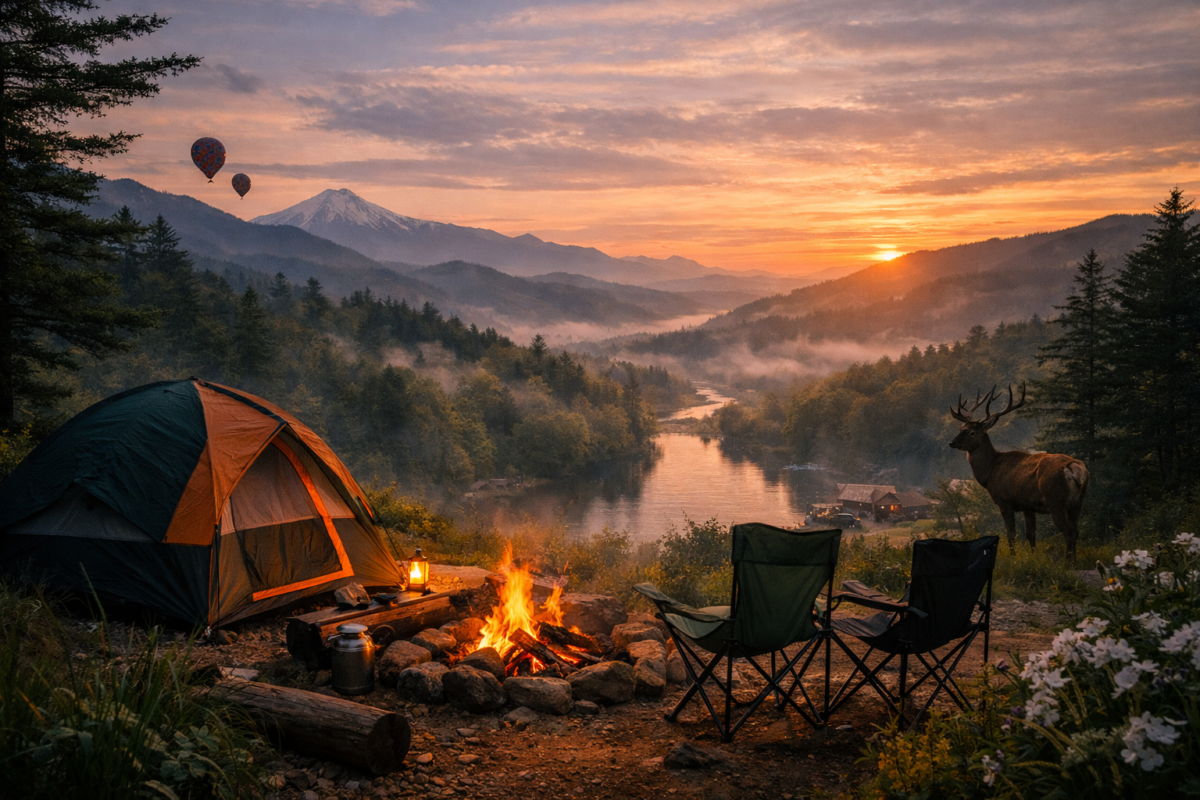
Best for: First-time national park camping, family trips, wildlife watching, autumn colour
Best season: May-June or September-October – avoid the summer peak crowds
Difficulty: Easy to moderate – wide range of campgrounds from drive-in to backcountry
Book via: Recreation.gov – Cades Cove, Elkmont, and Cosby campgrounds
The Great Smoky Mountains is the most visited national park in the USA – receiving around 12 million visitors a year – and it earns its popularity with a combination of genuinely extraordinary scenery and one of the best wildlife-watching environments in the eastern United States. But it’s also a first-timer’s park in a specific way: the road network is good, the campgrounds are well-developed, and the trails range from 30-minute family walks to challenging all-day ridge hikes.
The famous Cades Cove loop road – an 11-mile one-way loop through a historic valley – is where most visitors see white-tailed deer, black bears, wild turkeys, and occasionally coyotes. The loop opens to cyclists and pedestrians on Wednesday and Saturday mornings before 10am – one of the finest early morning wildlife-watching drives in the eastern US at any time of year.
In late October, the Smokies’ autumn colour is extraordinary – the diversity of hardwood species (over 100 types of native trees) means the peak colour period extends across nearly three weeks rather than the single weekend you get in the northern states. The mist that gives the mountains their name rolls through the valleys in the morning and lifts to reveal ridge after ridge of colour. Book Cades Cove or Elkmont campground as far ahead as possible for October weekends.
Wildlife Note: The Smokies has one of the highest densities of black bears in the eastern US – roughly 1,900 bears across the park. Never leave food, coolers, or scented items in your tent or unsecured in your campsite. All campgrounds require food storage in bear boxes or a hang. Bears in the Smokies are habituated to people and will investigate campsites opportunistically – the rules exist because they work.
2. Acadia National Park – Maine
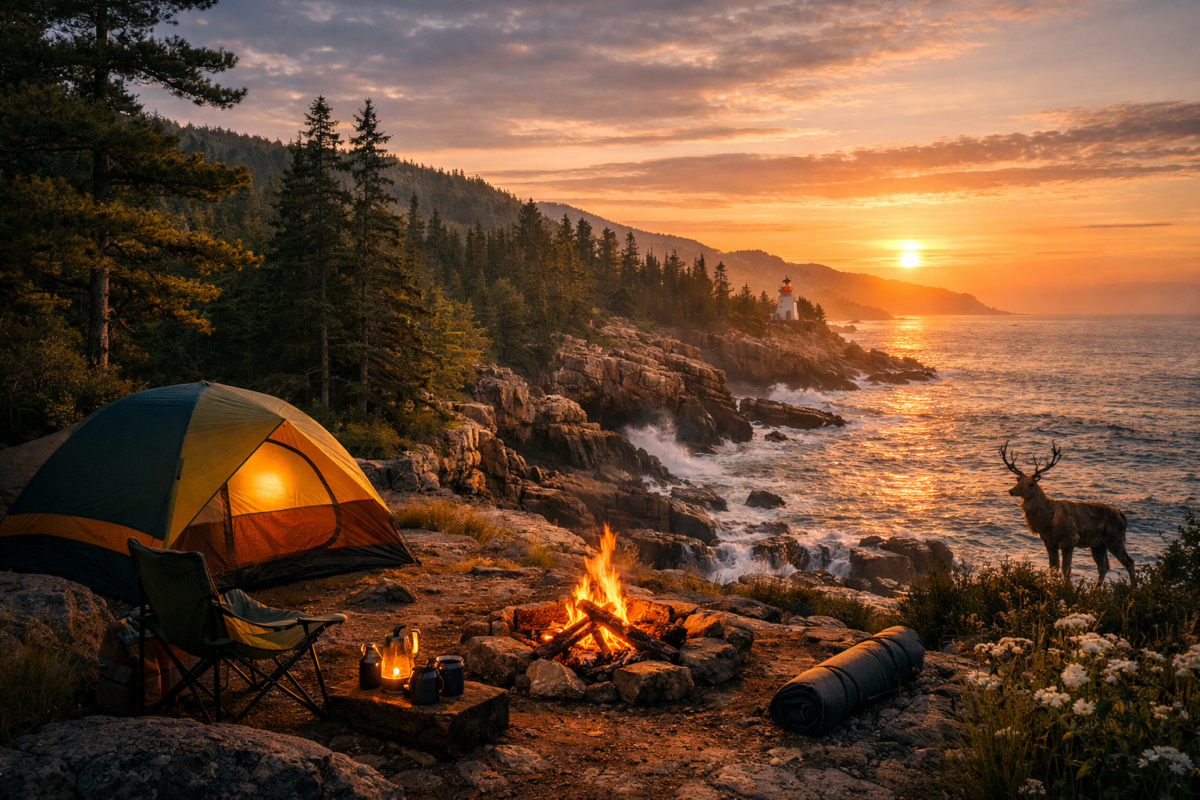
Best for: Coastal scenery, moderate hiking, New England charm, star-gazing, seafood
Best season: Late June-July or September-October (autumn foliage peak mid-October)
Difficulty: Easy to moderate – excellent trail network for all fitness levels
Book via: Recreation.gov – Blackwoods, Seawall, and Schoodic Woods campgrounds
Acadia is Maine distilled into 49,000 acres – the meeting point of granite coastline, dark spruce forests, and the clearest night sky in the eastern United States. It’s the place where the first sunrise in the continental USA touches land each morning (October through March, from the summit of Cadillac Mountain), and where the combination of ocean and mountain – rare in the American east – creates a landscape that rewards slow, repeated visits.
The 57-mile network of historic carriage roads – built by John D. Rockefeller Jr. in the early 20th century and maintained in pristine condition – is the finest car-free recreational trail system on the East Coast. Cycling or walking these stone-dusted roads through the interior of the park, past lakes and across stone arch bridges, gives you the landscape at exactly the right pace.
The summit of Cadillac Mountain (the highest point on the US Atlantic coast) is accessed by a 3.5-mile round-trip summit trail or by the summit road (reservation required in summer). For the sunrise experience, the timed-entry reservation for the summit road opens at Recreation.gov 90 days ahead – the 4am drive and the first light on the Atlantic below is one of the genuinely remarkable experiences available in the eastern US.
Pro Tip: Stay at Blackwoods Campground (open year-round, closest to Bar Harbor town) and budget an evening in Bar Harbor itself – the lobster rolls, the craft brewery, and the harbour view from Agamont Park are collectively one of the finer New England evenings available. Compare rental car prices at GetRentACar for the Bangor Airport pick-up, the most convenient gateway.
3. Shenandoah National Park – Virginia
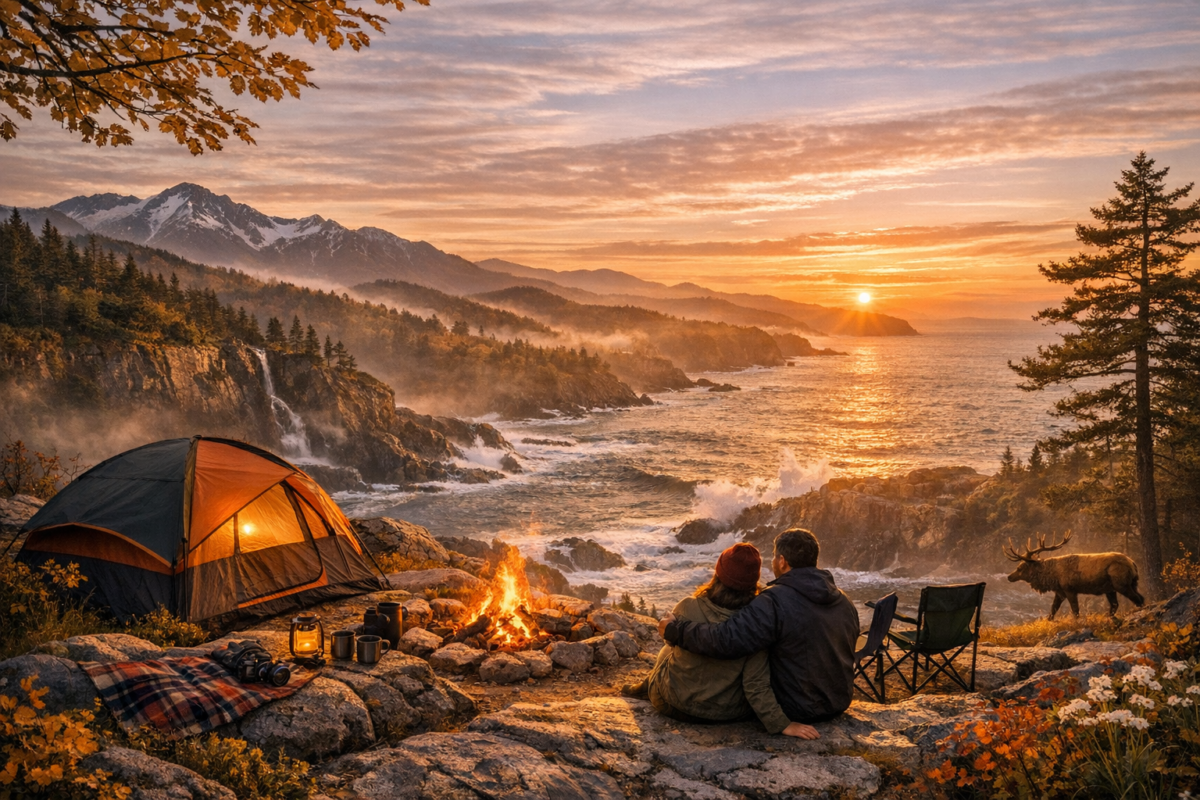
Best for: Appalachian Trail access, panoramic ridge views, wildflowers, beginner backpacking
Best season: May-June (wildflowers) or October (peak foliage)
Difficulty: Easy – the Skyline Drive provides car camping with trail access from every turnout
Book via: Recreation.gov – Big Meadows and Lewis Mountain are most popular
Shenandoah is the most accessible major national park from the East Coast population centres – it is within easy drive of Washington DC, Baltimore, Richmond, and Philadelphia – and it’s the best park for first-time campers who want to understand what national park camping feels like without committing to a long journey first.
The Skyline Drive runs 105 miles along the crest of the Blue Ridge Mountains through the park, with 75 named overlooks giving panoramic views of the Shenandoah Valley below. Driving it at dawn or dusk – when the light makes long shadows across the ridges and deer feed in the meadows along the road edge – is one of the finest slow drives in the eastern US. The Big Meadows campground, at the park’s midpoint, sits beside an open meadow that fills with fireflies in late June and early July in a display that first-time visitors tend to describe in terms usually reserved for religious experience.
The Appalachian Trail runs the entire length of the park – you can access it from dozens of trailheads along the Skyline Drive and walk as much or as little as you want. Overnight backcountry camping is allowed in designated areas with a free permit, making Shenandoah one of the best places to try your first night in the backcountry with the comfort of knowing the road and a campground are never more than a few miles away.
Insider Note: Shenandoah has the highest density of black bears in the National Park System per square mile – roughly 1 bear per square mile. Food storage rules are enforced. The park also has excellent bird watching – spring migration through the ridge in late April and May brings hundreds of species through in concentrated waves that attract ornithologists from across the country.
4. Glacier National Park – Montana
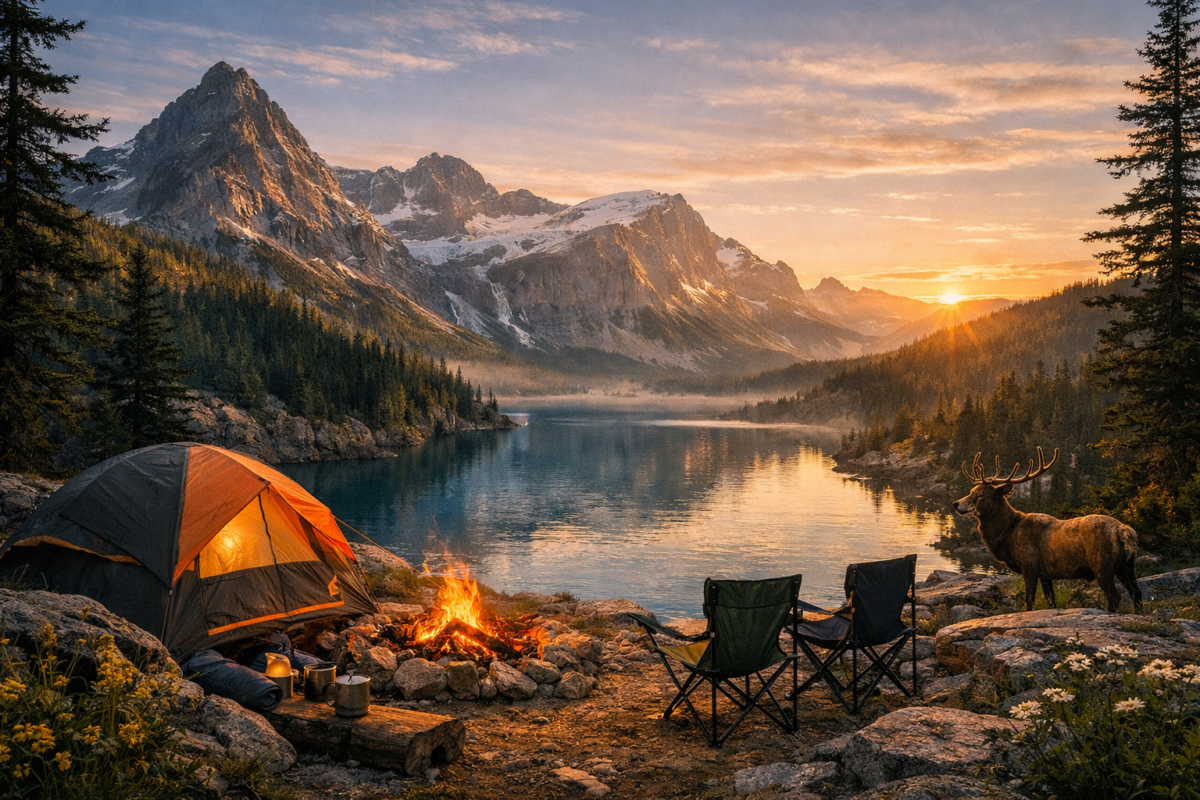
Best for: Alpine scenery, serious hiking, wildlife (grizzlies, wolves, mountain goats), Going-to-the-Sun Road
Best season: July-mid-September – the Going-to-the-Sun Road opens fully around July 4
Difficulty: Easy to strenuous – wide range, many accessible walk-in campsites
Book via: Recreation.gov – Many Glacier and Apgar campgrounds book out months ahead
Glacier is, in the opinion of many who have worked their way through the National Park system, the most beautiful park in the USA. The combination of sharp arête ridges carved by glaciers during the last ice age, turquoise glacier-fed lakes at the base of every valley, and the most concentrated wildlife-watching environment in the lower 48 creates a landscape of sustained, compounding drama that takes days to fully absorb.
The Going-to-the-Sun Road – a 50-mile engineering marvel completed in 1932 that crosses the Continental Divide at Logan Pass (2,026 metres) – is one of the great mountain drives in North America. Car entry to the road requires a timed-entry ticket reservation (separate from camping reservations) in summer. The view from Logan Pass across the Garden Wall ridge in clear morning light is the image most people carry away from Glacier.
The Many Glacier valley is where wildlife is most reliably encountered: grizzly bears on the avalanche slopes above the lakes in July and August, mountain goats on the cliff faces above Swiftcurrent Lake, moose in the willows along the valley floor. The Many Glacier campground requires both a camping reservation and a vehicle reservation to reach the valley – plan accordingly.
Wildlife Note: Glacier is grizzly country. Bear spray is mandatory for any backcountry travel and strongly recommended for day hiking in the Many Glacier and North Fork areas. Make continuous noise on the trail – call out ‘hey bear’ at blind corners. Never approach any wildlife. Mountain lion encounters are rare but possible in the late season.
5. Olympic National Park – Washington State
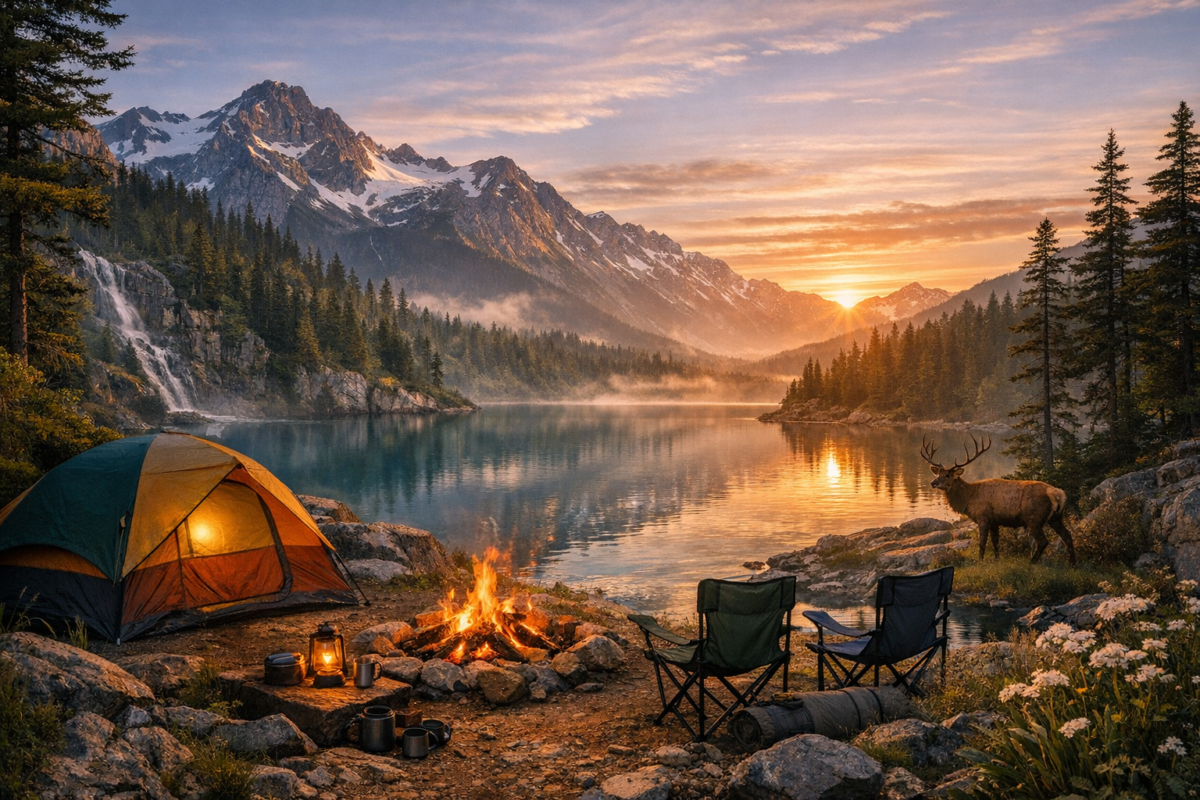
Best for: Diversity of landscapes, rainforest camping, wild Pacific coastline, beginner backpacking
Best season: June–September – the Hoh Rainforest is accessible year-round but wet outside summer
Difficulty: Easy to moderate – the park’s three distinct ecosystems offer something for every level
Book via: Recreation.gov – Hoh, Kalaloch, and Sol Duc campgrounds
Olympic is the park that most visitors discover with surprise – it is large, genuinely remote (the interior is roadless), and contains three completely different ecosystems within its boundaries: temperate rainforest, sub-alpine mountain terrain, and wild Pacific coastline. In a single day you can walk through old-growth Sitka spruce and Bigleaf maple draped in club moss, and end the afternoon watching Pacific waves crash against sea stacks while grey seals watch from offshore rocks.
The Hoh Rain Forest – one of the few temperate rainforests in the world, receiving 12-14 feet of precipitation annually – is the most otherworldly landscape in Washington State. The Hall of Mosses Trail (0.8 miles, flat, accessible) is covered in hanging club moss of a green so vivid and dense it looks artificial. Walking through it in the morning when the light filters through the canopy is one of those experiences where words fail and photographs fail worse.
For first-time coastal camping, Kalaloch Campground sits on a bluff above the Pacific with direct beach access – falling asleep to the sound of Pacific surf with the campfire still warm is one of the finest introductions to camping available anywhere in the continental US.
Insider Note: The Olympic Peninsula is one of the wettest places in the continental USA. Even in summer, rain is common. Pack full waterproofs, bring extra tent pegs for soft ground, and choose a campsite slightly elevated from the valley floor if you have a choice – pooling is common after heavy rain.
6. Joshua Tree National Park – California
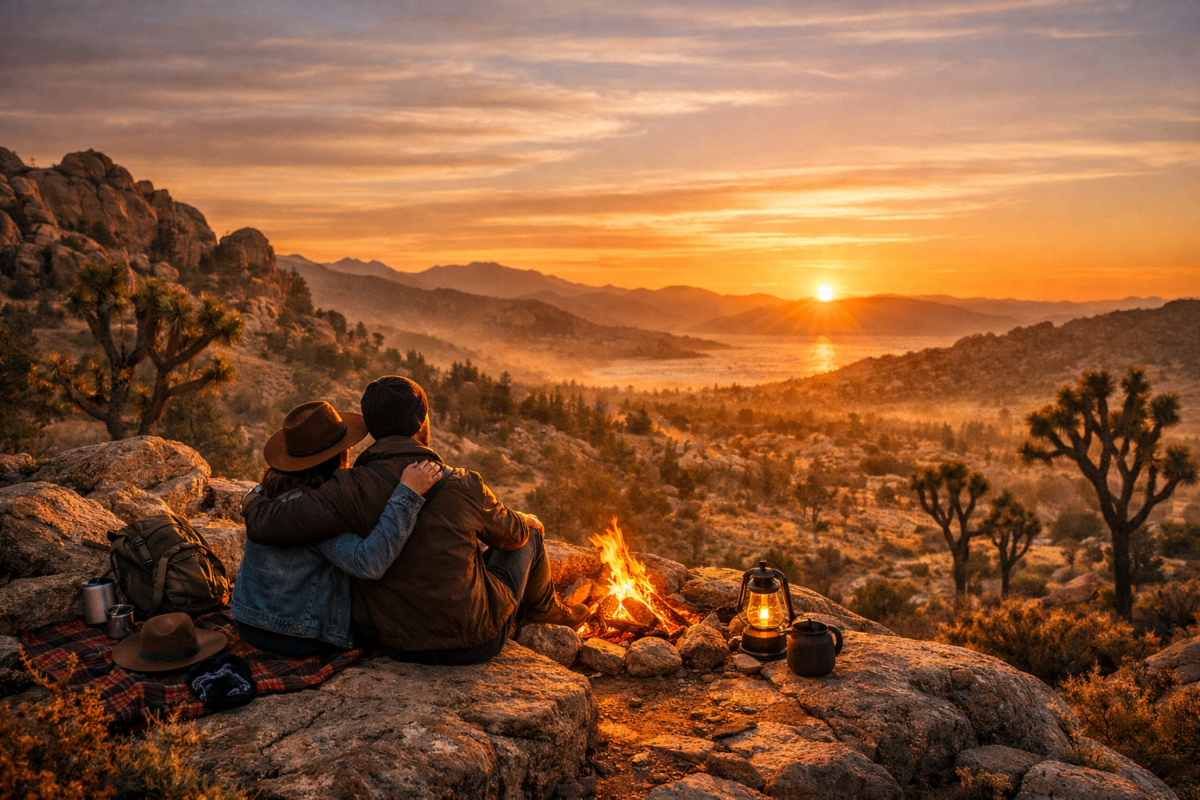
Best for: Desert camping, stargazing, rock climbing, otherworldly scenery, winter camping
Best season: October-April – summers are extreme (40°C+) and dangerous for camping
Difficulty: Easy to moderate – excellent for beginners due to accessible car campgrounds
Book via: Recreation.gov – Jumbo Rocks, Skull Rock, and Cottonwood campgrounds
Joshua Tree is where the Mojave and Colorado deserts meet, creating a landscape of extraordinary sculptural strangeness: boulder piles the size of apartment blocks balanced with improbable precision, the iconic Joshua trees (not actually trees but a species of yucca, growing in their branching forms only in the Mojave), and a night sky that is ranked among the darkest in Southern California.
For first-time desert campers, Joshua Tree is the gateway. The Jumbo Rocks campground sits among its namesake boulder formations with campsites tucked between granite outcrops that catch the last light in shades of orange and gold. Waking up in the desert before dawn to watch the boulders change colour as the sun rises over the Little San Bernardino Mountains is available for the cost of a camping permit and some cold air at 5:30am.
The stargazing at Joshua Tree is legitimately extraordinary – at over 1,000 metres of altitude in the desert, away from the light pollution of Los Angeles, the Milky Way is visible and the star field genuinely overwhelming. The park hosts Astronomy Nights events with ranger-guided telescope viewing. On any clear night between October and April, the sky alone justifies the trip.
Heads Up: Joshua Tree summer heat is life-threatening for campers – night temperatures rarely drop below 35°C in July and August and heat exhaustion is a genuine risk. Visit October through April only for camping. Bring significantly more water than you think you need (1 gallon per person per day minimum in any desert environment) and tell someone your plans before any backcountry hiking.
Best for: Mountain views, wildlife (bison, elk, moose, bear), float trips on the Snake River, first backpacking
7. Grand Teton National Park – Wyoming
Best season: June-September
Difficulty: Easy to strenuous – wide range of frontcountry and backcountry options
Book via: Recreation.gov – Signal Mountain and Jenny Lake campgrounds
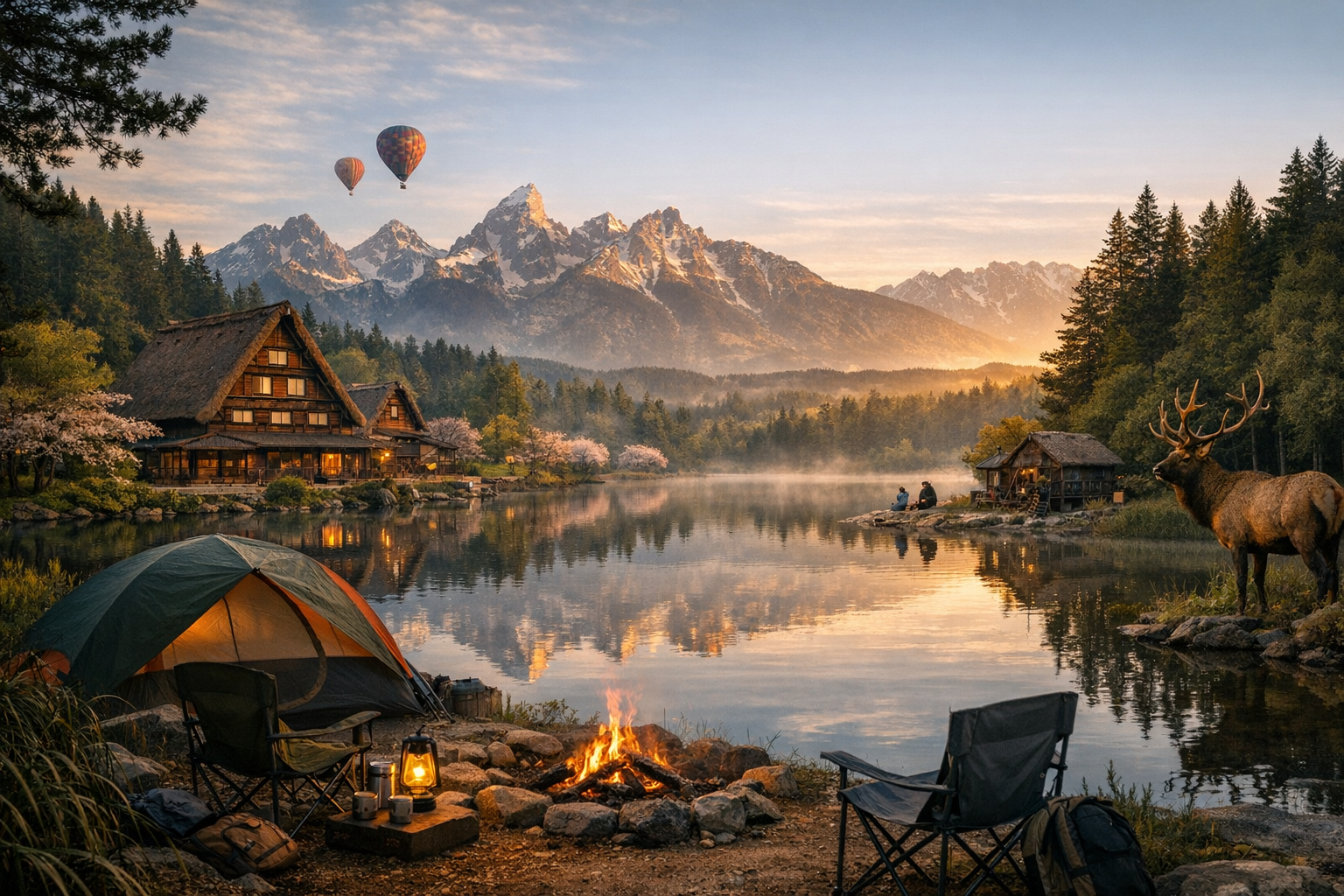
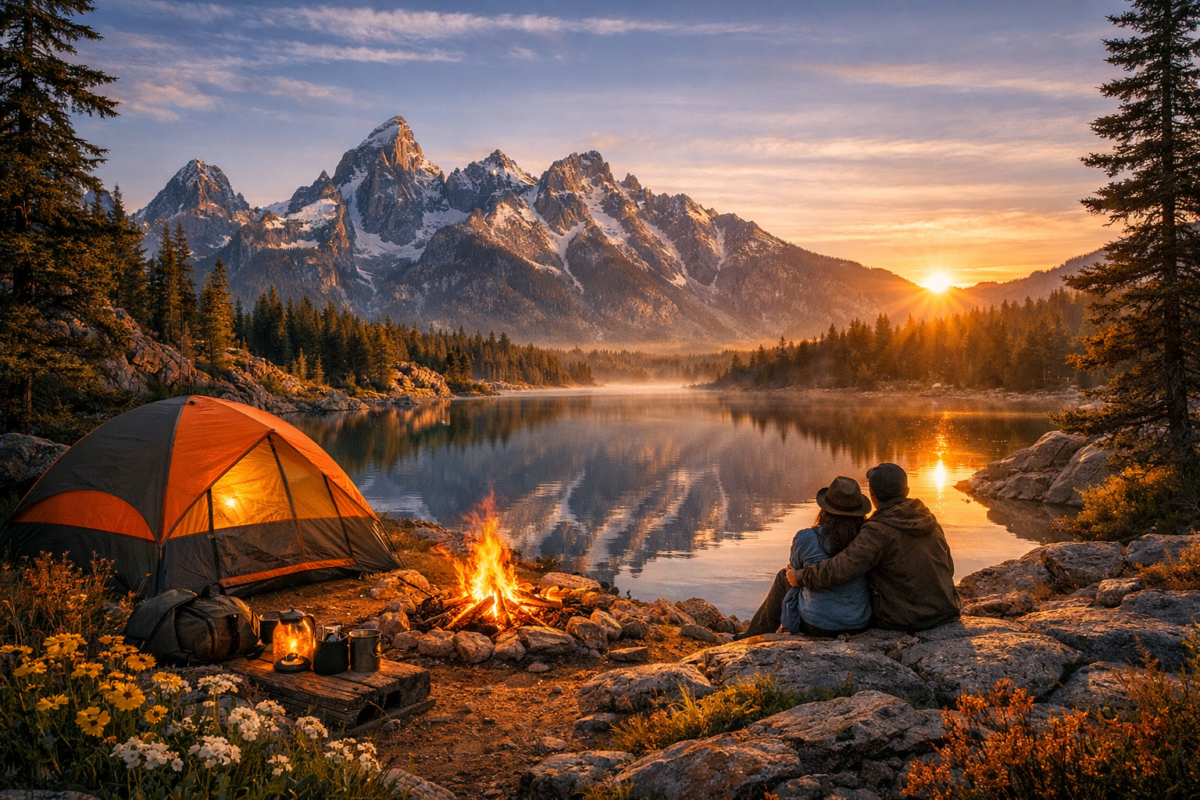
The Teton Range rises abruptly from the Jackson Hole valley floor without any foothills – a wall of 12,000-foot granite peaks with no visual transition between the flat sagebrush plain and the vertical mountain face. The effect, particularly at dawn and dusk when the light on the peaks is direct and warm, is genuinely shocking every time regardless of how many times you’ve seen it.
Jenny Lake campground – sitting below the Cathedral Group peaks with the lake as a foreground – is one of the most scenically positioned campgrounds in the National Park System. It’s tent-only, fills early, and requires either advance reservation or an early-morning arrival at 6am when spots open for same-day occupancy (walk-in spots only, no reservation available). The effort is entirely justified by two or three nights of waking up to those peaks.
The Moose-Wilson Road south of Jenny Lake is where most wildlife encounters happen – particularly in the early morning and evening. Moose are reliably present in the willows along the road. Black bears appear regularly. In September and October, elk herds move down from the high country and the bugling of bull elk across the valley floor is one of the great natural sound experiences of the American West.
Pro Tip: Grand Teton and Yellowstone are 60 miles apart and are almost always visited together. Plan at least 3 nights in each for a combined trip – add the Firehole Canyon, the Lamar Valley (Yellowstone’s premier wildlife-watching corridor), and the less-visited southern Teton range for a 10-day trip that covers the greatest concentration of wildlife and scenery in the contiguous United States.
8. Zion National Park – Utah
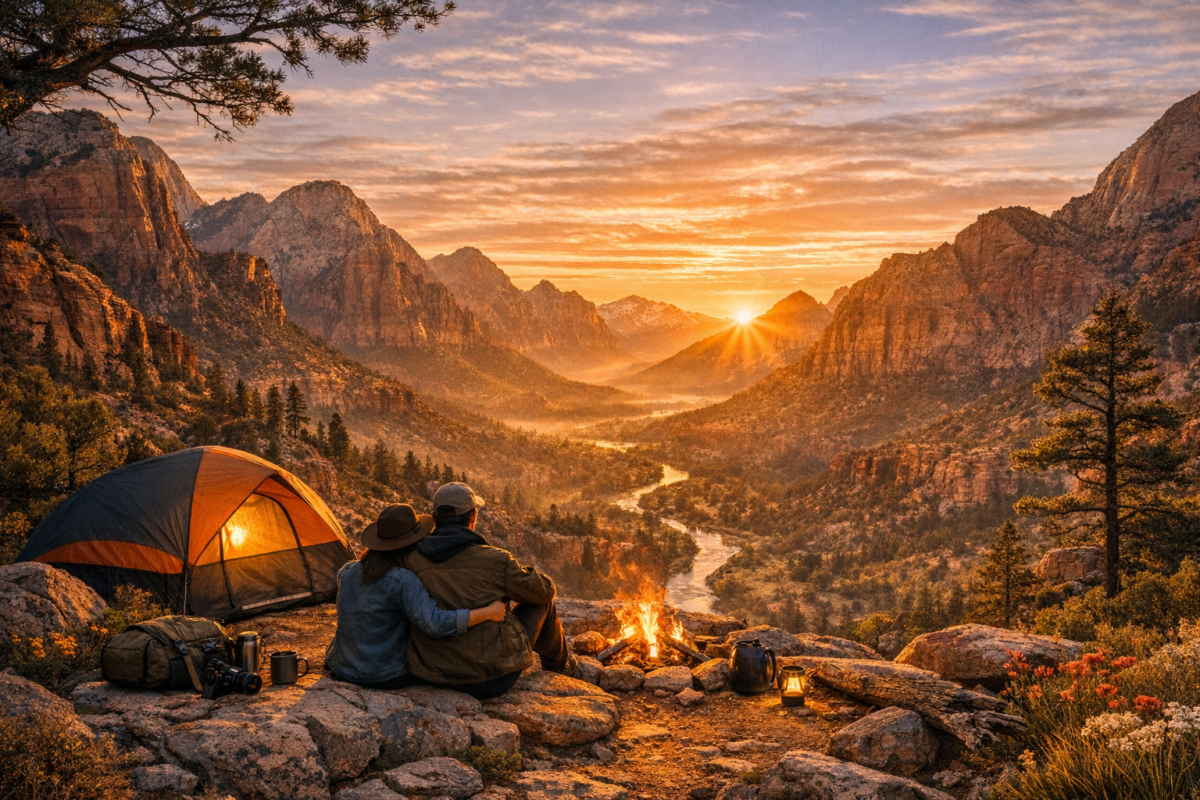
Best for: Slot canyon hiking, The Narrows, Angels Landing, desert river camping
Best season: March-May or September–November – summer is very hot and crowded
Difficulty: Moderate – the signature hikes are achievable for fit beginners with proper footwear
Book via: Recreation.gov – Watchman and South campgrounds in Zion Canyon
Zion Canyon – a 2,000-foot deep gorge carved by the Virgin River through Navajo sandstone – is the most dramatic slot canyon in the American Southwest and home to two of the most famous hikes in the United States. The Narrows follows the Virgin River upstream through canyon walls that narrow to as little as 20 feet wide and rise 1,000 feet overhead – the hiking is through the water itself, knee- to waist-deep in places, and the experience of walking through cathedral-scale stone walls in a clear river is unlike anything else in the USA.
Angels Landing – a 5.4-mile round-trip hike that gains 1,488 feet and involves chains bolted into sheer cliff faces on the final ridge – is the most well-known ‘scary’ hike in the US. A permit lottery system now limits daily hikers to reduce crowding. The view from the top over the canyon floor 1,400 feet below is vertiginous and magnificent in equal measure. People afraid of heights should consider the West Rim Trail instead, which offers similar views without the exposure.
Heads Up: Flash flooding in Zion’s slot canyons – particularly The Narrows – is a genuine and sometimes fatal risk. A rainstorm 20 miles upstream can send a wall of water down the canyon with no warning and no escape route. Check the NPS flash flood forecast at the Zion visitor centre before entering The Narrows, every day, without exception. The rangers are not being overcautious.
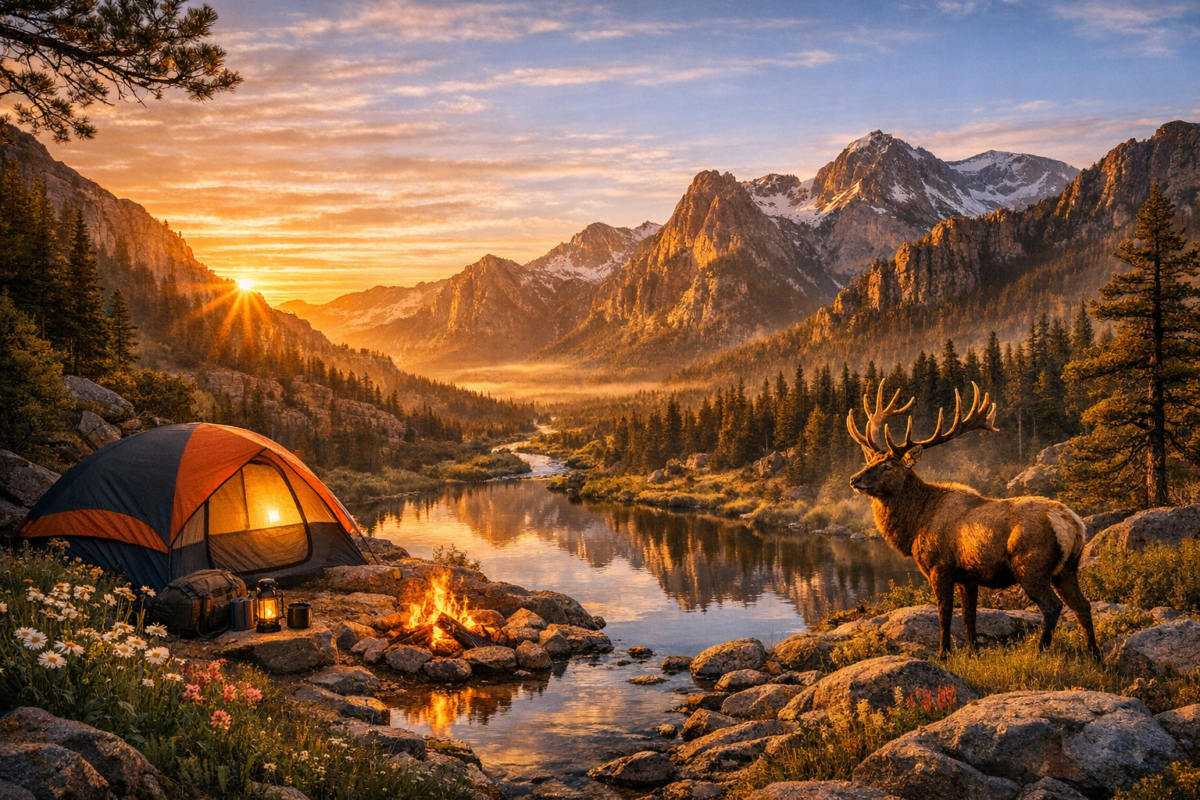
Best for: Alpine scenery, elk watching, Trail Ridge Road, beginner backcountry camping
9. Rocky Mountain National Park – Colorado
Best season: June–September – Trail Ridge Road opens around Memorial Day
Difficulty: Easy to strenuous – good range for all levels
Book via: Recreation.gov – Moraine Park and Glacier Basin campgrounds
Rocky Mountain National Park is the most visited park in the Mountain West, and it earns the visits with scenery that is accessible from the moment you enter. The Trail Ridge Road – the highest continuous paved road in the USA at 12,183 feet – crosses the tundra above treeline with views that extend 100 miles in clear weather. In June and July, elk graze on the tundra beside the road with the casual indifference of animals that have never encountered a predator worth worrying about.
September and October are when the Rocky Mountain experience reaches its annual peak: the elk rut brings hundreds of bull elk into the valleys to bugle and contest for harems, with the most concentrated activity typically in Moraine Park and Horseshoe Park in the early morning. The sound of a bull elk bugling at dawn from a tent in Moraine Park campground is one of those alarm clock moments that makes you immediately glad to be awake.
The Bear Lake corridor – a system of interconnected alpine lakes accessible by shuttle from the park’s main visitor centre – is where most visitors concentrate, and for good reason: the combination of mirror-like lakes, subalpine forest, and the Continental Divide rising above is exactly what people imagine when they picture the Rockies. Arrive before 7am to get a parking spot at Bear Lake or use the free park shuttle from Estes Park.
Insider Note: Altitude sickness is a real consideration in RMNP – Estes Park is already at 7,500 feet, and Trail Ridge Road tops out at 12,183. First-timers from sea level should spend a night in Denver or Estes Park acclimatising before heavy exertion, drink extra water, avoid alcohol on the first day, and descend if experiencing severe headache, nausea, or confusion.
10. Crater Lake National Park – Oregon
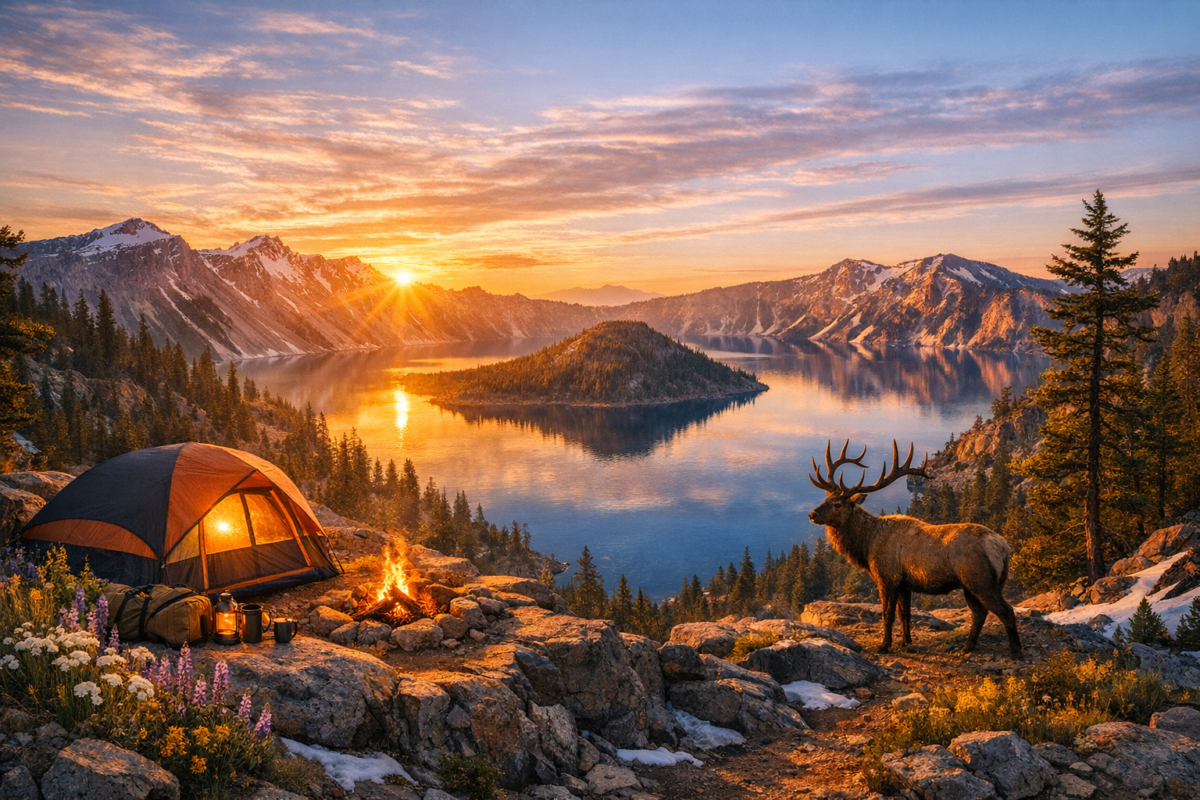
Best for: The most vivid blue water in North America, rim hikes, solitude, photography
Best season: July-September – the park is buried in snow for much of the year
Difficulty: Easy to moderate – rim drive accessible by car, select hikes to the caldera rim
Book via: Recreation.gov – Mazama Village Campground
Crater Lake was formed 7,700 years ago when the volcano Mount Mazama erupted and collapsed into itself, creating a caldera 6 miles wide that has filled with snowmelt to form the deepest lake in the USA (593 metres) and the most vivid blue body of water in North America. The colour is not a trick of light or photography – it is the actual colour of the water, which has no inflows or outflows and is filtered only by its own depth and purity.
There is a specific moment when you first see Crater Lake from the rim that almost all visitors describe in nearly identical terms. You walk the path to the caldera edge and then – without any gradual reveal – the entire lake materialises below you in a blue so saturated and improbable that the brain takes a second to categorise it as real. Wizard Island (a cinder cone volcano in the middle of the lake) floats in this blue like a prop from a geography lesson. It is one of the most extraordinary natural sights in the United States.
The Rim Drive (33 miles, multiple viewpoints) takes 2-3 hours by car and can be done on a day visit. But camping at Mazama Village Campground (just below the rim) allows you to catch the lake at dawn and dusk when the light is direct on the water and the crowds have largely gone – the lake has a completely different character in the first and last light of the day.
11. Cape Hatteras National Seashore – North Carolina
Best for: Beach camping, surfing, lighthouses, birdwatching, free accessible camping
Best season: April–June or September–October – hurricane season August–October requires attention
Difficulty: Easy – drive-up beach camping, accessible to all
Book via: Recreation.gov – Oregon Inlet, Ocracoke Island, and Cape Point campgrounds
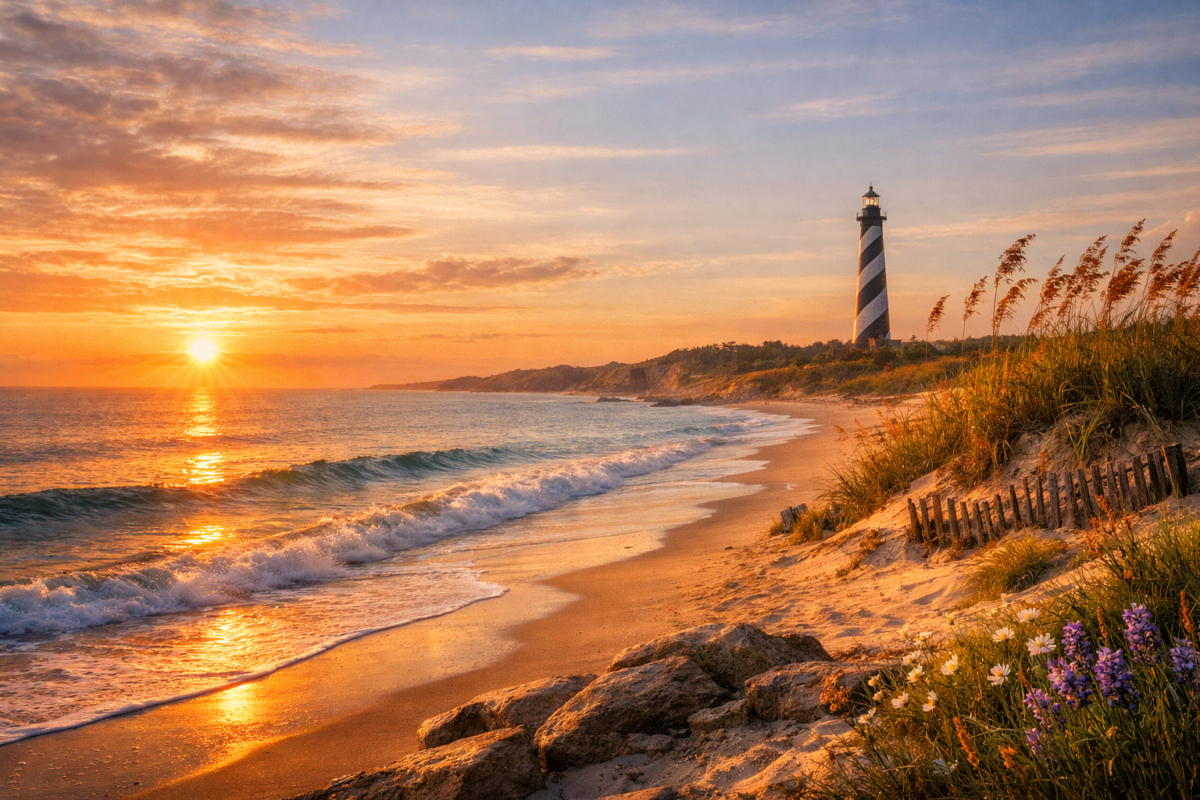
Cape Hatteras is 70 miles of Atlantic barrier island – the Outer Banks of North Carolina – managed as a National Seashore with four campgrounds directly on the beach. This is drive-to-the-water-and-pitch-your-tent camping in its simplest and most satisfying form: you back your car to the sand, set up your tent with the Atlantic visible from inside, and go to sleep with the sound of surf.
The lighthouse at Cape Hatteras is the tallest brick lighthouse in the USA (198 feet), and the climb to the top takes fifteen minutes and gives views across the barrier island system that make immediately apparent why this particular point of land was both essential for navigation and notorious for shipwrecks – it is called the Graveyard of the Atlantic for the 600+ ships that have been lost here over 400 years.
Cape Hatteras is also, along with the Outer Banks generally, one of the premier shorebird and migratory bird watching locations in the eastern US – the spring migration corridor in late April and May brings remarkable volumes of birds through. The National Seashore has no entry fee and the campgrounds are among the most affordable in the National Park System.
Pro Tip: 4WD vehicles can access the beach at Cape Point and Ocracoke with a free permit from the NPS – driving on the beach at low tide, particularly at dawn when the fishermen are out and the light on the water is extraordinary, is one of the more unusual camping-adjacent experiences on the East Coast.
12. Boundary Waters Canoe Area Wilderness – Minnesota
Best for: Canoe camping, complete solitude, boreal lake landscape, portaging, Northern Lights
Best season: June-August for paddling; September-October for fall colour and aurora potential
Difficulty: Moderate – requires basic canoe skills and portaging fitness, no technical mountaineering
Book via: Recreation.gov – BWCAW entry point permits, $16/person plus canoe rental
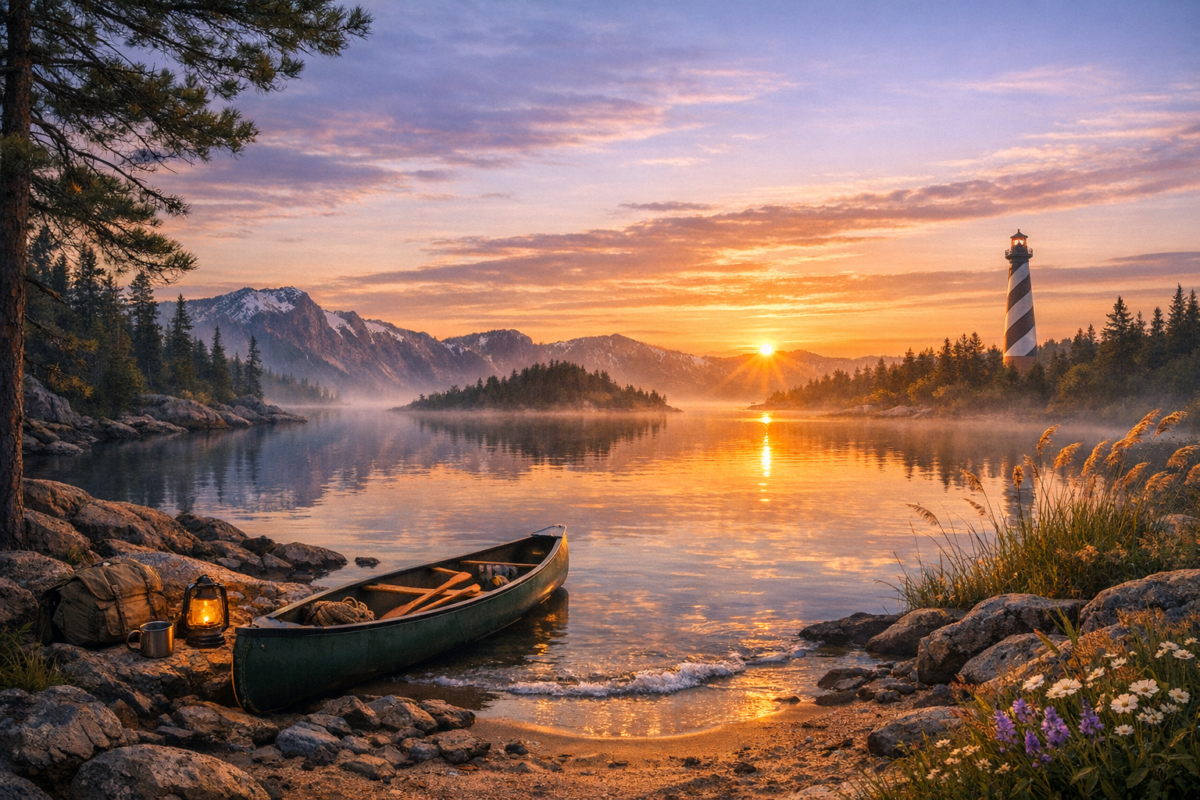
The Boundary Waters Canoe Area Wilderness in northern Minnesota is one million acres of boreal forest and over 1,000 interconnected lakes along the Canadian border – the largest wilderness area east of the Rocky Mountains and, along the portage trails between lakes, one of the last places in the lower 48 where you can go a full week without encountering another human being if you choose your route carefully.
The entry system is specifically designed for canoe camping: you pick an entry point, a route connecting lakes by water and portage trails, and camp on designated sites scattered across the interior. No motorboats are allowed in most of the wilderness. No roads. The only sounds are loons calling, the paddle on the water, and – on clear nights in September – occasionally the aurora.
For first-time BWCAW visitors, the Sawbill Lake entry point (near Tofte on the north shore of Lake Superior) is one of the most accessible and beautiful entry points in the wilderness, with a well-established outfitter (Sawbill Canoe Outfitters) that rents all equipment, provides routes for every fitness and experience level, and will fill every knowledge gap a first-time wilderness canoe camper has.
Insider Note: The BWCAW requires bear canisters for food storage – they are rented at all entry-point outfitters. This is one of the best-regulated wilderness camping systems in the world: the combination of permit limits, pack-in/pack-out rules, and canoe-only access means the lakes are clean, the campsites are maintained, and encounters with other parties are rare even in peak season. It rewards the planning effort enormously.
First-Timer’s Camping Gear Guide: What You Actually Need
The camping gear industry wants you to spend a lot of money. The actual essentials list is shorter than most gear shops suggest. Here is what a first-time camper genuinely needs for a 2-3 night frontcountry trip (car camping) at a developed campground:
The Non-Negotiable Essentials
- Tent: A 3-season tent rated to the temperatures you’ll encounter. For summer camping, almost any tent works; for shoulder season, check the rated temperature range. REI and Coleman both make reliable entry-level tents for $80–150.
- Sleeping bag: Match to the lowest expected night temperature at your destination – check our Weather Checker before selecting. A 20°F (-7°C) rated bag handles most three-season US camping. Down compresses smaller; synthetic insulation stays warm when wet – important in the Smokies and Olympic.
- Sleeping pad: Non-negotiable for warmth – the ground conducts cold rapidly and a sleeping bag alone provides no insulation from below. A foam pad is $20-30; an inflatable sleeping pad is $40-100 and far more comfortable.
- Camp stove: A two-burner propane stove (Coleman Classic is the reliable standard) or a single-burner backpacking stove. Coffee, oatmeal, pasta – the equipment cost is recovered in restaurant savings within a single trip.
- Headlamp: Not a torch. A headlamp, worn on your head, leaves your hands free for setting up tent in the dark, cooking, and finding your way to the camp bathroom at 2am. Bring extra batteries.
- Water filtration: A Sawyer Squeeze or Katadyn filter bottle if camping near streams. At developed campgrounds with piped water, this is optional.
- Bear canister or bear bag: Required or strongly recommended at most national parks and wilderness areas. All food, toiletries, and scented items must be stored away from your tent and sleeping area. Non-negotiable where bears are present.
- First aid kit: Basic kit including blister treatment (the most common camping injury) and whatever personal medications you need.
- Navigation: Paper map of the area plus offline maps downloaded before departure. Cell coverage at national parks is frequently nonexistent.
Pro Tip: Use our Packing List Generator to build a custom camping gear checklist tailored to your specific destination, season, and number of nights. It generates a complete list including clothing, food, cooking gear, and safety items based on the conditions you’ll face.
Getting to and Around US Camping Destinations
Flights to the USA
For international visitors from the UK, Europe, and Canada, search for the best transatlantic fares on Aviasales – it compares prices across all major airlines simultaneously. Earn cashback on every booking with WayAway. If your flight is disrupted, AirHelp handles compensation claims on a no-win-no-fee basis.
Car Rental – The Essential Vehicle
A car is essential for virtually every campsite on this list – only the Boundary Waters is accessed by canoe rather than car, and even that requires a drive to the entry point. Compare prices across all major US providers at GetRentACar. For the desert Southwest and the Boundary Waters portage trails, consider whether a larger or 4WD vehicle justifies the extra cost. For most parks and state campgrounds, a standard economy car is perfectly adequate.
For airport pickup and drop-off without the hassle of finding your own transport while managing camping gear, GetTransfer offers pre-booked private transfers at most US gateway airports.
Connectivity at Campgrounds
Mobile coverage at national parks is inconsistent and frequently absent in the backcountry. An eSIM with US data coverage helps in the visitor centre areas and gateway towns. Airalo and Yesim offer US data packages for international visitors – activate before flying. Download offline maps, campsite details, and trail maps before entering any national park. For access to your home streaming services while in the USA, NordVPN works on US networks.
Travel Insurance for US Camping Trips
US medical costs without insurance are among the highest in the world. A mountain rescue helicopter evacuation from Rocky Mountain National Park or Glacier can cost $20,000-80,000 without insurance. Ekta Travel Insurance offers comprehensive adventure travel policies including outdoor activity coverage, emergency evacuation, and trip cancellation – essential for any camping trip involving remote hiking or wilderness travel.
Luggage Storage for Travel Days
If you’re arriving in a city before heading to a national park (Denver for Rocky Mountain, Portland for Crater Lake, Nashville for the Smokies), Radical Storage has storage locations near most major US city train stations and airports – useful for the day between arrival and picking up your rental car and camping gear.
Tour Options
For first-timers who want a guided introduction to backcountry camping before going independently, WeGoTrip has guided camping and hiking experiences at several of the parks in this guide. Guided trips provide gear, food, and leadership – an excellent way to learn the skills before doing it solo.
Plan Your US Camping Trip with These Free Tools
- AI Travel Budget Estimator – calculate your complete camping trip costs including flights, car rental, park fees, gear, and food
- Packing List Generator – generate a custom camping gear checklist based on destination, season, and trip length
- Live Currency Converter – real-time USD conversion for international visitors from UK, EU, Canada, and Australia
- Travel Planning Services – need a custom US camping itinerary built around your dates, budget, and fitness level? Our team builds them end to end
- More Destination Guides – our full library of North America, Europe, and worldwide destination guides
- Budget Travel Hub – money-saving strategies for US camping and every other destination we cover
Frequently Asked Questions
Q1: How much does camping in a US national park cost?
Campsite fees in national parks range from $15-35 per night for frontcountry drive-in sites. Backcountry permit fees are typically $5-15 per person per night. The America the Beautiful Annual Pass ($80) covers all park entry fees for 12 months – essential if you are visiting two or more parks. For international visitors, use our AI Travel Budget Estimator to calculate a complete trip cost including flights, car rental, food, gear, and park fees.
Q2: Do I need to book US campsites in advance?
For popular national park campgrounds (Yosemite Valley, Glacier’s Many Glacier, Grand Teton’s Jenny Lake), advance reservation through Recreation.gov is essential – peak summer dates book out 6 months ahead. For national forest campgrounds, many are first-come-first-served and you can often find a site without advance booking outside peak weekends. For state parks, the process varies by state. Shoulder season (May-June and September-October) significantly improves walk-up availability at most campgrounds.
Q3: What is the Leave No Trace principle and why does it matter?
Leave No Trace (LNT) is the ethical framework for outdoor recreation in the USA – seven principles that collectively define how to experience wilderness without damaging it for future users. The core rules: pack out all rubbish (including food scraps), camp on designated sites or durable surfaces, minimise campfire impact (use established rings only, leave no charred wood), leave wildlife alone, and respect other visitors. Following LNT is both a courtesy and, in protected areas, legally required.
Q4: Is camping in the USA safe for solo travellers and international visitors?
Yes – US national parks are extremely safe for most visitors. The specific risks that require preparation are environmental: wildlife (bears, rattlesnakes, mountain lions), weather changes (afternoon thunderstorms in the Rockies, flash flooding in Utah canyons), altitude sickness above 8,000 feet, and dehydration in desert environments. These are manageable risks with awareness and appropriate preparation. Crime at national park campgrounds is very rare. Solo camping is common and accepted throughout the US outdoor culture.
Q5: What is the best national park for a complete first-time camping beginner?
Shenandoah National Park in Virginia is the best overall choice for a complete beginner in the eastern half of the USA: it is accessible from major East Coast cities, has well-developed campgrounds, excellent trail infrastructure, ranger programmes, and a Skyline Drive that lets you see the park from your car on the first day while you get your bearings. For the West, Rocky Mountain National Park offers a similar combination of accessibility, infrastructure, and genuine alpine scenery without the extreme permit competition of Yosemite or Glacier.
Q6: Can international visitors camp in US national parks?
Absolutely – US national parks are open to visitors from all countries. There are no citizenship requirements for entering or camping in national parks. International visitors need standard US entry documentation (ESTA for visa-waiver eligible countries, US visa for others). The Recreation.gov booking platform accepts international payment methods. The America the Beautiful Pass is available for purchase at all park entrances regardless of nationality.
Final Thoughts: America’s Wild Places Are Waiting
I’ve spent a lot of time in the USA’s national parks and public lands over the years, and the thing that still surprises me – every single time – is how fast the scale recalibrates your sense of what’s possible outdoors. You arrive in a parking lot at the Grand Teton, walk three minutes to the lake’s edge, and the mountain face across the water is so large and so close and so vertical that the body’s response is physical before it’s intellectual. The chest tightens slightly. The breath changes. Something realigns.
That happens at Glacier and at Crater Lake and at the Boundary Waters paddling into the wilderness on the first morning. And it happens in smaller, quieter ways – the fireflies at Big Meadows, the first stars visible above Joshua Tree boulders, the sound of rain on the tent in the Smokies – that are no less real for being small.
The 12 destinations in this guide are the ones that make that happen most reliably for people encountering it for the first time. Go in with the right gear, the right expectations, and a willingness to be surprised. The country has been doing this to people for a very long time and it is very good at it.
Start planning your US camping trip today. Find the best flights on Aviasales, earn cashback with WayAway, compare car rentals at GetRentACar, activate your eSIM with Airalo or Yesim, and protect every hike and drive with Ekta Travel Insurance. Browse our full USA destination guides and budget travel hub for everything else.
Pack the tent. See the stars.
Hidden Travels Team | hiddentravels.site