
⚠️ Affiliate Disclosure: Some links below are affiliate links – we earn a small commission if you book through them, at no extra cost to you. We only recommend services we genuinely trust.
I have driven a lot of roads. Mountain passes in the Alps, the coastal highway along California’s Big Sur, stretches of the Patagonian steppe where you don’t see another vehicle for two hours. But the road trip that I keep coming back to – the one that sits in my memory with a particular, unrepeatable quality – was a six-day loop through the Scottish Highlands in a second-hand Vauxhall Astra with a cracked heater, a road atlas from 2014, and a budget of £400.
That trip changed what I understood about the UK as a travel destination. Because Britain – and I say this having now driven the length and breadth of it – is extraordinary. It has volcanic coastlines and ancient forests and market towns that look like they were designed specifically to appear on the covers of novels. It has roads so scenic they double as tourist attractions. And it has a density of history, landscape, and culture per square mile that you genuinely have to drive to understand.
The problem is that most people who live in the UK don’t really travel in the UK. They fly somewhere warm and come home. The domestic road trip is something they’ll do ‘someday’ – when the weather’s better, when work eases off, when the kids are older. Someday keeps getting postponed.
This guide is for the people who want to stop waiting for someday. It covers six of the best road trips in the UK that you can complete for under £500 – including fuel, accommodation, food, and activities – with real, detailed routes, honest costs, and the specific stops and moments that make each one worth doing. International visitors from the USA, Canada, Europe, or Australia will find everything they need to plan a memorable British road trip from scratch.
Pro Tip: Before you plan, check our AI Travel Budget Estimator to build a personalised UK road trip budget, and use the Live Currency Converter to convert GBP to your home currency in real time.
Why a UK Road Trip Belongs on Every Traveller’s List
There’s a line people use about Britain that I’ve always found slightly ridiculous: that it’s ‘a small island.’ Small by land mass, maybe – but in terms of what it contains per square mile, the UK is one of the most varied, layered, historically rich landmasses on the planet.
Think about what you can drive through in a single week: Roman fortifications, Viking harbours, medieval castle towns, Georgian spa cities, Industrial Revolution landscapes, ancient woodland, sub-tropical gardens, volcanic coastlines, peat bog wilderness, chalk cliffs, sea stacks, and river gorges. All of it connected by roads that, outside the motorway network, are often breathtakingly scenic.
For international visitors, a UK road trip also offers a logistical simplicity that continental Europe doesn’t: English is the language everywhere (with regional variations that become part of the experience), driving is on the left (unfamiliar but straightforward to adapt to), and the road network is comprehensive even in the most remote areas.
And for UK residents: the country outside the major cities is genuinely, consistently underestimated. You don’t need to go to Iceland for dramatic coastlines. You don’t need to go to Tuscany for rolling hills and stone villages. Wales and the Cotswolds and the Highlands are all there, waiting, within a tank of fuel.
Local Insight: UK road trips are almost always better on the smaller B-roads than the main A-roads. Yes, the A-roads are faster. But the B-roads go through the villages, past the farmhouse tea rooms, along the cliff edges, and over the stone-walled passes where the sheep stand in the road and look at you with complete indifference. That is the experience. Take the slower road.
How the Under-£500 Budget Actually Works
The £500 budget covers a solo traveller over 5-7 days. Couples sharing costs will find the per-person figure drops significantly – often below £300 each. Here’s how the numbers break down across a typical 6-day UK road trip:
| Expense | Budget | Comfort |
| Car rental (6 days, economy class) | £120–150 | £180–250 |
| Fuel (400–600 miles avg per route) | £55–80 | £55–80 |
| Accommodation (6 nights) | £120–160 | £210–300 |
| Food & drink (mix of self-catering/pubs) | £80–100 | £150–200 |
| Attractions & activities | £25–40 | £60–100 |
| Parking & tolls | £15–25 | £20–35 |
| TOTAL (6-day solo trip) | £415–555 | £675–965 |
Heads Up: The £500 budget is firmly achievable for budget-style travel – B&Bs or hostels, self-catering breakfasts and packed lunches, one pub dinner per day. It becomes tight if you’re staying in hotels or eating out for every meal. The comfort column above shows realistic mid-range costs for comparison.
Car Rental Tips for UK Road Trips
Always compare across multiple providers before booking. GetRentACar searches all major UK rental companies simultaneously – Enterprise, Hertz, Europcar, Avis, and smaller independent operators – and consistently surfaces better prices than booking direct. Book at least 2-3 weeks ahead for summer trips, when economy cars sell out quickly in popular departure cities.
For international visitors driving in the UK for the first time: the left-hand side of the road takes about a day to feel natural. The main hazard isn’t the main roads – it is the single-track lanes in Wales, Scotland, and Devon, where two cars cannot pass simultaneously and you need to use passing places. Take these slowly and nobody is in a hurry.
Pro Tip: Check your travel insurance policy before renting. Many policies include rental car excess cover, which means you can decline the expensive excess waiver the rental desk will offer. This alone can save £50-100 on a week-long rental.
6 Best Budget Road Trips in the UK
| Route 1 – The Scottish Highlands Loop |
| Distance: ~450 milesIdeal duration: 5–7 daysStart / End: Inverness → Glencoe → Fort William → Skye → InvernessUnmissable moment: The first sight of Glencoe valley from the A82 – black peaks and mist and a silence that feels older than anythingBest for: First-time Highland visitors, landscape photographers, hikers |
Why This Route First
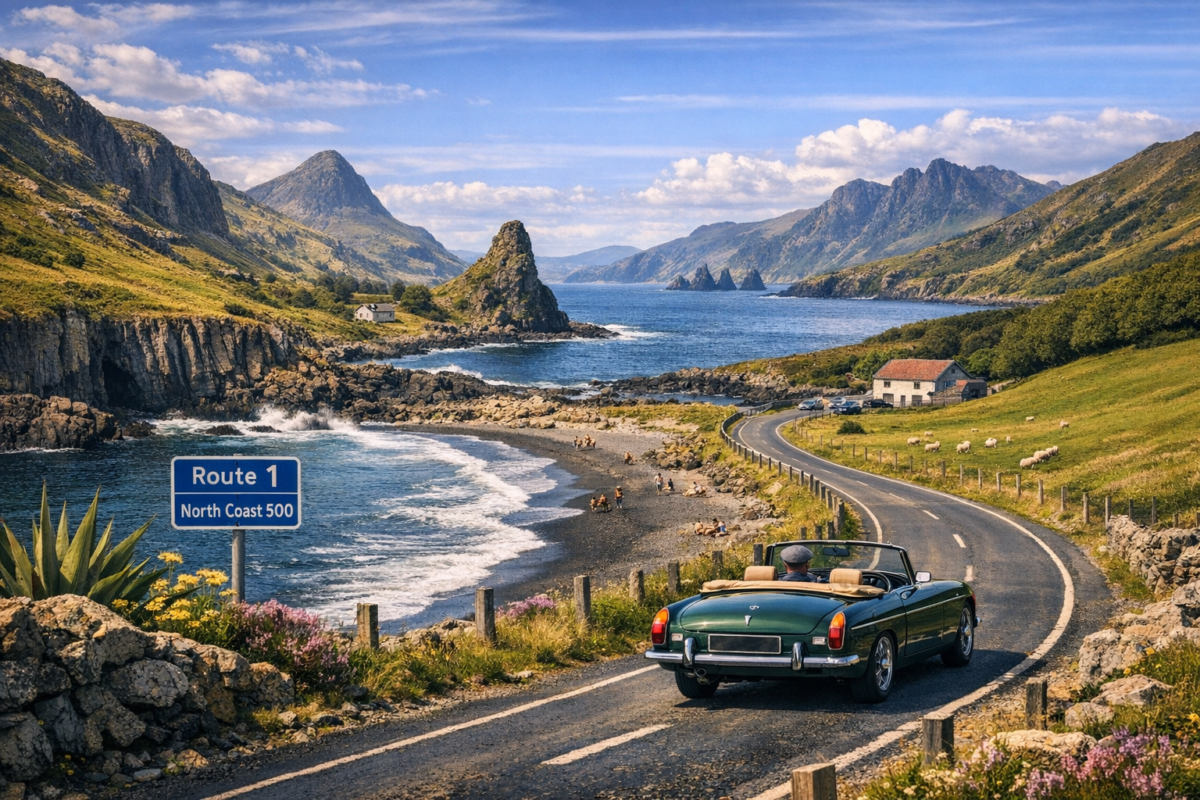
The Scottish Highlands Loop is the most dramatic road trip in Britain, and there’s genuinely no close second. The drive south from Inverness on the A9 through the Cairngorms, west across Rannoch Moor, and into Glencoe is one of the great drives in Europe – full stop. Add the Skye bridge crossing, the Fairy Pools, Eilean Donan Castle, and Loch Ness on the return leg, and you have five days that will fundamentally recalibrate what you think scenery is capable of.
We covered this route in depth in our Scotland road trip itinerary guide – but for budget planning purposes, here’s how the numbers work on this specific loop.
Budget Breakdown: Scottish Highlands Loop
- Car rental (5 days, Inverness): £90-130 via GetRentACar
- Fuel (450 miles, avg 40mpg): £55-70
- Accommodation (4 nights B&B / 1 night hostel): £90-130
- Food (self-catering breakfast, pub lunch and dinner): £70-90
- Activities (Glencoe Visitor Centre, Skye Fairy Pools parking, Eilean Donan): £20-35
- TOTAL: approximately £325-455
Pro Tip: Book Skye accommodation at least 6 weeks ahead in summer – the island has limited rooms and they fill completely from June to September. The village of Portree (Skye’s main town) has the widest range of accommodation options at all price points.
Local Insight: The Cluanie Inn on the A87 between Invergarnie and Shiel Bridge is one of the great Highland pubs – remote, warm, excellent food, and a view across Loch Cluanie that makes arriving feel like a genuine achievement. Stop for lunch even if you’re not staying.
| Route 2 – The Pembrokeshire & Welsh Coast |
| Distance: ~320 milesIdeal duration: 4–5 daysStart / End: Cardiff → Tenby → St Davids → Aberystwyth → Snowdonia → backUnmissable moment: The view from St Davids Head at sunset — the smallest city in Britain, the oldest cathedral in Wales, and the Irish Sea turning goldBest for: Coastal walkers, families, wild swimmers, castle lovers |
Wales: The Dramatically Underrated Road Trip
Most people who haven’t been to Wales imagine it’s a bit like England, but rainier and with more sheep. The reality is that Wales is its own entirely distinct country – with a living ancient language, a coastline that rivals anything in Ireland or Scotland, and a concentration of medieval castles per square mile that no other country in the world can match.
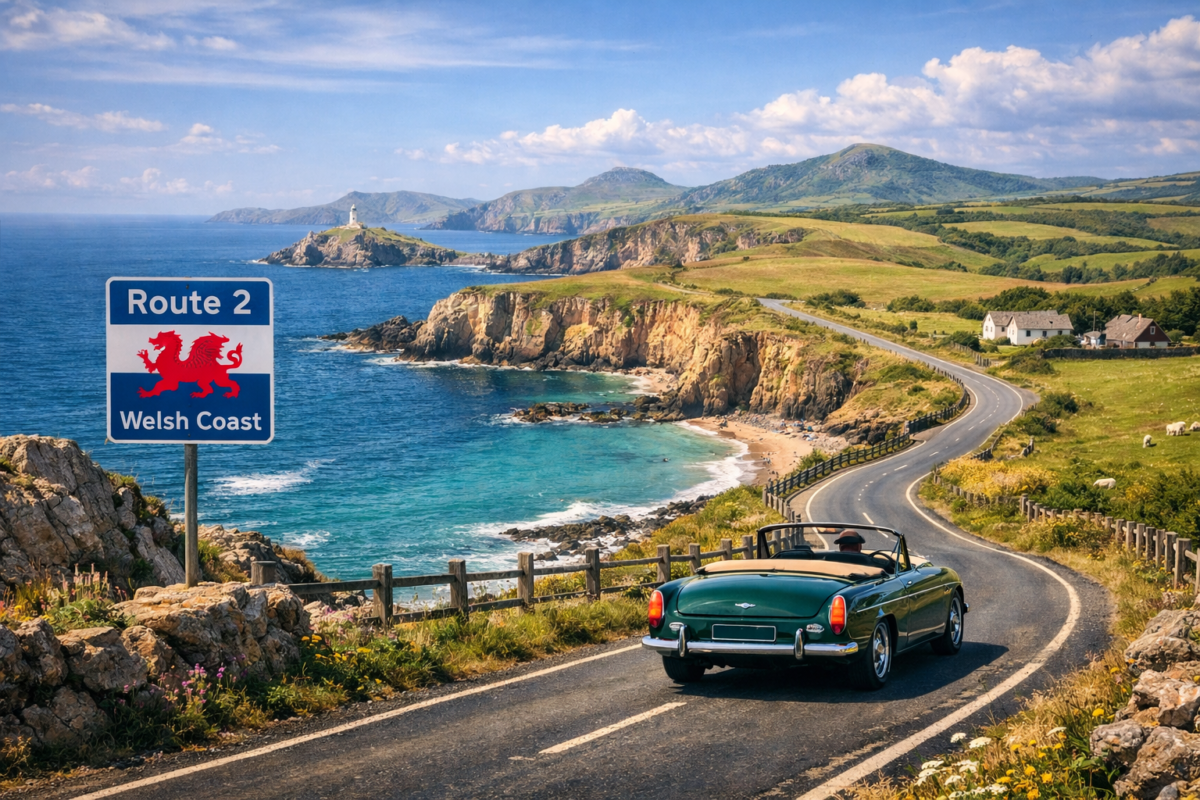
Pembrokeshire in the southwest is where the Welsh coast is at its most dramatic: limestone sea stacks, blowholes, natural arches, and beaches with water so clear it could be the Mediterranean if the temperature were thirty degrees warmer. St Davids – population 1,800, technically Britain’s smallest city by virtue of its cathedral – is the spiritual heart of Wales and one of the most quietly beautiful places in Britain.
The Unmissable Stops
- Tenby: A walled medieval town perched above a harbour with four beaches. Colourful Georgian houses, independent shops, and ice cream that tastes exactly like seaside ice cream should.
- St Davids Cathedral: Founded in the 6th century, the cathedral sits in a hollow in the cliffs (deliberately hidden from sea raiders). The interior is breathtaking. Entry by donation.
- Barafundle Bay: A beach accessible only by a 20-minute cliff walk – no road access, no café, no car park. One of the most beautiful beaches in Britain. The effort filters out everyone who isn’t serious.
- Llangrannog and the Ceredigion Coast: A string of small cove beaches along the central Welsh coast, most accessible by short walks from tiny car parks. Almost entirely unknown outside Wales.
- Snowdonia National Park: The final stretch – drive north through mountains past Cader Idris and into the rocky, lake-scattered highlands of Snowdonia. The Llanberis Pass (A4086) is one of the great mountain drives in Britain.
Budget Breakdown: Welsh Coast Loop
- Car rental (4 days, Cardiff): £75-100 via GetRentACar
- Fuel (320 miles): £40-55
- Accommodation (3 nights B&B / 1 hostel): £75-110
- Food: £60-80
- Activities (mostly free – beaches, castles, cliff walks): £15-25
- TOTAL: approximately £265-370
Heads Up: Parking at popular Pembrokeshire beaches costs £5-8 per day in summer. Arrive before 9am or after 5pm to find spaces at Barafundle, Broad Haven, and Marloes Sands – and it’s often free in the shoulder hours.
| Route 3 – The Jurassic Coast & West Country |
| Distance: ~380 milesIdeal duration: 5–6 daysStart / End: Bristol → Bath → Glastonbury → Exeter → Dartmoor → Cornwall → backUnmissable moment: Standing on the cliff above Durdle Door as the morning mist clears off the English Channel and the limestone arch below goes from grey to goldBest for: History lovers, foodies, surfers, families, slow travellers |
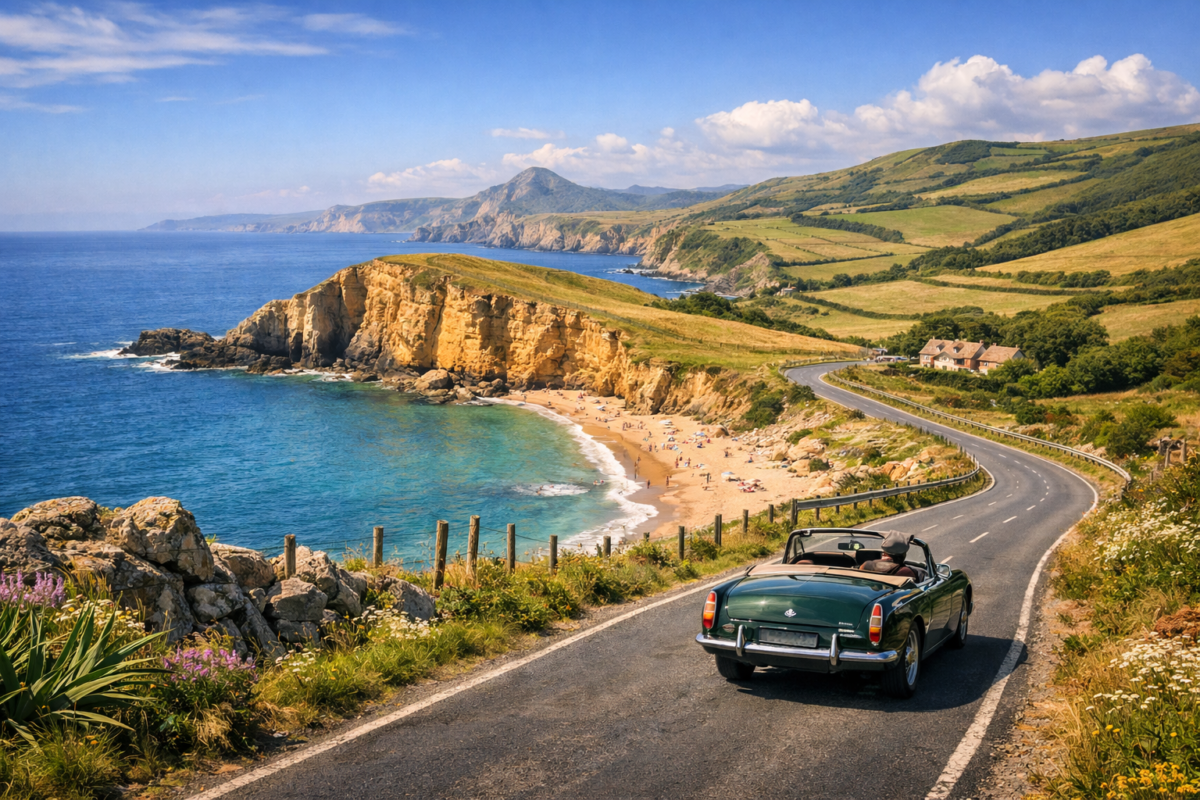
England’s Greatest Road Trip
The southwest of England – Somerset, Devon, and Cornwall – is the part of the country that people from Bristol and London regard as their summer escape, and that international visitors almost always underestimate. There are Roman baths, Arthurian legends, the world’s oldest geological World Heritage Site, Atlantic surf beaches, and cream teas so good they’ve caused genuine regional diplomatic incidents (the question of jam before or cream before you know).
The Jurassic Coast runs for 95 miles along the Dorset and Devon shoreline, exposing 185 million years of geological history in an almost continuous section of cliff that UNESCO protected as England’s only natural World Heritage Site. Durdle Door – a natural limestone arch standing offshore – is the most photographed location on the English coast and genuinely earns it.
The Unmissable Stops
- Bath: The finest Georgian city in the world – Roman baths, Jane Austen’s drawing rooms, honey-coloured crescents of townhouses curving above the River Avon. A full day minimum. The Roman Baths museum (£22) is worth every penny.
- Glastonbury Tor: A medieval tower on a conical hill above the Somerset levels – visible for thirty miles in every direction and layered with Arthurian, pagan, and Christian mythology. The walk up takes 20 minutes; the view across the Levels is extraordinary. Free.
- Dartmoor: The wildest landscape in southern England – granite tors rising above open moorland where wild ponies and Bronze Age stone rows coexist. The B3212 through the middle of the moor is a genuinely spectacular drive.
- Cornwall’s North Coast (Tintagel to St Ives): The Atlantic-facing coast of Cornwall is raw and dramatic – sea stacks, blowholes, cliff paths, and coves. Tintagel Castle (Arthurian site, £16) is genuinely spectacular. St Ives has the finest light in Britain – Turner painted here; the Tate St Ives has a reason for existing.
- The Lizard Peninsula: England’s most southerly point. Serpentine rock cliffs, smuggler’s coves, and the most consistently warm microclimate in the country. Almost entirely overlooked by visitors who head straight to St Ives and Newquay.
Pro Tip: Cornwall gets extremely crowded in July and August – narrow lanes gridlock, parking is a nightmare, and accommodation prices double. Visit in May, June, or September for the same scenery with half the crowds and 30-40% lower accommodation costs. Check current weather patterns at our Weather Checker before setting your dates.
Budget Breakdown: West Country Loop
- Car rental (5 days): £90-130
- Fuel (380 miles): £50-65
- Accommodation (4 nights – mix of Airbnb/B&B): £100-140
- Food (Bath splurge + self-catering elsewhere): £80-100
- Activities (Roman Baths, Tintagel, Tate St Ives, rest free): £45-65
- Parking in Cornwall: £25-35
- TOTAL: approximately £390-535
| Route 4 – The North Yorkshire Moors & Coast |
| Distance: ~280 milesIdeal duration: 4–5 daysStart / End: York → Helmsley → Whitby → Robin Hood’s Bay → Scarborough → YorkUnmissable moment: Walking into Whitby at dusk as the abbey ruins appear on the clifftop above the harbour – Dracula was set here and you will immediately understand whyBest for: History lovers, walkers, foodies, families, coastal explorers |
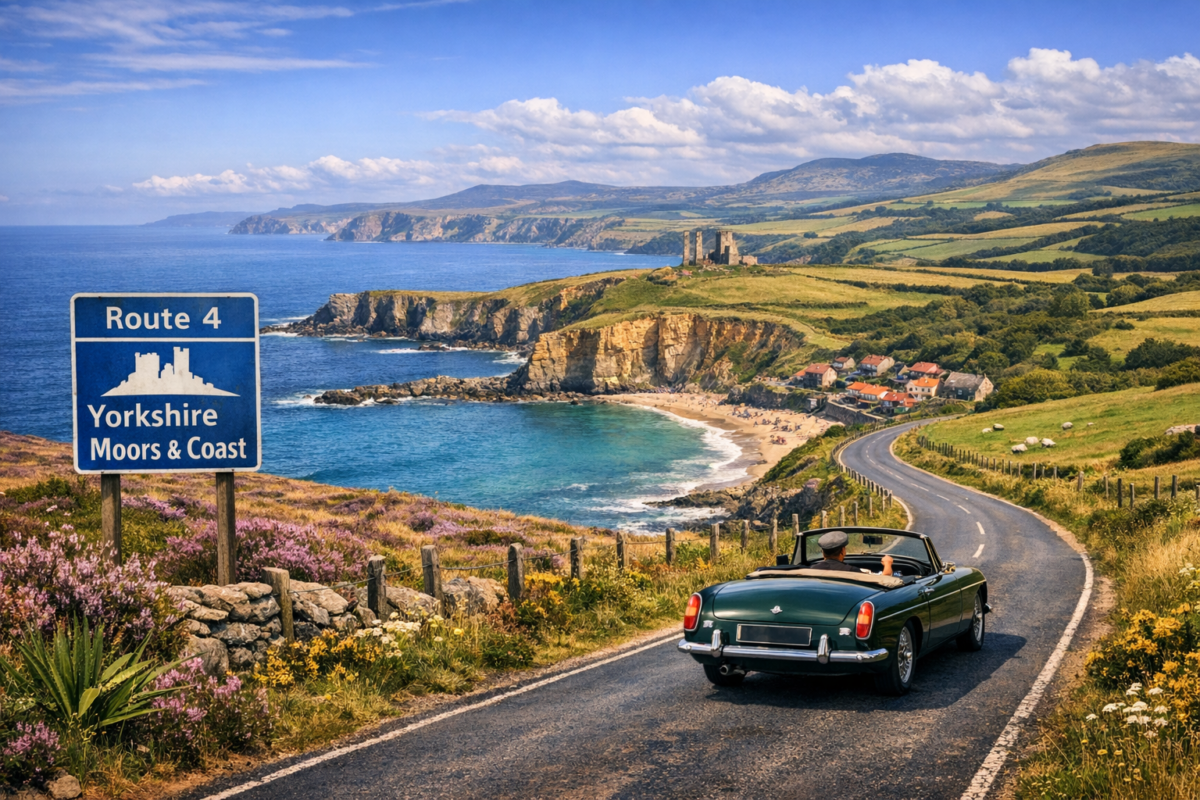
The Most Underrated Corner of England
Yorkshire – and the North in general – is the part of England that southerners and international visitors most consistently overlook. This is a mistake that locals are quietly grateful for, because it means the North Yorkshire Moors remain one of the most genuinely beautiful, accessible, and affordable landscapes in Britain without the crowds that the southwest attracts.
The moors themselves are extraordinary – 554 square miles of heather moorland that turns vivid purple in August, crossed by Roman roads, Iron Age earthworks, and medieval abbeys standing in various states of magnificent ruin. And the coast is unlike anything else in England: cliffs of dark alum shale, fishing villages where the streets are too narrow for two cars, and a heritage of smuggling, whaling, and literature that goes back centuries.
The Unmissable Stops
- York: Start and end here. York is one of the finest medieval cities in Europe – two kilometres of intact Roman city walls, the largest Gothic cathedral in Northern Europe (York Minster), The Shambles (a medieval street so narrow the upper floors of opposing buildings almost touch), and a food and drink scene that has transformed over the last decade. Allow a full day.
- Rievaulx Abbey (near Helmsley): The ruins of a 12th-century Cistercian abbey in a wooded valley of the Rye – the most romantically beautiful ruined abbey in England. £9.50 entry, English Heritage members free. The walk down from Rievaulx Terrace gives you the full picture.
- The North York Moors Railway: A steam railway running 18 miles from Pickering to Whitby through the heart of the moors. Particularly spectacular in August when the heather is out. One-way ticket from £18 – worth the detour.
- Whitby: A former whaling port on twin cliffs above a harbour where the Esk meets the North Sea. Dracula was set here (Bram Stoker stayed at the Royal Hotel and used the abbey ruins, the 199 steps, and the harbour layout directly). The fish and chips at Magpie Café are the most contested in Britain – the queue will confirm this.
- Robin Hood’s Bay: A village so steep that its main street is essentially a drainage channel – houses built on top of houses down to a tiny beach. One of the most atmospheric places on the English coast. The walk from Whitby along the Cleveland Way takes 6 miles and is superb.
Local Insight: The Yorkshire Moors are best in late August when the heather blooms – the landscape turns from green-brown to a vivid purple that stretches to every horizon. It happens for about three weeks and is genuinely one of the most quietly spectacular natural events in the British calendar.
Budget Breakdown: North Yorkshire Loop
- Car rental (4 days, York): £70-95
- Fuel (280 miles): £35-50
- Accommodation (3 nights B&B): £90-120
- Food (York dinner + pub lunches): £65-85
- Activities (Rievaulx, Moors Railway, York Minster): £35-55
- TOTAL: approximately £295-405
| Route 5 – The Lake District Full Loop |
| Distance: ~200 milesIdeal duration: 4-5 daysStart / End: Penrith → Ullswater → Keswick → Wastwater → Windermere → PenrithUnmissable moment: The moment you crest the Honister Pass and Buttermere appears below – a lake the colour of slate surrounded by fells that feel closer to Norway than EnglandBest for: Hikers, nature lovers, Wordsworth enthusiasts, wild swimmers, artists |
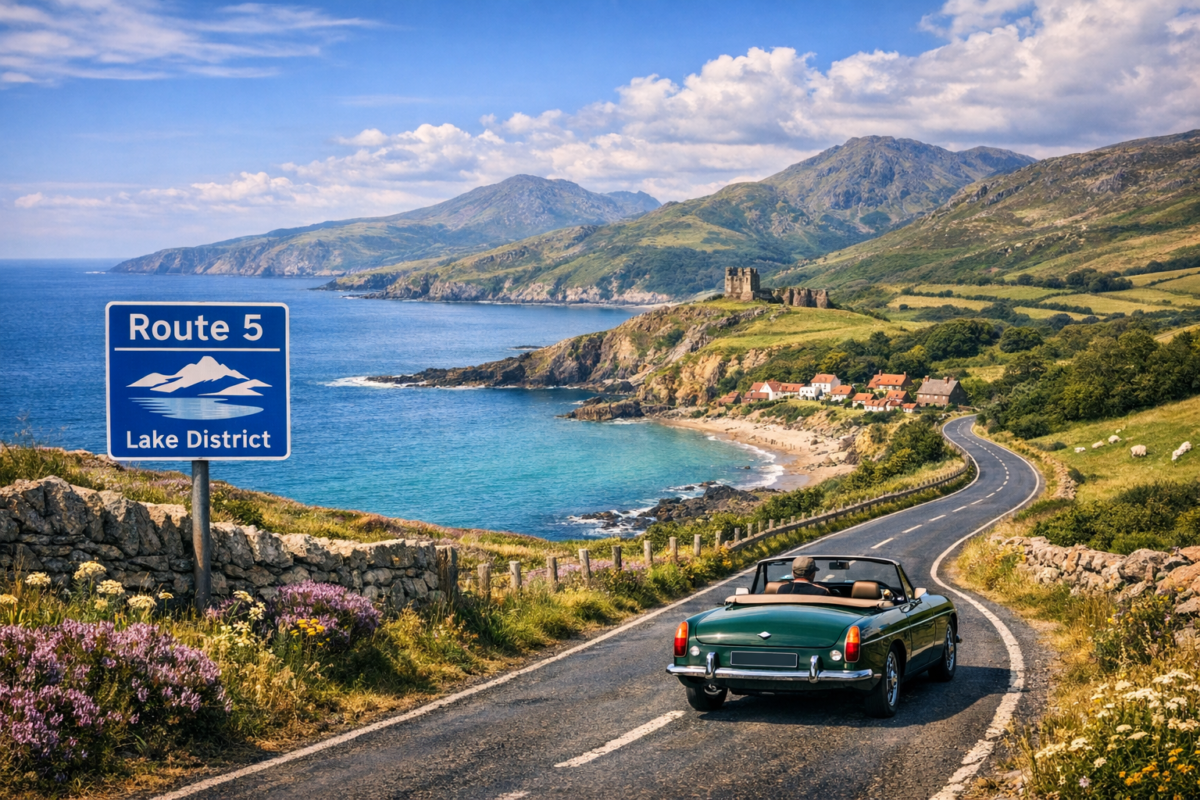
England’s Mountain Country
The Lake District was the first place in England to make me understand why landscape can be genuinely emotional rather than merely pleasant to look at. The combination of mountains and water – 16 major lakes, numerous tarns, and fells that rise steeply from lake shores to summits above 900 metres – creates a landscape of constantly changing light and reflection that painters and poets have been trying to capture for 250 years with only intermittent success.
William Wordsworth was born here and spent most of his life here. Beatrix Potter moved here after her books made her wealthy and spent her money buying up and protecting fell farms. John Ruskin died here. The landscape has a way of keeping the people it captures.
The Unmissable Stops
- Ullswater Steamers: The oldest working steamers in the world, running from Pooley Bridge to Glenridding on England’s second-largest lake. A 35-minute crossing with fells rising on all sides. From £13 one-way – take the boat one way and walk the Ullswater Way back.
- Castlerigg Stone Circle (near Keswick): A Neolithic stone circle positioned with panoramic views of the surrounding fells – built before Stonehenge, free to visit, rarely crowded at dawn. One of the most atmospherically placed prehistoric sites in Britain.
- Honister Pass: The most dramatic mountain road in the Lake District – 1,176 feet at the summit, steep gradients on both sides, and views that require you to stop the car. The Honister Slate Mine at the top does tours. Free to drive.
- Wastwater: England’s deepest lake, surrounded by the highest peaks, with a scree slope descending directly into the water on the southern shore. The most austere and powerful of all the Lakes – Wasdale Head at the far end feels like the edge of the world.
- Coniston and Brantwood: John Ruskin’s lakeside home is open as a museum with extraordinary views across the water. The walk up the Old Man of Coniston from the village (2.5 hours return) is the most satisfying fell walk for the effort involved in the Lakes.
Pro Tip: The Lake District is the wettest part of England – it’s what makes it green, but also what makes waterproofs non-optional. Always carry full waterproofs in a daypack even on sunny mornings. The weather can change in 20 minutes. Check the Met Office forecast at our Weather Checker
Budget Breakdown: Lake District Loop
- Car rental (4 days): £70-95
- Fuel (200 miles – short route, lots of walking): £25-35
- Accommodation (3 nights – hostel/B&B): £75-105
- Food: £60-80
- Activities (Ullswater Steamers, Brantwood, optional Honister Mine tour): £30-50
- TOTAL: approximately £260–365
| Route 6 – The Scottish Borders & Northumberland |
| Distance: ~340 milesIdeal duration: 4-5 daysStart / End: Edinburgh → Jedburgh → Hadrian’s Wall → Northumberland Coast → EdinburghUnmissable moment: Walking a section of Hadrian’s Wall at dawn – 1,900 years old, stretching to both horizons across the Northumberland moorland, and entirely desertedBest for: History lovers, walkers, castle hunters, off-the-beaten-path seekers |
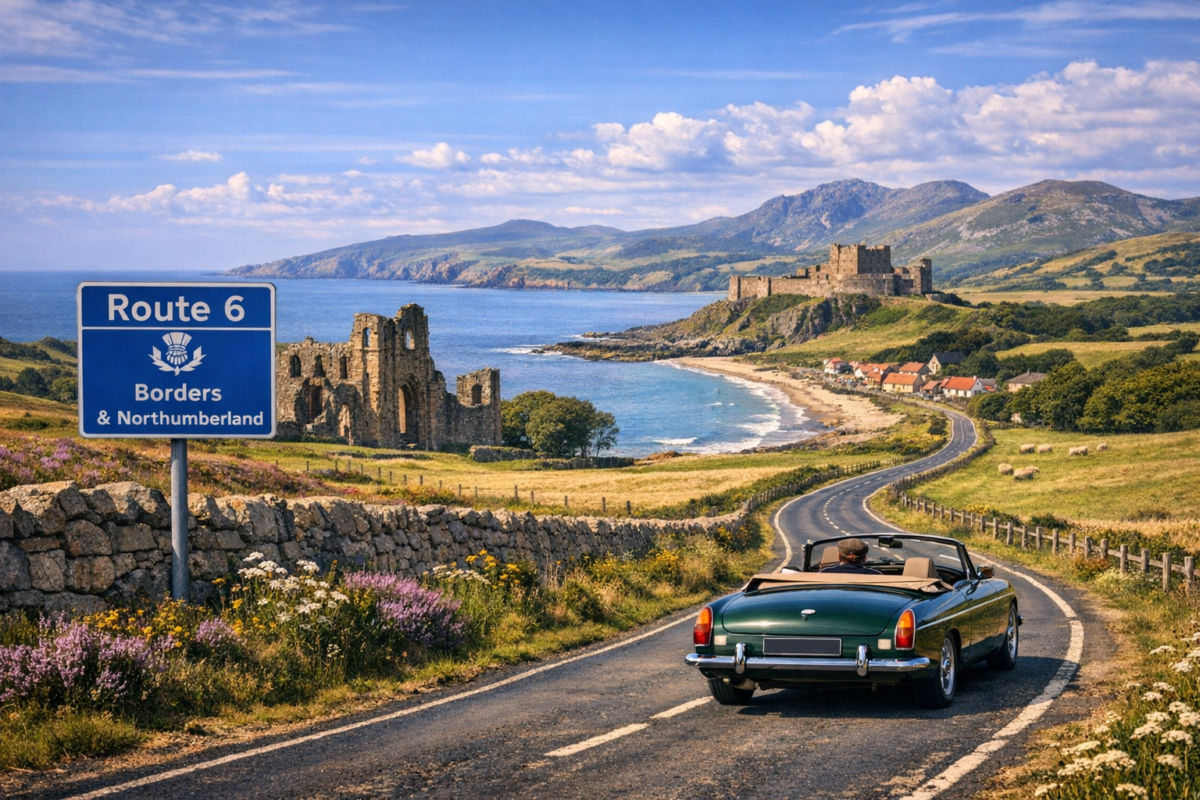
The Forgotten Border Country
The landscape between Edinburgh and Newcastle – the Scottish Borders and Northumberland – is one of Britain’s least-visited and most historically rich regions. This is the territory that was fought over for 400 years between England and Scotland: a landscape of ruined abbeys, peel towers, fortified farmhouses, castles on every hilltop, and moorland that still feels genuinely remote.
Hadrian’s Wall alone would justify the detour. Built by the Romans between 122 and 128 AD to mark the northern frontier of their empire, it runs 73 miles from the Solway Firth to the North Sea across some of the most dramatic moorland in England. The central section – Housesteads to Steel Rigg – is the finest, and the 8-mile walk along it one of the great historical hikes in Britain.
The Unmissable Stops
- Jedburgh Abbey: The finest of the four great Border abbeys – roofless, red sandstone, 12th-century magnificence. £9 entry, Historic Environment Scotland members free.
- Floors Castle (near Kelso): The largest inhabited castle in Scotland – a baroque-revival pile overlooking the Tweed with extraordinary interiors. £15 entry.
- Housesteads Roman Fort: The best-preserved Roman fort on Hadrian’s Wall – barracks, granaries, the famous communal latrine (the Romans were admirably practical). The Wall walk west from here to Steel Rigg takes 2.5 hours and is superb. £10 entry.
- Northumberland Coast: The least-visited coastline in England – wide empty beaches, dune systems, and two extraordinary islands. Lindisfarne (Holy Island, tidal causeway, check tide times before crossing) was one of early Christianity’s most important sites in Britain. Bamburgh Castle sits on a basalt outcrop above the beach and looks exactly like a castle should.
- Bamburgh Beach: Three miles of flat sand with Bamburgh Castle at one end and the Farne Islands on the horizon. In summer, grey seals haul out on the rocks. On a clear day, the view north to Scotland is thirty miles. Entirely free.
Local Insight: Alnwick Castle in Northumberland was used as Hogwarts in the first two Harry Potter films. It remains a working family home but opens to the public from April to October – Harry Potter broomstick training sessions still run in summer, primarily for under-12s but quietly enjoyed by everyone else.
Budget Breakdown: Scottish Borders Loop
- Car rental (4 days, Edinburgh): £75-100
- Fuel (340 miles): £45-60
- Accommodation (3 nights B&B): £80-110
- Food: £65-85
- Activities (Jedburgh, Housesteads, optional Floors Castle): £30-45
- TOTAL: approximately £295-400
Getting to the UK: Flights, Ferries, and First Steps
For international visitors, the UK’s main entry points for road trips are London Heathrow, London Gatwick, Edinburgh, Manchester, and Bristol – all with good car rental options directly at the terminal.
Search for the best transatlantic and European fares on Aviasales – it compares prices across dozens of airlines simultaneously and consistently finds competitive rates. If you want cashback on every flight you book, WayAway is worth using for larger purchases. From the USA, return fares to London run from $400-700 in shoulder season; from Canada, $450-750; from mainland Europe, £40-150.
If your flight is disrupted – delayed, cancelled, or overbooked – AirHelp handles your EU261 and equivalent compensation claims on a no-win-no-fee basis. They deal with the airline paperwork so you don’t have to.
For European visitors arriving by sea, Sea Radar covers cross-Channel and North Sea ferry routes – from France, Belgium, Netherlands, Spain, and Ireland to various UK ports. Driving onto a ferry and continuing directly to your road trip departure point is often more convenient than flying, particularly if you want to bring your own vehicle.
Connectivity During Your Trip
UK mobile coverage is good on main roads and in towns, patchy in remote Highland glens and moorland. International visitors should pick up a UK eSIM before departure – Airalo and Yesim both offer UK and Europe-wide data packages that activate automatically on arrival. No SIM swapping, no airport kiosk queues.
For access to geo-restricted streaming (your home Netflix library, banking apps) while in the UK, NordVPN works reliably on UK networks and takes two minutes to set up.
Travel Insurance for UK Road Trips
UK travel insurance covers medical, vehicle, baggage, and cancellation. Ekta Travel Insurance offers flexible policies covering road trips specifically, including rental car excess and activity coverage. UK residents travelling domestically should also check that their car insurance covers the rental vehicle – some comprehensive policies include this.
Tours and Experiences Along the Way
For guided walks, cultural experiences, and activity booking along any of these routes, WeGoTrip has a strong UK catalogue – particularly good for audio guides in York, Bath, and Edinburgh, and small-group walking tours in the Highlands and Lake District. For events and live entertainment during your trip – concerts, theatre, sports – Ticket Network covers major UK venues with English-language booking.
If you need serviced accommodation for longer stays – self-catering apartments, holiday cottages, or longer-term lets that work out cheaper than nightly B&B rates – Intui is worth checking alongside Hotellook for the broadest coverage of UK accommodation options at all price points.
Plan Your UK Road Trip with These Free Tools
Before you set off, make full use of the planning tools on Hidden Travels:
- AI Travel Budget Estimator – build your exact road trip budget based on route, travel style, and group size
- Packing List Generator – get a custom UK road trip packing list based on your season and activities
- Travel Planning Services – need a custom itinerary built for your dates and budget? Our team handles it end to end
- More Destination Guides – explore guides to Scotland, Wales, England, and every other destination we cover
Frequently Asked Questions
Q1: Is it worth renting a car for a UK road trip or should I use public transport?
For the routes in this guide, a car is essential. Scotland, Wales, Northumberland, Dartmoor, and the Lake District all have limited public transport to the specific places that make them worth visiting. Bus services exist between major towns, but the remoter stretches of coastline, moorland, and mountain road that define these road trips are only accessible by car. For city-only travel (London, Edinburgh, Bath), public transport is faster and cheaper – save the rental car for when you leave the cities.
Q2: What is the cheapest time of year for a UK road trip?
March-April and October-November offer the best combination of price and experience. Accommodation is 30-50% cheaper than July-August peak. Attractions are open but not crowded. Autumn specifically is arguably Britain’s most beautiful season – bracken turning orange on moorland, leaf colour in the Lake District and Scottish glens, low golden light in the afternoons. The weather is changeable but rarely severe. September is particularly good – summer warmth lingers and the school holidays have ended.
Q3: Do international visitors need a special licence to drive in the UK?
US, Canadian, Australian, EU, and most other international licences are valid in the UK for up to 12 months. An International Driving Permit (IDP) is recommended but not legally required for most nationalities. Your licence must be in Roman script or accompanied by an official translation. Car rental companies will ask to see your home licence and may additionally request an IDP – check with your chosen rental company before travelling.
Q4: Which UK road trip route is best for first-time visitors?
The Scottish Highlands Loop gives the most dramatic scenery for the distance covered and is the one most visitors describe as genuinely life-changing. However, if you’re flying into London rather than Edinburgh, the West Country route (Bristol → Bath → Cornwall) is more logistically straightforward and still genuinely spectacular. The Lake District loop works well as an add-on to a Manchester or Liverpool city break.
Q5: How do I find cheap accommodation for UK road trips?
Combine three approaches: YHA hostels (Youth Hostel Association, from £20 per night, excellent locations particularly in the Lake District and Yorkshire Moors), Airbnb for self-catering cottages (often better value than B&Bs for two or more nights in one place), and Hotellook to compare rates across all platforms simultaneously for B&Bs and guesthouses. Book at least 3-4 weeks ahead for any trip between June and September – smaller B&Bs in popular areas fill completely.
Q6: Is the UK safe for solo road trip travel?
Yes, without qualification. The UK is one of the safest countries in the world for road travel. Traffic is well-managed, roads are well-maintained, breakdown cover (the RAC and AA both offer short-term policies) is reliable, and crime against travellers is rare. The main practical considerations are weather-related: always carry waterproofs, always tell someone your planned route if driving remote Highland or moorland roads, and always check road conditions before driving in winter (Traffic Scotland and the Highways Agency both have real-time condition updates).
Final Thoughts: The UK Is Better Than You Think
I have spent a lot of time in this guide making a case for the UK as a road trip destination, and I realise that for some readers – particularly those who grew up here – that might feel like making a case for the obvious. But I think a lot of British people genuinely don’t know how good their own country is for this kind of travel. They have been to the tourist spots. They haven’t done the routes.
The real UK road trip experience isn’t Stonehenge on a coach or the Tower of London from a tour bus. It’s stopping at a farm gate on the Pembrokeshire coast because you can hear the sea and you want to find out what’s below. It’s the landlord of a North Yorkshire pub who knows the history of every farm on the moor by name. It is Castlerigg at 7am when the mist is still on the fells and you’re the only person there and it’s 4,000 years old and absolutely silent.
That Britain is out there on every one of these routes. Under £500. Waiting.
Start planning your UK road trip today. Compare car rentals at GetRentACar, find the best flights into the UK at Aviasales, book accommodation via Hotellook, get your eSIM with Airalo or Yesim, and protect every mile with Ekta Travel Insurance. Browse all our UK and Europe destination guides for more inspiration – and check our budget travel hub for cost-cutting tips that work across every one of these routes.
Safe travels — and take the B-road.
Hidden Travels Team | hiddentravels.site