
⚠️ Affiliate Disclosure: This post contains affiliate links. Booking through our links earns us a small commission at no extra cost to you. We only recommend services we trust.
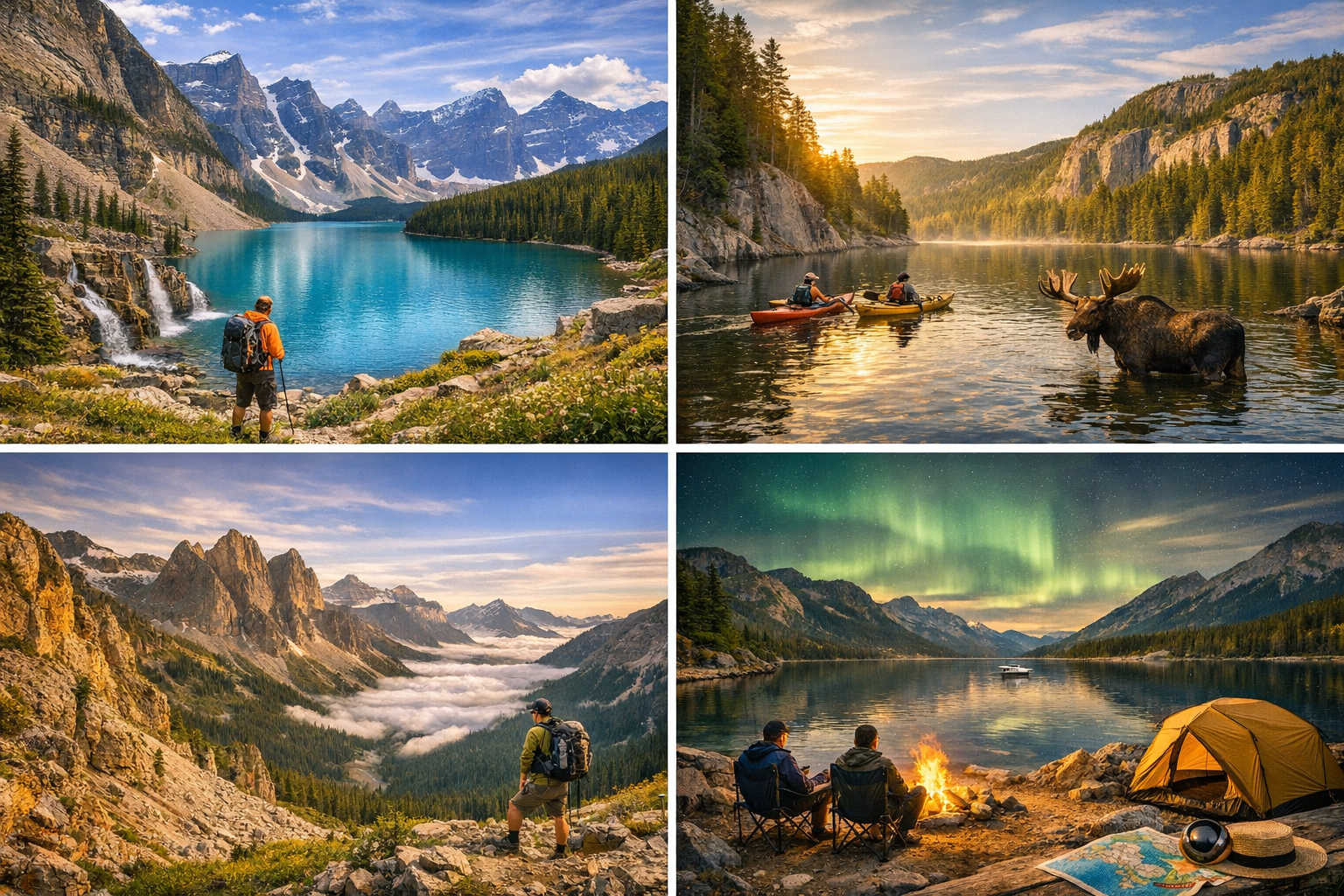
The grizzly appeared from behind a stand of subalpine fir, moving through the meadow with that loose-shouldered, unhurried gait that makes bears look like they own every square metre of the planet – because they do. I was standing on a trail in a Canadian national park that receives fewer than 40,000 visitors a year. No boardwalks, no selfie crowds, no ice cream kiosks. Just the bear, the meadow, the mountains, and the particular silence of a wilderness that has been wild for a very long time.
Everyone knows Banff. Everyone has seen the turquoise postcard of Lake Louise. And Banff is genuinely magnificent – but it now receives over four million visitors a year, its main highway resembles a parking lot in July, and the experience of ‘wilderness’ has to compete with shuttle buses and reservations-required hiking.
Canada has 48 national parks protecting 340,000 square kilometres of some of the most extraordinary wilderness on Earth. Most people visit three or four of them. The other 44 are waiting.
This guide covers the 10 Best underrated Canadian national parks for adventure seekers – the parks where the trails are quieter, the wildlife encounters are more frequent, the skies are darker, and the experience of genuine wilderness is exactly what adventure travelers come to Canada to find.
Pro Tip: Planning your Canada national parks trip? Use our AI Travel Budget Estimator to calculate realistic costs for your itinerary – including park passes, camping fees, gear, and transport.
Why Canada Is the Ultimate Adventure Travel Destination
Canada is the second-largest country on Earth, with the longest coastline, the world’s largest boreal forest, Arctic tundra stretching toward the pole, and mountain ranges that dwarf anything in continental Europe. It is a country where moose outnumber people in entire provinces, where the northern lights dance over frozen lakes for six months of the year, and where you can drive for four hours and not pass a single town.
For international adventure travelers – particularly from the USA, UK, and Europe – Canada offers something increasingly rare: space, silence, and wilderness so vast it genuinely humbles you. And the national park system, managed by Parks Canada, is one of the finest conservation programmes in the world.
- World-class wildlife: Grizzly and black bears, wolves, caribou, moose, elk, bald eagles, beluga whales, polar bears
- Terrain diversity: Rocky Mountains, Pacific rainforest, Arctic tundra, Atlantic seacliffs, Great Plains grasslands, boreal forest
- Dark skies: Canada has more designated Dark Sky Preserves than any country on Earth – extraordinary stargazing and northern lights
- Accessible infrastructure: Parks Canada maintains excellent campgrounds, trail systems, and visitor centres even in remote parks
- English-speaking: Easy to navigate for travelers from the USA, UK, Australia, and other English-speaking countries
- Safe wilderness: Excellent safety protocols, well-marked trails, and ranger networks even in remote areas
Good to Know: Canada is enormous – distances between parks can be extreme. Always research travel times carefully. The drive from Toronto to the nearest park in this list (Bruce Peninsula) is 3 hours; from Vancouver to Pacific Rim is 3.5 hours. Flying within Canada is often necessary for multi-park trips.
The 10 Best Underrated Canadian National Parks for Adventure Seekers
#1 – Gwaii Haanas National Park Reserve | British Columbia
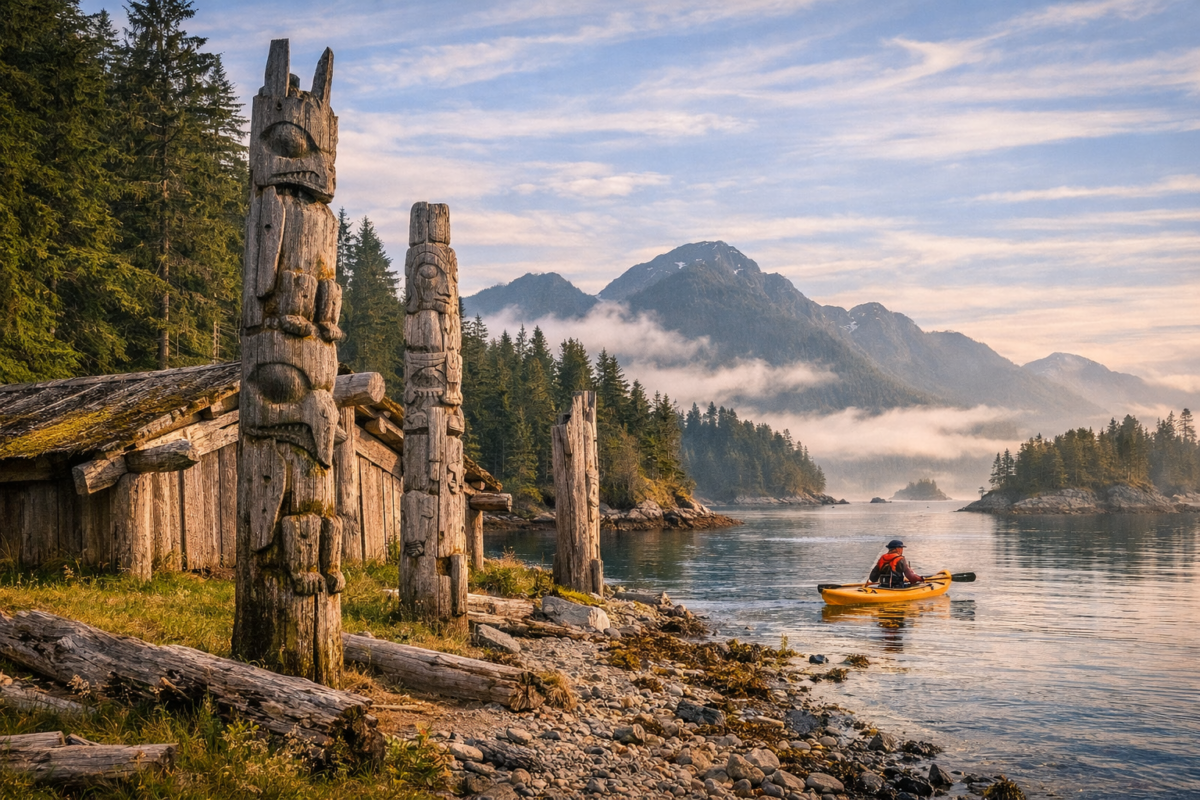
| A remote archipelago of 150+ islands known as the ‘Galapagos of the North’ – ancient Haida culture, primeval rainforest, and wildlife found nowhere else on Earth. Best for: Wildlife watching, kayaking, Haida cultural heritage, remote wilderness immersion Best time: June-August (access by boat or floatplane only) Must-do: Paddle through Haida Gwaii by sea kayak; visit SGang Gwaay UNESCO World Heritage Site |
Gwaii Haanas: The Park That Requires the Most Commitment
There are no roads into Gwaii Haanas. No bridges, no ferries from the mainland, no casual day-trip option. To reach this national park reserve at the southern end of Haida Gwaii (formerly the Queen Charlotte Islands) off the coast of British Columbia, you take a floatplane or charter boat – and that commitment immediately filters out 99% of casual visitors.
What awaits those who make the journey is one of the most biologically rich and culturally profound places in North America. Ancient Sitka spruce and western red cedar soar above a forest floor so thick with moss and fern that sound disappears within metres of the treeline. Humpback whales surface in the channels. Sea otters float on their backs in the kelp forests. And on abandoned Haida village sites, mortuary poles stand in the forest – weathered cedar monuments to a civilisation that has lived here for over 13,000 years.
Pro Tip: Visits to Gwaii Haanas require a mandatory orientation session with Parks Canada. Only 1,800 visitor-nights per zone are permitted per year. Book your trip minimum 6 months in advance through the Parks Canada reservation system.
Wildlife Alert: Gwaii Haanas supports populations of black bears that have evolved in isolation for thousands of years, developing unique foraging behaviours. You will almost certainly see bears on any multi-day kayak trip. Keep food in bear canisters at all times.
#2 – Torngat Mountains National Park | Newfoundland & Labrador
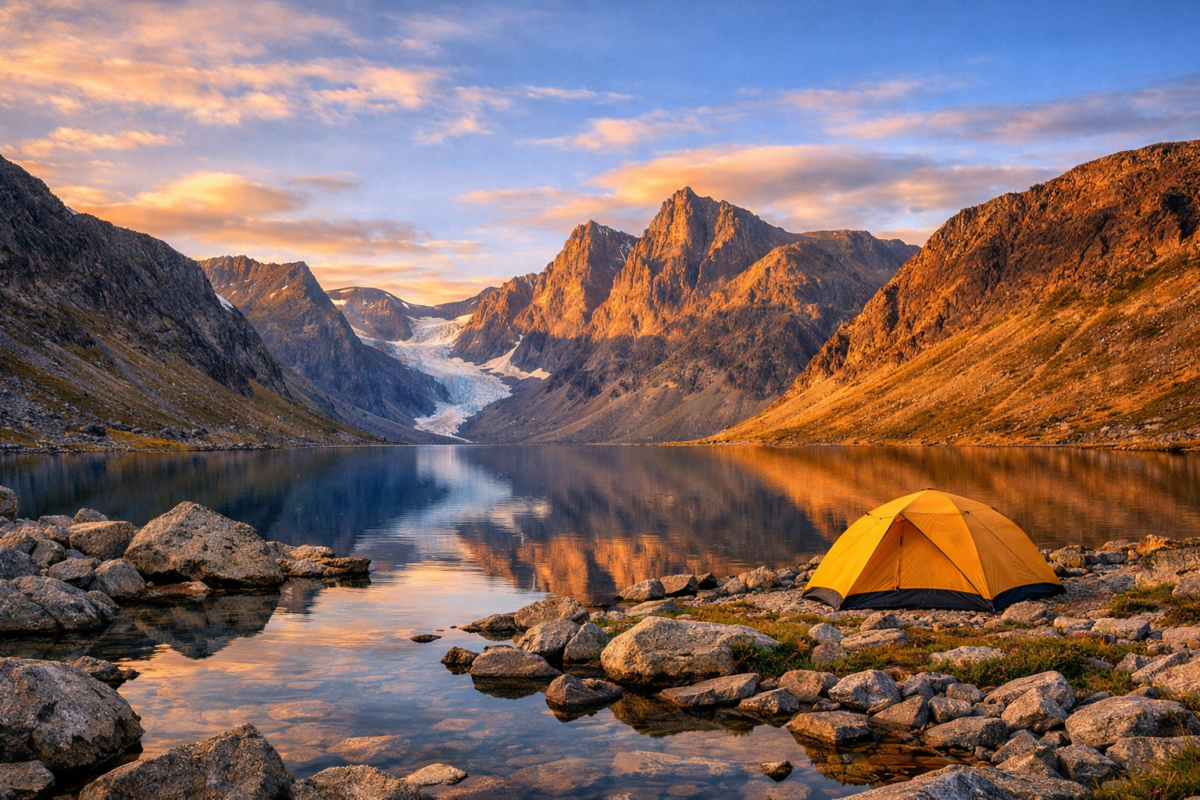
| The most remote and dramatic park in eastern Canada – ancient fiords, polar bears, caribou herds, and Inuit culture at the northern tip of Labrador. Best for: Expedition hiking, polar bear watching, fiord exploration, Indigenous cultural experiences Best time: July-August only (very short season, extreme remoteness) Must-do: Take a guided expedition by boat through the fiords; hike to the Torngat Mountains base camp |
Torngat Mountains: The Last True Frontier
The Torngat Mountains form the ancient spine of the Labrador Peninsula at the very northeastern tip of mainland Canada, jutting into the Labrador Sea above 58° North. They are among the oldest mountains on Earth – the exposed Precambrian rock dates back 3.9 billion years – and they rise directly from deep Atlantic fiords in walls of bare granite that dwarf everything around them.
Getting here is genuinely expeditionary. A charter flight from Goose Bay or Happy Valley lands at base camp, where Parks Canada operates a summer-only facility in partnership with Inuit communities. From base camp, guided boat tours, hikes, and cultural programmes reveal a landscape so ancient and austere it feels prehistoric. Polar bears are a real and frequent presence – guides are armed, and the experience of being in genuine polar bear habitat changes something fundamental in how you understand wilderness.
Good to Know: Torngat Mountains is not a park for independent travel. All visits must be arranged through guided expeditions or the Parks Canada base camp. The season runs mid-July to early September only. Budget $5,000-8,000 CAD for an all-inclusive expedition package.
#3 – Pacific Rim National Park Reserve | British Columbia
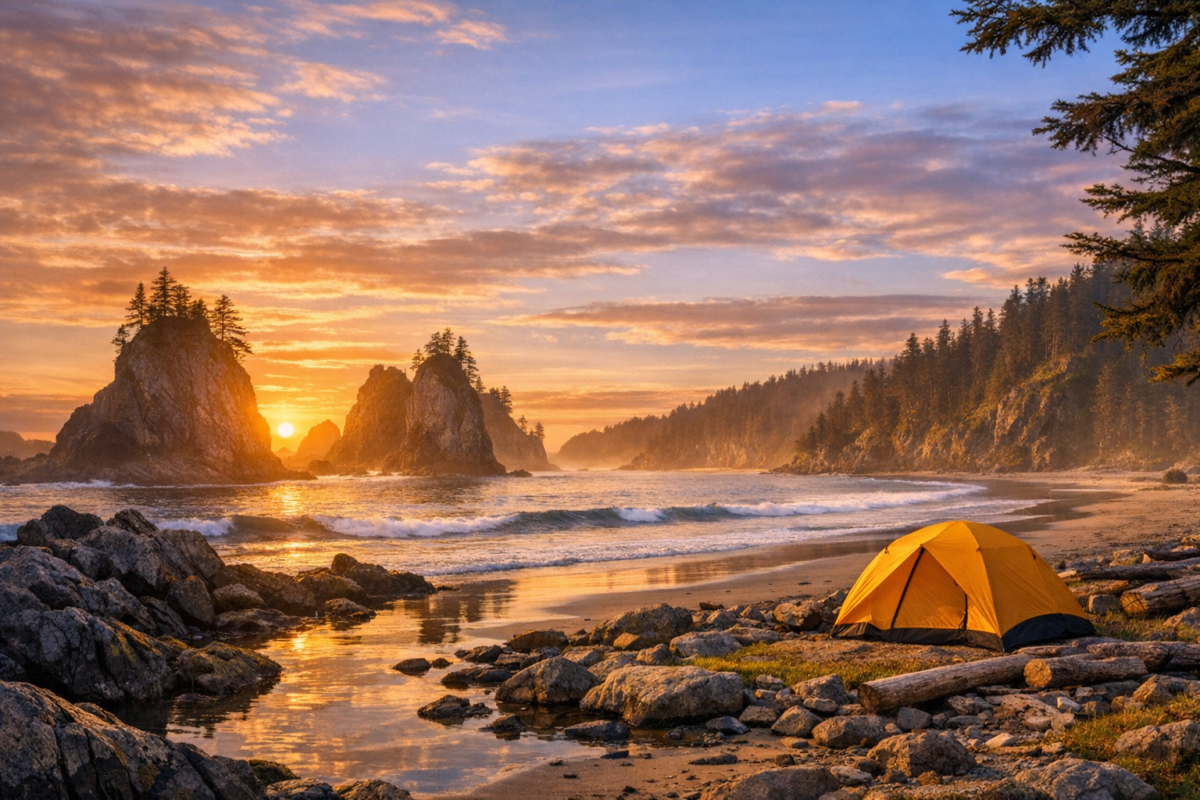
| Ancient temperate rainforest meeting the wild Pacific Ocean – world-class surfing, bear-watching on beaches, and 75km of remote coastal wilderness trail. Best for: Surfing, bear watching, rainforest hiking, kayaking, whale watching Best time: June–September (surfing year-round for wetsuit-clad enthusiasts) Must-do: Hike the West Coast Trail – 75km, 6-8 days, one of the world’s great long-distance hikes |
Pacific Rim: Where the Rainforest Meets the Wild Pacific
On the west coast of Vancouver Island, Pacific Rim National Park Reserve protects a stunning stretch of temperate rainforest, remote beaches, and oceanic islands that form one of the most dramatic coastlines in North America. While the Tofino area adjacent to the park has become well-known, the park itself – particularly its two most spectacular sections – remains surprisingly undervisited by international travelers.
Long Beach – Bear Country by the Ocean
The 16-kilometre arc of Long Beach is one of the finest surf beaches on the Pacific coast of North America, and it is also – uniquely – prime black bear habitat. Bears frequently walk the shoreline at low tide foraging for crabs and clams, providing one of the most extraordinary wildlife viewing experiences in Canada: a wild bear, ocean waves, and a setting sun all in the same frame.
The West Coast Trail – One of the World’s Great Hikes
The 75-kilometre West Coast Trail was originally built as a rescue route for shipwrecked sailors on the ‘Graveyard of the Pacific.’ Today it is recognised as one of the finest coastal long-distance hikes on Earth – a 6–8 day journey through old-growth rainforest, across suspension bridges, up iron ladders bolted into sea cliffs, and along beaches strewn with the wreckage of ships. Only 8,000 hikers per season are permitted; book by lottery in January.
Pro Tip: The West Coast Trail requires a $30 CAD Parks Canada reservation fee plus $250 CAD trail use fee. Hikers must attend a mandatory orientation. Trail conditions can be extreme – training hikes in advance are essential. Check the Parks Canada website for current conditions and booking windows.
#4 – Bruce Peninsula National Park | Ontario
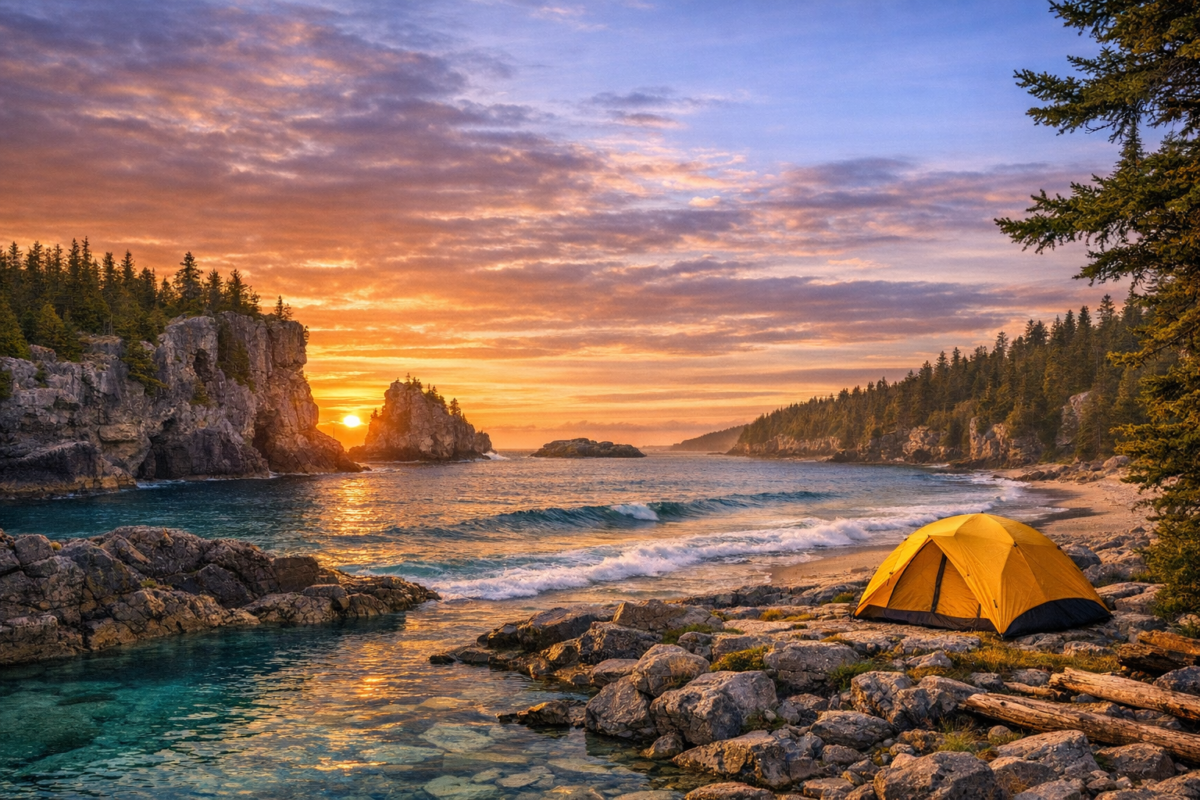
| The Niagara Escarpment meets the crystal waters of Georgian Bay – wild orchids, ancient cedars clinging to cliffs, and Canada’s clearest freshwater swimming. Best for: Hiking, swimming in crystal-clear freshwater, rock climbing, snorkelling, stargazing Best time: June–October (summer for swimming; autumn for foliage and silence) Must-do: Hike the Bruce Trail to Indian Head Cove and The Grotto – the most stunning freshwater swimming hole in Canada |
Bruce Peninsula: Ontario’s Best-Kept Secret
Located just 3 hours north of Toronto, Bruce Peninsula National Park is one of the most accessible yet genuinely wild parks in eastern Canada. The Niagara Escarpment – a UNESCO World Biosphere Reserve – runs the length of the peninsula like a spine, creating dramatic limestone cliffs that drop into Georgian Bay’s impossibly clear, tropical-blue water.
The Grotto – Canada’s Most Beautiful Swimming Hole
The signature experience of Bruce Peninsula is The Grotto – a sea cave carved into the limestone cliffs of Georgian Bay where the water glows vivid turquoise in direct sunlight, and underground passages connect the cave to the open lake. Swimming here on a calm summer morning, with the light filtering through the rock and the water so clear you can see every stone on the bottom at 5 metres depth, is an experience that stays with you.
Wildlife Alert: Bruce Peninsula has the highest concentration of Massasauga rattlesnakes in Canada – Ontario’s only venomous snake. They are shy and rarely encountered, but always watch where you step on rocky trails and never reach into rock crevices.
Pro Tip: The Grotto and Indian Head Cove require advance reservations through Parks Canada’s day-use reservation system ($11.50 CAD per vehicle). In summer, spots sell out within minutes of release. Set an alarm for 8am on the booking opening date.
#5 – Kluane National Park & Reserve | Yukon
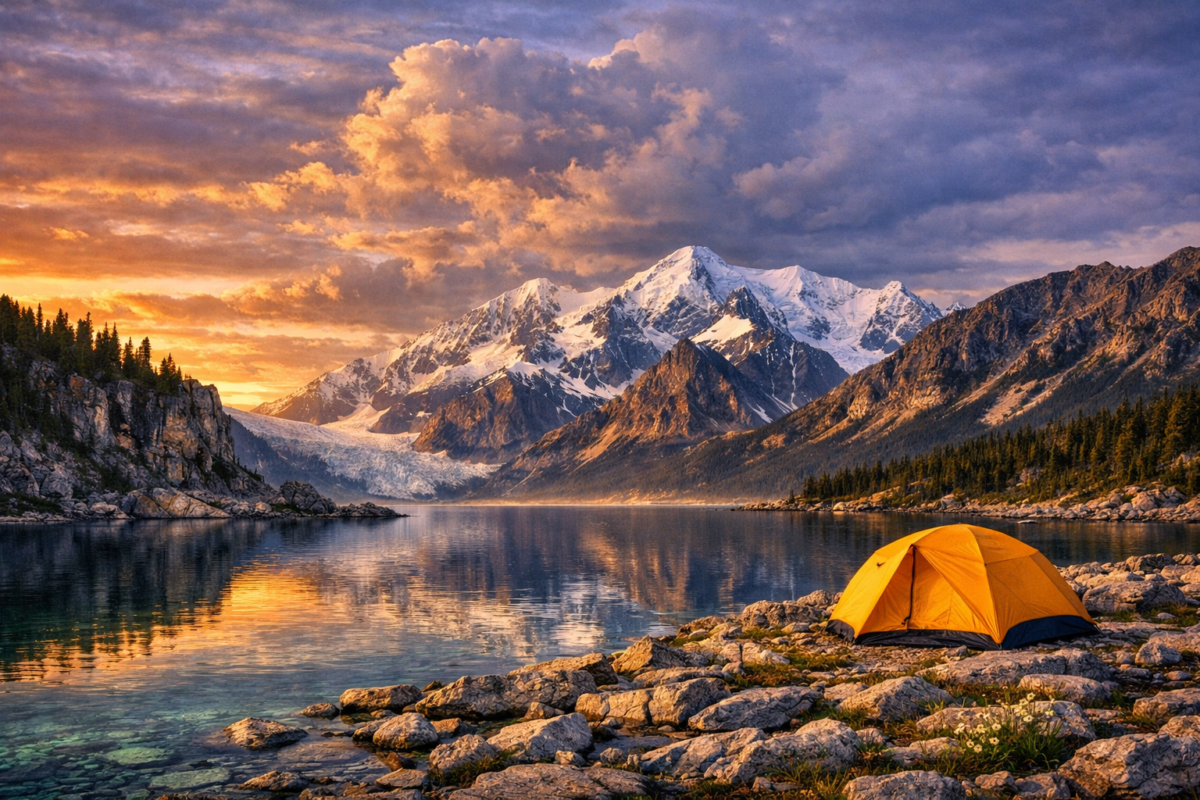
| The largest non-polar icefield on Earth outside Antarctica – massive glaciers, North America’s highest peaks, and one of the planet’s most intact wilderness ecosystems. Best for: Glacier trekking, mountaineering, flightseeing, grizzly bear watching, backcountry camping Best time: June-August (glaciers accessible; shoulder season for fewer crowds) Must-do: Take a flightseeing tour over the Kaskawulsh Glacier and the St. Elias Mountains – the most dramatic landscape in North America |
Kluane: Where the Ice Age Never Ended
In the southwest corner of the Yukon, on the Alaska border, Kluane National Park contains the Kluane-Wrangell-St. Elias icefield – a 22,000 square kilometre mass of ice covering an area larger than Switzerland. The ice, in places 900 metres thick, is the largest non-polar icefield in the world, and it feeds glaciers that have been flowing continuously for more than 30,000 years.
Mount Logan, within the park boundary, is Canada’s highest peak at 5,959 metres and the second-highest mountain in North America. The entire Kluane massif is a World Heritage Site – and it receives fewer than 50,000 visitors per year.
What to Do in Kluane
- Flightseeing over the Kaskawulsh Glacier – 90-minute bush plane tours from Haines Junction
- Hike Slim’s West Trail to the Kaskawulsh Glacier viewpoint (4-5 days round trip)
- Paddle the Alsek River – one of North America’s great wilderness rivers, permit required
- Dall sheep watching on the mountain slopes visible from the Alaska Highway
- Grizzly bears: Kluane has one of the highest grizzly densities in Canada – carry bear spray, travel in groups
#6 – Fundy National Park | New Brunswick
| Home to the highest tides on Earth – the Bay of Fundy tides rise and fall 16 metres twice daily, creating a coastline that transforms completely every six hours. Best for: Hiking, sea kayaking, tidal bore watching, waterfalls, overnight backpacking Best time: July-October (warmest water June-September; autumn foliage October) Must-do: Kayak on the ocean floor at low tide, then return 6 hours later to paddle on open water – nothing else like it on Earth |
Fundy: The Park Built Around the World’s Most Extreme Tides
The Bay of Fundy between New Brunswick and Nova Scotia experiences the most extreme tidal range on Earth: the water rises and falls up to 16 metres – as tall as a five-storey building – twice every 24 hours. The coastline visible at low tide is entirely submerged six hours later. Kayakers paddle on the exposed ocean floor in the morning and return to find ten metres of water where they stood.
Fundy National Park protects 206 square kilometres of Acadian forest above this extraordinary coastline, with 120 kilometres of hiking trails connecting sea cliffs, inland waterfalls, and ancient mixed forest. The Coastal Trail is one of the finest cliff-top hikes in eastern Canada, and the tidal pools exposed at low tide contain some of the richest marine life on the Atlantic coast.
Pro Tip: Download the Parks Canada tide prediction app before visiting Fundy. Tidal timing is everything – the most dramatic landscapes (tidal rivers running dry, sea stacks surrounded by land, ocean floor kayaking) only happen in specific 2-3 hour windows around low tide.
#7 – Nahanni National Park Reserve | Northwest Territories
| Virginia Falls – twice the height of Niagara – in one of the most remote wilderness areas in North America. A UNESCO World Heritage Site almost nobody visits. Best for: Whitewater rafting, canoeing, wilderness trekking, waterfall viewing, hot springs Best time: June-August (accessible by floatplane from Fort Simpson only) Must-do: Raft the South Nahanni River past Virginia Falls – 4,000km² of protected wilderness with no roads |
Nahanni: The Park That Rewards the Devoted Traveler
Deep in the Northwest Territories, Nahanni National Park Reserve protects one of the most spectacular wild river canyons in the world. The South Nahanni River cuts through four canyon systems – the deepest is over 300 metres – before arriving at Virginia Falls, a waterfall twice the height of Niagara that crashes into a pool surrounded by ancient limestone walls in complete wilderness silence.
There are no roads to Nahanni. Access is exclusively by floatplane from Fort Simpson, a small community accessible from Yellowknife. Multi-day canoe and raft trips run the full South Nahanni River over 10-14 days – considered by many wilderness paddlers to be one of the greatest river journeys in the world. Permits are limited; the river is remote; the experience is life-defining.
Wildlife Alert: The Nahanni watershed supports wolves, grizzly bears, Dall sheep, wolverines, and woodland caribou in numbers rarely encountered elsewhere. Bears are active along all riverbanks – hang food properly every night and carry bear spray at all times.
#8 – Terra Nova National Park | Newfoundland
| Newfoundland’s boreal coast where icebergs drift past black spruce forest – sea kayaking beside 10,000-year-old ice, whale watching, and authentic outport culture. Best for: Iceberg watching, sea kayaking, whale watching, hiking, ocean kayaking Best time: May-July for icebergs; June-September for whales and hiking Must-do: Kayak beside a drifting iceberg in Clode Sound – one of the most surreal experiences in Canadian nature |
Terra Nova: Icebergs, Whales, and the Edge of the World
Newfoundland already feels like the edge of something – an island province where the Atlantic has battered the coastline into extraordinary shapes and the boreal forest runs right to the shore. Terra Nova National Park protects the northeastern section of this coast, where icebergs calved from Greenland glaciers drift south through Bonavista Bay from May through July, moving past sea kayakers and fishing villages with the slow, indifferent grandeur of geological time.
The park’s 400-kilometre coastline is a world of fjords, sea stacks, sandy beaches, and boreal woodland that most travelers drive straight past on the Trans-Canada Highway without stopping. That’s a serious mistake. Humpback whales feed in the nutrient-rich waters offshore from June through August. Moose are so abundant on the Trans-Canada through the park that speed limits are enforced primarily for collision prevention.
Pro Tip: Iceberg season in Newfoundland peaks in late May and early June – search ‘iceberg tracker Newfoundland’ before travelling to find current locations. Some years are exceptional (50+ bergs visible at once); others are quiet. The Iceberg Alley webcam gives daily updates.
#9 – Wapusk National Park | Manitoba
| The polar bear capital of the world – over 900 polar bears gather here each autumn to wait for Hudson Bay to freeze. One of the world’s greatest wildlife spectacles. Best for: Polar bear watching, beluga whale swimming (summer), Arctic wildlife photography Best time: October-November (polar bears); June-July (beluga whales in Churchill River) Must-do: Take a Tundra Buggy tour across the Arctic tundra to watch polar bears at close range – the most exclusive wildlife experience in Canada |
Wapusk: Where the Polar Bears Come to Wait
The small town of Churchill, Manitoba on the western shore of Hudson Bay is the polar bear capital of the world – and Wapusk National Park behind it is where the bears spend their summer and early autumn waiting for the bay to freeze. Every October and November, over 900 polar bears gather on the tundra along the Churchill coast, creating one of the most extraordinary wildlife spectacles on Earth.
Access to Wapusk is strictly controlled and managed through licensed operators using Tundra Buggies – specially designed vehicles that allow travelers to observe bears at close range from an elevated, safe platform. The bears approach the buggies out of curiosity, pressing their huge faces against the windows, standing on their hind legs to peer inside, and occasionally sparring with each other metres away.
In summer, the Churchill River at the edge of town fills with beluga whales – thousands of them, gathering in the warm estuary to moult and socialise. Snorkelling with belugas is one of the most extraordinary wildlife encounters available anywhere in the world.
Good to Know: Churchill is only accessible by air or the Via Rail train from Winnipeg (a 44-hour journey through the boreal forest). All polar bear viewing requires a licensed guide – approaching bears independently is illegal and dangerous. Budget $4,000-7,000 CAD for a 4-day guided polar bear experience including accommodation and Tundra Buggy access.
#10 – Grasslands National Park | Saskatchewan
| Canada’s only unploughed mixed-grass prairie – North America’s largest dark sky preserve, the return of bison to the plains, and fossils protruding from eroded badlands. Best for: Dark sky astronomy, bison watching, fossil hunting, prairie hiking, wildlife photography Best time: June-September (summer); winter for extreme solitude and potential northern lights Must-do: Camp overnight on the prairie and watch the Milky Way arc overhead – one of the darkest skies in North America |
Grasslands: The Forgotten Frontier
Most people, asked to imagine a Canadian national park, think mountains. Grasslands National Park in southern Saskatchewan is the antidote to that assumption – and one of the most quietly extraordinary places in Canada.
This is the last remnant of the mixed-grass prairie that once covered the Great Plains from Texas to Edmonton – a sea of grass and wildflowers that existed for millions of years before the plough arrived. The park protects 906 square kilometres of unbroken prairie, and the experience of standing in the middle of it under a sky that occupies 80% of your field of vision is genuinely moving.
The Darkest Skies in North America
Grasslands is a Royal Astronomical Society of Canada Dark Sky Preserve and consistently ranks among the darkest locations in North America east of the Rockies. On a clear summer night away from the campground, the Milky Way is so vivid it casts a faint shadow. Meteor showers, visible nebulae, the Andromeda galaxy with the naked eye – stargazing at Grasslands is a transformative experience.
The Return of the Bison
Parks Canada has reintroduced plains bison to Grasslands after a 120-year absence. The herd now numbers over 400 animals, and watching a thundering mass of bison crossing the prairie on the horizon – against the context of understanding that this landscape once supported 30 million of them – is both magnificent and quietly heartbreaking.
Wildlife Alert: Black-footed ferrets – North America’s most endangered mammal – have been reintroduced to Grasslands alongside prairie dogs. The park also supports rattlesnakes, swift foxes, and golden eagles. This is a genuinely rewilded ecosystem; treat it with appropriate respect.
Essential Planning Information for Canada National Parks
Parks Canada Discovery Pass – Best Value for Multi-Park Visits
The Parks Canada Discovery Pass provides unlimited admission to over 80 national parks, national historic sites, and national marine conservation areas for one year. Adult price: $75.25 CAD; family/group: $151.25 CAD. If you plan to visit more than 3-4 parks, the pass pays for itself immediately. Purchase at any park entrance or online at pc.gc.ca.
Getting to Canada
Canada’s main international airports – Toronto (YYZ), Vancouver (YVR), Calgary (YYC), and Montreal (YUL) – are well-served by transatlantic and transpacific routes. Search for the best international fares using Aviasales or earn cashback on every booking with WayAway. For remote parks (Kluane, Nahanni, Torngat, Wapusk), additional domestic flights are required – factor this into your budget.
Car Rental – Essential for Most Parks
A rental car is essential for the majority of parks on this list. Compare prices across all major providers at GetRentACar. For parks in remote provinces (Yukon, NWT, Newfoundland), choose a reliable vehicle with good ground clearance – some access roads are unpaved and poorly maintained.
Stay Connected in the Backcountry
Cell coverage in Canadian national parks ranges from limited to nonexistent. For international travelers, Airalo eSIM offers Canada data packages that work in areas with coverage, with none of the roaming fees. For deep backcountry, rent a satellite communicator (SPOT or Garmin inReach) – this is not optional in genuinely remote parks.
Travel Insurance – Non-Negotiable
Medical evacuation from a remote Canadian national park can cost $50,000-200,000 CAD without insurance. Always travel with comprehensive coverage including emergency evacuation. Ekta Travel Insurance offers adventure travel policies that cover backcountry hiking, kayaking, and wilderness activities.
Campsite Reservations
Frontcountry campsites at popular parks (Bruce Peninsula, Pacific Rim, Fundy) must be reserved months in advance through the Parks Canada Reservation Service at reservation.pc.gc.ca. Backcountry permits for trails like the West Coast Trail open January 1 by lottery – set a calendar reminder.
Best Time to Visit Canadian National Parks
- June-August (Peak Season): All parks accessible, maximum daylight (up to 20hrs in the Yukon), wildflowers, waterfalls at full flow. Campsite reservations essential. Best for hiking, kayaking, and wildlife viewing.
- September-October (Golden Season): Fall foliage is spectacular across all eastern parks. Bears hyperphagia (intense eating before hibernation) makes sightings more frequent. Fewer crowds, lower prices. Best month overall: September.
- November (Polar Bears): Wapusk and Churchill only – polar bear season peaks mid-October to mid-November before Hudson Bay freezes.
- January-March (Winter): Extraordinary northern lights in Yukon, NWT, and northern Manitoba. Backcountry skiing and snowshoeing in mountain parks. Extreme cold (-30°C to -45°C in northern parks) requires serious preparation.
- May-June (Spring): Snowmelt creates spectacular waterfalls. Icebergs off Newfoundland coast. Bears emerging from hibernation, often with cubs. Quieter than summer with most facilities open.
Pro Tip: The shoulder seasons – late May/early June and September – offer the best combination of good weather, manageable crowds, competitive accommodation prices, and outstanding wildlife activity. If your schedule is flexible, avoid July and August for the underrated parks on this list.
Frequently Asked Questions
Q1: Which Canadian national park is the most underrated overall?
Gwaii Haanas in British Columbia is arguably the most extraordinary national park in Canada that most people have never heard of. Its combination of ancient Haida culture, primeval rainforest, incredible marine wildlife, and absolute remoteness makes it unlike anything else in the national park system. The effort required to get there is precisely what makes the experience so profound.
Q2: Do I need a permit to camp in Canadian national parks?
Yes – all overnight use of national parks requires either a camping permit (frontcountry sites, booked through the Parks Canada reservation system) or a backcountry permit (wilderness camping, booked in advance for quota-controlled areas). Day use requires a valid park pass or entry fee. The Parks Canada Discovery Pass covers entry for 12 months at all national parks and is excellent value for multi-park trips.
Q3: Is it safe to hike alone in Canadian national parks?
Hiking solo in bear country requires specific precautions: carry bear spray and know how to use it, make noise on the trail (talk, sing, clap), never hike with headphones in, store food properly, and register with the park’s backcountry registration system. Parks Canada recommends hiking in groups of three or more in high bear activity areas. Solo hiking is legal and common – but preparation is non-negotiable.
Q4: What gear do I need for Canadian national park hiking?
Non-negotiables: bear spray ($40-60 CAD – mandatory in most western parks), quality waterproof hiking boots, layered clothing (weather changes rapidly in mountain environments), navigation tools (map, compass, GPS – cell coverage is unreliable), headlamp with spare batteries, first aid kit, emergency bivy, and sufficient water filtration. For backcountry trips add a bear canister or hang system for food. Full gear list at hiddentravels.site/travel-tools/packing-list-generator/
Q5: How much does a Canadian national parks trip cost?
Budget varies enormously by park and style. A week camping in Bruce Peninsula or Fundy can be done for $80-120 CAD/day including park pass, camping, food, and transport. Remote parks (Gwaii Haanas, Nahanni, Torngat, Wapusk) require guided expeditions costing $3,000-8,000 CAD per person for the full experience. International flights to Canada add $400-900 USD from the USA/UK/Europe. Use our AI Travel Budget Estimator for a personalised breakdown.
Q6: Can I see the northern lights in Canadian national parks?
Yes – Canada is one of the best places on Earth for northern lights (aurora borealis). The optimal viewing zone runs through Yukon, Northwest Territories, northern British Columbia, and northern Manitoba. Kluane (Yukon) and Wapusk (Manitoba) both offer outstanding aurora viewing from late August through March. The lights are unpredictable – check aurora forecast apps (SpaceWeatherLive, My Aurora Forecast) and plan for minimum 3-4 nights to maximise your chances.
Final Thoughts: The Canada Waiting Beyond the Postcards
There is a version of Canada that most international travelers experience – the Lake Louise postcard, the Niagara Falls day trip, the Banff gondola at sunset. It’s beautiful. It’s worth doing.
And then there is the other Canada: the one where a grizzly materialises from the treeline and changes the pace of your heartbeat for the rest of the day. The one where you wake at 2am in a tent on the Saskatchewan prairie and unzip the fly to find the Milky Way stretching from horizon to horizon in a darkness so complete it feels sacred. The one where you stand at Virginia Falls in Nahanni, in a wilderness the size of Switzerland with nobody else around, and understand viscerally why this land is worth protecting.
That Canada exists in these ten parks. It is waiting – quieter, wilder, and more profound than anything in the brochures.
Start planning your Canadian adventure today. Find the best flights at Aviasales, rent your car at GetRentACar, activate a Canada eSIM with Airalo, and protect your trip with Ekta Travel Insurance. The wilderness is ready when you are.
Go find your wild.
Hidden Travels Team | hiddentravels.site