
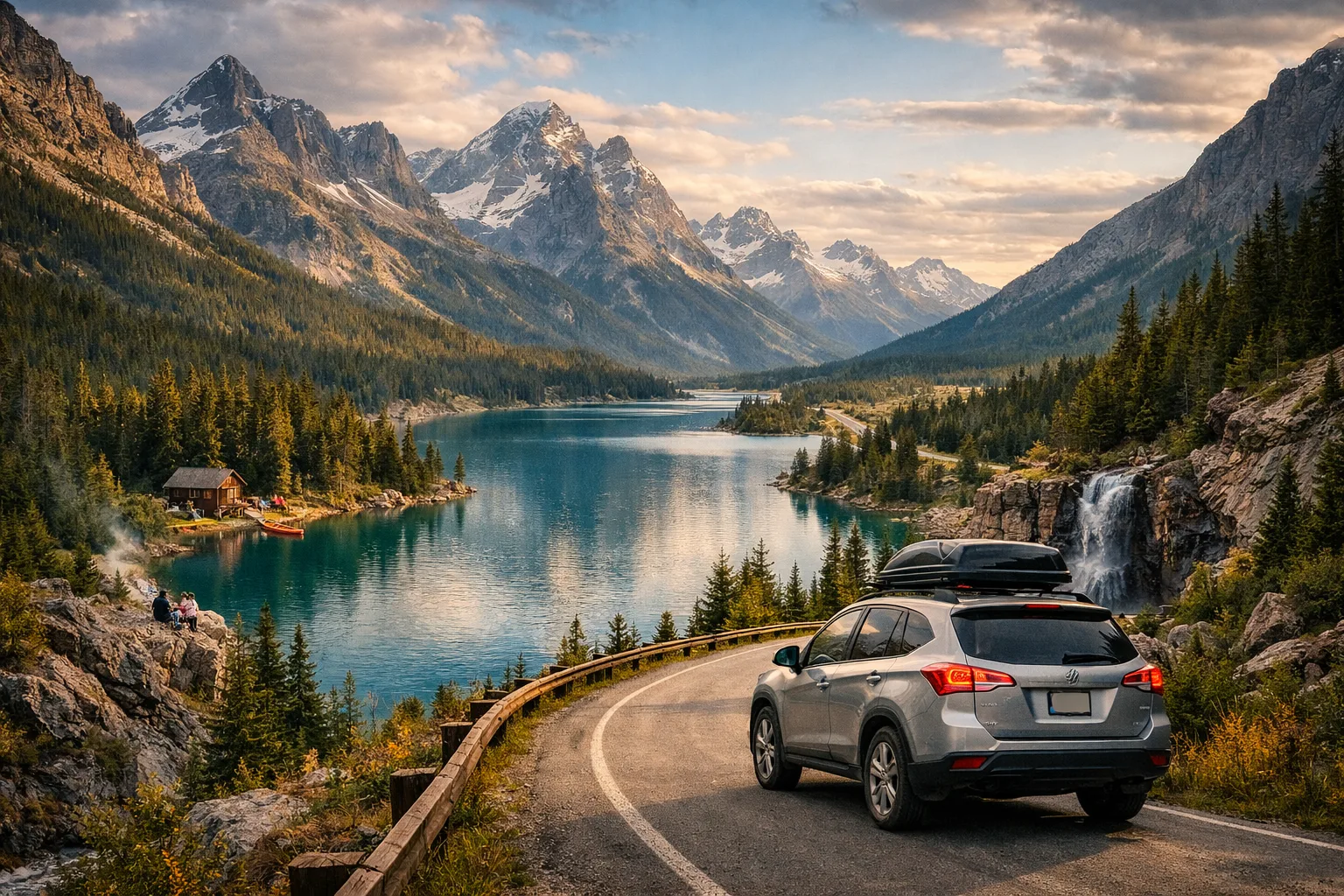
Canada is one of those destinations that makes your breath catch before you’ve even arrived. You’re somewhere over the Atlantic or the Pacific, watching the map tick slowly westward, and you start doing the mental math: the Rocky Mountains. Glacier-fed lakes of impossible turquoise. Coastal rainforests dripping with mist. Empty highways running straight to the horizon through prairie that seems to go on forever.
And then the familiar anxiety: can I actually afford this?
The answer – and the reason this guide exists – is yes. Canada has a reputation as an expensive country, and in some respects (restaurants, city accommodation, national park entrance fees) that’s fair. But Canada is also a country where some of the most extraordinary experiences cost nothing. Where free dispersed camping puts you under the stars in wilderness that would cost hundreds in a paid resort. Where a tank of gas takes you through scenery that no guided tour could improve upon.
A Canada road trip on a budget is not a compromise version of the Canada experience. It is, in many ways, the best version – because the road forces intimacy with the landscape that no airport and hotel itinerary can replicate.
This guide covers everything: two fully-planned 7-day on budget Canada road trip routes, real cost breakdowns, money-saving strategies specific to Canada, and the hidden gems that most visitors driving the same highways blow straight past.
Why Canada Road Trip Is the Best Way to See Canada on a Budget
Canada is the world’s second-largest country. Its defining landscapes – the Rockies, the Maritimes, the boreal forest, the Pacific Coast – are not in its cities. They are between them, along the roads that connect them, and down the side roads that most travelers never take.
- Freedom to camp: Free or near-free camping options exist across Canada that put you in extraordinary wilderness for $0-10/night – your biggest budget saving.
- Control over food costs: A car means supermarket runs, camp cooking, and roadside picnics – cutting daily food costs dramatically.
- Access to free landscapes: Canada’s greatest scenery – the Icefields Parkway, the Cabot Trail, the Sea-to-Sky Highway – is simply the road. No entrance fee. No reservation. Just drive.
- Flexible itinerary: Stop when something catches your eye. Stay an extra day at a lake. Skip the town that doesn’t feel right. No bus schedule, no tour group.
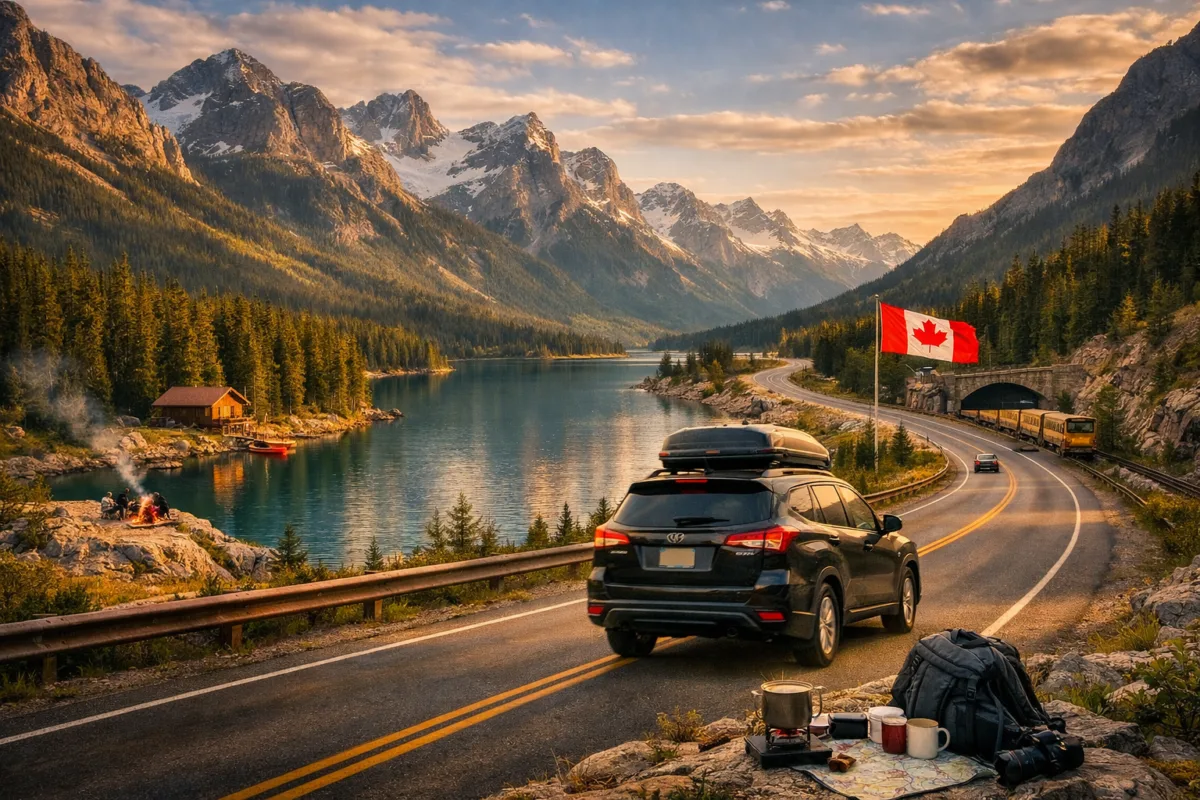
Getting Your Rental Car: How to Find the Best Prices
Unless you’re a Canadian resident with your own vehicle, a rental car is the foundation of your road trip – and also your biggest fixed cost. Here’s how to minimize it.
| Compare Every Rental Company Before You BookNever book a rental car through an airline website, hotel lobby, or the first comparison site you find. Prices across rental companies for identical vehicles on identical dates can vary by 40-60%. GetRentACar aggregates prices from major international brands (Enterprise, Hertz, Avis, Budget) and local Canadian agencies simultaneously – showing you the absolute lowest available rate for your dates and pickup location.Book early: Rental prices in peak Canada summer season (July-August) rise sharply as inventory depletes. Book 6-8 weeks ahead.Choose the smallest practical vehicle: A compact or economy car costs 30-40% less than an SUV and handles all paved Canadian roads perfectly well.Check your credit card: Many premium credit cards include collision damage waiver (CDW) for rental cars – potentially saving $15-25/day in rental company insurance fees.Pick up and drop off at the same city: One-way rentals between cities carry significant drop fees. Design your route as a loop where possible. |
Route 1: The Canadian Rockies – Calgary to Vancouver (7 Days)
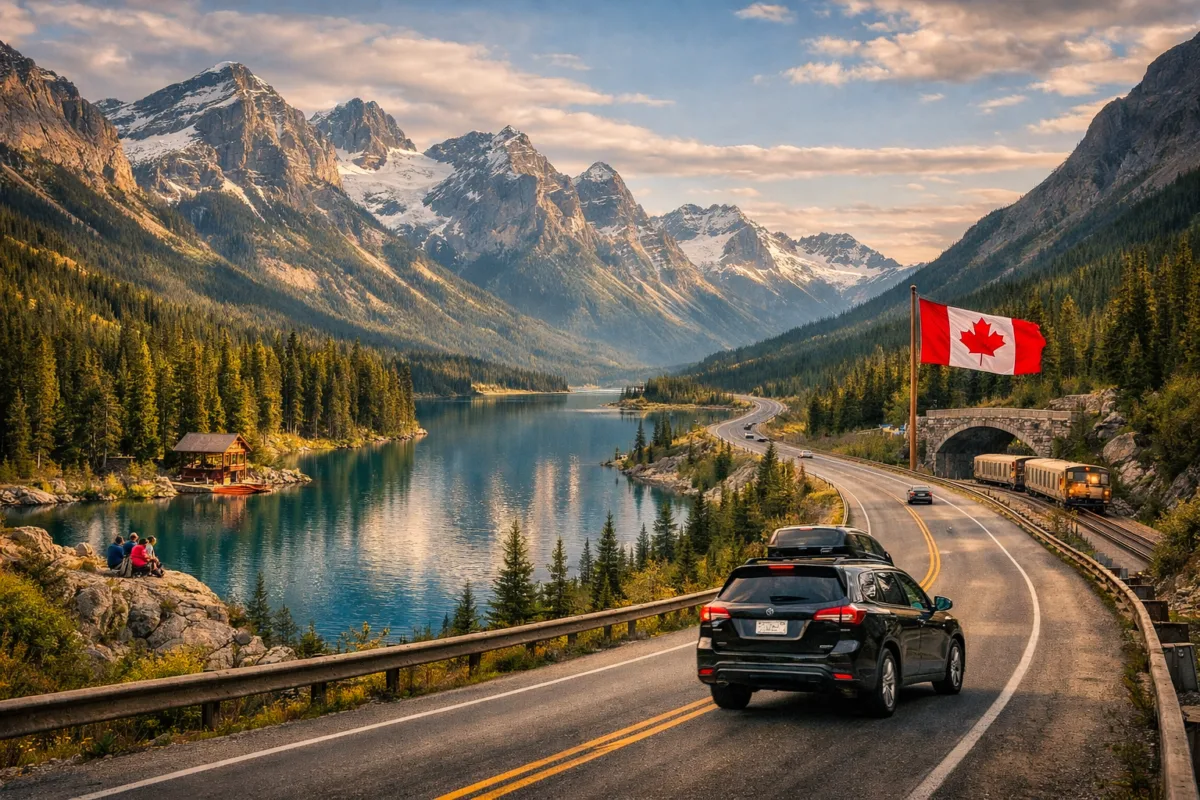
This is Canada’s most celebrated road trip route – and for extraordinarily good reason. It runs through some of the most breathtaking mountain scenery on earth: the Icefields Parkway (widely considered the world’s most spectacular drive), Banff and Jasper national parks, and the Sea-to-Sky Highway into Vancouver.
Fly into Calgary, pick up your rental, and head west. Return your car in Vancouver and fly home from there (a one-way rental fee applies, but the route is worth it).
| Day | Route / Location | Highlights | Est. Daily Cost |
| Day 1 | Calgary → Banff (1.5 hrs) | Banff townsite, Bow River walk, Cascade Mountain views | $65–85 |
| Day 2 | Banff area | Lake Louise (free), Moraine Lake (free), Johnston Canyon hike | $40–55 (free activities) |
| Day 3 | Banff → Jasper via Icefields Pkwy (3.5 hrs) | Columbia Icefield, Peyto Lake viewpoint, Athabasca Falls | $55–75 |
| Day 4 | Jasper area | Maligne Lake, Valley of the Five Lakes hike (free), Pyramid Lake | $35–50 |
| Day 5 | Jasper → Kamloops via Hwy 5 (4 hrs) | Thompson River canyon, optional Clearwater stop | $50–65 |
| Day 6 | Kamloops → Whistler via Sea-to-Sky Hwy | Shannon Falls (free), Garibaldi Provincial Park, Whistler village | $55–75 |
| Day 7 | Whistler → Vancouver (2 hrs) | Stanley Park seawall (free), Granville Island Market, Gastown | $65–85 |
Route 1 Budget Tips
- National Parks pass: Buy a Parks Canada Discovery Pass ($75 CAD/adult, ~$55 USD) for unlimited entry to all national parks for a year. If you’re visiting Banff and Jasper, it pays for itself immediately.
- Camp instead of staying in Banff townsite: Accommodation in Banff is notoriously expensive ($150-300/night for hotels). Tunnel Mountain campground is $30-40 CAD/night and walkable to town.
- Free viewpoints: Lake Louise, Peyto Lake, Bow Lake, Athabasca Falls, and the Icefields Parkway itself are all free to drive and walk. The scenery is jaw-dropping without spending a dollar.
- Pack food for mountain days: Restaurants in Banff and Jasper tourist zones are expensive. A supermarket run in Calgary before you leave saves $30-50 per day.
Route 2: The Maritime Loop – Quebec City to Halifax (7 Days)
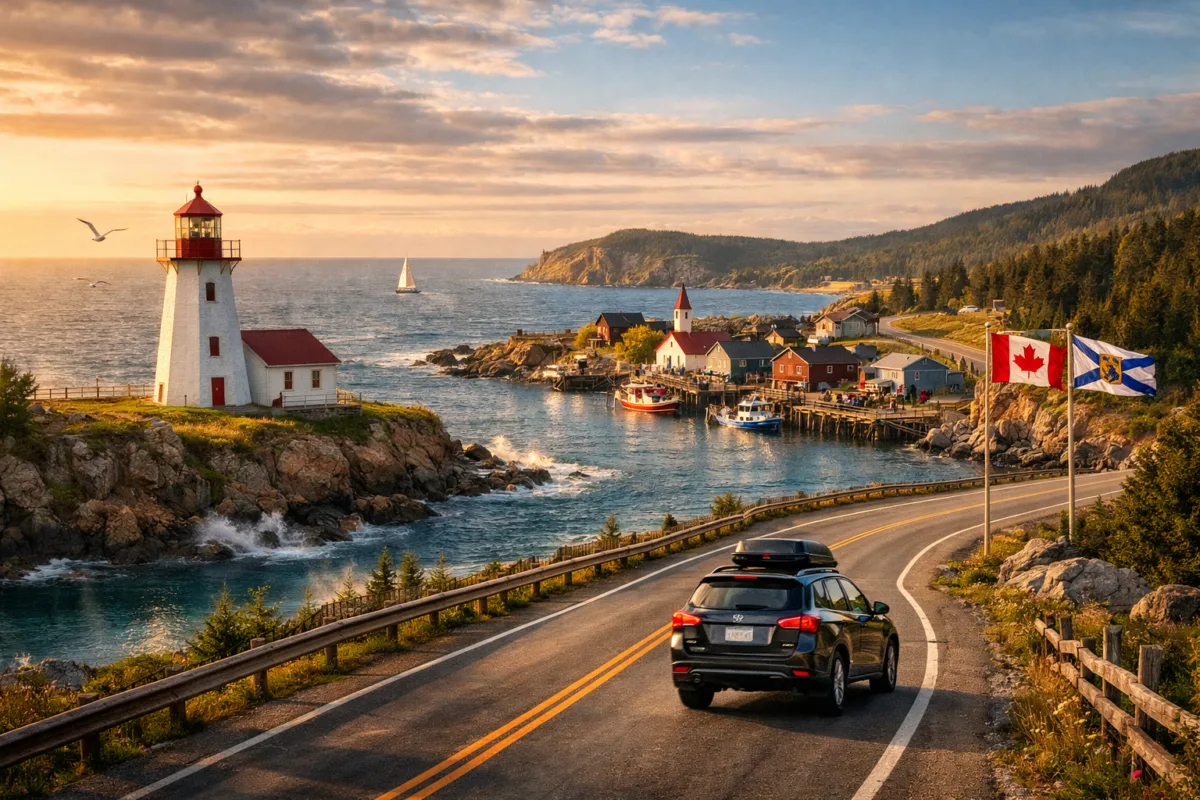
If Route 1 is Canada’s most famous road trip, Route 2 is its most underrated. The Maritime provinces – New Brunswick, Nova Scotia, Prince Edward Island – offer a completely different Canada: French-Canadian culture in Quebec, Acadian coastal villages, the world’s highest tides in the Bay of Fundy, the red-sand beaches of PEI, and the wild beauty of Cape Breton’s Cabot Trail.
And it’s significantly cheaper than the Rockies – accommodation costs less, food is more affordable, and there are far fewer tourist-trap pricing zones.
| Day | Route / Location | Highlights | Est. Daily Cost |
| Day 1 | Quebec City | Old Quebec (UNESCO, free to walk), Montmorency Falls, Plains of Abraham | $60–80 |
| Day 2 | Quebec → Fredericton, NB (4.5 hrs) | St. Lawrence River drive, Trois-Rivières stop, arrive Fredericton | $55–70 |
| Day 3 | Fredericton → Fundy Trail (2 hrs) | Bay of Fundy tidal bore, Fundy Trail Parkway hike, Hopewell Rocks | $45–60 |
| Day 4 | Fundy → PEI via Confederation Bridge | Red sand beaches, Green Gables Heritage site, fresh lobster rolls | $55–75 |
| Day 5 | PEI → Cape Breton, NS (3 hrs via ferry) | Cabot Trail start, Cape Breton Highlands NP, Cheticamp | $50–65 |
| Day 6 | Cape Breton loop | Skyline Trail hike (free, iconic whale views), Baddeck, Fortress Louisbourg | $45–60 |
| Day 7 | Cape Breton → Halifax (3.5 hrs) | Halifax Citadel (free grounds), Waterfront Boardwalk, Pier 21 | $60–80 |
Route 2 Budget Tips
- Free camping in NB and NS: New Brunswick and Nova Scotia have provincial parks with camping from $28-38 CAD/night ($21-28 USD) – excellent value in stunning coastal settings.
- Fresh lobster on a budget: Buy directly from lobster pound wharves in PEI and NS rather than restaurants. A whole cooked lobster costs $10-18 CAD at the wharf; the same thing in a restaurant costs $45+.
- Confederation Bridge is free eastbound: You only pay ($50 CAD) when leaving PEI westbound. Plan accordingly.
- Free Cabot Trail: The entire Cabot Trail is a public highway – free to drive. Cape Breton Highlands National Park entry is $9 CAD/adult, covered by the Parks Canada pass.
Complete 7-Day Budget Breakdown (Per Person)
| Category | Budget Option | Estimated Cost (7 days) |
| Car rental | Compact car via GetRentACar | $200–320 (split if 2 people) |
| Fuel | Based on ~1,200km avg route | $80–120 |
| Accommodation | Mix of campsites + 1–2 hostel nights | $120–200 |
| Food | Supermarket + roadside + one restaurant/day | $120–175 |
| National Parks pass | Parks Canada Discovery Pass | $55 USD (worth it) |
| Activities | Mix of free hikes + 1–2 paid attractions | $30–60 |
| eSIM / data | Airalo Canada plan (10 days) | $12–18 |
| Travel insurance | Ekta 7-day comprehensive | $20–30 |
| Buffer / fuel stops / misc | Snacks, coffee, surprises | $30–45 |
| TOTAL (per person, 2 sharing car) | All categories combined | $540–$780 USD |
Solo travelers: the car rental and fuel costs are not split, which raises the per-person cost. Traveling with one other person dramatically improves the value calculation.
15 Money-Saving Tips Specific to Canada Road Trip
| #1 Book your rental car early through GetRentACarCanadian summer rental prices spike sharply as July–August approaches. Booking 6-8 weeks ahead through GetRentACar locks in lower rates before inventory depletes. Compare across all agencies simultaneously – the cheapest option isn’t always the brand you expect. |
| #2 Get a Parks Canada Discovery Pass before you goAt $75 CAD/adult ($55 USD), the Parks Canada Discovery Pass covers unlimited entry to all 37 national parks for a full year. If you’re visiting Banff (entry: $11 CAD/day) and Jasper ($11 CAD/day), it pays for itself after 3-4 days. Available at the first park gate you reach. |
| #3 Camp instead of staying in hotel roomsAccommodation in Canada’s tourist towns is genuinely expensive. A hotel in Banff or Whistler runs $150-400/night. A campsite at Tunnel Mountain (Banff) or Alice Lake (Whistler) runs $30-45 CAD/night and puts you in nature rather than a parking lot. Reserve campsites on Parks Canada’s reservation system 3-4 months ahead for summer sites. |
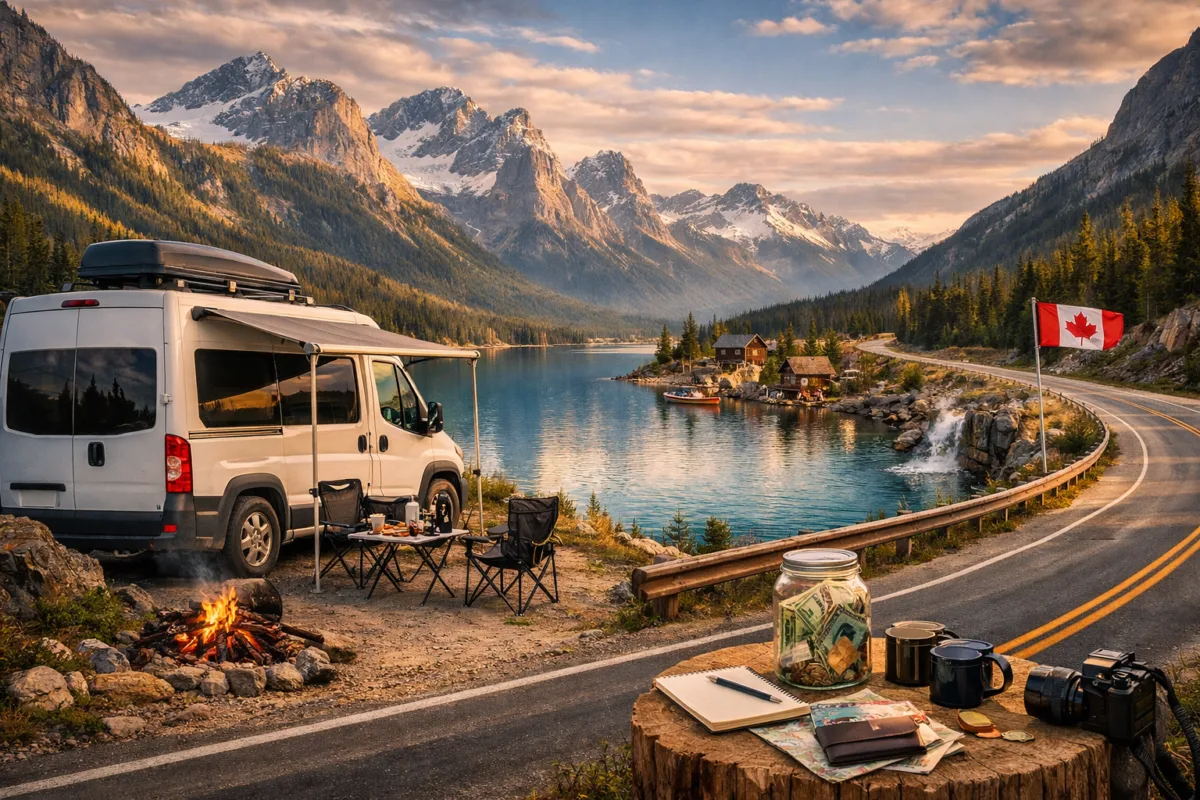
| #4 Explore free dispersed camping for zero-cost nightsIn Canada’s Crown Land areas – vast public land outside national and provincial parks – dispersed camping is legal and free, typically with a 14-night limit. This is most practical in BC, Alberta, and the Maritime provinces. Check provincial regulations before setting up. Combined with a week of camping, this can reduce accommodation costs to near zero. |
| #5 Do a supermarket run before entering mountain townsBanff, Jasper, Whistler, and other tourist-zone towns charge premium prices for groceries and restaurants. Do a large supermarket shop in Calgary, Edmonton, or Vancouver before entering the mountain zones. Pack a cooler for perishables. A week of mostly self-catered meals saves $200-300 per person compared to eating out in tourist towns. |
| #6 Use GasBuddy to find the cheapest fuel on your routeFuel prices in Canada vary significantly between stations and between towns. Gas in rural areas and near highways often runs 10-15 cents/litre more than at stations in larger towns. The free GasBuddy app shows real-time prices at stations along your route – a consistently useful tool on any Canadian road trip. |
| #7 Stay connected with an eSIM – skip the roaming feesFor international visitors, Canadian roaming charges can be brutal – $10-20/day from some home carriers. Set up a Canada eSIM through Airalo before departure. Plans with 10+ days of data start from $12-18 and activate instantly. Staying connected for navigation and accommodation searches saves more money than it costs in rural Canada. |
| #8 Use free hiking trails – Canada’s greatest treasureCanada has some of the world’s finest hiking trails, and the vast majority are completely free. Valley of the Five Lakes in Jasper, Skyline Trail on Cape Breton, the Fundy Trail in New Brunswick, Garibaldi Provincial Park near Whistler – world-class wilderness experiences that cost nothing beyond your park pass. |
| #9 Eat lobster (and other seafood) from wharves, not restaurantsIn the Maritime provinces, fresh seafood directly from fishing wharves and lobster pounds costs a fraction of what restaurants charge. PEI and Nova Scotia have dozens of waterfront operations selling fresh-cooked lobster, mussels, and oysters. A whole lobster from a wharf: $12-20 CAD. The same at a Halifax restaurant: $45+. |
| #10 Use NordVPN on public networksHostels, campsite offices, and cafés across Canada offer free Wi-Fi – and like all public networks, they’re potential security risks. NordVPN keeps your banking and personal data secure on any connection, and lets you access home streaming services during rainy camp evenings. |
| #11 Get travel insurance before every international trip to CanadaCanadian healthcare is not free for visitors. Emergency care, especially from hiking accidents in remote national parks, can result in medical bills and evacuation costs running into tens of thousands of dollars. Comprehensive travel insurance from Ekta Traveling Insurance costs $3-8/day and covers medical emergencies, trip cancellation, and evacuation. |
| #12 Pre-book your airport transfer to avoid cab fare surprisesCalgary, Vancouver, and Halifax airports all have taxi and rideshare options, but pre-booking a fixed-price transfer through GetTransfer eliminates any pricing uncertainty on arrival day and ensures a professional, confirmed pickup – especially useful when you are landing late and picking up a rental the next morning. |
| #13 Check the exchange rate before every major transactionWith the USD, GBP, and EUR all trading at varying rates against the Canadian dollar, knowing the real exchange rate before fuel stops, restaurants, and campsite payments helps you avoid overpaying. Check the live rate on our Currency Converter throughout your trip. |
| #14 Check AirHelp before your trip if you’ve had past flight disruptionsIf you have had a delayed, cancelled, or overbooked EU-operated flight in the past 3 years, you may be owed up to €600 in unclaimed compensation. AirHelp checks eligibility and handles claims on a no-win, no-fee basis. Recover that money before your Canada trip and it effectively pays for your Parks Canada pass. |
| #15 Pack a carry-on only to avoid baggage fees on your Canada-bound flightBudget airlines operating transatlantic routes to Canadian cities charge $40-80+ per checked bag each way. On a return trip, that’s $80-160 extra. Use our Packing List Generator to build a smart carry-on packing list for a 7-10 day Canadian road trip – you need less than you think, especially if you’re camping and doing laundry mid-trip. |
Free and Almost-Free Canada Experiences That Beat Paid Attractions
Some of Canada’s most iconic experiences are completely free – and some of the best are almost entirely unknown to first-time visitors.
| Experience | Location | Cost | Notes |
| Icefields Parkway drive | Alberta (Banff–Jasper) | Free | Called world’s most scenic highway |
| Lake Louise viewpoint | Banff NP, Alberta | Free (park pass req.) | Glacier-fed turquoise lake |
| Peyto Lake overlook | Banff NP, Alberta | Free (park pass req.) | Wolf-head shaped lake from above |
| Athabasca Falls | Jasper NP, Alberta | Free (park pass req.) | Most powerful waterfall in Canadian Rockies |
| Valley of Five Lakes hike | Jasper NP, Alberta | Free (park pass req.) | 5 coloured lakes on one trail |
| Stanley Park seawall | Vancouver, BC | Free | 10km coastal walk in urban forest |
| Cabot Trail drive | Cape Breton, NS | Free (park entry $9 CAD) | Epic coastal highlands road |
| Skyline Trail hike | Cape Breton Highlands NP | Free (park pass req.) | Cliff-edge whale-watching trail |
| Hopewell Rocks | Bay of Fundy, NB | $14 CAD adult | World’s highest tides, sea stacks |
| Old Quebec City walk | Quebec City, QC | Free | UNESCO walled city, cobblestone streets |
| Montmorency Falls | Quebec City, QC | Free (park entry nominal) | Higher than Niagara Falls |
| Granville Island Market | Vancouver, BC | Free to enter | Best food market in Western Canada |
Plan Your Canada Road Trip With These Free Tools
Before you book anything, use our free AI Travel Budget Estimator to build a personalized cost breakdown for your specific Canada itinerary. Enter your route, travel style, and duration for a realistic day-by-day budget.
Time your trip for the best conditions – Canada’s weather varies enormously by province and season. Our Weather Checker helps you identify the ideal travel window for your chosen route.
Pack smart and carry-on-only with our Packing List Generator – it builds a destination-specific list for Canada road trip conditions, including camping gear reminders and weather-appropriate clothing.
Related Travel Resources
Want to make your next trip more affordable and stress-free? Explore these helpful guides and tools designed to simplify every stage of your journey:
- Browse our comprehensive destination guides for insider tips, attractions, and local recommendations.
- Explore practical travel tips to help you travel smarter, avoid common mistakes, and maximize your experience.
- Get personalized assistance through our travel planning services for a smoother and more organized trip.
Frequently Asked Questions (FAQ)
Q.1 How much does a 7-day Canada road trip cost?
For two people sharing a rental car, a 7-day Canada road trip typically costs $540-780 USD per person, covering car rental, fuel, a mix of camping and hostel accommodation, groceries plus a few restaurant meals, national park entry, and travel insurance. Solo travelers will pay more (full car cost, not split), while groups of three or four bring the per-person cost down further.
Q.2 What is the best time of year for a Canada road trip?
June through September is prime road trip season across Canada. July and August offer the best mountain weather and the longest days, but also peak prices and crowds at major campgrounds. Late June and September offer nearly identical scenery with lower prices, quieter roads, and easier campsite bookings. The Maritimes are best in August and early September when ocean temperatures are warmest.
Q.3 Do I need an international driving permit to rent a car in Canada?
Citizens of the USA do not need an international driving permit (IDP) to drive in Canada. Citizens of the UK, EU, Canada, and most other Western countries can drive with their home license for up to 3 months. Travelers from some countries may need an IDP – check requirements for your specific nationality before arrival.
Q.4 Can I camp for free in Canada’s national parks?
No – camping within national parks requires a paid permit ($30-45 CAD/night) and advance reservation through the Parks Canada booking system. However, dispersed camping on Crown Land outside park boundaries is legal and free in most provinces. Provincial parks also offer paid camping at $28-38 CAD/night in beautiful settings.
Q.5 Is the Parks Canada Discovery Pass worth buying?
Almost always yes if you are visiting multiple national parks. At $75 CAD/adult, it covers unlimited entry to all 37 Canadian national parks for a full year. If your Rockies itinerary includes Banff and Jasper (each charging $11 CAD/day per vehicle), the pass pays for itself after 3-4 days. Buy it at the first park gate you reach or online before your trip.
Q.6 How do I stay connected in remote areas of Canada?
Set up a Canada eSIM through Airalo before departure for affordable data throughout the trip. Note that remote stretches of the Icefields Parkway, the Cabot Trail, and many provincial parks have limited or no cellular coverage regardless of carrier. Download offline maps (Google Maps or Maps.me) for your route before entering coverage dead zones.
Q.7 What are the must-see free experiences on a Canadian Rockies road trip?
The Icefields Parkway itself is free and widely considered the world’s most spectacular drive. Lake Louise and Moraine Lake viewpoints are free with a national park pass. Peyto Lake overlook, Athabasca Falls, and the Valley of the Five Lakes hike in Jasper are all free with park entry. The most expensive experience – the Athabasca Glacier Ice Explorer tour ($60+ CAD) – is completely optional; you can walk to the glacier toe free of charge.
The Road Is the Destination. Canada Is Waiting.
Here’s what a Canada road trip teaches you that no other travel experience quite replicates: that the most profound moments are rarely the ones you planned.
They are the elk that walks across the highway at dusk on the Icefields Parkway and stops to look back at you with complete calm. The fog burning off Cheticamp Harbour at 6am while the lobster boats head out. The moment you crest a hill on the Cabot Trail and the Atlantic opens up below you, impossibly blue, impossibly large.
None of those moments cost anything. None of them appeared in the itinerary. All of them stayed with travelers forever.
Canada road trips are among the world’s great ones – not because they’re perfectly engineered, but because Canada is vast enough and wild enough that the road still surprises you. And on a budget that most travelers would spend on a week in a resort, you can have an adventure that most resort guests will never experience.
Book the car. Pack the cooler. Drive.
Start planning with our free AI Travel Budget Estimator. Compare rental prices at GetRentACar. Find more budget travel inspiration at the Hidden Travels Budget Hub.
© Hidden Travels — hiddentravels.site
Inspiring Travelers. Sharing Hidden Stories. One Adventure at a Time.