
⚠️ Affiliate Disclosure: Some links in this post are affiliate links – we earn a small commission if you book through them, at no extra cost to you. We only recommend services we genuinely use and trust.
The lobster was still moving when they brought it to the table. This was not, the waitress explained matter-of-factly as she set it down on the newspaper spread across the diner table on the Cape Breton waterfront, anything unusual. The boat had come in two hours ago. What I was eating had been in the Atlantic that morning.
I have eaten lobster in London, in Paris, in Boston, in Tokyo. None of it tasted like this. The Maritime Provinces of Canada – Nova Scotia, New Brunswick, and Prince Edward Island – sit on some of the most productive cold-water fishing grounds in the world, and the seafood that comes out of those waters is so fresh that the concept of ‘the best lobster I’ve ever had’ effectively resets every time you sit down to eat here.
But the seafood is only one of the reasons to make the Maritime road trip. There is also the Cabot Trail – a 300-kilometre circular coastal drive around the northern tip of Cape Breton Island that most people who do it consider one of the finest drives in North America. There is the Bay of Fundy, where the world’s highest tides rise and fall 16 metres twice a day in a geological rhythm that has been running since before humans had words for it. There is Prince Edward Island, where the red soil farmland and the green fields and the white beaches have a quality of rural tranquillity that feels somehow preserved from a slower century. There is Lunenburg, a UNESCO World Heritage fishing town so perfectly preserved it looks built as a film set and has been continuously occupied since 1753.
This guide covers a 10-14 day Maritime Provinces road trip starting and ending in Halifax – the most direct gateway with the best flight connections. It is the most underrated road trip in eastern North America, and one of the finest in Canada.
Pro Tip: Before you plan, use our AI Travel Budget Estimator to build your Maritime road trip budget. Compare the current CAD exchange rate at the Live Currency Converter – the Canadian dollar is typically favourable for visitors from the USA, UK, and Europe.
Why the Maritime Provinces Deserve a Dedicated Road Trip
The Maritime Provinces occupy the far northeastern corner of North America – east of Quebec, north of Maine, jutting into the North Atlantic on a peninsula and two islands. They are, in terms of Canadian geography, the oldest settled part of the country: the Acadian French were here from the early 17th century, the British from the 18th, and the Mi’kmaq First Nations from thousands of years before either.
What this history has produced is a region with a distinct, layered cultural identity that is quite unlike the rest of Canada – less multicultural, more historically anchored, with a strong sense of place that shows up in the way people talk about their specific harbour, their specific fishing ground, their specific lighthouse. Maritime identity is local in a way that is not often found in modern Canada, and that specificity is one of the great pleasures of driving through it.
The landscape – the red cliffs of PEI, the birch forests of Cape Breton, the tidal flats of Fundy, the granite coastline of Nova Scotia – is quietly extraordinary without being dramatic. There are no mountains. There is no Grand Canyon scale. What there is instead is a sustained, cumulative beauty that builds across the days of a road trip: every harbour, every lighthouse, every sea fog rolling in over a clapboard fishing village adds a layer to something that, by the end of the trip, is genuinely difficult to leave.
Local Insight: The word ‘Maritime’ specifically refers to the three provinces of Nova Scotia, New Brunswick, and Prince Edward Island. When people say ‘Atlantic Canada’ they sometimes include Newfoundland and Labrador as well – a province that is technically separate from the Maritimes but part of the same Atlantic regional identity. If you have three weeks, adding a ferry crossing to Newfoundland from North Sydney, Nova Scotia, opens up one of the most extraordinary landscapes in eastern Canada.
The Maritime Road Trip Route: Day by Day
1. Halifax, Nova Scotia – Days 1-2: The Gateway City
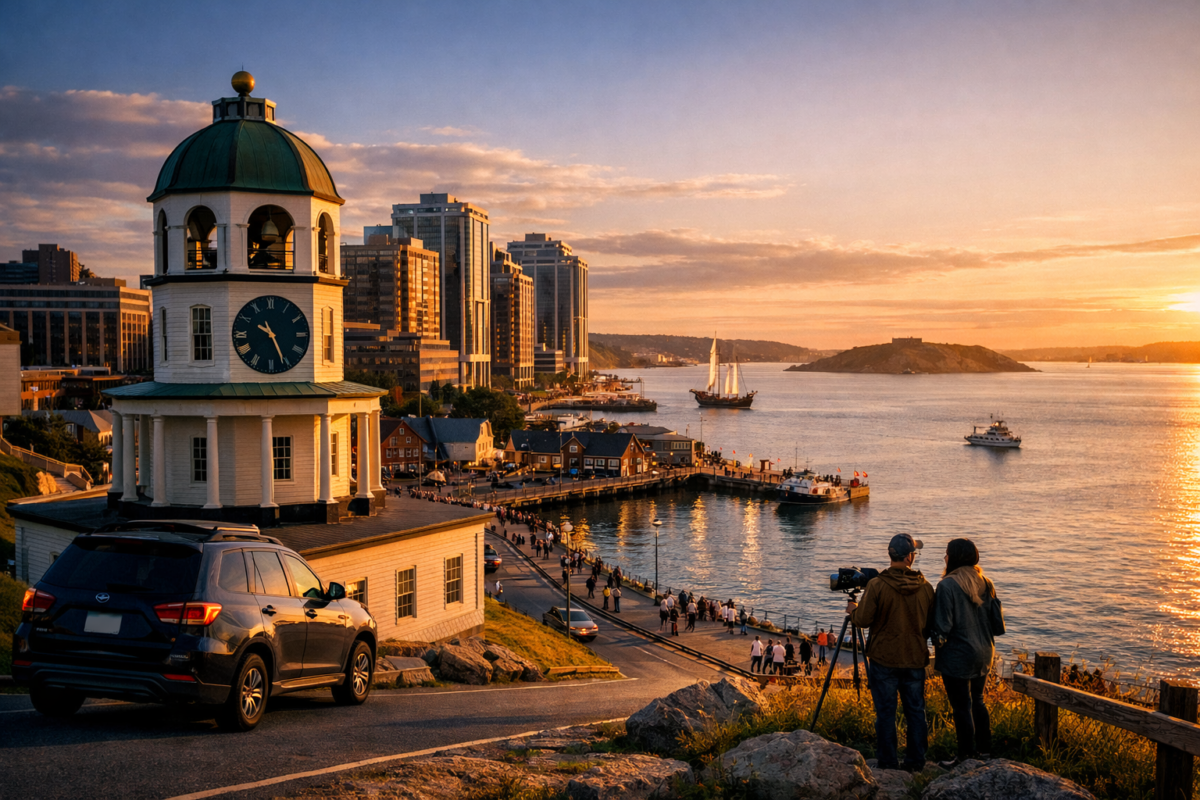
Halifax is a city that most Canadians love but most international visitors have not heard of, and that imbalance is part of what makes it so good to arrive in. A waterfront city of 450,000 people on a natural harbour that’s been one of the most strategically important ports in the North Atlantic for 300 years, Halifax has an energy that mixes the maritime heritage with a young, creative, independent-minded university population and one of the finest craft beer and seafood scenes in Atlantic Canada.
The Halifax Citadel – a star-shaped hilltop fort overlooking the harbour, completed in 1856 and used continuously until the Second World War – is the most impressive fortification in Maritime Canada and gives views over the city, the harbour, and the Atlantic approaches that make the strategic reasoning for its position immediately obvious. Sited Citadel Hill is managed by Parks Canada; entry CA$15, Canada Discovery Pass holders free.
The Halifax Waterfront Boardwalk – 4km of connected wharves, historic buildings, restaurants, and working fishing operations – is where Halifax’s maritime character is most visible and accessible. The Historic Properties at the north end of the boardwalk are a cluster of restored 19th-century stone warehouses that contain some of Halifax’s best restaurants and bars. The Alexander Keith’s Brewery (operating since 1820, the oldest operating brewery in North America) does tours and tastings from CA$26 – one of the finer Halifax experiences.
Halifax’s North End neighbourhood – a gentrified former working-class area now home to independent coffee shops, galleries, bookstores, and restaurants – is one of the finest neighbourhood walking experiences in Atlantic Canada. The Hydrostone District, built in 1918 to house residents displaced by the Halifax Explosion (the largest man-made explosion prior to the atomic bomb, which killed 2,000 people and injured 9,000 in December 1917), has a specific Georgian architectural uniformity and a story that the local museum tells with admirable directness.
Food Note: Donair is Halifax’s unofficial civic dish – a Maritime-specific version of the doner kebab with sweet donair sauce (a condensed milk, vinegar, and garlic sauce that sounds wrong and tastes exactly right). King of Donair on Quinpool Road has been serving the definitive Halifax donair since 1973. Order one within 24 hours of arriving in the city. It is a rite of passage and it is genuinely excellent.
2. The South Shore – Lunenburg and Peggy’s Cove – Day 3: Nova Scotia’s Iconic Coastline
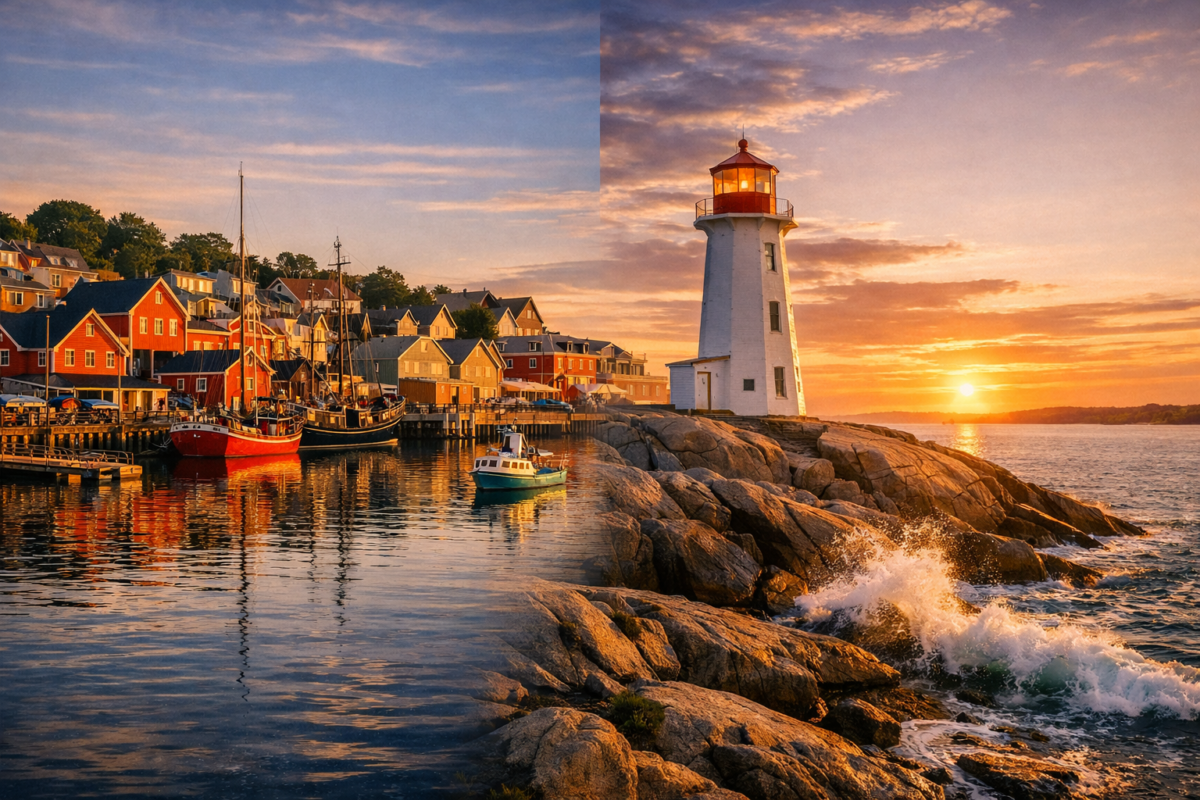
Drive the South Shore from Halifax – the 103 west to Mahone Bay and then down to Lunenburg. The South Shore is Nova Scotia’s most scenic coastal drive, with small fishing villages, island-studded bays, and the extraordinary red-and-white lighthouse at Peggy’s Cove visible from 5 kilometres before you reach it.
Peggy’s Cove (45 minutes from Halifax) is Nova Scotia’s most photographed location – a working fishing village of perhaps 40 people on a headland of smoothed granite above the Atlantic. The lighthouse stands on the granite promontory in a position so perfect for photography that it has become Nova Scotia’s de facto symbol. The village is genuinely tiny and genuinely beautiful. Arrive before 9am to have it largely to yourself.
Lunenburg is a UNESCO World Heritage Site – a planned British colonial town laid out on a grid above a deep harbour in 1753 and still largely intact in its original form. The colourful wooden buildings (the traditional Maritime palette of dark red, deep blue, ochre, and cream) climbing the hillside above the waterfront have barely changed in character since the 18th century. The Fisheries Museum of the Atlantic (CA$15) on the waterfront is excellent – it includes the original Bluenose II schooner, a working fish plant, and an aquarium of Atlantic species.
Pro Tip: Book accommodation in Lunenburg rather than day-tripping from Halifax – the town at dusk and dawn, when the tour buses have gone, is extraordinary. Compare guesthouse and B&B prices at Hotellook. The South Shore in general has excellent accommodation at much better prices than Halifax.
Food Note: The Lunenburg seafood scene is excellent and remarkably affordable. A chowder at a waterfront restaurant costs CA$12-16. A whole fresh lobster at a casual wharf-side restaurant costs CA$28-40 depending on market price. The Fleur de Sel restaurant on Montague Street is considered one of the finest restaurants in Nova Scotia.
3. Bay of Fundy – New Brunswick – Days 4-5: The World’s Highest Tides
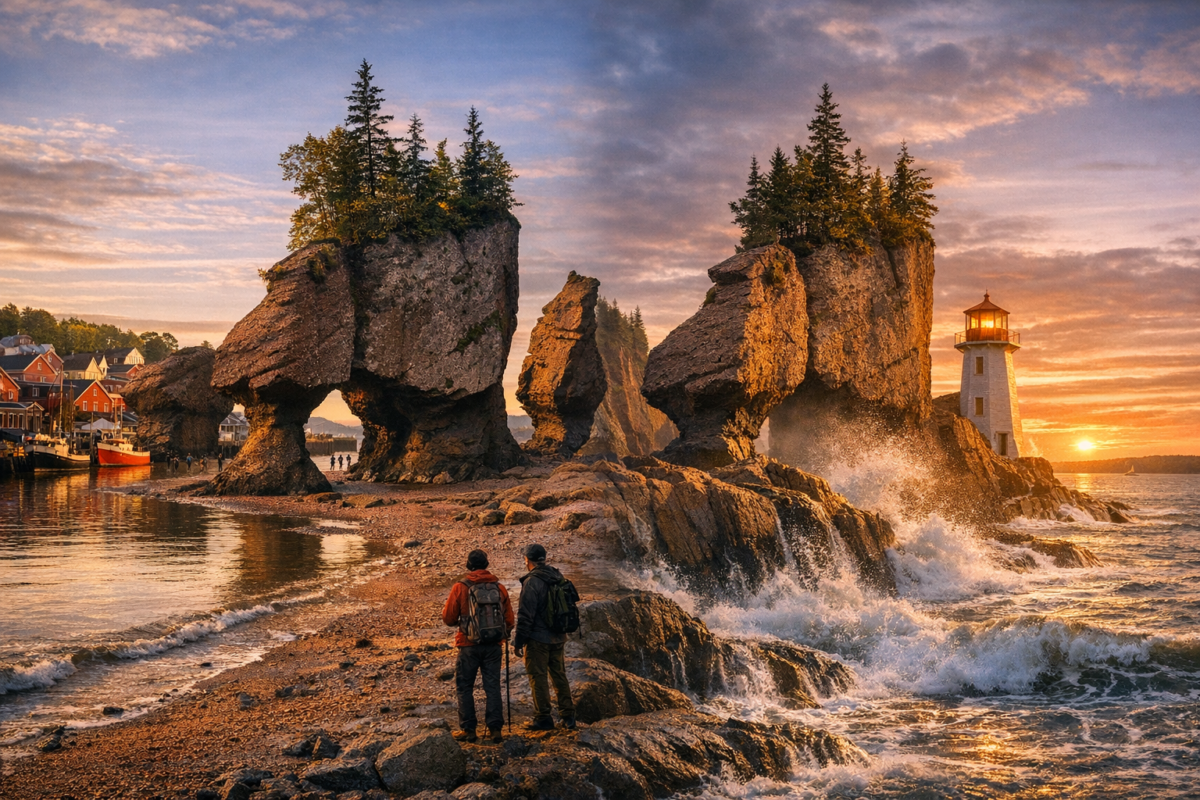
Cross into New Brunswick and head for the Bay of Fundy – the long, narrow bay between Nova Scotia and New Brunswick that acts as an amplifier for the Atlantic tidal system, producing water level changes of up to 16 metres twice every 24 hours. This is the highest tidal range on Earth, and the physical reality of it – vast red mud flats exposed at low tide, the same expanse covered by metres of water six hours later – is genuinely astonishing to witness.
The Hopewell Rocks (Rocks Provincial Park, CA$10 entry) are the most famous Fundy tidal landmark: red sandstone pillars topped with vegetation, standing on the tidal floor at low tide, surrounded by up to 12 metres of seawater at high tide. Walking among the sea stacks at low tide – then returning at high tide to see the same formations from a kayak – is one of the most extraordinary tidal experiences available on the Atlantic coast. The Hopewell Rocks tide table is posted daily and the optimal window for the sea stack walk (around 2-3 hours either side of low tide) must be planned around it.
The Fundy Trail Parkway on the upper Bay coast is 16km of coastal road through old-growth forest with access to remote beaches, sea caves, and suspension bridges over river gorges. At the end of the road, the Big Salmon River suspension bridge leads to a backcountry hiking network through one of the most pristine wilderness areas in southern New Brunswick. The day-use fee is CA$10 per vehicle.
Heads Up: The Fundy tidal range is dangerous for the uninformed. Walking on exposed tidal flats at low tide is safe when you know the timing – it becomes very dangerous when the tide turns. The tide comes in extremely fast (up to 1 metre per minute in some Fundy locations), and the wet mud on the flats can trap feet and boots. Always check the official Hopewell Rocks tide table, never walk on tidal flats in fog, and pay attention to the warning signs at every Fundy tidal site.
Moncton and the Tidal Bore
The Petitcodiac River Tidal Bore at Moncton – a wave of water 15-25cm high that travels upriver at the front of the incoming Fundy tide, reversing the river’s flow entirely – is viewable from Bore Park on the Moncton waterfront. The official tidal bore schedule is posted at the park. It is a quiet, deeply strange natural phenomenon: the river running in one direction and then, at the appointed time, beginning to run in the other. Moncton itself is the largest city in New Brunswick and has excellent restaurants and nightlife concentrated around the Main Street district.
4. Fredericton and the Saint John River Valley – Day 6: New Brunswick’s Capital
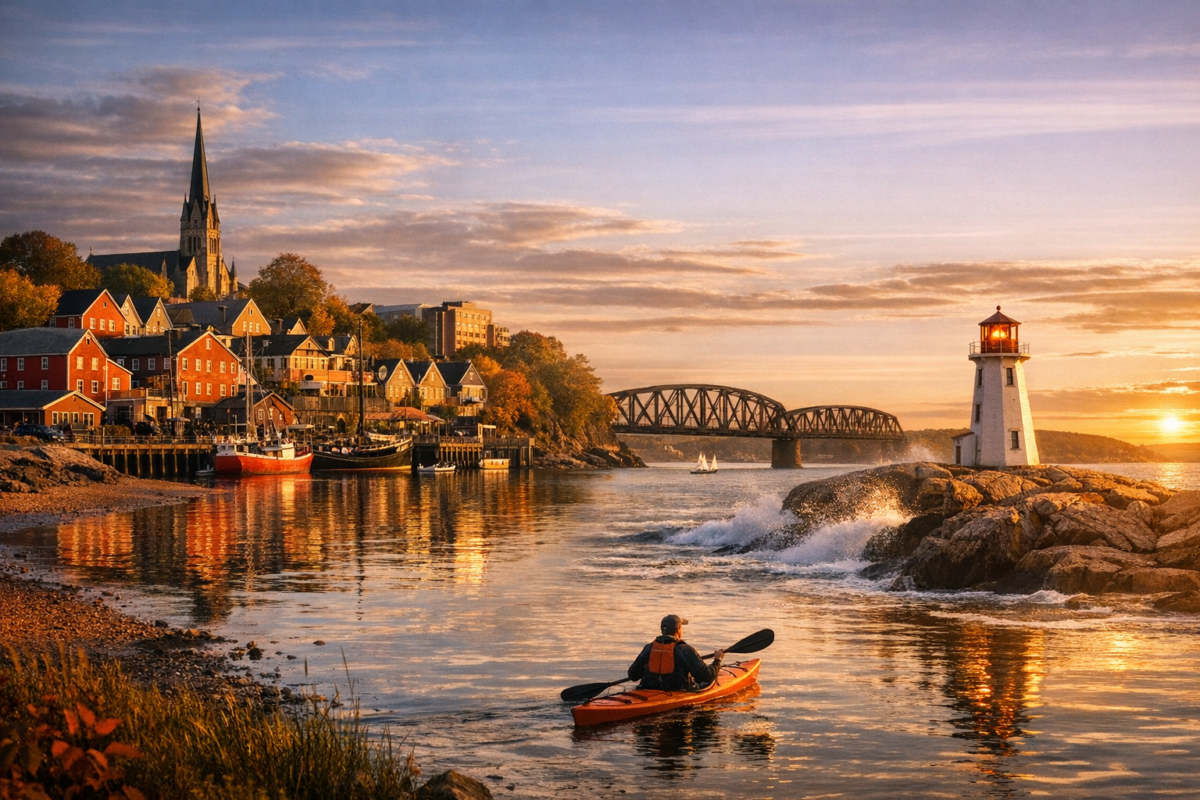
Fredericton is New Brunswick’s small, leafy provincial capital – a garrison town on the Saint John River that feels entirely unlike the industrial port cities of the Maritime coastline. It has a Green (the city’s central park and historic military parade ground), a compact but excellent arts district centred on the Beaverbrook Art Gallery (one of the best small art museums in Atlantic Canada), and a residential streetscape of Victorian houses under enormous elm trees that turns utterly spectacular in October.
The Beaverbrook Art Gallery (CA$15) was founded by Max Aitken (Lord Beaverbrook) in 1959 and contains a surprisingly strong collection of British and Canadian art including Salvador Dalí’s Santiago El Grande, a 4-metre-tall painting that dominates an entire gallery and was commissioned specifically for this museum. In a relatively small gallery in a small Canadian city, it is genuinely startling.
The Saint John River Valley north of Fredericton offers one of the finest fall foliage drives in Atlantic Canada – particularly the stretch from Fredericton north through the Kings Landing Historical Settlement (a living history museum recreating a 19th-century Loyalist farming community) to Hartland, home of the world’s longest covered bridge (391 metres, built in 1901, still carrying traffic). The covered bridge is free to cross and has a parking area on both sides for the obligatory photograph.
5. Prince Edward Island – Days 7-8: The Gentle Island
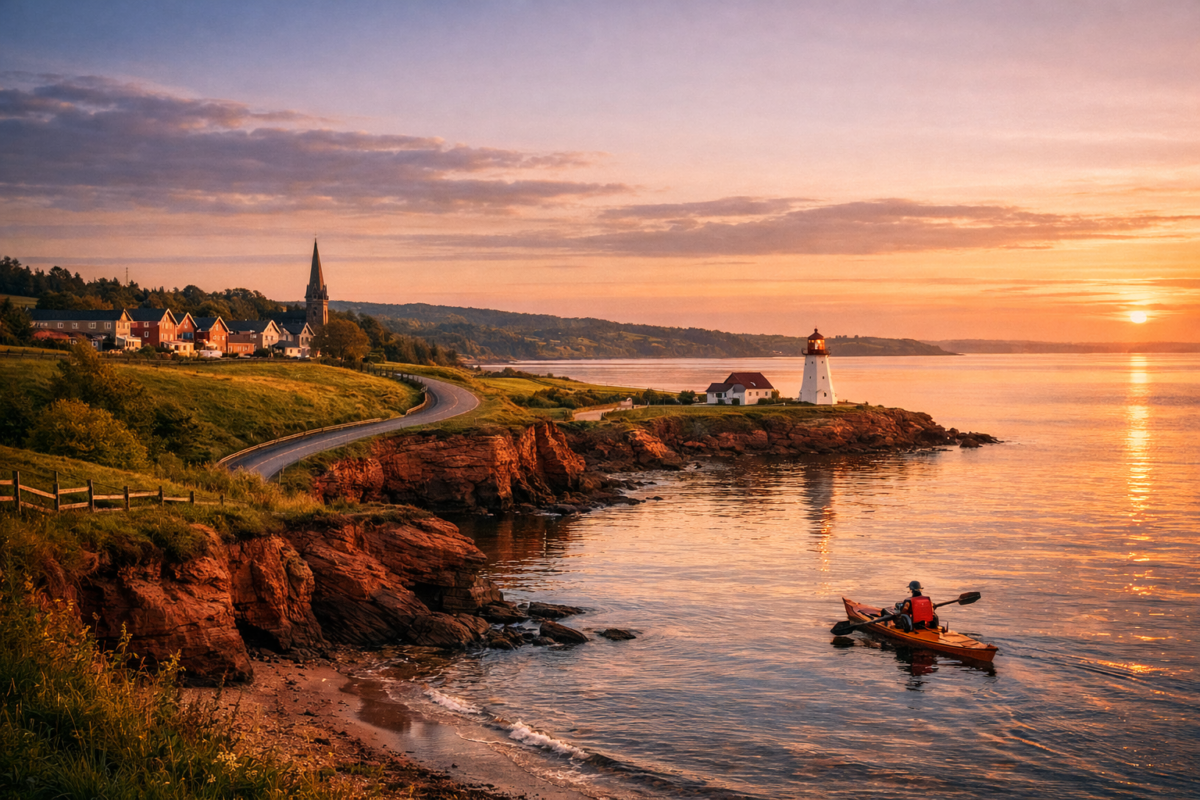
Cross into Prince Edward Island on the Confederation Bridge – a 12.9km span across Northumberland Strait that opened in 1997 and is the longest bridge over ice-covered water in the world. The crossing itself takes about 12 minutes and gives views of the island’s distinctive red soil and green farmland appearing ahead of you as the bridge descends from its highest point.
PEI is a small island with a very particular character. It is flat. It is agricultural. It is the birthplace of Confederation (Canada’s 1867 union was negotiated in Charlottetown). It is L.M. Montgomery’s Anne of Green Gables country. And it produces the finest potatoes in Canada (the red iron-rich soil is uniquely suited to them) and some of the finest shellfish on the Atlantic coast – particularly the Malpeque oysters, which are served in restaurants across North America but are best eaten on the island that grows them, within 24 hours of leaving the water.
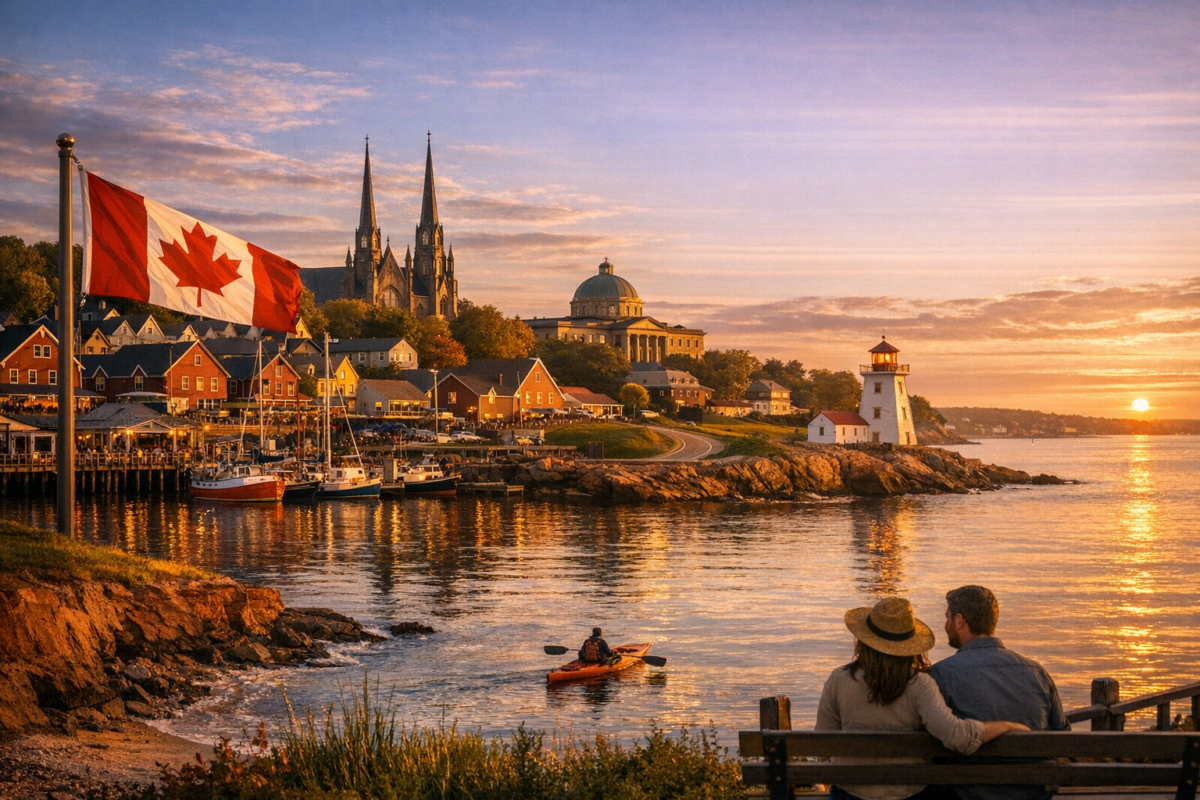
Charlottetown – Canada’s Birthplace
Charlottetown is PEI’s capital and Canada’s smallest provincial capital – a compact, walkable city of Georgian brick buildings, a waterfront that has been entirely revitalised, and a creative arts scene that belies the city’s size. Province House (free), where the Confederation conferences were held in 1864, has been immaculately restored and is one of the finest examples of neoclassical civic architecture in Atlantic Canada. The Confederation Centre of the Arts adjacent to it hosts the annual Anne of Green Gables Musical every summer – an institution in its 60th year and the best-attended summer theatre production in Canada.
Cavendish and Green Gables Heritage Place
L.M. Montgomery’s Anne of Green Gables novels (1908-1921) created a version of PEI that has drawn visitors from Japan, South Korea, and around the world for decades – the specific pastoral-romantic image of red soil roads, white clapboard farmhouses, and silver birch forests reflected in ponds is both literary invention and landscape reality. Green Gables Heritage Place (CA$8.50, Parks Canada) in Cavendish is the farm that inspired the novels, and the pilgrimage of Anne-obsessed visitors from East Asia who visit in cosplay is itself one of the more extraordinary cross-cultural phenomena in Canadian tourism.
The PEI National Park shoreline north of Cavendish has some of the finest beaches in Atlantic Canada – fine red-tinged sand, warm (for Atlantic Canada: 20-22°C in August) water, and dunes covered in wild roses and marram grass. The park day-use fee is CA$9 per person.
Food Note: PEI is where you eat lobster and Malpeque oysters in their best possible state. The PEI Lobster Roll – cold poached lobster in a mayonnaise dressing in a buttered split-top bun – costs CA$22-32 at a good lobster shack and is one of the definitive Maritime food experiences. The Claddagh Oyster Bar in Charlottetown serves Malpeque oysters for CA$3-4 each. A plate of a dozen oysters and a glass of Nova Scotia white wine on the Charlottetown waterfront is one of the great simple pleasures available in Atlantic Canada.
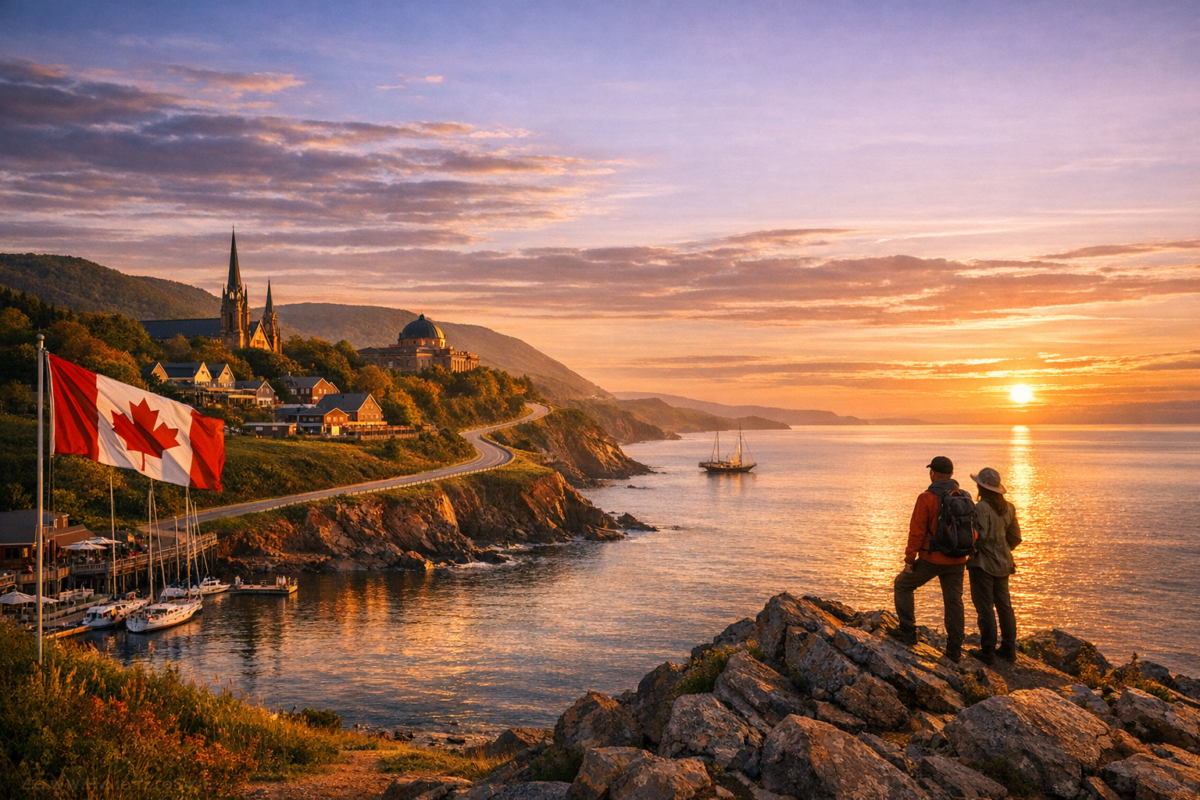
6. The Cabot Trail – Cape Breton Island – Days 9-11: The Most Spectacular Drive in Eastern Canada
Cape Breton Island is connected to mainland Nova Scotia by the Canso Causeway and is, by most measures, the most dramatic landscape in Atlantic Canada. The northern tip of the island – where the Cabot Trail circles the Cape Breton Highlands – has a combination of highland plateau, spectacular sea cliffs, deep-cut river gorges, and the Atlantic Ocean on three sides that puts it in a category of coastal mountain drives usually reserved for Norway, Scotland, or New Zealand.
The Cabot Trail is a 300km circular highway around the northern tip of Cape Breton Island, taking in the Cape Breton Highlands National Park, the Acadian French communities of the Chéticamp area, the Scottish-heritage Gaelic communities of the northeast, and a series of lookoff viewpoints that give sea and mountain views comparable to anything in the Maritime region.
Driving the Cabot Trail: The Essential Stops
- Cabot Trail Highlands: The drive from Chéticamp up the western escarpment – hairpin curves, a plateau at 445 metres with views over the Gulf of St Lawrence, then descent into Cape North – is the most dramatic section. Drive counter-clockwise (Chéticamp first) for the best sea views on the climb.
- French Mountain Lookoff: The first major viewpoint on the western ascent – looking back over Chéticamp and the Acadian coast. Stop here regardless of how many stops you think you have time for.
- Cape Breton Highlands National Park: CA$9 per person daily fee, Discovery Pass accepted. The Skyline Trail (8km return, 2.5 hours, to a cliff edge above the Gulf of St Lawrence) is the signature hike and must be booked in advance in summer. Moose are reliably seen from the trail in early morning.
- Meat Cove: The most remote and spectacular camping location on Cape Breton – a small cove at the extreme northern tip of the island accessible by 10km of rough gravel road. The campground (CA$30/night) sits above the meeting of the Atlantic and the Gulf of St Lawrence. Worth the detour.
- Ingonish Beach: The finest beach on Cape Breton’s Atlantic coast, within the national park. Fresh and salt water swimming available (the lake behind the beach is significantly warmer than the ocean). Free with park pass.
- Cabot Trail Whisky: The Cabot Trail Distillery in Englishtown and the Glenora Distillery in Glenville (Canada’s only single malt whisky distillery, producing since 1990) both offer tours and tastings. The Glenora is on the western section of the trail – worth timing a stop.
Whale Watching from Pleasant Bay
Pleasant Bay, on the western side of the Cabot Trail, is one of the finest whale watching locations in Atlantic Canada. Pilot whales (short-fin pilot whales in pods of 20-100+) are reliably present June through October; minke whales, fin whales, and occasional humpbacks are also sighted regularly. Whale Interpreting Centre tours run from the harbour at CA$25-35 per person – small boats that get genuinely close to the animals in open water.
Local Insight: The Highland Village Museum in Iona (off the Cabot Trail, south side of Bras d’Or Lake) is an outdoor living history museum that recreates the experience of Cape Breton’s Scottish Gaelic settlers across different periods from the 1700s to the early 20th century. Gaelic is still spoken as a first language by some Cape Breton residents – a cultural persistence that is genuinely remarkable given the distance from Scotland and the passage of time.
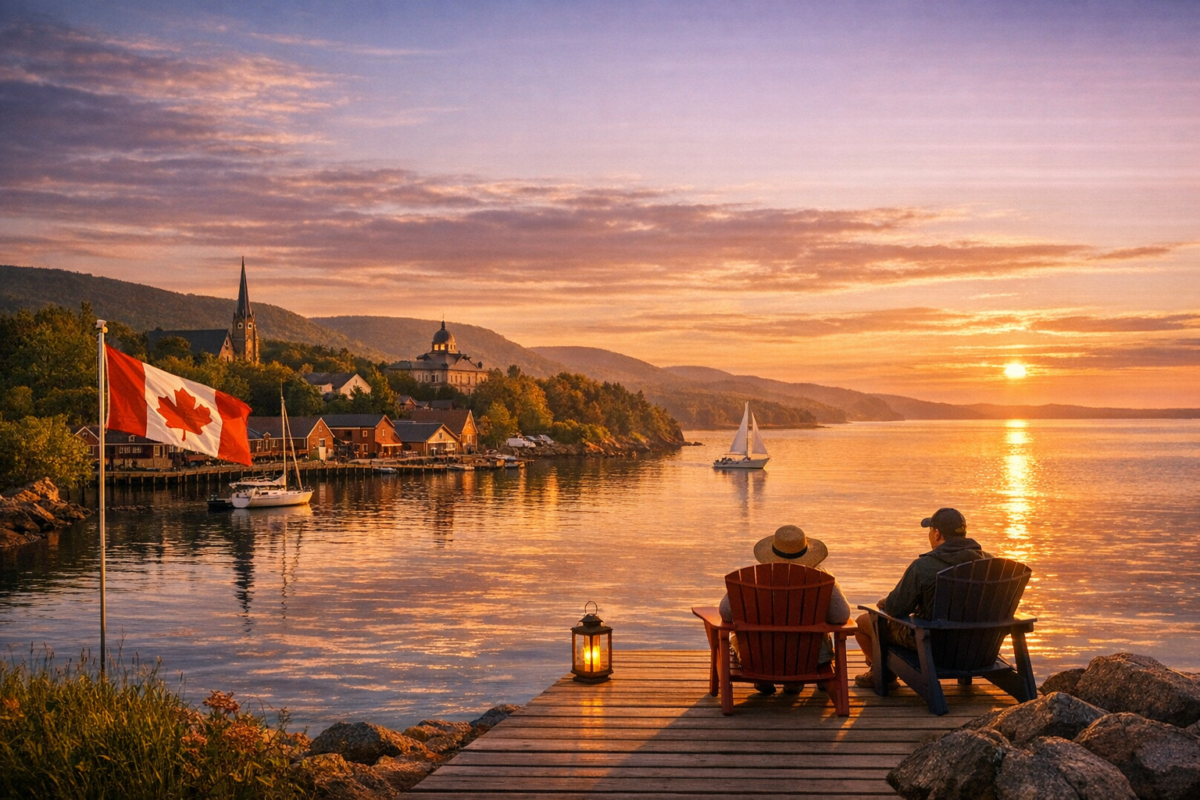
7. The Bras d’Or Lakes and Baddeck – Day 12: The Inland Sea
The Bras d’Or Lakes is a 1,100-square-kilometre brackish inland sea in the centre of Cape Breton Island – connected to the Atlantic through two narrow channels, tidal but contained, and one of the most beautiful sailing destinations on the eastern seaboard. The town of Baddeck on its northern shore is where Alexander Graham Bell spent the last 37 years of his life, conducting experiments in aviation, hydrofoils, and communications technology in a laboratory overlooking the lake.
The Alexander Graham Bell National Historic Site in Baddeck (free, Parks Canada) is one of the finest science history museums in Canada – Bell’s experimental aircraft, telephone variations, and tetrahedral kite structures are displayed alongside the extraordinary breadth of his intellectual interests. Bell’s first telephone patent was filed in 1876; he died in Baddeck in 1922 still actively working. The site looks over the lake and the hills of the Cape Breton interior in a setting that makes immediately obvious why he came here and did not leave.
Baddeck has excellent accommodation, good seafood restaurants, and a relaxed pace that makes it one of the finest places on the Cabot Trail circuit to spend an extra night. The Baddeck Cabot Trail Hostel is consistently rated one of the best hostels in Atlantic Canada – well-equipped, well-located, and genuinely friendly in the way that Maritime hospitality reliably is.
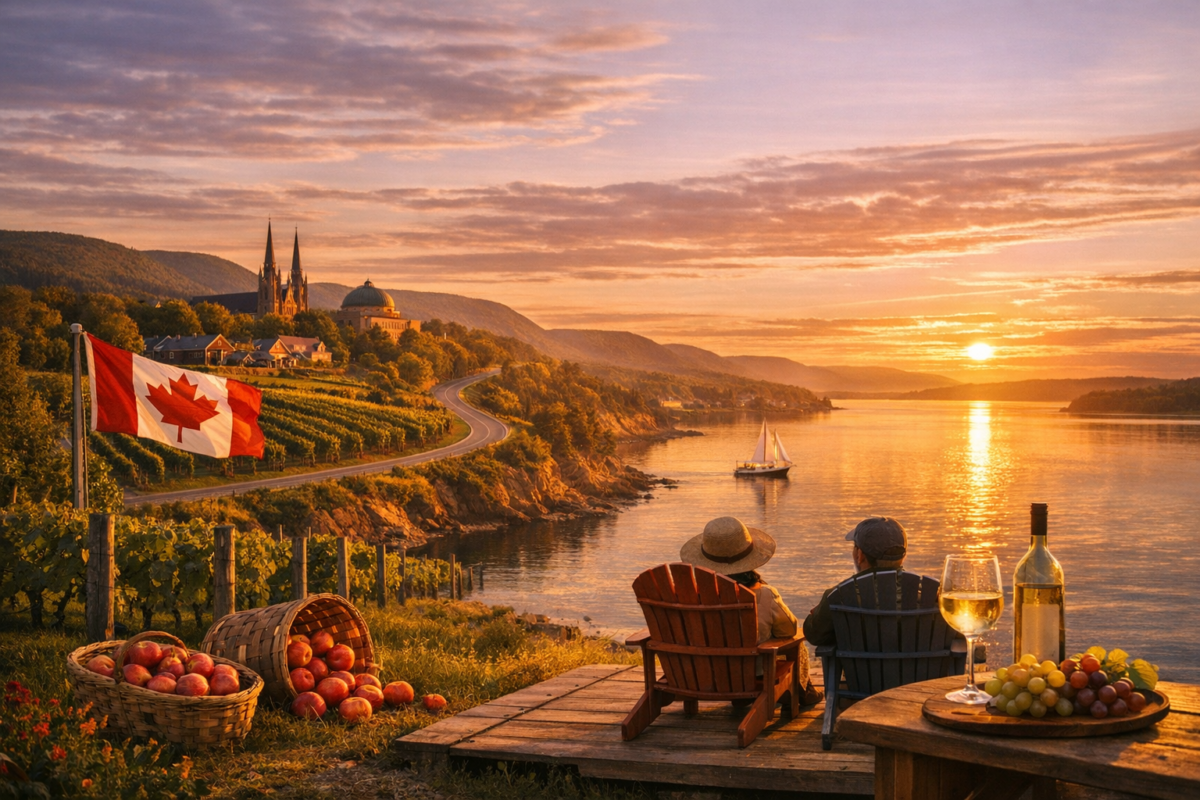
8. The Annapolis Valley and Back to Halifax – Days 13-14: Apples, Wine, and the Tidal Bore
The return drive to Halifax along the north shore of Nova Scotia takes you through the Annapolis Valley – the agricultural heart of Nova Scotia, sheltered between two mountain ridges, warm enough to grow apples and grapes, and home to a wine industry that has developed significantly over the last twenty years.
Nova Scotia’s wines – particularly the sparkling wines (the cool climate and chalk-influenced soils of the Gaspereau Valley produce wines compared to Champagne by the people who make them) and the Tidal Bay whites (a Nova Scotia-specific designation) – are available at wineries along the Farmhouse Inn Wine Route and the Gaspereau Valley wineries near Wolfville. The Luckett Vineyards, Benjamin Bridge (the finest sparkling wine producer), and L’Acadie Vineyards (organic, biodynamic) are the wineries most worth stopping at.
The Grand Pré National Historic Site near Wolfville (free, Parks Canada) is one of the most historically significant and quietly heartbreaking sites in Atlantic Canada – it marks the location of the 1755 Acadian Deportation, when the British expelled the French-speaking Acadian population who had farmed this land for generations, scattering them across the eastern seaboard. The memorial gardens and the church reconstruction are simple and moving in a way that lets the weight of the history settle without theatrics.
Practical Maritime Road Trip: Everything You Need to Know
Getting to Halifax
Halifax Stanfield International Airport (YHZ) has direct flights from London (Air Canada and British Airways via seasonal routes), New York, Boston, Montreal, and Toronto. It’s the logical start and end point for the Maritime loop. Search for the best fares on Aviasales and earn cashback on every booking with WayAway. If your flight is disrupted, AirHelp handles compensation claims on a no-win-no-fee basis.
Car Rental
A rental car is essential – the Maritime Provinces have minimal intercity public transport and many of the best experiences (Hopewell Rocks, Cabot Trail, Annapolis Valley wineries) are accessible only by car. Compare prices at GetRentACar and book 3-4 weeks ahead for summer dates. For airport transfers on arrival before picking up a rental, GetTransfer offers pre-booked private cars from Halifax Airport.
Best Time to Visit
- July–August (Peak Season): Best weather, all attractions open, lobster season in full swing, highest accommodation prices. Book 4-6 weeks ahead.
- June (Ideal Balance): Spring wildflowers, manageable crowds, lupins blooming along Nova Scotia roadsides in a display that stops traffic. Lower accommodation prices than July. Whale watching season starting.
- September-October (Best Overall): Autumn foliage – the Maritime fall colour peaks mid-October and rivals New England at a fraction of the crowd. Seafood still excellent. Accommodation prices dropping from mid-September.
- May (Early Season): Quiet, fresh, some attractions not yet open. Good for budget travellers.
Pro Tip: Check current Maritime weather using our Weather Checker before planning day activities. Maritime weather can be foggy and wet regardless of season – the sea fog that rolls in from the Atlantic is famous and beautiful but limits visibility at Peggy’s Cove and on the Cabot Trail viewpoints. Check the forecast and build flexibility into each day.
What the Maritime Road Trip Costs
- Car rental (10 days): CA$400-600 via GetRentACar
- Fuel (2,000km approximately): CA$200-280
- Accommodation (budget B&B or hostel, 9 nights): CA$700-1,100
- Food (self-catering breakfast, restaurant lunch and dinner): CA$600-900
- Activities and entry fees: CA$150-250 (many are free or Parks Canada Discovery Pass covered)
- TOTAL (solo, 10 days): CA$2,100-3,100 excluding flights
Pro Tip: The Canada Discovery Pass (CA$75.25 for adults, valid for 12 months) covers entry to all national historic sites and national parks in the Maritime Provinces – Cape Breton Highlands National Park, PEI National Park, Province House, Green Gables Heritage Place, Alexander Graham Bell NHS, Grand Pré NHS, and more. It pays for itself within the first two days of the route.
Connectivity
Cell coverage is good on main highways and in cities, patchy in rural Cape Breton and along the Fundy Trail. Download offline maps before remote drives. Airalo and Yesim offer Canada eSIM packages – activate before flying from home. For streaming access while in Canada, NordVPN works on Canadian networks.
Travel Insurance
Canadian healthcare is excellent for residents but costs for international visitors without insurance are significant. Ekta Travel Insurance offers flexible single-trip policies covering medical, rental car excess, and trip cancellation – essential for any Canadian road trip.
Luggage Storage
If you are spending extra time in Halifax at the start or end of the trip, Radical Storage has locations in the city for day-of storage before or after the road trip begins.
Tours and Experiences
For guided whale watching at Pleasant Bay and the Cabot Trail, guided kayaking at Hopewell Rocks, and guided Acadian and Mi’kmaq cultural experiences, WeGoTrip has a growing Atlantic Canada catalogue. For concerts, traditional music sessions (the Cape Breton fiddle and Acadian folk music scenes are both extraordinary), and Celtic festivals, Ticket Network covers major Maritime venues.
Plan Your Maritime Road Trip with These Free Tools
- AI Travel Budget Estimator – calculate your complete Maritime road trip budget including flights, car, accommodation, food, and activities
- Live Currency Converter – real-time CAD conversion from USD, GBP, EUR, AUD, and all major currencies
- Weather Checker – check conditions by region – essential for timing Cabot Trail drives and Fundy tidal visits
- Packing List Generator – custom Maritime road trip packing list for variable Atlantic weather – waterproofs always required
- Travel Planning Services – need a custom Maritime itinerary built around your dates and interests? Our team builds them end to end
- More Destination Guides – our full library of Canada, USA, and worldwide destination guides
- Budget Travel Hub – money-saving strategies for Canadian road trips and every destination we cover
Frequently Asked Questions
Q1: How many days do you need for the Maritime Provinces road trip?
Ten days is the minimum to cover Halifax, the South Shore, the Bay of Fundy, PEI, and the Cabot Trail without feeling rushed. Fourteen days allows a relaxed pace with extra nights in Lunenburg, Baddeck, and PEI, plus side trips to the Annapolis Valley and a possible ferry crossing to Newfoundland. Two weeks is the sweet spot for most visitors – enough to feel each province rather than just pass through it.
Q2: When is lobster season in the Maritime Provinces?
Maritime lobster seasons are strictly regulated and vary by specific zone, but the broad picture: spring lobster season runs approximately May-June across much of Nova Scotia and New Brunswick. Fall season runs approximately November–January. Prince Edward Island’s main season runs late April-June. Fresh, live lobster is available in restaurants year-round (frozen from other seasons), but visiting during spring or fall season means the lobster was in the water that morning and costs less. The distinction is significant and worth timing a trip around.
Q3: Is the Cabot Trail suitable for all drivers?
The Cabot Trail is a public highway, fully paved, and suitable for any vehicle including rental cars, motorhomes, and bicycles. The western section (Chéticamp to Pleasant Bay) has steep grades and tight curves on the mountain ascent that require reduced speed and gear management in a manual car, but are entirely safe at normal driving pace. Allow 2-3 days to do the full 300km circuit properly rather than driving it in a day, which is physically possible but misses everything that makes it worth doing.
Q4: Do I need to cross any borders on this road trip?
The basic Maritime loop (Halifax → South Shore → Bay of Fundy → Fredericton → PEI → Cape Breton → Halifax) stays entirely within Canada. The only international border crossing on the natural extension of this route is into the USA via the Trans-Canada highway through New Brunswick – which many travellers do when extending the trip to include Maine or New England. The Confederation Bridge crossing from New Brunswick to PEI is not a border – both sides are Canadian provinces.
Q5: What is the best thing to eat in each Maritime province?
Nova Scotia: Lunenburg chowder (smoked fish base, unlike the cream chowders of New England), lobster in any form, and Donair in Halifax. New Brunswick: Fiddleheads (wild fern fronds, a New Brunswick spring specialty), poutine (the province is close enough to Quebec to take it seriously), and the Shediac lobster (Shediac, NB, calls itself the lobster capital of the world). Prince Edward Island: Malpeque oysters, PEI mussels (some of the finest in the world), and the PEI lobster roll. Across all three provinces: the seafood chowder available at every waterfront restaurant is among the finest you will eat anywhere on the Atlantic coast.
Q6: Is it worth adding Newfoundland to the Maritime road trip?
Yes, if you have the time. The MV Blue Puttees ferry from North Sydney, Nova Scotia, to Argentia, Newfoundland, takes 14-16 hours and opens up a province that is genuinely unlike any other in Canada: dramatic North Atlantic cliffs, icebergs drifting past the coast in June, puffin colonies in their millions, the most distinctive dialect of English in North America, and a culture of hospitality that defines the word in a way the Maritime provinces understand but rarely surpass. Allow at least 5 additional days for a meaningful Newfoundland extension.
Final Thoughts: The Maritimes Will Slow You Down – That’s the Point
There is a pace to Maritime Canada that is different from the pace of most modern travel. The roads are slower. The distances between significant towns are longer. The people stop to talk to you – genuinely, unhurriedly, with genuine curiosity about where you’re from and where you’re going – in a way that happens less and less in the parts of the world that tourism has polished smooth.
I have done this road trip three times and the thing that stays with me most isn’t the lighthouse at Peggy’s Cove or the view from the French Mountain Lookoff or even the lobster that morning in Cape Breton (though the lobster is extremely present in the memory). It’s the conversations. The man at the Hopewell Rocks who explained the tide tables with the specificity of someone who has spent forty years watching the same water. The innkeeper in Baddeck who pulled out a hand-drawn map of Cape Breton’s interior salmon rivers and asked me twice if I was sure I did not want to extend my stay by a day. The French-speaking fisherman in Chéticamp who insisted on buying coffee before telling me which road to take to the best whale-watching cliff that didn’t appear on any tourist map.
The Maritimes reward slowness. They reward the kind of travel that makes space for the conversations to happen. Two weeks is better than ten days. Staying somewhere an extra night is almost always the right decision. The road will still be there in the morning.
Start planning your Maritime road trip today. Find the best flights on Aviasales, earn cashback with WayAway, compare car rentals at GetRentACar, book accommodation via Hotellook, sort your airport transfer with GetTransfer, activate your eSIM with Airalo or Yesim, and protect the whole trip with Ekta Travel Insurance. Browse our full Destination Guide Library and budget travel hub for more.
Céad Míle Fáilte — a hundred thousand welcomes.
Hidden Travels Team | hiddentravels.site