
Affiliate Disclosure: Some links in this post are affiliate links – we earn a small commission if you book through them, at no extra cost to you. We only recommend services we genuinely use and trust.
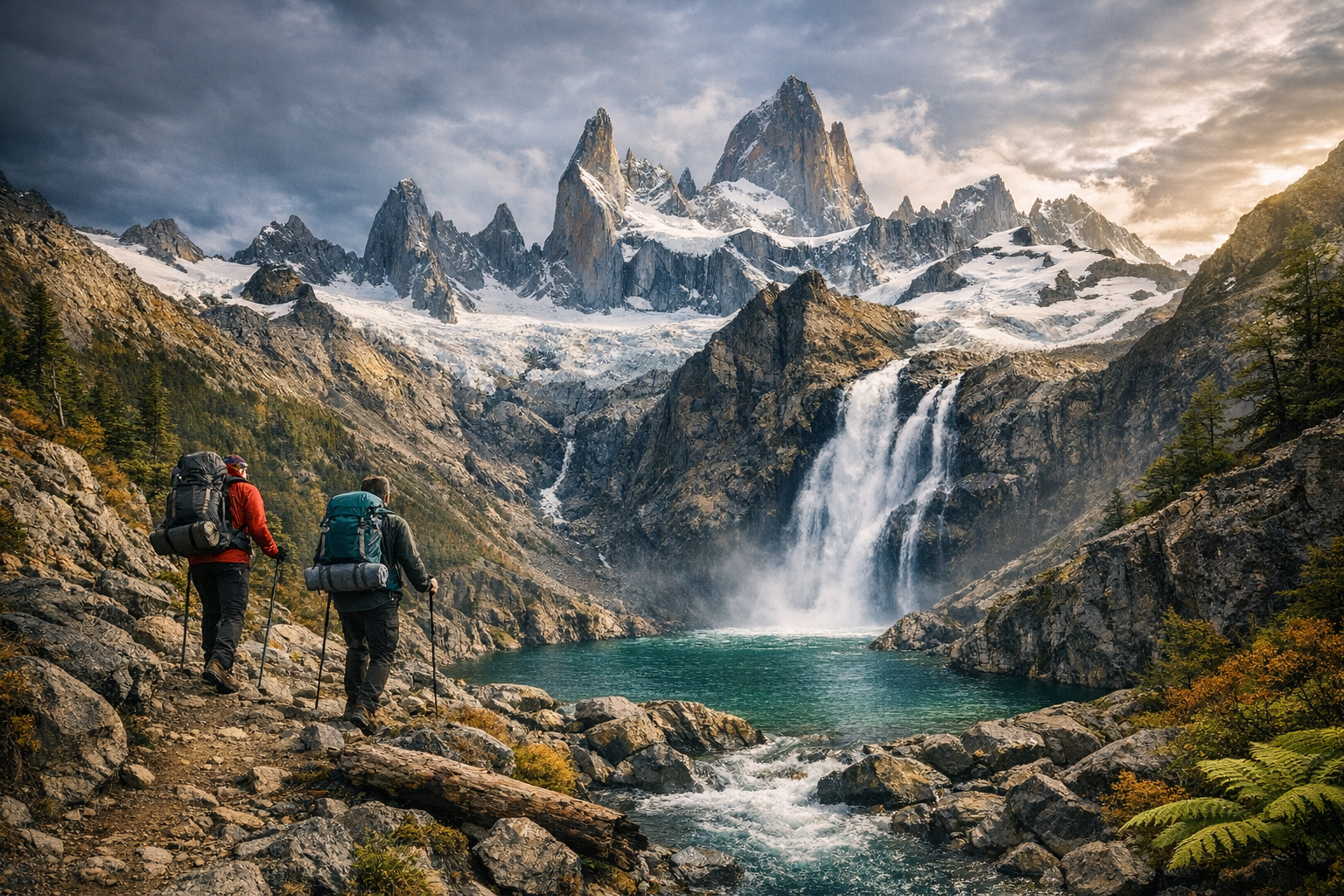
The first morning on the W Trek in Torres del Paine, I walked out of my sleeping bag and tent at 5:45am into a cold that had teeth in it, and I looked up and saw the Torres.
The Torres del Paine are three vertical towers of pale granite – the Paine Massif – that rise 2,500 metres from the Patagonian steppe into a sky that, at that particular hour, was the specific blue that exists only when the sun is very recently risen and the air has not yet been touched by the wind that will spend the rest of the day rearranging the landscape. The towers were lit from the east in amber and gold. A condor was riding a thermal above the left-hand tower. The lake below us was still.
I had travelled for 36 hours from London to get to that tent, on that particular morning, in that particular cold. And standing there, still in a sleeping bag liner and two merino layers, watching the light move on granite that has been that shape for millions of years, I understood completely why people come to Patagonia from the far side of the planet and find that it was worth it.
Patagonia – the vast, wind-scoured, glacier-studded wilderness that occupies the southern third of South America, split between Chile and Argentina – is the last great adventure travel destination that still feels genuinely remote and genuinely overwhelming. It is not a destination for the passive tourist. The logistics are real, the weather is genuinely extreme, the distances are genuinely vast. But what it gives in return – landscapes of a scale and drama that have no equivalent in the accessible world – is unlike anything else that travel currently offers.
This guide covers everything you need to plan a Patagonia adventure trip – the essential experiences, the practical logistics, the real costs, and the specific knowledge that makes the difference between a Patagonia trip that lands and one that is undone by bad planning.
Pro Tip: Before you plan, use our AI Travel Budget Estimator to build a realistic Patagonia trip budget. Patagonia costs more than most South American destinations – planning the numbers before committing prevents the most common planning mistakes.
Why Patagonia Is Different From Every Other Adventure Destination
Most adventure travel destinations have a formula: spectacular scenery, organised trekking infrastructure, predictable weather windows, and a well-worn circuit of experiences that sufficient planning will reliably deliver. Patagonia has some of this – the Torres del Paine W Trek and O Circuit are among the most organised multi-day hikes in South America. But Patagonia also has something that those destinations generally don’t:
Genuine unpredictability. The Patagonian weather system – where Antarctic fronts collide with Pacific moisture against the Andes – produces conditions that can change from clear and calm to 100km/h horizontal rain within thirty minutes, and then reverse back to sunshine within another twenty. This is not a metaphor or an exaggeration. It is the single most important fact about Patagonia and the one that most first-time visitors underestimate.
But this unpredictability is also part of what makes Patagonia Patagonia. The wind that nearly knocks you sideways on the Valle del Francés ridge is the same wind that has been carving these landscapes for millions of years. The rainbow that appears over the Perito Moreno Glacier as the front passes is something you could not have planned or bought. The condor that lands 30 metres from you on a rocky outcrop because the wind has pushed it there – that only happens in weather that makes everything else difficult. The extremity of the landscape and the extremity of the conditions are inseparable.
Local Insight: Patagonians have a word for the specific quality of light that appears after a storm front passes – when the air is newly washed and the glaciers glow and the granite towers appear almost luminous against a deep blue sky. They call it la luz de Patagonia and it is, by common agreement, the most extraordinary light available to the naked eye in the southern hemisphere. You can’t plan for it. You simply have to be there long enough for it to find you.
The Essential Patagonia Adventure Experiences
1. The W Trek – Torres del Paine National Park – Chilean Patagonia
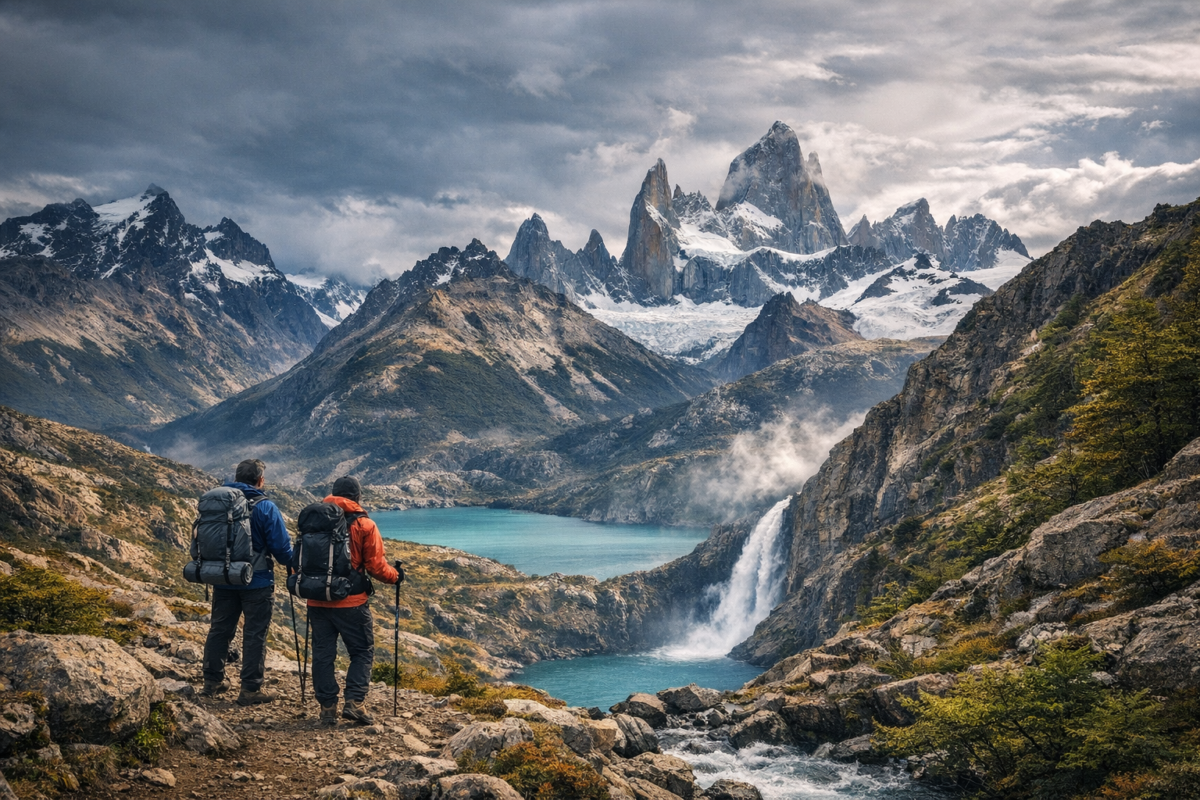
The W Trek is the defining multi-day hike in South America – a 4-5 day circuit through Torres del Paine National Park that traces the shape of a W across the park’s three main valleys, visiting the base of the Torres towers, the Cuernos horns, the Valle del Francés glacier viewpoint, and the Grey Glacier. It is not the most technically demanding long-distance hike in Patagonia. It is, however, the one that most reliably delivers the complete Patagonian experience: dramatic granite peaks, glacial lakes in every shade of turquoise and grey, ancient beech forest, open steppe, and – unavoidably – the wind.
The trek can be done in either direction (most guides recommend east to west, ending at the Torres viewpoint at sunrise on day one or sunrise on the last morning). Accommodation is either in the CONAF-managed refugios (dorm beds with meals, CA$50,000–80,000 CLP per night with half board) or free camping at the designated campsites along the route. Booking is absolutely essential – the refugios and official campsites are fully booked 6+ months ahead for the November–March high season.
The Torres Sunrise – Non-Negotiable
The classic Torres sunrise – reaching the mirador at the base of the towers in time for the first light on the granite – requires leaving your camp at Refugio Torre Central (or camping at Mirador Las Torres) at 5-5:30am. The walk to the mirador takes 1.5-2 hours. In good weather, the reflected pink-to-orange progression of the light on the towers above Laguna Torres is one of the defining natural spectacles in the world. In bad weather, you see nothing but grey and feel the full weight of having walked 1.5 hours uphill in the dark for it. This also happens to people. Come back the next morning.
Heads Up: Torres del Paine requires a daily entry fee (approximately USD $35 in high season) plus campsite/refugio booking fees that together make it one of the more expensive national parks in South America. Budget USD $150–250 per day on the W Trek including accommodation, meals, and park entry. Book the entire trek — campsites and refugios – on the CONAF and Vertice Patagonia websites at least 6 months ahead for December-February dates.
Pro Tip: The W Trek is 5 days and 4 nights for most people. Adding 2 extra days to reach the Grey Glacier viewpoint properly and to allow a second attempt at the Torres sunrise in case of cloud on the first morning is strongly recommended. Budget the extra time rather than trying to rush the itinerary.
2. The O Circuit – Torres del Paine’s Back Side – Chilean Patagonia
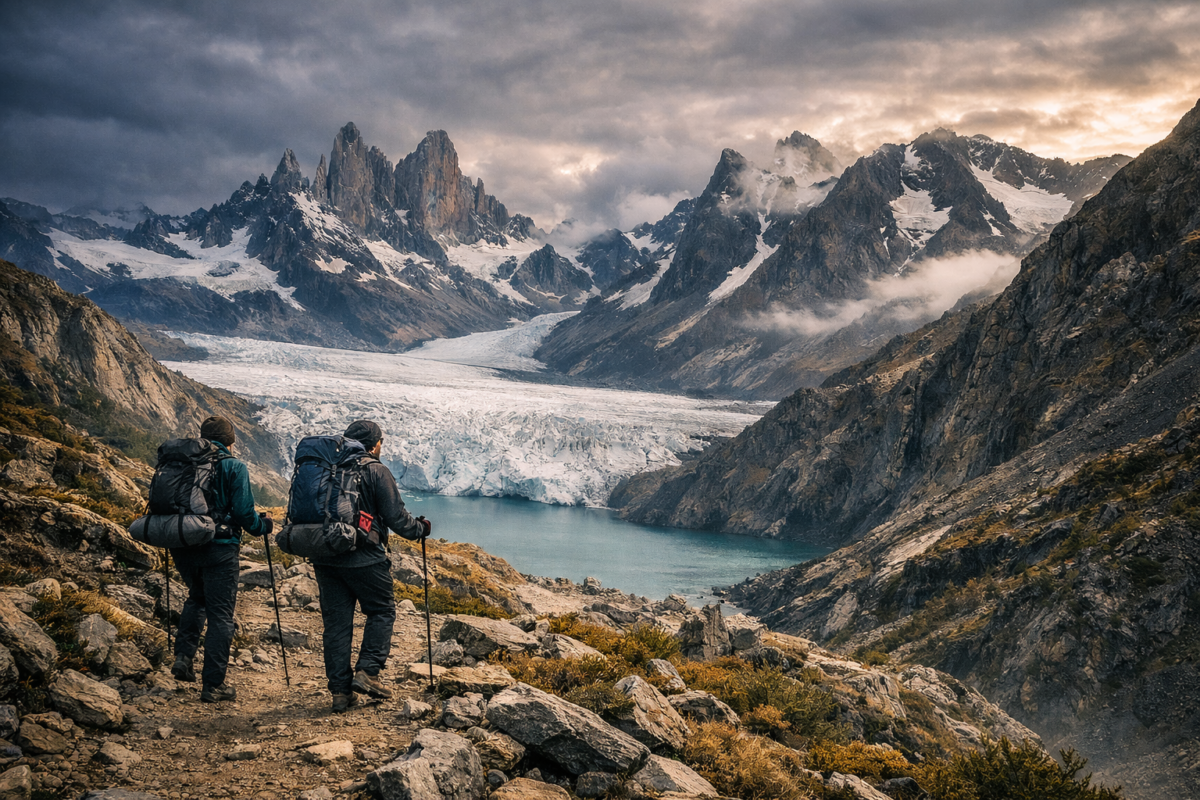
The O Circuit adds 4-5 days to the W Trek by continuing around the back of the Paine Massif on a route that most W Trekkers never see – and that many experienced Patagonia trekkers consider more rewarding than the W itself. The back circuit covers the John Gardner Pass (the highest point on any official Patagonia trek, with views over the Southern Patagonian Ice Field that are genuinely overwhelming), the remote Dickson and Los Perros campsites, and the long walk along the shore of Lago Dickson with the massif across the water.
The back circuit is harder, longer, and more exposed than the W. The John Gardner Pass section requires crossing a boulder field and climbing through steep terrain that becomes dangerous in heavy rain. It is not suitable for inexperienced trekkers and requires both good fitness and good weather judgment. For those who are ready for it, the full O Circuit (8-10 days) is one of the great long-distance treks in the world.
3. Perito Moreno Glacier – Argentine Patagonia, Los Glaciares National Park
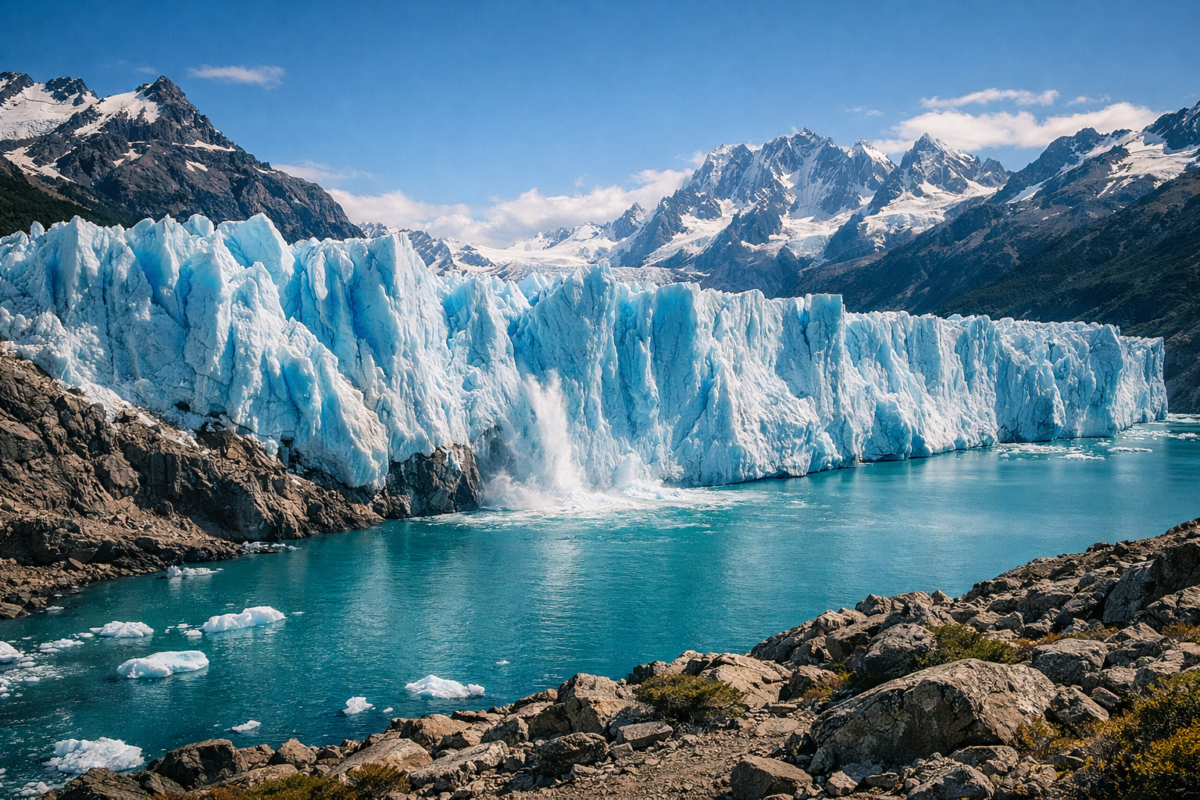
The Perito Moreno Glacier is 30 kilometres long, 5 kilometres wide, and 60 metres high at its face – and it is one of the very few glaciers in the world that is neither retreating nor advancing but maintaining a rough equilibrium, which means it periodically calves enormous blocks of ice into Lago Argentino in a process of constant, thunderous renewal.
Standing on the viewing walkways above the glacier face when a calving event happens – which is unpredictable, impossible to anticipate, and can involve a block of ice the size of a house separating from the face in a roar that takes ten seconds to travel the 300 metres of lake to where you’re standing – is one of the most physically exciting moments available to a traveller in South America. The glacier is accessible from El Calafate by a 90-minute bus ride. Entry to Los Glaciares National Park is approximately USD $20 per person.
Wildlife Note: The lake at Perito Moreno’s face supports a significant population of Andean condors – the largest flying bird in the world, with a wingspan up to 3.3 metres. They ride the thermals above the glacier face using the cold air rising off the ice. If the glacier isn’t calving, watching condors soar at close range above a wall of blue ice for an hour is adequate compensation.
4. El Chaltén and the Fitz Roy Massif – Argentine Patagonia
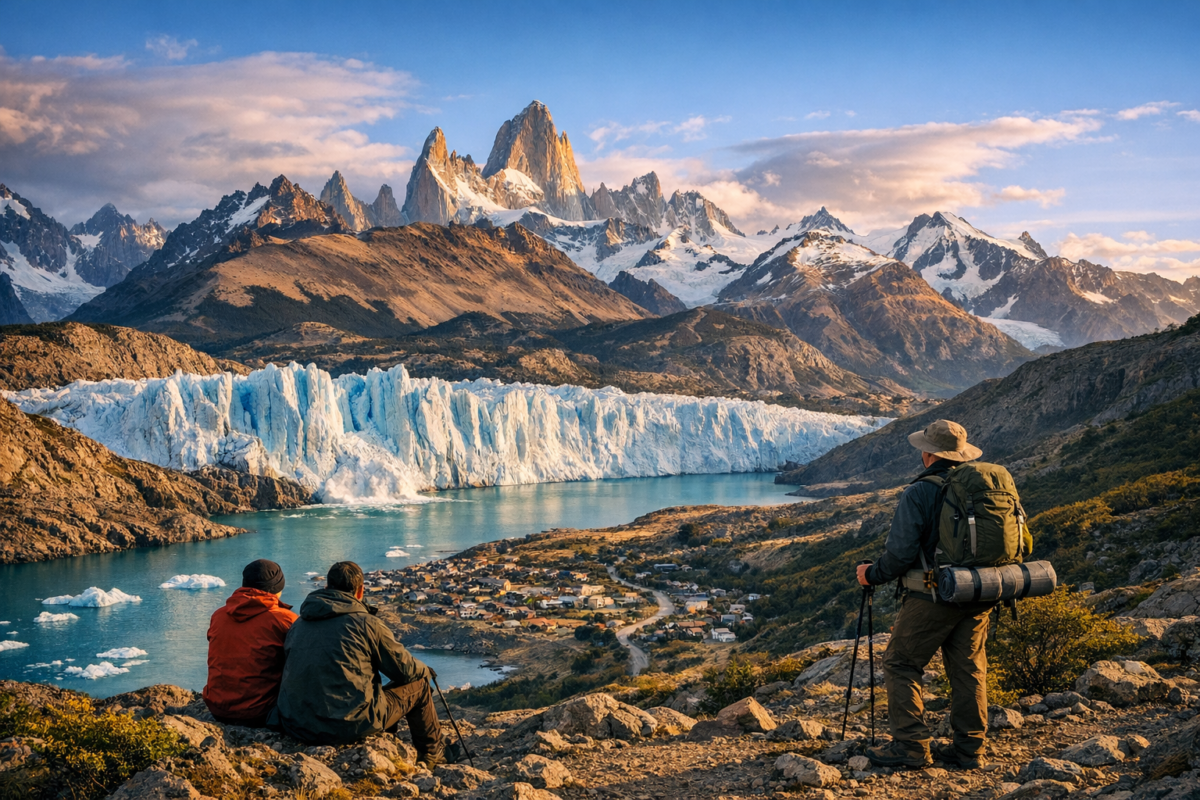
If Torres del Paine is Patagonia’s most famous trekking destination, El Chaltén is its best-kept secret – a small village of 1,800 people at the foot of the Fitz Roy and Cerro Torre massifs in Los Glaciares National Park that was founded as recently as 1985 and has become one of the world’s premier destinations for hiking, climbing, and mountaineering.
The Laguna de los Tres day hike – 22km return, 750m elevation gain, finishing at a turquoise glacial lake directly below the vertical north face of Fitz Roy (3,405m) – is the finest day hike in Argentina and one of the finest in South America. The mountain’s silhouette – a jagged tower of reddish granite rising from the steppe like something from another planet – is the image that defined Patagonia in the collective imagination before Torres del Paine became famous. Bruce Chatwin used it on the cover of In Patagonia. The Patagonia clothing brand used it as their logo. Neither captures what it looks like from 200 metres below its north face on a clear morning.
El Chaltén’s hiking trails are completely free – no permit, no entry fee, no reservation. You arrive, you walk, you see Fitz Roy. This is rare in 2025 Patagonia and is a significant financial and logistical advantage over Torres del Paine.
Pro Tip: The Laguna Torre day hike (20km return to the base of Cerro Torre – a perfectly vertical granite needle that was one of the most contested mountaineering prizes of the 20th century) is slightly less famous than Laguna de los Tres and slightly more reliably uncrowded. On a clear day with both hikes scheduled, do Laguna Torre in the morning (better light on Cerro Torre in the morning) and Laguna de los Tres in the afternoon (Fitz Roy catches the sunset light from the west).
5. Peninsula Valdés – Whale and Wildlife Capital – Argentine Patagonia
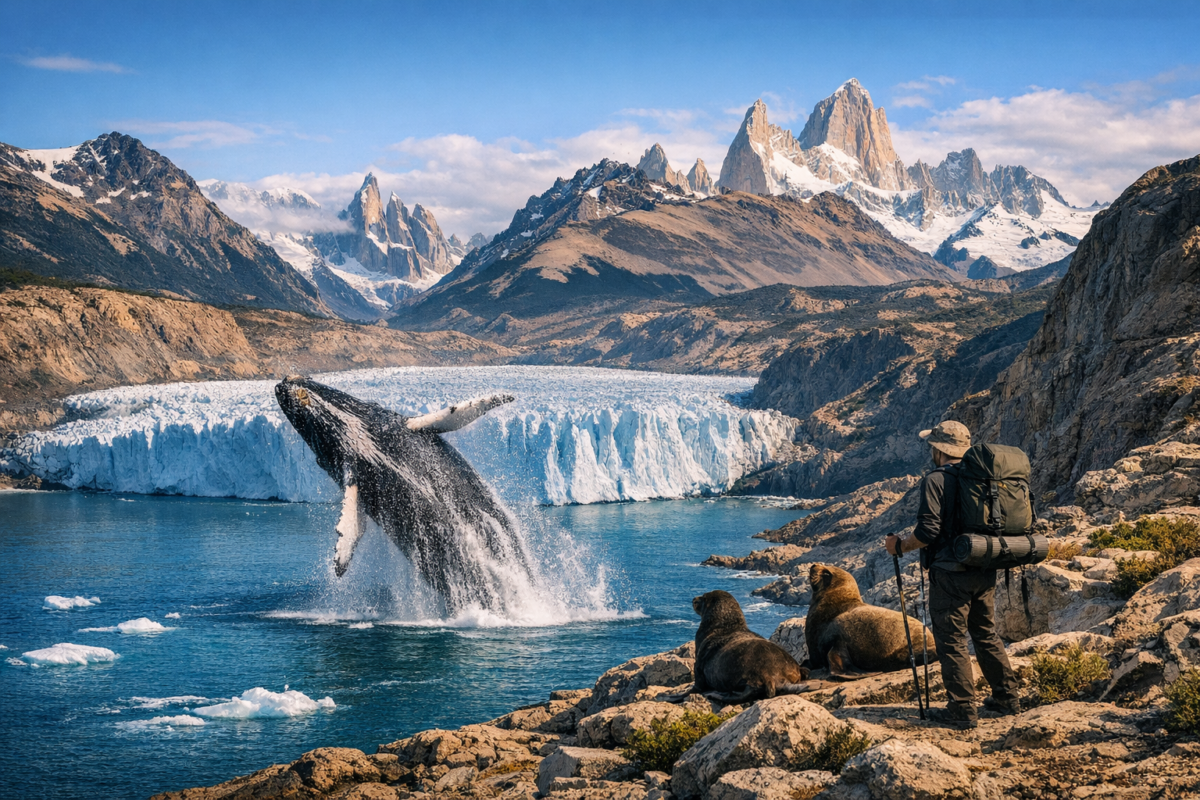
Peninsula Valdés is a UNESCO World Heritage Site on Argentina’s Atlantic coast – a flat, scrubby headland that projects into the South Atlantic and creates one of the greatest wildlife concentration points in the Southern Hemisphere. It’s a different Patagonia from the mountain and glacier world of the south: open, semi-arid, and teeming with life that uses its remoteness as a refuge.
Southern right whales (June–December, peak September-October) come to the sheltered gulfs of Península Valdés to mate and give birth – the only confirmed land-adjacent whale nursery in the world, where mothers and calves stay in shallow water for months. Boat tours approach within 10 metres of animals that can reach 18 metres in length and can be heard breathing from the shore.
Orca hunting (February–April) is Peninsula Valdés’s most extraordinary spectacle — orcas intentionally beach themselves on Punta Norte and Caleta Valdés to hunt sea lions in the surf, running themselves deliberately onto dry land and wriggling back to sea. This behaviour is unique to this population of orcas in the world. When the tide and the sea lion pups cooperate, it is one of the most dramatic wildlife events available on the planet.
Wildlife Note: Peninsula Valdés also has the world’s largest Magellanic penguin colony at Punta Tombo (outside the peninsula but nearby) – 1.2 million penguins during October and November. Walking among Magellanic penguins – which are completely unafraid of humans and will treat your boots as an obstacle to walk around rather than a threat – is one of those experiences that resets what ‘wildlife encounter’ means.
6. Ice Trekking on Perito Moreno – Walking on 30,000-Year-Old Ice – Argentine Patagonia
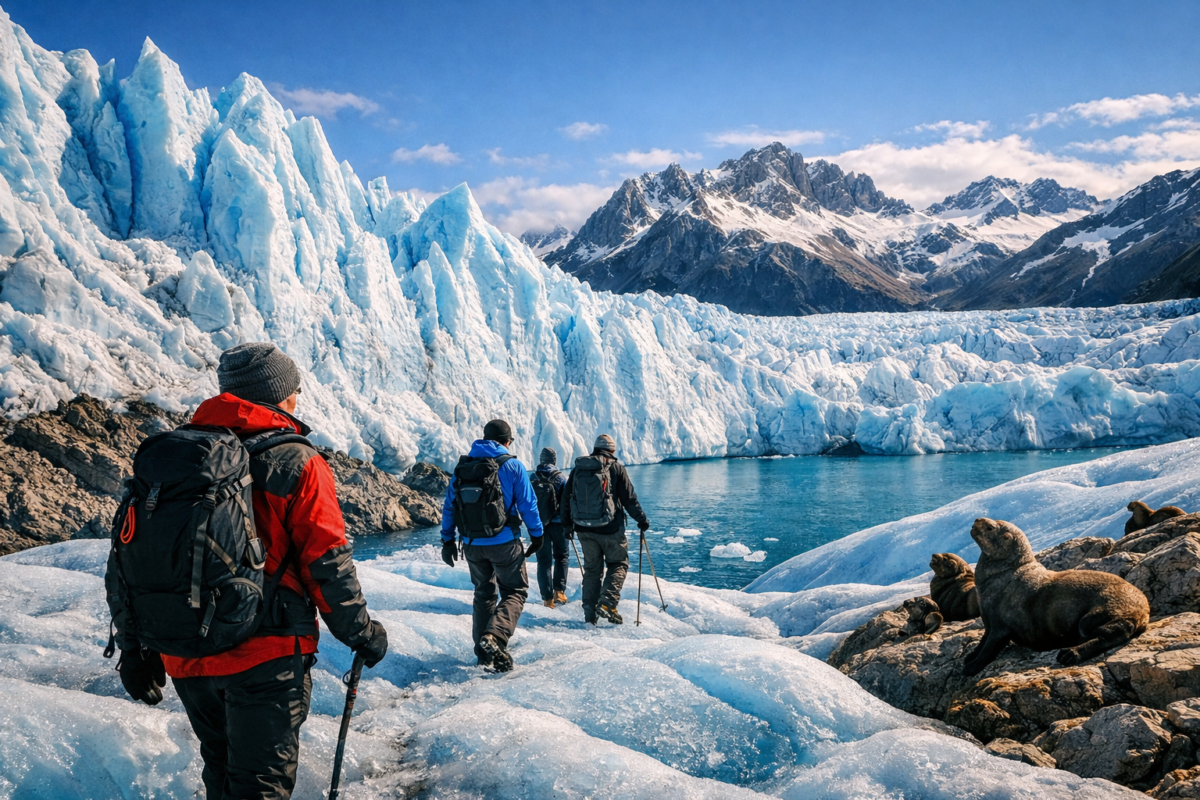
The standard Perito Moreno viewwalk experience is extraordinary. The minitrekking and big ice experiences – guided walks on the glacier surface itself – are something different again.
Minitrekking (2-3 hours on the ice, crampons provided, from USD $60 per person) takes small groups onto the glacier surface for a walk across crevasse fields and blue ice formations. Big Ice (5-6 hours on the ice, more extensive route, from USD $120) goes further from the face into the interior of the glacier where the crevasses are deeper, the blue ice more vivid, and the silence – surrounded by hundreds of square kilometres of ice – more complete.
Standing in a crevasse on Perito Moreno – walls of ice rising 20 metres on both sides, the blue a shade that has no name in ordinary colour vocabulary, the ice 30,000 years old and still moving – is one of those experiences that is simply not available anywhere except here, at the end of the world, on a glacier that is still alive.
7. Kayaking the Fjords of Chilean Patagonia – Chilean Patagonia
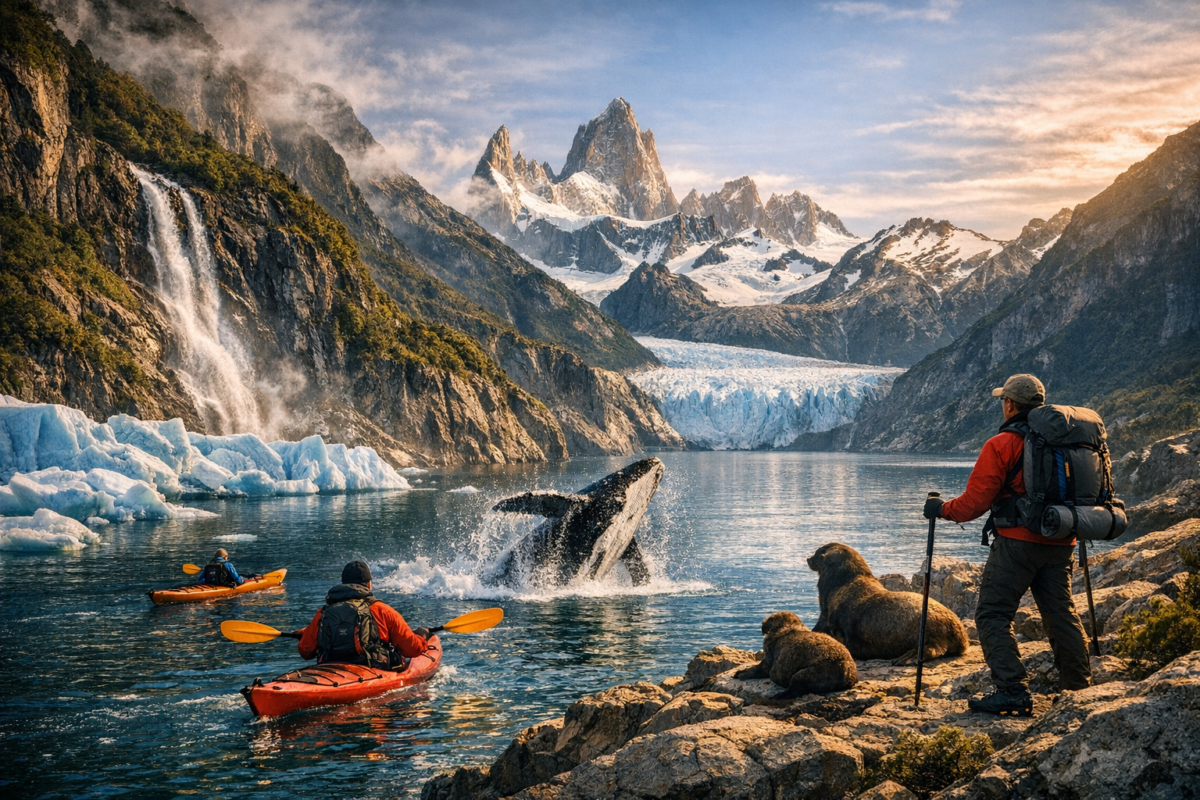
South of Torres del Paine and El Chaltén, Chilean Patagonia dissolves into a network of fjords, channels, islands, and glaciers that stretches 1,000 kilometres south to Cape Horn – one of the most complex and beautiful coastal environments on Earth. Most of it is accessible only by boat, and most of that accessible only by local vessels and expedition tours that operate out of Puerto Natales and Puerto Montt.
Day and multi-day sea kayaking tours in the fjords near Torres del Paine and in the Ultima Esperanza Sound near Puerto Natales offer the most intimate encounter with this landscape available to non-sailors. Kayaking among icebergs calved from the Serrano Glacier, watching Andean condors circle above the fjord walls, landing on uninhabited beaches for lunch – the kayaking experience gives you a relationship with the Patagonian landscape that trekking does not.
Reputable operators include Indomita Wild and Big Foot Adventure Patagonia – both based in Puerto Natales, both with strong safety records and excellent local knowledge. Day tours from USD $80-120 per person; multi-day from USD $250-400 per person per day.
8. Stargazing in the Atacama and Patagonian Dark Skies – Chile/Argentina
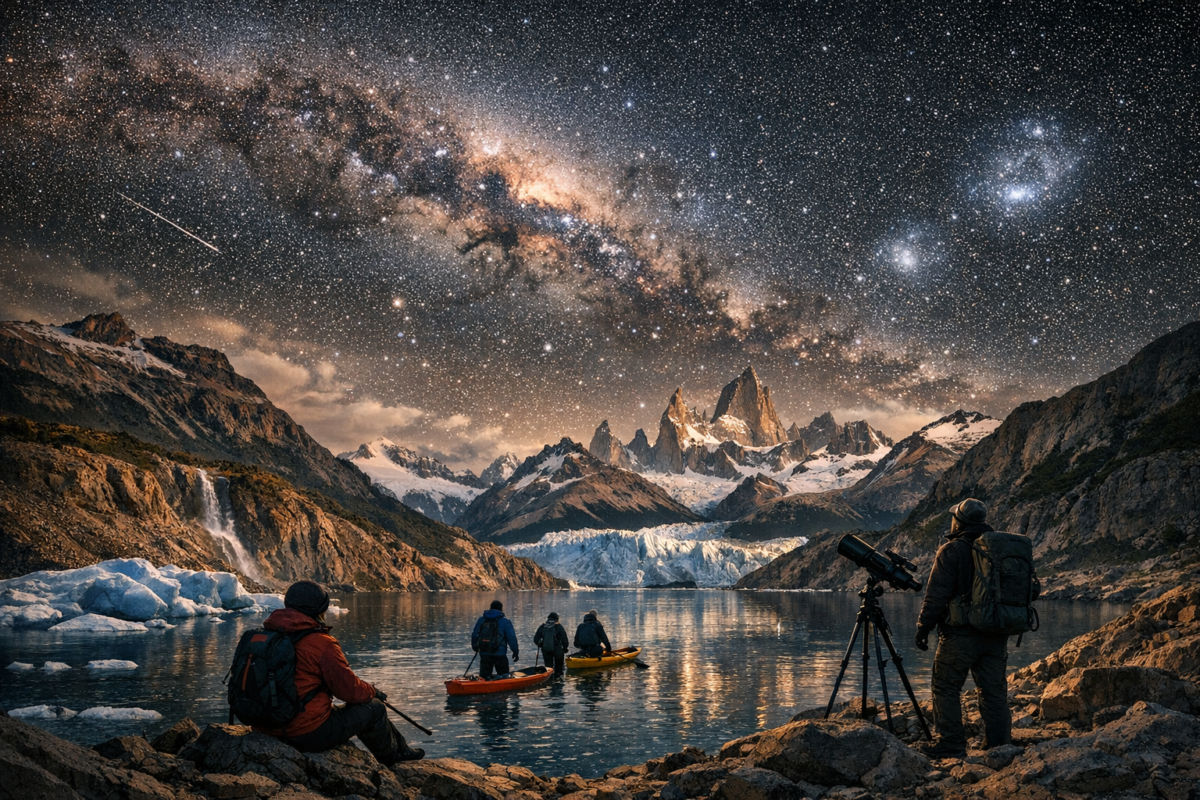
Patagonia’s remoteness and low humidity create some of the darkest night skies in the southern hemisphere. Away from El Calafate and Puerto Natales, the sky on a clear moonless night in the interior is extraordinary – the Milky Way as a physical presence overhead, the Magellanic Clouds (the two satellite galaxies of the Milky Way, visible only from the Southern Hemisphere) clearly visible to the naked eye, and the Southern Cross at its most vivid.
For dedicated astronomical observation, the Atacama Desert in northern Chile (a logical addition to a South America trip with Patagonia) is home to the world’s greatest concentration of professional observatories and offers the driest, most transparent skies available anywhere on Earth. San Pedro de Atacama has multiple professional-grade star tour operators – Space Obs, ALMA observation site tours, and the private observatories above the town – that give access to equipment and sky conditions unavailable at any other tourist-accessible location in the world.
Planning Your Patagonia Adventure: The Practical Guide
When to Go
Patagonia’s trekking season runs October through April, with the core high season being November through February (southern hemisphere summer). Outside this window, most trekking infrastructure closes, roads can be impassable, and the weather is more extreme.
- November (Shoulder Season – Good Choice): Wildflowers on the steppe, fewer trekkers on the W Trek than peak season, all facilities open, some snow still on high passes adding drama. Book 4-5 months ahead.
- December-January (Peak Season): Best weather statistically, longest days (up to 18+ hours of light near the solstice), maximum crowds and highest prices. Book 6+ months ahead for refugios.
- February-March (Ideal Balance): Still good weather, calmer winds than midsummer, crowds thinning significantly from mid-February, berries ripening, autumn starting to touch the beech forests. Book 4-5 months ahead.
- April (Late Season): The beech forest turns vivid gold and red in one of the most spectacular autumn displays in the Southern Hemisphere. Cold, some facilities closing, dramatic light. Not for the underprepared but extraordinary for those who go.
Pro Tip: Check the Patagonia weather forecast using our Weather Checker before committing to daily activities – but treat the forecast as a guide rather than a guarantee. Patagonian weather changes faster than any forecast model can predict. Build flexibility into every day’s plan.
Getting to Patagonia
The main gateways are Punta Arenas (Chile, served by LATAM from Santiago – 3 hours) for Torres del Paine, and El Calafate (Argentina, served by Aerolíneas Argentinas and LATAM from Buenos Aires – 3 hours) for Perito Moreno and El Chaltén. Most international visitors fly into Santiago or Buenos Aires first.
For transatlantic flights to Santiago or Buenos Aires, search Aviasales for the best available fares and earn cashback with WayAway. Flights from the UK to Buenos Aires typically run £550–900 return in shoulder season; from New York, USD $700-1,100. Allow 2-3 days in Buenos Aires or Santiago before heading south – both cities reward time and the acclimatisation is useful before multi-day trekking.
If your connecting flight is disrupted, AirHelp handles compensation claims on a no-win-no-fee basis – useful on long-haul South American routes where disruption can cascade into missed onward connections.
Getting Around Patagonia
Patagonia requires a combination of internal flights, long-distance buses, and local shuttles. The main inter-city distances are vast – El Calafate to Puerto Natales (Chile) is 5 hours by bus; El Chaltén to El Calafate is 3 hours. There are no direct flights between El Calafate and Puerto Natales.
For car rental to explore at your own pace – particularly for Peninsula Valdés, the Ruta 40, or the Chilean fjord roads – GetRentACar compares prices across all South American providers. Rental cars in Patagonia require specific insurance and some roads require 4WD – check the specific road conditions for your planned route before booking.
Airport transfers from El Calafate and Punta Arenas airports to town centres are best pre-booked through GetTransfer – particularly useful for arrivals at odd hours when public transfers aren’t running.
Accommodation Strategy
For the W Trek and O Circuit, accommodation in the refugios and official campsites must be booked 6+ months ahead for peak season dates. Use the CONAF and Vertice Patagonia websites directly. In El Calafate, El Chaltén, and Puerto Natales, compare all accommodation prices at Hotellook – the price variation between platforms for Patagonia accommodation is significant and worth the comparison.
What Patagonia Costs
Patagonia is expensive relative to the rest of South America, particularly on the W Trek where refugio accommodation with meals can reach USD $150–200 per person per day.
- Torres del Paine W Trek (5 days, refugios with half board): USD $600–900 per person total
- Torres del Paine W Trek (5 days, camping): USD $200-350 per person total (own gear required)
- El Chaltén independent trekking (4 days): USD $100-200 per person (accommodation in town, free trails)
- Perito Moreno day trip from El Calafate: USD $50-80 including bus and entry fee
- Peninsula Valdés (2 days including whale watching): USD $150-250 per person
- Daily accommodation in gateway towns (hostel/guesthouse): USD $25-60 per night
Pro Tip: Use our AI Travel Budget Estimator to build a complete Patagonia trip budget. Currency fluctuations in Argentina are significant – check the real-time ARS rate at our Live Currency Converter. Note that Argentina has historically had a significant gap between official and blue-market exchange rates; research the current situation before travel.
Patagonia Packing Essentials
The principle of Patagonia packing is: prepare for every type of weather in a single day. The famous Patagonian weather system means you will experience sun, wind, rain, and possibly sleet within any given 24-hour period. The layering system is non-negotiable:
- Base layer: Merino wool – warm when wet, fast-drying, no odour after days of wearing
- Mid layer: Fleece or down jacket – compressible, packable
- Shell layer: Waterproof and windproof hard shell (Gore-Tex or equivalent) – the most important item in your pack. Cheap waterproofs fail in Patagonian wind and rain. Invest here.
- Trekking trousers: Softshell or waterproof trekking trousers. Not jeans under any circumstances
- Footwear: Waterproof hiking boots with ankle support – waterproof because the trails are wet, ankle support because the terrain is uneven
- Gaiters: For the boggy sections of the W Trek (Grey camp area particularly) – prevents wet boots
- Trekking poles: Non-optional for the O Circuit’s John Gardner Pass and for any person with knee issues
- Balaclava, warm hat, waterproof gloves: The wind chill on Patagonian ridge sections is severe even in midsummer
- Sun protection: The Patagonian sun through the ozone hole is intense – SPF 50+, UV sunglasses, sun hat
Pro Tip: Generate a complete Patagonia-specific packing list at our Packing List Generator – include your planned activities (W Trek, ice trekking, kayaking, whale watching) for a fully customised gear list.
Connectivity in Patagonia
Cell coverage in Patagonia is limited to the gateway towns (El Calafate, El Chaltén, Puerto Natales, Punta Arenas) and major roads. Inside Torres del Paine and on the trails, there is no cell coverage. Download offline maps before entering the park – Maps.me and Wikiloc are both used by W Trek trekkers.
For coverage in the gateway cities, Airalo and Yesim offer South America-wide eSIM packages covering Argentina and Chile simultaneously – essential for a trip that crosses both countries. Activate before flying from home. For streaming and VPN access while in South America, NordVPN works reliably on both Argentine and Chilean networks.
Travel Insurance – Absolutely Non-Negotiable
Medical evacuation from Torres del Paine by helicopter costs USD $5,000–15,000. Emergency repatriation from the southern tip of South America costs significantly more. Travel insurance that covers outdoor adventure activities, mountain trekking, and emergency evacuation is non-negotiable for any Patagonia trip. Ekta Travel Insurance offers adventure travel policies covering trekking, ice activities, and kayaking – the specific activities that define a Patagonia trip.
Guided Experiences vs Independent Travel
The W Trek can be done independently with good planning. The O Circuit is strongly recommended with a guide for inexperienced trekkers (the John Gardner Pass in bad weather is genuinely dangerous without mountain experience). Ice trekking on Perito Moreno requires a guide – you cannot walk on the glacier independently.
For guided trekking experiences, wildlife tours at Peninsula Valdés, and sea kayaking in the Chilean fjords, WeGoTrip has a growing South America and Patagonia catalogue with English-language booking. Local operators in El Calafate and Puerto Natales also have strong track records – Big Foot Adventure Patagonia (Puerto Natales) and Los Glaciares Turismo (El Calafate) are among the most respected.
Luggage Strategy
For the W Trek and O Circuit, your trekking pack should contain only what you carry for 5-8 days. Leave excess luggage at your hostel in Puerto Natales or El Calafate – most hostels offer secure luggage storage. Radical Storage has some coverage in larger South American cities for transit-day storage needs.
Plan Your Patagonia Adventure with These Free Tools
- AI Travel Budget Estimator – calculate your complete Patagonia trip costs including flights, trekking accommodation, tours, gear, and transport
- Live Currency Converter – real-time CLP and ARS conversion from USD, GBP, EUR, and all major currencies – essential given Argentina’s exchange rate complexity
- Weather Checker – monitor Patagonian weather before and during your trip – build in flexibility based on daily forecasts
- Packing List Generator – generate a complete Patagonia trekking and adventure packing list based on your specific activities
- Travel Planning Services – need a custom Patagonia itinerary covering Chile and Argentina? Our team builds bespoke multi-week adventure plans
- Budget Travel Hub – money-saving strategies for adventure travel in Patagonia and every other destination we cover
Frequently Asked Questions
Q1: How many days do you need in Patagonia?
The minimum to see the essentials: 14 days – 5-6 days for the W Trek in Torres del Paine, 3 days for El Chaltén and the Fitz Roy hikes, 2-3 days for El Calafate and Perito Moreno, and travel days between. Three weeks allows a much more relaxed pace with time for weather delays and the Peninsula Valdés wildlife. Four weeks allows the full O Circuit plus El Chaltén and Argentina’s Atlantic coast. Patagonia severely penalises rushed itineraries – weather delays are almost inevitable and trying to compress the experience too tightly results in missing the best of it.
Q2: How fit do you need to be for the W Trek?
The W Trek requires a moderate fitness level – the ability to walk 15–20km per day with 400-700m of elevation gain carrying a day pack (if staying in refugios with meals) or a full pack (if camping). The most challenging section is the ascent to the Valle del Francés viewpoint. There is no technical climbing or scrambling required. Trekkers who regularly walk 10+ km on weekends and have some hill fitness will find the W Trek manageable. The O Circuit requires higher fitness, particularly for the John Gardner Pass section (steep, rocky terrain, often wet).
Q3: What is the difference between the W Trek and the O Circuit?
The W Trek covers the front (eastern) side of the Paine Massif in 4-5 days and visits the park’s three signature valleys. The O Circuit is the W Trek plus 4-5 additional days covering the back (western) side – the John Gardner Pass, Lago Dickson, and the Campamento Los Perros area. The back circuit is harder, longer, more remote, and statistically sees better weather than the crowded front circuit. Most people do the W on their first Patagonia trip and return for the O Circuit on subsequent visits.
Q4: Is Patagonia safe for solo travellers?
Yes – Torres del Paine and El Chaltén are well-managed and regularly patrolled by CONAF rangers. The W Trek in particular is a well-worn route with campsites and refugios at regular intervals. The specific risks are environmental: hypothermia in extreme weather (genuine in the O Circuit if unprepared), getting lost in whiteout conditions, and twisted ankles on boulder sections. Solo trekkers should register at the CONAF park entrance, carry emergency contact information, and leave their planned route with a trusted contact. Never attempt the O Circuit’s back sections alone without mountain experience.
Q5: Do I need a visa for Chile and Argentina?
Citizens of the USA, UK, Canada, Australia, and most EU countries can visit Chile and Argentina visa-free for 90 days each. The two countries are separate Schengen-equivalent zones – crossing the border between them (which you will do on a Patagonia trip) is a standard passport control process. Note that Argentina charges a reciprocity fee for some nationalities at the border, and Chile has a USD $17 tourist fee that is included in many flight tickets. Check the specific requirements for your passport nationality before travelling.
Q6: What is the Ruta 40 and is it worth driving?
The Ruta 40 is Argentina’s legendary trans-Patagonian highway – the longest road in the country, running 5,000km from the Bolivian border in the northwest to Cabo Vírgenes near the Strait of Magellan in the south. The southern section through Patagonia (from El Calafate north through the Perito Moreno town area to Bariloche) is one of the great road trips in the world: empty roads, volcanic landscapes, ancient beech forest, guanaco herds watching the occasional car pass, and views of the Andes that are different from, and in some ways better than, anything visible from the park trails. Allow 5-7 days for the southern section and rent a car capable of unpaved road sections.
Final Thoughts: Patagonia Is Worth Every Kilometre of the Journey
There is a specific threshold you cross in Patagonia – somewhere between the first full day in Torres del Paine and the moment you see Fitz Roy for the first time – where the justification for all the planning and the expense and the long flights falls away completely and is replaced by something simpler. You understand why people come to the end of the world. You understand why they come back.
The landscape here does something to the human sense of scale that is genuinely difficult to describe. The mountains are vertical. The glaciers are alive. The wind is not a weather condition but a presence – something with intention and weight that the landscape accommodates and you simply have to move through. The condor riding the thermal above the glacier is doing it because this is where the thermals are, and the thermals are here because the glacier is here, and the glacier is here because of the weight of ten thousand years of snow, and the snow is here because the mountains are here, and the mountains are here because the continents moved and the crust buckled and the granite cooled into these specific shapes in this specific place at this specific end of the world.
You can feel all of that standing in front of the Torres at sunrise, which is available to anyone who gets up early enough and doesn’t mind a little cold.
Start planning your Patagonia adventure today. Find flights on Aviasales, earn cashback with WayAway, rent your car at GetRentACar, book accommodation at Hotellook, sort airport transfers via GetTransfer, activate your eSIM with Airalo or Yesim, and protect every day with Ekta Travel Insurance. Browse our full World Destination Guides and Budget Adventure Travel Hub for more.
Al fin del mundo – to the end of the world.
Hidden Travels Team | hiddentravels.site