

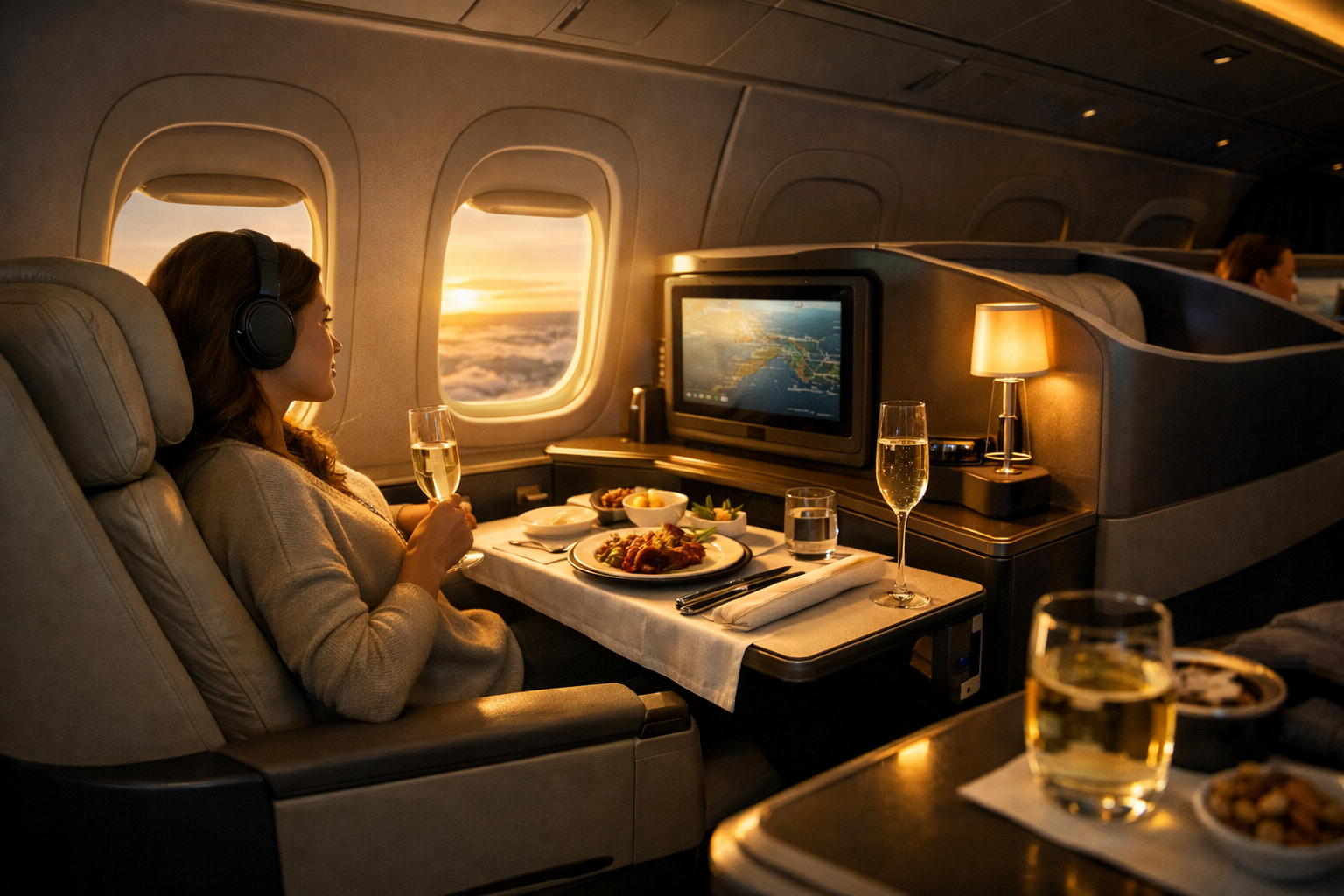
The seat reclined into a fully flat bed at 35,000 feet over the North Atlantic. A flight attendant brought warm nuts and offered a pre-departure glass of champagne. The legroom was so generous I genuinely could not reach the seat in front of me from mine. The amenity kit contained pyjamas.
I paid $340 for this. The passenger next to me, booking through the airline’s website at the standard rate, paid $3,800 for the same seat on the same flight.
That $3,460 gap is not luck. It is not a special connection or insider access. It is a system – a set of ten strategies that frequent travelers, points hobbyists, and informed budget travelers use to access premium cabin seats at fractions of their published prices. And once you understand how it works, you’ll look at long-haul flights differently forever.
Business Class travel is not the exclusive domain of corporate expense accounts and the wealthy. It never has been, for those who know where to look. The airlines need to fill those front-cabin seats, and they create dozens of legitimate pathways to do it at reduced cost – through points redemptions, upgrade bids, error fares, partner booking, and more.
This guide covers all ten strategies comprehensively – with honest assessments of how reliable each is, how much effort is required, and exactly how to execute them on your next long-haul flight.
Understanding Business Class Pricing: Why the Same Seat Costs 10 Different Prices
Before the strategies, a brief but important foundation: airline Business Class pricing is not fixed. It is dynamic, inventory-based, and subject to dozens of variables that the airline’s revenue management system adjusts in real time.
The published ‘Business Class fare’ you see on an airline’s website represents the maximum the revenue management system believes it can extract from full-fare corporate buyers. Below that ceiling exist dozens of discounted fare classes, award redemption rates, upgrade pricing tiers, and error pricing windows that offer the same physical seat at dramatically lower cost.
The key insight is this: an airline would rather sell a Business Class seat for $400 than fly it empty at $3,800. Every one of the strategies below exploits this economic reality in a different way.
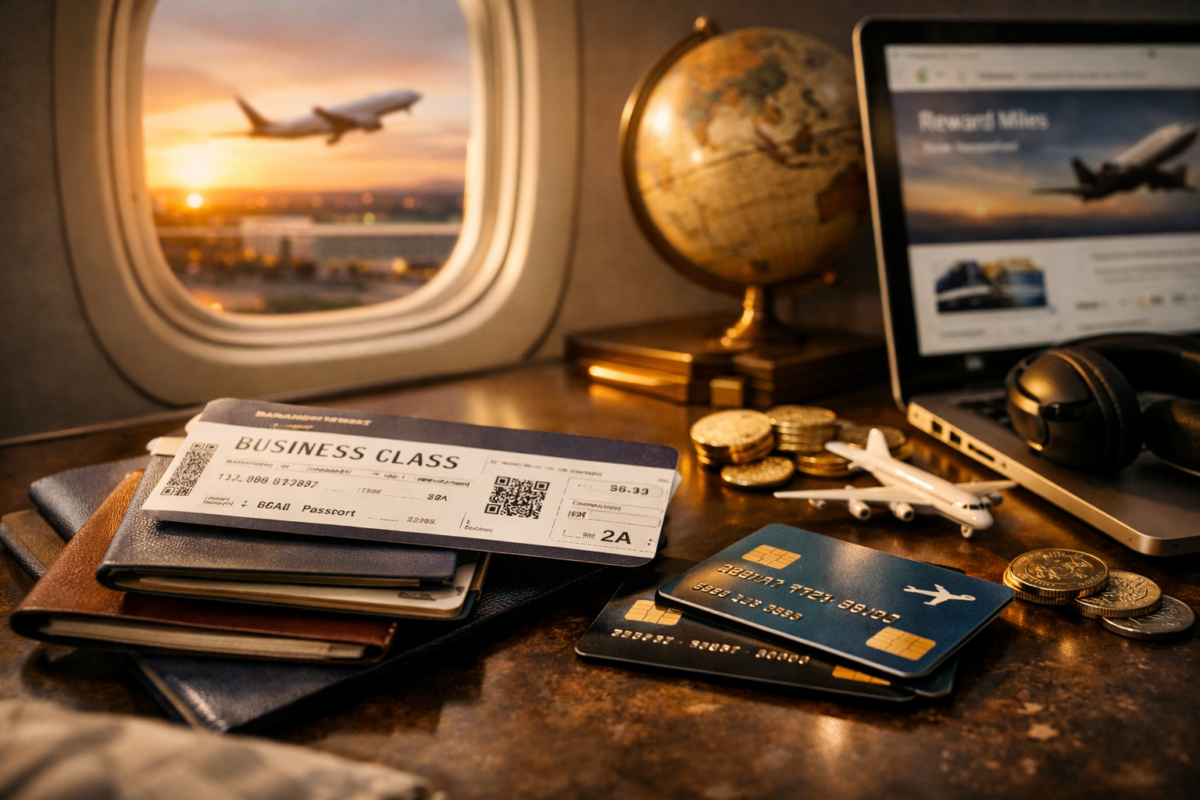
| Strategy #1: Use Airline Miles and Credit Card Points – The Most Powerful Upgrade Tool This is the strategy with the highest ceiling and the steepest learning curve – but also the one that produces the most extraordinary results. Frequent flyer miles and transferable credit card points (American Express Membership Rewards, Chase Ultimate Rewards, Capital One Miles) can be redeemed for Business Class award seats at values that dwarf any cash discount.A transatlantic Business Class seat might cost 57,500 miles on American AAdvantage. That same number of miles, earned through credit card sign-up bonuses and everyday spending, might have cost you $300-400 in annual fees and spending that you would have done anyway.The Points Arbitrage in NumbersRouteCash Business Class PriceAward Miles NeededMiles Value at Cash RateEffective Price PaidNYC → London (BA)$3,800–4,50057,500 Avios$0.068/mile~$350–500 in fees onlyLA → Tokyo (ANA)$4,200–5,00075,000 miles (Virgin)$0.065/mile~$120 fees + miles costLondon → Hong Kong (Cathay)$3,500–4,00060,000 miles$0.068/mile~$300 fees + miles costNYC → Dubai (Emirates)$5,000–6,00085,000 Skywards miles$0.071/mile~$200 fees + miles cost How to Accumulate Points Without FlyingCredit card sign-up bonuses: Premium travel credit cards (Amex Platinum, Chase Sapphire Reserve, Capital One Venture X) offer 60,000-120,000 bonus points on approval for meeting a minimum spend threshold. That’s often enough for a one-way Business Class ticket alone.Everyday spending: Every purchase on a travel rewards card earns points. Redirect all household spending (groceries, utilities, dining, subscriptions) onto a points-earning card paid in full each month.Transfer partners: Transferable points (Amex MR, Chase UR) move at 1:1 to multiple airline programs. This flexibility is enormously valuable – hold the points until you find the best redemption.Shopping portals: Major loyalty programs have online shopping portals that award bonus miles for purchases through partner retailers. Pro tip: Use WayAway for cashback on flights you do pay cash for – the earnings fund more travel and reduce the need to deplete your points balance on every booking. |
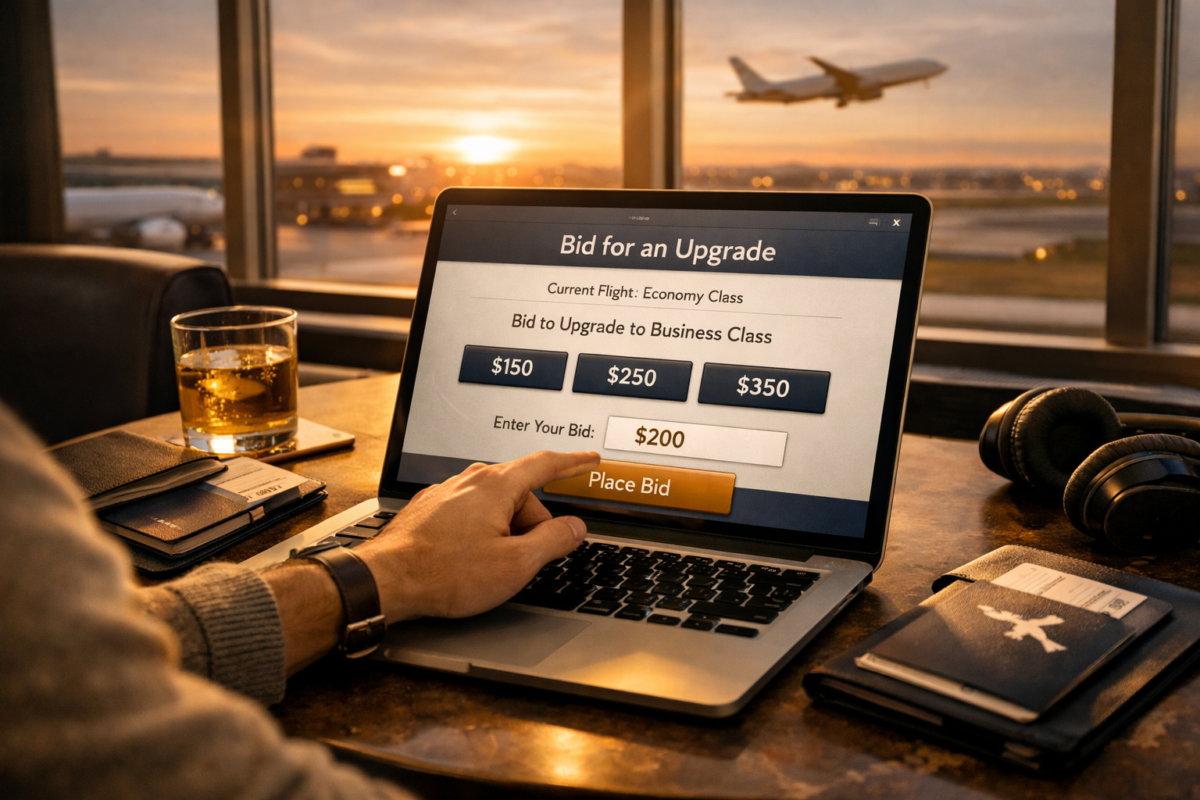
| Strategy #2: Bid for an Upgrade: Offer What You Can Afford Most major airlines now offer upgrade bidding programs that allow Economy and Premium Economy passengers to submit cash offers for unsold Business Class seats. If the airline’s revenue management system accepts your bid – typically 24-48 hours before departure – you pay what you bid and fly in Business Class.The logic is pure economics: the airline would rather sell an unsold Business Class seat for $400 in a bid than fly it empty. Passengers who bid strategically can access lie-flat Business Class seats for 20-40% of their published price.How to Bid SmartBid the minimum first, then increase if prompted: The bidding interface usually shows a range. Start at the lower end – acceptance rates for minimum bids are surprisingly high on routes with lower load factors.Best routes for bid acceptance: Long-haul routes mid-week, off-peak seasons, and routes where Business Class inventory is consistently undersold.Airlines with upgrade bidding: British Airways (SpeedBird Upgrade), Lufthansa (MyOffer), Singapore Airlines (KrisFlyer Spontaneous Upgrades), Qatar Airways (Bid to Upgrade), Air New Zealand, Virgin Atlantic.Typical successful bid amounts: $200-500 for transatlantic routes. $300-700 for Asia-Pacific long-haul. Far below the cash premium cabin price. |
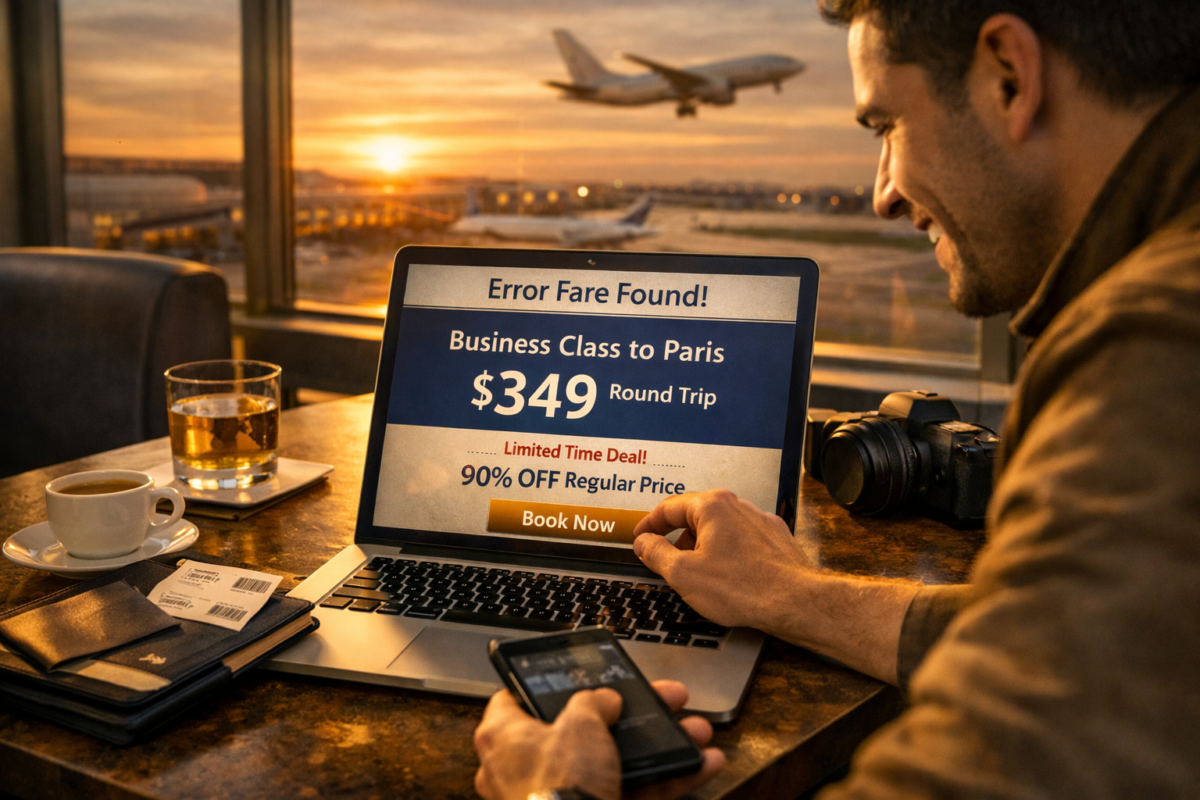
| Strategy #3: Hunt Error Fares: The Business Class Holy Grail Airline pricing systems occasionally produce errors – Business Class fares priced at Economy levels, wrong currency conversions that create impossible prices, or legacy fares left active in the system by mistake. These error fares are the most spectacular Business Class deals available – but they require speed, flexibility, and the right monitoring systems.Real examples that have occurred: Business Class London–Bangkok for £200 (standard: £2,500+). Business Class New York–Hong Kong for $400 (standard: $4,000+). All of these were booked by thousands of travelers before the airlines corrected them – and in virtually every case, the airlines honoured the bookings.How to Position Yourself for Error FaresFollow flight deal communities: Secret Flying, Jack’s Flight Club, The Flight Deal, and dedicated deal forums on Reddit (r/awardtravel, r/churning) surface error fares within minutes of them appearing.Search on Aviasales regularly for routes you’re interested in – error fares appear on comparison platforms before most people notice them.Book immediately: Error fares typically last 2-120 minutes before correction. Book first, plan second. Most airlines honour properly ticketed error fares.Be flexible: Error fares cannot be planned for specific dates. They require the ability to say yes quickly when the right route appears at an impossible price.Set fare alerts: On Aviasales and WayAway for routes you’d be happy to fly. Unusually low alerts sometimes catch error fare windows. |
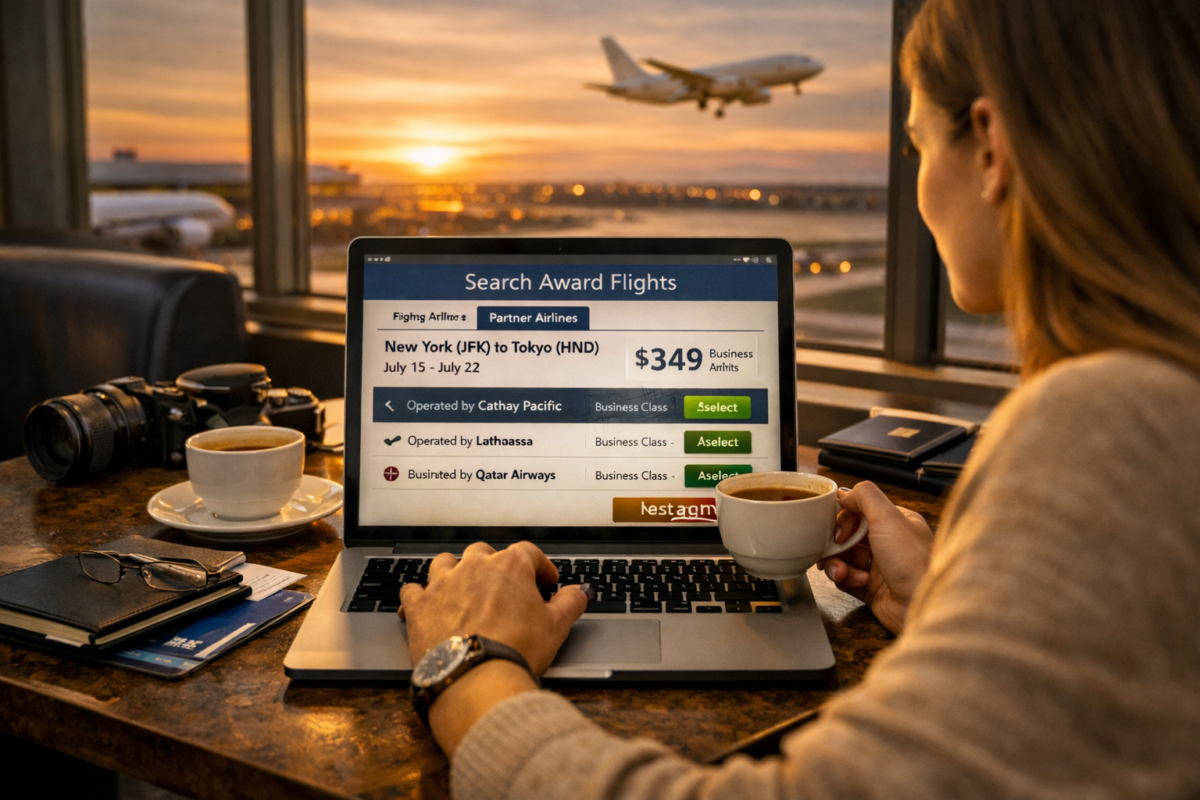
| Strategy #4: Book Through Partner Programs: The Hidden Award Inventory This is one of the most consistently underutilized strategies in the points world. When airlines partner with each other (through alliances like Star Alliance, Oneworld, and SkyTeam, or bilateral partnerships), you can book seats on Airline A using the miles of Airline B – often at significantly lower rates than Airline A charges through its own program.Classic examples that consistently offer exceptional value:ANA (Japan) miles for Lufthansa Business Class: ANA charges significantly fewer miles for Lufthansa routes than Lufthansa charges itself. A Frankfurt-New York Business Class seat costs 58,000 ANA miles vs. 85,000+ Lufthansa miles.Virgin Atlantic Flying Club for ANA Business Class: Virgin’s transfer partners include ANA, and its award rates for Tokyo routes are among the best available anywhere.Avianca LifeMiles for Star Alliance Business: Avianca LifeMiles regularly offers off-peak pricing that other Star Alliance programs don’t.Air France/KLM Flying Blue for Delta One Business: FlyingBlue promo awards offer monthly discounted redemptions on specific routes. Key principle: Before redeeming miles, check every partner program’s pricing for the same seat. The difference can be 30,000–50,000 miles for identical physical travel. |
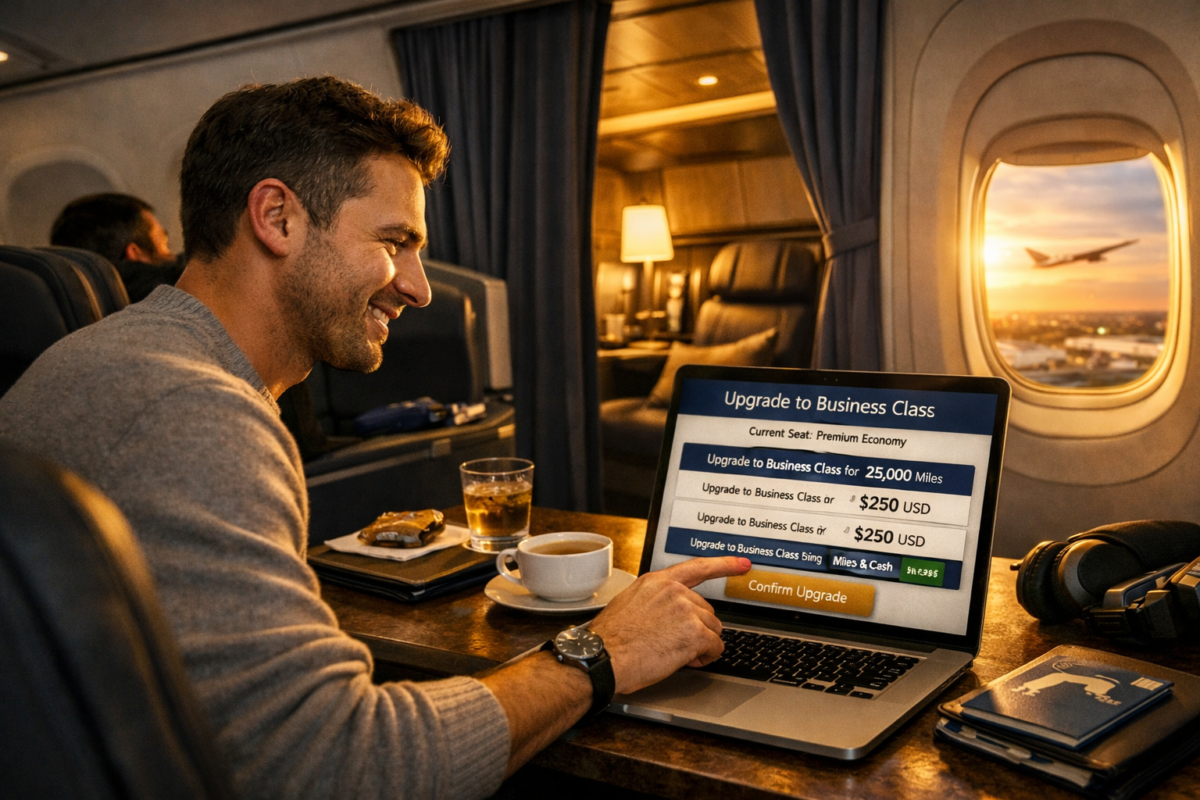
| Strategy #5: Buy Premium Economy, Then Upgrade From There Premium Economy has become one of the savviest positions for Business Class upgrades. It occupies a sweet spot: it’s cheaper to purchase than Business Class, often upgradeable with a small cash bid or miles, and on many airlines now represents a genuinely excellent product in its own right.The strategy: buy Premium Economy on a route with known Business Class underselling. Use the bid upgrade system or miles to move into Business Class from a lower starting price point. Your total cost – Premium Economy fare plus upgrade bid – is often 40-60% less than buying Business Class directly.Best airlines for this strategy: British Airways, Air France, Lufthansa, Singapore Airlines, Virgin Atlantic – all have active upgrade bidding programs and regularly undersold Business Class on long-haul routes.Cost example: Premium Economy London-New York: $900-1,200. Upgrade bid: $250-400. Total: $1,150-1,600. Direct Business Class: $3,800-4,500. |
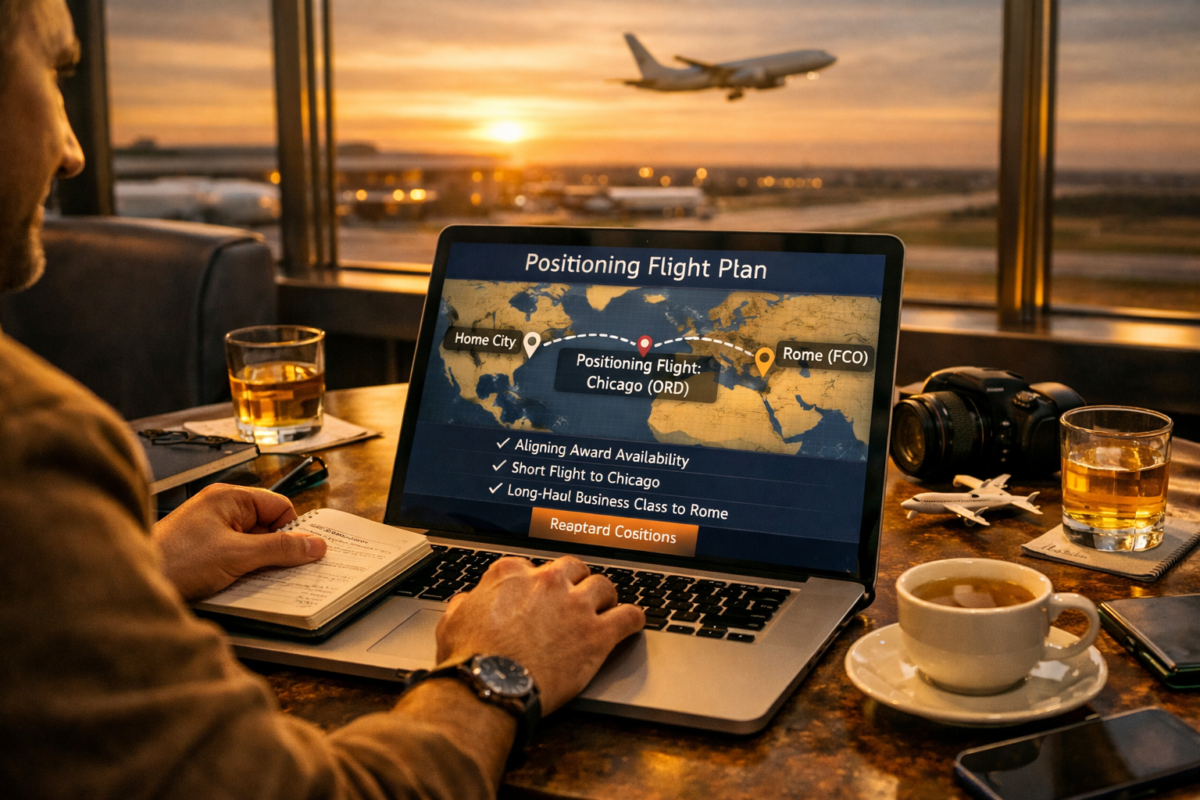
| Strategy #6: Use Positioning Flights to Access Better Award Inventory Some of the world’s best Business Class award redemptions depart from hubs that are not your home city. A positioning flight – a short, cheap flight to a better departure hub – unlocks significantly better award availability or cash pricing on the long-haul sector.Classic example: Business Class awards from Frankfurt often offer far better availability and pricing than the same route from London. A $50-100 EasyJet or Ryanair flight to Frankfurt, followed by a 57,500-mile Business Class award to New York, produces a better outcome than any London-departure option at twice the price.Best positioning hubs for award travel: Frankfurt (Lufthansa hub), Dubai (Emirates hub), Doha (Qatar hub), Amsterdam (KLM hub), Zurich (Swiss hub).Finding cheap positioning flights: Use Aviasales for the positioning segment – a $30-80 budget airline flight is often all that’s needed to unlock a dramatically better long-haul option. |
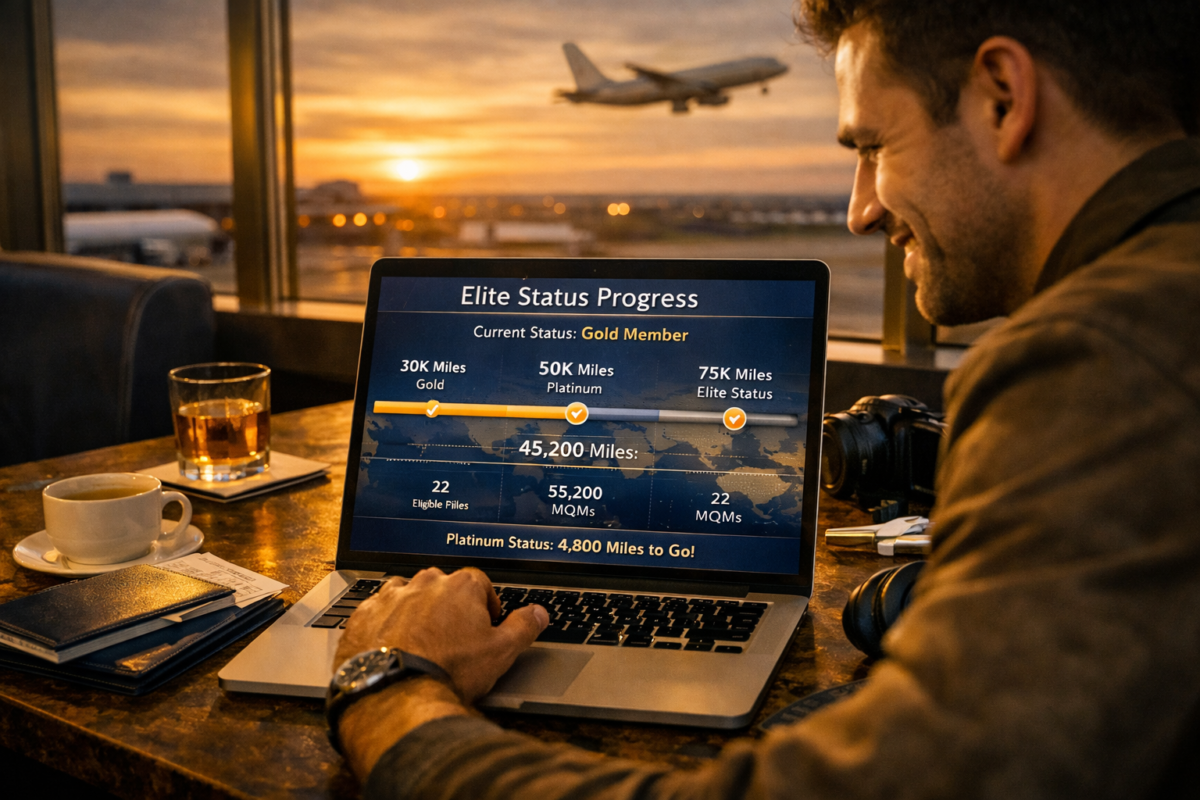
| Strategy #7: Build Elite Status for Complimentary Upgrades Airlines reward their most frequent customers with elite status tiers that include complimentary upgrades to Business Class when inventory is available at departure. While this strategy requires a commitment to flying with one airline (or alliance), it produces a compounding return: the more you fly, the more upgrades you receive, the more you fly.For travelers who take 6-10+ flights per year, concentrating travel with a single airline or alliance to build status is one of the highest-return long-term strategies available.Entry-level status typically requires: 25,000-30,000 elite qualifying miles per year, or 30-40 flight segments.Upgrade benefits begin at: Most airlines grant complimentary upgrade eligibility starting at mid-tier status (Gold/Platinum equivalent), subject to inventory availability.Status match programs: Many airlines will match status you hold with a competitor airline to their own program to attract your loyalty. Always check for status match or challenge opportunities when switching. |
| Strategy #8: Fly Shoulder Season on Undersold Routes Business Class pricing, like Economy pricing, follows demand. The same flight that commands $4,500 in July might see discounted Business Class fares of $1,100-1,500 in November or January. Shoulder season travel – January–March and October-November for most transatlantic routes – produces dramatically lower Business Class cash prices that occasionally approach ‘affordable’ territory.RoutePeak Business ClassShoulder Season BusinessShoulder SavingLondon → New York$3,800–4,500$1,100–1,60060–74% off peakLondon → Tokyo$4,000–5,000$1,400–2,00055–72% off peakNYC → Dubai$4,500–6,000$1,500–2,20056‗67% off peakLA → Sydney$5,000–6,500$1,800–2,50058‑72% off peak Always check whether shoulder season dates align with good weather at your destination using our free Weather Checker. Some shoulder season windows offer identical experience at 60-70% lower Business Class prices. |

| Strategy #9: Use Price Comparison, Then Book Smart Business Class award availability and cash pricing vary enormously between booking channels. Always search multiple platforms before booking:For cash fares: Search on Aviasales for the widest comparison of Business Class cash fares across airlines and booking platforms. Pair with WayAway for cashback on the booking.For award seats: Search directly on airline websites for award availability. Use tool platforms like Seats.aero or PointsYeah to search award inventory across multiple programs simultaneously.For bid upgrades: Check the airline’s upgrade bidding portal after booking an Economy or Premium Economy fare. Upgrade invitations typically arrive 72-96 hours before departure.For last-minute premium: Airlines sometimes release heavily discounted Business Class fares 3-5 days before departure to fill unsold seats. Check again shortly before travel. |

| Strategy #10: Book Boat and Sea Travel in Premium Class For travellers who love the sea and have time, premium cabin sailing and cruise travel offers extraordinary value compared to equivalent Business Class flying – particularly on ocean crossings and coastal routes where the journey itself is the experience.Repositioning cruises – when cruise ships move between their summer and winter home ports – offer premium cabin prices at fractions of normal cruise rates. A Balcony cabin on a Queen Mary 2 transatlantic crossing from New York to Southampton can cost $600-900, including all meals, entertainment, and a private cabin. Compare this to a $3,800 Business Class flight. For travelers with flexible schedules, SeaRadar helps find and compare marine travel options including premium cabin offerings.Best value repositioning crossings: North Atlantic autumn (September–October) and spring (April-May) repositioning voyages offer the lowest per-day premium cabin prices.Added value: Sea crossings include accommodation, meals, entertainment, and spa access in the cabin price – making the cost comparison with Business Class air travel even more favorable when you factor in hotel costs at your destination. |

Protecting Your Premium Travel Investment
Travel Insurance Is Even More Important for Premium Bookings
A Business Class ticket, points redemption, or upgrade bid represents a significant financial commitment. If your trip is cancelled, disrupted, or you fall ill, comprehensive travel insurance through Ekta Traveling Insurance protects your investment – covering cancellation costs, rebooking fees, and medical emergencies at your destination.
Claim Compensation for Any Disruption
If your Business Class flight is delayed 3+ hours, cancelled, or you’re downgraded to Economy involuntarily on an EU-operated flight, you are entitled to compensation under EU Regulation 261/2004. In the case of involuntary downgrade, airlines must refund the difference in fare plus an additional compensation payment. AirHelp handles all compensation claims on a no-win, no-fee basis.
Stay Productive and Connected in Premium Cabins
Premium cabin Wi-Fi is generally better than Economy but still subject to inflight limitations. Keep your NordVPN active on inflight Wi-Fi – aircraft networks are technically public networks, and your security obligations don’t disappear at altitude.
Your Business Class Strategy Checklist
| Strategy | Effort Level | Reliability | Best For |
| Points & Miles Redemption | High (setup) | Very High | Long-haul premium travel |
| Bid Upgrades | Low | Medium–High | Spontaneous upgrades on booked flights |
| Error Fares | Very Low | Low (but spectacular) | Opportunistic flexible travelers |
| Partner Program Awards | Medium | High | Maximizing miles value |
| Premium Econ + Upgrade Bid | Medium | High | Consistent premium access |
| Positioning Flights | Low | High | Better hub access |
| Elite Status Upgrades | High (long-term) | High (once achieved) | Frequent flyers |
| Shoulder Season Cash Fares | Low | Very High | Planned travel with date flexibility |
| Price Comparison (Aviasales) | Low | Very High | Every booking |
| Sea Travel Premium Cabins | Low | Very High | Flexible schedule travelers |
Free Tools for Smarter Premium Travel Planning
Use our free AI Travel Budget Estimator to calculate the real cost difference between Economy and Business Class options for your trip – factoring in points, bid upgrades, and positioning flights.
Check shoulder season timing with our Weather Checker – some of the best Business Class cash fare windows align with outstanding weather conditions at popular destinations.
Always compare live exchange rates before booking international tickets in foreign currencies with our Currency Converter – buying a British Airways ticket priced in GBP from a USD card sometimes saves 5-8% over the auto-converted price.
Frequently Asked Questions (FAQ)
Is it really possible to fly Business Class for the price of Economy?
Yes – through points redemptions and error fares particularly. A Business Class seat that costs $4,000 cash can be booked for 57,500 airline miles, and those miles can be earned through credit card sign-up bonuses worth $300-500 in annual fees and spending. Error fares occasionally price Business Class at Economy rates for short windows. Upgrade bids regularly produce $200-500 upgrades on routes where Business Class would cost $2,000+ more.
What is the easiest way to get a Business Class upgrade?
The easiest and most reliable method for most travelers without existing miles balances is the upgrade bid. After booking an Economy or Premium Economy ticket, most major airlines offer a bidding window 48-72 hours before departure. Minimum bids are often accepted on routes with low Business Class load factors. The process takes 5 minutes and requires no existing loyalty program relationship.
Which credit card is best for earning Business Class miles?
The best cards for travel rewards are the American Express Platinum (transferable Membership Rewards points, massive sign-up bonus), Chase Sapphire Reserve (Ultimate Rewards points, excellent transfer partners), and Capital One Venture X (Miles, good value and simplicity). The optimal choice depends on your spending patterns, preferred airlines, and annual fee tolerance. Always verify current offer terms before applying, as bonus offers change frequently.
Do airlines honour error fares?
The majority of airlines honour properly ticketed error fares – particularly when the passenger has received a booking confirmation and the ticket has been issued. Airlines are not legally required to honour error fares in most jurisdictions, but commercially they almost always do to avoid the negative publicity of mass cancellations. The safest approach is to book and pay immediately, wait for ticket issuance, then plan around the booking.
How far in advance should I search for discounted Business Class?
It depends on the strategy. For points redemptions, search 10-12 months ahead when partner award inventory is often highest. For bid upgrades, submit bids 48-72 hours before departure. For shoulder season cash fares, the sweet spot is 8-12 weeks ahead. For error fares, no advance planning applies – they require immediate action when they appear. For last-minute discounted cash fares, check 3-5 days before departure on undersold routes.
What is Premium Economy and is it worth it compared to Business Class?
Premium Economy offers a seat significantly wider and more reclined than Economy – typically 8-12 inches extra width, 38-40 inches of pitch versus Economy’s 30-32 inches, and sometimes an elevated meals service. It does not offer the fully flat bed, maximum privacy, or full service of Business Class. Premium Economy is worth booking when: it can be purchased at 1.5-2x Economy price and you plan to use it as a stepping stone for a bid upgrade into Business Class, or when it represents your comfort threshold for a 10-14 hour flight without a lie-flat bed requirement.
The Front of the Plane Is More Accessible Than You Think
Here is what happens when you board a Business Class cabin for the first time after years of Economy travel: you feel slightly guilty. Surely this can’t be right. Surely there was a mistake, and someone is about to walk up and redirect you to the back.
Then the flight attendant brings warm towels and takes your coat and offers you a drink before the door even closes, and something shifts. You realize that this – the wide seat, the quiet cabin, the meal that arrives on actual crockery, the bed that you’ll sleep in for seven hours over the ocean – was accessible all along. You just didn’t know the system.
The ten strategies in this guide are that system. They don’t require a corporate travel budget or a large loyalty balance to get started. They require understanding how airline pricing actually works and making decisions accordingly.
Some of the best upgrades begin with a five-minute bid on a phone. Others take months of credit card spending. Others require nothing more than checking one extra platform before every booking. All of them are legitimate. All of them are used by thousands of travelers on every flight.
The seat at the front of the plane is waiting. Now you know how to find it.
Search your next Business Class fare on Aviasales and earn cashback on every booking through WayAway. Explore more budget and smart travel strategies at the Hidden Travels Budget Hub.
© Hidden Travels — hiddentravels.site
Inspiring Travelers. Sharing Hidden Stories. One Adventure at a Time.