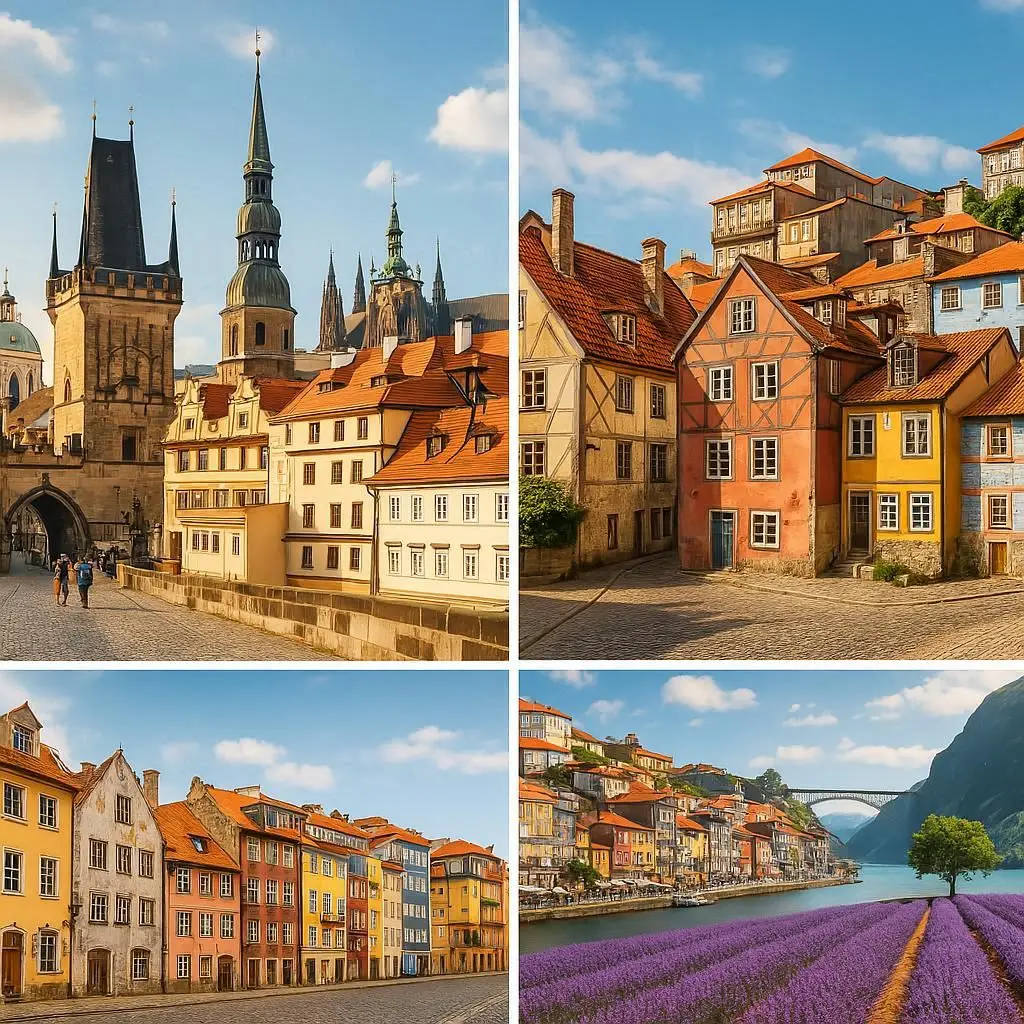


Let me tell you a little secret that the travel industry doesn’t want you to know about Travel Europe.
Europe – yes, the continent famous for its designer boutiques, Michelin-starred restaurants, and €20 cocktails – can absolutely be explored on a shoestring budget. I know because I’ve done it. Not once, but over and over again, crisscrossing countries from Portugal to Poland without ever feeling like I was missing out.
The dream of sipping coffee outside a Parisian café, watching the sunset over the Aegean Sea, or wandering cobblestone streets in Prague doesn’t have to drain your bank account. It just requires a little planning, the right tools, and knowing where to look.
In this guide, I’m going to walk you through everything – from booking the cheapest flights and finding hidden-gem hostels to eating like a local and traveling between cities without spending a fortune. By the end, you’ll have a full, actionable roadmap to make your European adventure a reality, even if you’re on a tight budget.
Let’s dive in.
Why Europe Is not As Expensive As You Think
Most people assume Europe is out of reach financially. And honestly? That assumption is what keeps millions of people from ever going. But here’s the truth: Western Europe can be pricey, but Europe as a whole offers some of the most affordable travel destinations in the world.
Countries like Portugal, Hungary, Romania, North Macedonia, and Albania offer incredible experiences for a fraction of what you’d spend in France or Switzerland. And even within expensive countries, there are budget-friendly strategies that locals have used for generations.
The key is to stop thinking about Europe as one destination and start treating it as a collection of wildly different budget options.
Setting Your Budget: What Does $50 a Day Actually Cover?
Before we get into tips and tricks, let’s get real about what $50 a day looks like across Europe. Spoiler: it goes much further than you’d think.

Western Europe (France, Germany, Netherlands, Austria)
This is the most expensive region, but $50 a day is doable if you stay in dorms, cook some meals, and use free attractions. Expect to spend roughly $15-20 on accommodation in a hostel dorm, $10-15 on food (markets, supermarkets, and cheap local spots), and $5–10 on transport and sightseeing.

Central Europe (Czech Republic, Poland, Hungary, Slovakia)
This is the budget traveler’s sweet spot. $50 a day here feels downright luxurious. You can often afford a private room, eat at sit-down restaurants, and still have money left for a beer (which costs less than a bottle of water in some places).

Eastern & Southern Europe (Albania, North Macedonia, Kosovo, Romania, Bulgaria)
On $50 a day, you are practically living large. These countries are incredibly affordable and criminally underrated. Think $5 guesthouses, $2 meals, and scenery that rivals anything in Western Europe.
Step 1: Book the Cheapest Flights to Europe
The biggest cost for most budget travelers isn’t accommodation or food – it is the flight. But with the right tools and a bit of flexibility, you can drastically cut what you spend getting there.
Use Flight Search Tools That Actually Work
Start your search with Aviasales – one of the most powerful flight search engines available, often surfacing fares that other platforms miss. It compares hundreds of airlines simultaneously and shows you the cheapest days to fly, which can save you hundreds of dollars.
Another great option is WayAway, a flight aggregator that also offers a cashback program on every booking – meaning you earn money back on flights you were going to book anyway. It’s a no-brainer for frequent travelers.
Budget Flight Tips That Actually Save Money
- Be flexible with dates: Flying midweek (Tuesday/Wednesday) is typically 20-30% cheaper than weekends.
- Use the ‘Explore’ or ‘Everywhere’ search feature to find the cheapest destination from your city on any given month.
- Book 6-8 weeks in advance for transatlantic flights and 2-4 weeks for intra-Europe flights.
- Set fare alerts so you’re notified the moment prices drop for your desired route.
- Consider flying into secondary airports – many budget carriers fly into smaller hubs that are just 1 hour from major cities.
Step 2: Find Affordable Accommodation Without Sacrificing Safety
Where you sleep will be your biggest recurring daily cost in Europe. But gone are the days when ‘budget accommodation’ meant dingy, unsafe, or miserable. Today’s hostels are often beautifully designed social hubs with free breakfast, rooftop bars, and organized activities.
Where to Book Budget-Friendly Hotels and Hostels
For hotels, guesthouses, and apartments, Hotellook is an excellent comparison tool that searches across multiple booking platforms simultaneously, ensuring you always get the lowest price available. It is especially good for finding last-minute deals.
Types of Budget Accommodation in Europe
- Hostel Dorms: $10-25/night. Best for solo travelers and meeting people. Look for high review scores (8.5+ is the sweet spot).
- Private Hostel Rooms: $30-55/night. You get privacy with the social hostel vibe.
- Apartment Rentals: Great for longer stays of 5+ days, often cheaper per night than hotels.
- Couchsurfing: Free accommodation with locals who genuinely want to share their city with you.
- Work Exchanges (Workaway/Worldpackers): Free accommodation in exchange for a few hours of work daily.
Pro Tip: Left Luggage Storage
If you’re moving between cities and need somewhere to store your bags for a few hours, Radical Storage has luggage storage points in cities across Europe for just a few dollars per day. Perfect for those awkward check-in/check-out gaps.
Step 3: Getting Around Europe on the Cheap
Once you’re in Europe, the continent is incredibly well-connected. The challenge is knowing which transport options offer the best value at any given moment.
Budget Airlines for Intra-Europe Travel
This is often the fastest and cheapest way to cover long distances. Airlines like Ryanair, EasyJet, Wizz Air, and Transavia regularly offer seats for $10-30 if you book early and travel light. Compare routes on Aviasales before booking.
Trains: Scenic and Sometimes Surprisingly Affordable
Train travel in Europe is iconic for good reason – it is comfortable, scenic, and drops you right in city centers. Night trains especially are a budget traveler’s best friend since you travel while you sleep, saving on a night’s accommodation.
Book train tickets in advance and compare routes using Intui Travel for competitive pricing on trains and multi-modal routes across Europe.
Buses: The Cheapest Option
FlixBus, BlaBlaCar Bus, and Eurolines connect virtually every corner of Europe at rock-bottom prices. A 5-hour journey can cost as little as $5-10 if booked early. Yes, it’s slower, but your wallet will thank you.
City-to-City Rides
For flexible, affordable intercity travel, InDrive city-to-city rides is a ride-hailing service that lets you negotiate prices with drivers, often undercutting traditional taxis significantly.
Airport & Station Transfers
If you need a private, reliable airport transfer, GetTransfer offers fixed-price rides with professional drivers – great when you’re arriving late at night or have heavy luggage and want peace of mind.
Car Rental for Flexibility
Planning to explore rural areas, coastal roads, or national parks? Renting a car gives you unbeatable freedom. Compare rental prices easily through GetRentACar, which aggregates offers from major and local rental companies to find the best deal for your dates.
Step 4: Stay Connected Without Paying Outrageous Roaming Fees
There’s nothing worse than arriving in a new country and suddenly losing data access. You can’t navigate, can’t check your hostel booking, can’t translate the menu. Don’t let that happen to you.
Get a Local or International SIM Before You Land
Skip the airport SIM cards – they are always overpriced. Instead, set up your data before you even board the plane with Airalo, the world’s first eSIM marketplace. You can buy digital SIM cards for over 200 countries, starting from just $5. No physical SIM needed, no contracts – just instant connectivity.
Another excellent option is Yesim, which offers virtual SIM cards with data plans across Europe and beyond, perfect for travelers hitting multiple countries in one trip.
Protect Your Data With a VPN
When using hostel Wi-Fi, café networks, or any public internet, always protect yourself with a VPN. NordVPN is our top recommendation – it is fast, highly secure, and covers up to 6 devices simultaneously. It also lets you access streaming services from home while abroad.

Step 5: Eating Well in Europe Without Spending a Fortune
Food is one of the great joys of European travel, and the good news is you don’t need a restaurant budget to eat incredibly well.
The Golden Rules of Eating on a Budget in Europe
- Shop at local markets and supermarkets for breakfast and lunch. A baguette, cheese, and fruit in France costs less than €4 and tastes better than most cafés.
- Eat where the locals eat. If there are no locals in a restaurant, walk away.
- Look for the ‘menu del día’ (menu of the day) in Spain and Portugal – a full 3-course meal with drink for $8-12.
- Avoid tourist traps around major attractions. Walk 2 blocks away and prices drop dramatically.
- Street food is your best friend. Pierogi in Poland, Langos in Hungary, Börek in the Balkans – all delicious, all cheap.
Step 6: Things to Do in Europe for Free (or Almost Free)
Here’s something most travel blogs don’t tell you: some of the best experiences in Europe cost absolutely nothing.
Free Attractions That Will Blow Your Mind
- Most major museums in London are free, including the British Museum, Natural History Museum, and the Tate Modern.
- Walking tours in major cities – available in almost every European capital – are free (tip-based).
- Hiking and nature: the Cinque Terre coastal trail, Plitvice Lakes National Park, the Camino de Santiago – all largely free to walk.
- Cathedrals, churches, and historic town squares are almost always free to enter.
- Beach days, parks, and markets cost nothing and give you authentic local experiences.
Guided Experiences and Tours Worth Paying For
When you do want a guided experience, WeGoTrip offers self-guided audio tours and ticketed experiences across Europe at a fraction of standard tour operator prices. Perfect for museums, city walks, and historical sites.
Step 7: Don’t Skip Travel Insurance – Here is How to Do It Affordably
I know, I know – travel insurance feels like just another expense. But trust me, one medical emergency abroad without insurance can cost more than your entire year’s travel budget.
The good news is that comprehensive travel insurance doesn’t have to be expensive. Compare plans and find affordable coverage through Ekta Traveling Insurance – a popular option among budget travelers that covers medical emergencies, trip cancellations, and lost luggage.
Also worth considering: if your flight gets delayed or cancelled, you may be entitled to compensation under EU regulations. Services like AirHelp can handle this process for you automatically.
And if your flight is ever significantly delayed or cancelled, AirHelp can help you claim up to €600 in compensation under EU law – on a no-win, no-fee basis.
Step 8: Managing Your Money Wisely While Traveling
Currency exchange is one of the sneakiest ways travel costs creep up. Here is how to keep more money in your pocket.
Always Know the Exchange Rate Before You Spend
Use our Live Currency Converter to check real-time exchange rates before buying anything abroad. You had be amazed how many tourists overpay simply because they did not know the current rate.
Smart Money Tips for Budget Travelers
- Avoid airport currency exchange booths – they offer the worst rates. Use ATMs from major banks instead.
- Get a travel-friendly debit or credit card with no foreign transaction fees (Wise, Revolut, and Charles Schwab are popular choices).
- Always pay in the local currency, not your home currency (decline DCC – Dynamic Currency Conversion).
- Keep emergency cash on you at all times. Not everywhere accepts cards.
Sample 2-Week Budget Europe Itinerary: $700 Total
Here’s a real, actionable itinerary to show you exactly how this works in practice. This covers 14 days across 3 countries with a $50/day budget ($700 total, excluding your transatlantic flight).

Days 1-4: Lisbon, Portugal
- Accommodation: Hostel dorm – $15/night = $60
- Food: Markets, tascas (local taverns), pastel de nata – $12/day = $48
- Activities: Free walking tours, Belém Tower, Alfama neighborhood, Jerónimos Monastery (free Sundays)
- Transport: Tram 28, metro – $5/day = $20

Days 5-8: Porto, Portugal (train from Lisbon, $12)
- Accommodation: Hostel dorm – $14/night = $56
- Food: Francesinha sandwiches, wine in Vila Nova de Gaia, Porto markets – $10/day = $40
- Activities: Free wine tasting (sandeman open cellar Sundays), Livraria Lello (€5), Douro Valley day trip

Days 9-11: Seville, Spain (budget flight ~$15-20)
- Accommodation: Hostel with free breakfast – $18/night = $54
- Food: Menú del día €9, tapas bars – $12/day = $36
- Activities: Alcázar of Seville, flamenco show in a tablao, Real Alcázar gardens

Days 12-14: Granada, Spain (bus from Seville, $10)
- Accommodation: Cave hostel in Sacromonte – $16/night = $48
- Food: Free tapas with every drink order – effectively free food with drinks!
- Activities: Alhambra Palace ($16), free Albaicín neighborhood exploration, Sierra Nevada day hike
Estimated Total: ~$680 for 14 days. Budget intact. Memories: priceless.
Your Hidden Travels Budget Toolkit
Before you go, make sure to use the free travel planning tools on Hidden Travels. Our AI Travel Budget Estimator will give you a personalized cost breakdown for your specific destination and travel style. Our Packing List Generator ensures you pack smart and light – which directly saves money on baggage fees. And our Weather Checker helps you plan the best time to visit to avoid crowds and get cheaper rates.
Frequently Asked Questions (FAQ)
Is it really possible to travel Europe for $50 a day?
Absolutely. In Eastern and Central Europe, $50 a day is comfortable. In Western Europe, it’s tighter but very achievable with dorm stays, home cooking, and free attractions. The key is flexibility with your destination choices.
What’s the cheapest country to visit in Europe?
Albania, Kosovo, and North Macedonia consistently top the charts for cheapest European destinations. Budget travelers regularly report spending just $25–35 a day with meals, accommodation, and activities included.
How do I find cheap flights to Europe from the USA, UK, or Canada?
Use Aviasales or WayAway to compare across hundreds of airlines. Be flexible with dates and consider flying into secondary airports. Booking 6-8 weeks ahead typically yields the best transatlantic prices.
Do I need travel insurance for Europe?
Yes – 100%. One medical emergency can cost thousands. Even basic travel insurance is worth every cent. Compare affordable plans before your trip.
How do I get internet access cheaply in Europe?
Get an eSIM through Airalo before you leave home. Plans start at around $5 for 1GB of data and are instant to activate – no hunting for a SIM shop when you land.
Is Europe safe for solo budget travelers?
Europe is one of the safest regions in the world for solo travel. Hostels are social and supportive communities. Stick to standard safety practices (secure your valuables, be aware of your surroundings), and you’ll have an incredible experience.
How far in advance should I plan a budget Europe trip?
For flights, 6-8 weeks is the sweet spot. For accommodation, booking 2-3 weeks ahead gives you good choices without overpaying. For hostels during summer peak season (June-August), book earlier.
Final Thoughts: Your European Adventure Awaits
Here’s the thing about budget travel in Europe – it is not about sacrifice. It’s about traveling smarter.
When you swap the $300/night hotel for a well-reviewed hostel, you don’t just save money – you meet fellow travelers, get insider tips from staff, and often end up having richer experiences than tourists paying ten times as much.
When you take a night train instead of flying, you wake up in a new city having saved a night’s accommodation AND a day’s travel time.
Budget travel teaches you to be present, resourceful, and genuinely connected to the places you visit. And honestly? Those are the experiences you’ll tell stories about for the rest of your life.
Europe is waiting for you. All you need to do is start.
Ready to start planning? Use our free AI Travel Budget Estimator to get a personalized budget for your Europe trip, and check out more budget travel guides at Hidden Travels Budget Travel Hub.
© Hidden Travels — hiddentravels.site
Inspiring Travelers. Sharing Hidden Stories. One Adventure at a Time.