
⚠️ Affiliate Disclosure: Some links in this post are affiliate links – we earn a small commission if you book through them, at no extra cost to you. We only recommend services we personally trust.
My first day in Japan ended with me standing in the middle of Shinjuku Station – the largest and busiest railway station in the world – genuinely unable to find the exit. Not a specific exit. Any exit. I had been walking for twenty minutes through a building that contains over 200 exits, 50 platforms, and enough underground retail to qualify as a small city, and I was fully and completely lost.
What I remember most clearly about that moment is that nobody looked at me with impatience or amusement. A station worker in a pressed uniform materialised beside me, bowed slightly, took one look at the piece of paper I was holding with my hotel address, and walked me – without being asked and without any expectation of thanks – three minutes to the correct exit. Then bowed again and walked back.
That was my first real lesson in Japan. Not from a guidebook. From a station worker at 10pm in a crowd of tens of thousands of people. The level of consideration and care that Japanese society extends to strangers is genuinely different from anything I had experienced before, and understanding it – understanding that it comes from a cultural framework that runs deep and has specific rules – is the difference between visiting Japan and actually experiencing it.
This guide is everything I wish I had known before that first trip. Not the surface stuff – how to use chopsticks, which train pass to buy, that you should visit Kyoto in cherry blossom season. The deeper stuff: the cultural logic that makes Japan Japan, the practical surprises that catch first-time visitors off guard, the etiquette that matters and the etiquette that is overstated, and the things that nobody puts in the glossy travel magazines because they’re complicated to explain or slightly uncomfortable to say directly.
Japan will probably be the best trip you ever take. Going in with your eyes open makes it even better.
Pro Tip: Before you go, generate your Japan packing list at our Packing List Generator and check the currency at our Live Currency Converter. Japan’s seasons vary dramatically – the right preparation makes an enormous difference.
18 Things Nobody Tells You Before Your First Trip to Japan
1. Japan Is Still Largely a Cash Society – And ATMs Don’t Always Work
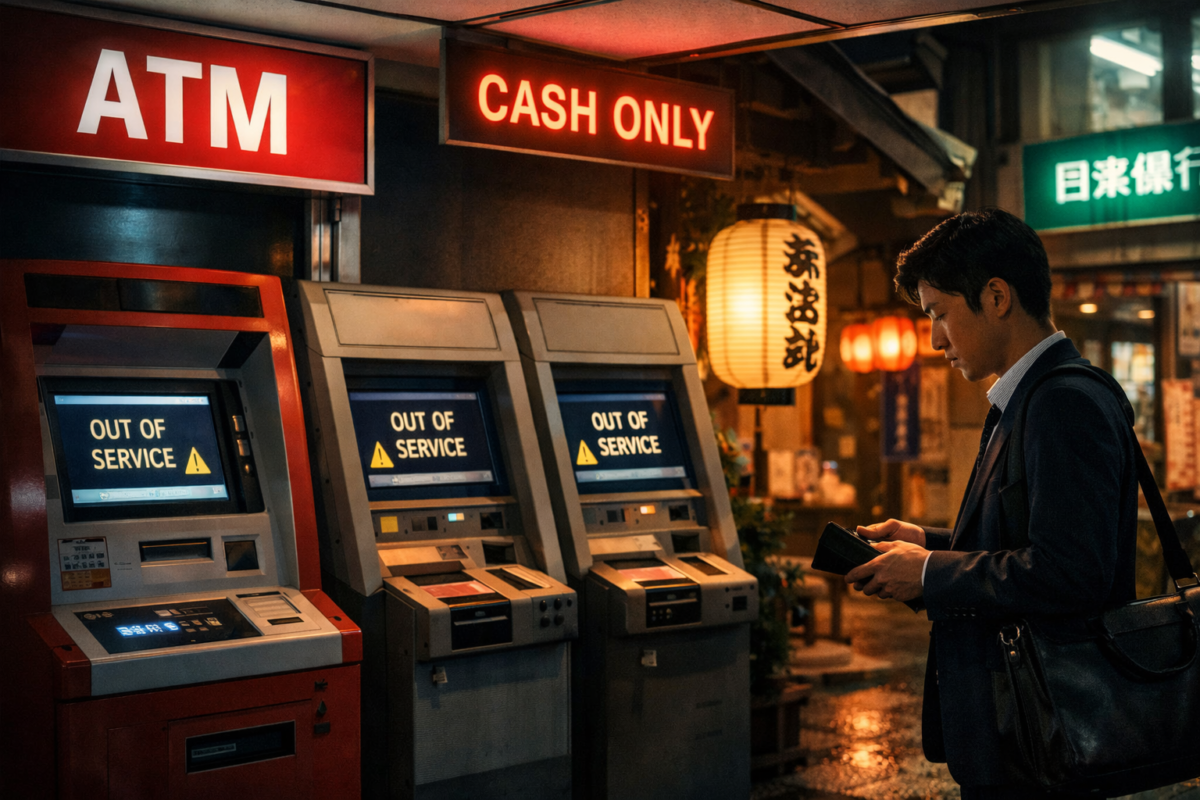
This is the single most important practical surprise for first-time visitors. Despite being one of the world’s most technologically advanced countries, Japan uses cash for the majority of everyday transactions. Many restaurants, small shops, vending machines (which are everywhere and sell everything), taxis, and even some mid-range hotels operate cash only. International credit cards are increasingly accepted in tourist areas but you cannot rely on them beyond the major hotel chains and department stores.
The second layer of this problem: most Japanese ATMs do not accept foreign cards. The local bank ATMs you will see throughout the country frequently reject international Visa and Mastercard. The reliable exceptions are 7-Eleven ATMs, Japan Post Bank ATMs, and Seven Bank ATMs. These accept most foreign cards and charge reasonable fees. Find them at every 7-Eleven convenience store (of which there are thousands) and at Japan Post offices.
Do This Instead: Get ¥30,000-50,000 cash from a 7-Eleven ATM within the first hour of arriving in Japan. Keep ¥10,000 in a separate pocket or bag from your main wallet. Carry cash at all times. This solves most practical problems before they arise.
2. Tipping Is Not Just Unnecessary – It Can Actually Cause Offence
In most Western countries, not tipping in a restaurant is interpreted as dissatisfaction. In Japan, attempting to leave a tip can be interpreted as an insult – an implicit suggestion that the service was inadequate and the staff need supplementing, or alternatively a form of charity that diminishes the dignity of the transaction. The cultural framework is that excellent service is simply what is provided, and payment is the consideration, not gratuity.
This applies to restaurants, taxis, hotel staff, tour guides, and virtually every service transaction. The only exception is a specific type of high-end traditional inn (a ryokan) where a personal attendant (nakai-san) looks after you throughout your stay – here a small gift (not cash, ideally something from your home country) at the end of the stay is sometimes appropriate. But for standard tourist Japan: no tipping. Ever. At all.
Local Insight: The Japanese concept of omotenashi – usually translated as wholehearted hospitality – describes a service ethic that anticipates needs before they’re expressed and gives without expecting return. It’s not performance. It’s genuinely cultural. When you encounter it, the appropriate response is simply to receive it graciously and say ‘arigatou gozaimasu.’
3. The IC Card Is Not Optional – It’s Infrastructure
A Suica or Pasmo IC card – a rechargeable contactless card that works on every train, metro, bus, and monorail in greater Tokyo, and on public transport in Osaka, Kyoto, and most other cities – is not a nice-to-have. It’s the operating system of daily life in Japan. It also works at convenience stores, vending machines, lockers, and many restaurants. You top it up at any station machine in 30 seconds.
Without an IC card you buy individual paper tickets for every journey, which involves deciphering fare maps in Japanese, feeding coins into machines, and arriving at the correct platform in a state of mild anxiety. With the IC card, you tap in, tap out, and the correct fare is deducted automatically. The difference in ease is not small.
You can now load a Suica card directly to Apple Pay or Google Wallet before you leave home – set it up on your phone, add ¥5,000-10,000, and tap into Japan’s transport system from the moment you clear customs. This is one of the better technological convenience upgrades of recent years.
Pro Tip: For international visitors doing multiple cities, compare whether a Japan Rail Pass (covering Shinkansen and JR network) makes financial sense versus individual tickets. The calculation depends on your itinerary – Tokyo to Kyoto return alone costs about ¥28,000; the 7-day JR Pass is ¥50,000. If you’re also doing Hiroshima, Osaka, or Fukuoka, the pass typically pays for itself.
4. Shoes Must Come Off – And Your Socks Should Reflect This
Removing shoes at the entrance (genkan) of a home, a traditional restaurant, a ryokan, a temple inner hall, and some other establishments is a non-negotiable cultural practice in Japan, not an optional courtesy. The floor inside is considered clean space; the ground outside is considered dirty. Wearing outdoor shoes past the genkan is a significant breach of etiquette.
The practical implications for visitors: wear shoes that slip on and off easily (laces are slow and awkward when you’re doing this multiple times a day). Make sure your socks have no holes – in Japan you will unexpectedly remove your shoes in front of strangers regularly and holey socks are universally noticed. Carry an extra pair of socks in your bag.
Some temples provide plastic slippers at the entrance for the inner halls – you leave your shoes in a designated area, put on the slippers, and leave them at the next division point. Pay attention to where other visitors are leaving their footwear and follow the practice.
5. Eating and Drinking While Walking Is Considered Rude
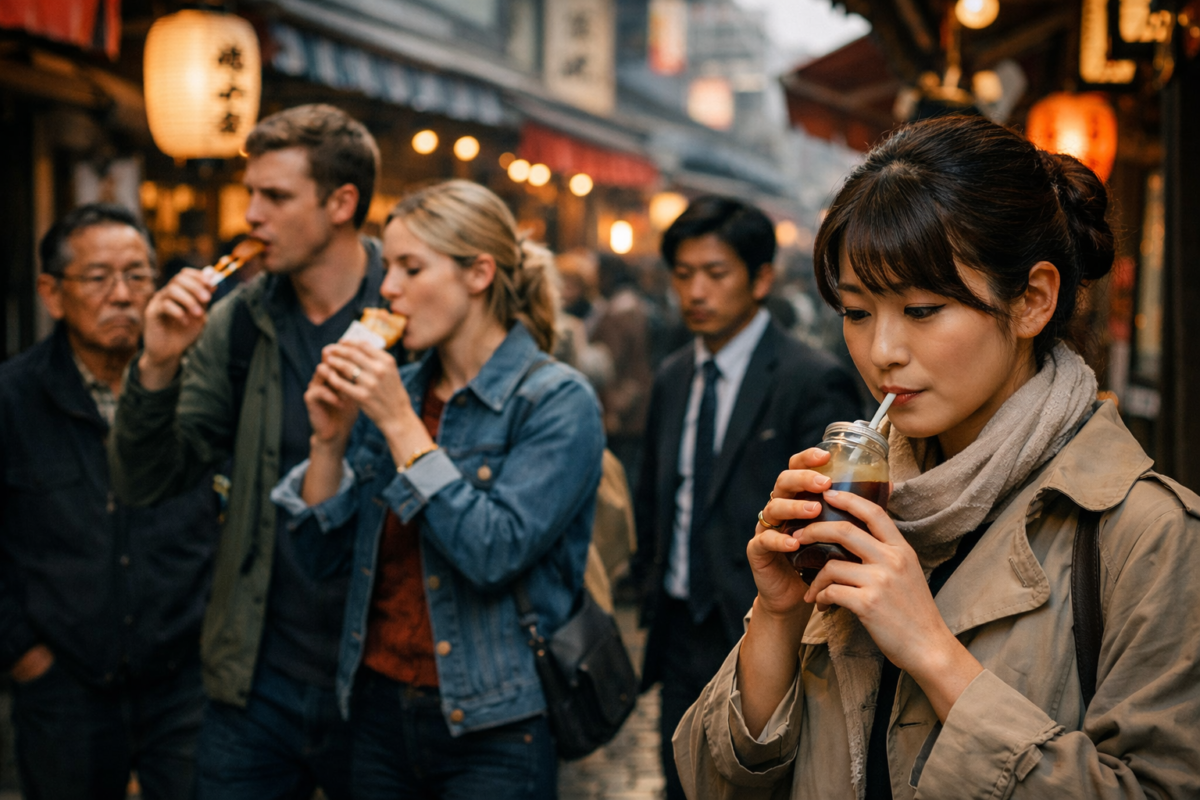
Japan has a strong cultural norm – particularly noticeable outside the major tourist areas – against eating or drinking while walking. It’s considered messy, inattentive, and vaguely disrespectful to the food and to the people around you. At street food markets and festival stalls, there are typically designated standing-eating areas where you consume your food before moving on.
The exception is ice cream – this is widely understood to melt and is therefore acceptable on the move. Also, eating on trains is generally fine on long-distance Shinkansen journeys (the ekiben – station bento box – tradition is entirely built around this) but considered poor form on local commuter trains in Tokyo and Osaka, particularly during peak hours.
Local Insight: At major tourist food streets (Nakamise-dori in Asakusa, Nishiki Market in Kyoto, Dotonbori in Osaka), eating while walking has become normalised because tourist volume made it unavoidable. But in residential neighbourhoods and off the tourist track, the traditional norm still applies – and following it earns visible appreciation from locals.
6. Tattoos Are Complicated, Particularly at Onsen
Japan has a historically complex relationship with tattoos – they are associated with the yakuza (organised crime) in the cultural imagination, and many public onsen (hot spring baths), sento (public bathhouses), some gyms, some swimming pools, and some traditional inns have policies that prohibit entry for tattooed individuals. This is not universal, not entirely logical, and increasingly contested by younger Japanese people, but it is real.
For visitors with tattoos: research any specific onsen or sento before visiting. A growing number now have private bath rentals (kashikiri buro) that give you exclusive use of a bath – these are generally available to anyone and cost ¥1,500-3,000 for 30-45 minutes. In areas with large tourist numbers, many onsen have relaxed their policies in recent years. App-based services like Onsen Search specifically filter for tattoo-friendly establishments.
Heads Up: Never attempt to cover tattoos with bandages or plasters at a facility that has a tattoo prohibition – staff will generally notice and the attempt to circumvent the rule is considered worse than having the tattoo in the first place. Ask directly or use a tattoo-friendly facility.
7. The Rubbish System Will Confuse and Then Humble You
Japan is one of the cleanest countries in the world. It achieves this through a detailed waste sorting system and a cultural norm of personal responsibility for rubbish that has no Western equivalent. The system varies by municipality – different cities have different collection days and different categories of sorting – but the general principle everywhere is that rubbish must be sorted into specific categories (burnable, non-burnable, plastics, glass, cans, cardboard) and disposed of on the correct day at the correct community collection point.
For tourists, the most immediately confusing aspect is that public bins are extremely rare in Japan. There are almost none on the street. This is a deliberate policy – waste is the responsibility of the person producing it, and public bins have been removed (or never installed) to prevent misuse and to encourage personal accountability. You carry your rubbish. You take it back to your accommodation or to a convenience store bin (which accepts certain waste categories).
The first day of this takes adjustment. By the third day it feels natural. By the end of a week you’ll be mildly dismayed at the litter back home.
Pro Tip: Carry a small plastic bag in your daypack for rubbish collection during the day. Most convenience stores have bins inside for purchasing-related waste (cup labels, receipts, packaging). Your accommodation will take your bagged rubbish each evening. This is simply how it works in Japan, and adapting to it is part of understanding the country.
8. Japan Is Extremely Quiet in Places You Wouldn’t Expect
8. Japan Is Extremely Quiet in Places You Wouldn’t Expect
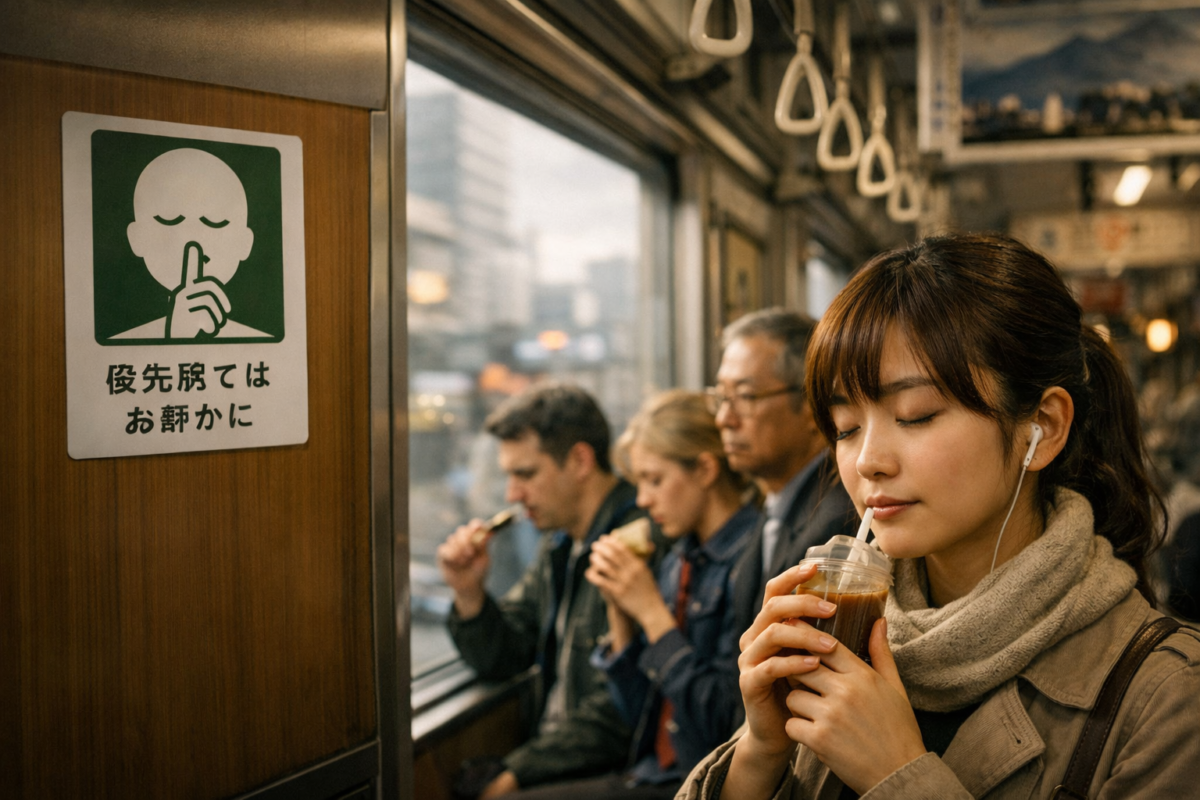
The Tokyo underground at 8am carries three million passengers with a noise level that, by any international comparison, is remarkable for its quietness. Conversations on trains are conducted in hushed tones or not at all. Phone calls on trains and buses are socially prohibited – you set your phone to manner mode (silent) and step off if you must take a call. Eating on commuter trains is avoided. The collective effort to maintain public quiet in a densely populated society is one of the most distinctive and, once noticed, most appreciated aspects of Japanese public life.
Temples and shrines require a stillness of a different order – not the enforced hush of a library but something more like a natural quiet that the space itself generates. The gravel path to a major shrine in early morning, the bamboo grove at Arashiyama before the tour groups arrive, the stone garden at Ryoan-ji at 8am – these are places where the quiet is the point, and where a group of loud tourists is not just inconsiderate but is actively destroying what everyone came for.
9. You Will Be Bowed At – And Bowing Back Is the Right Response
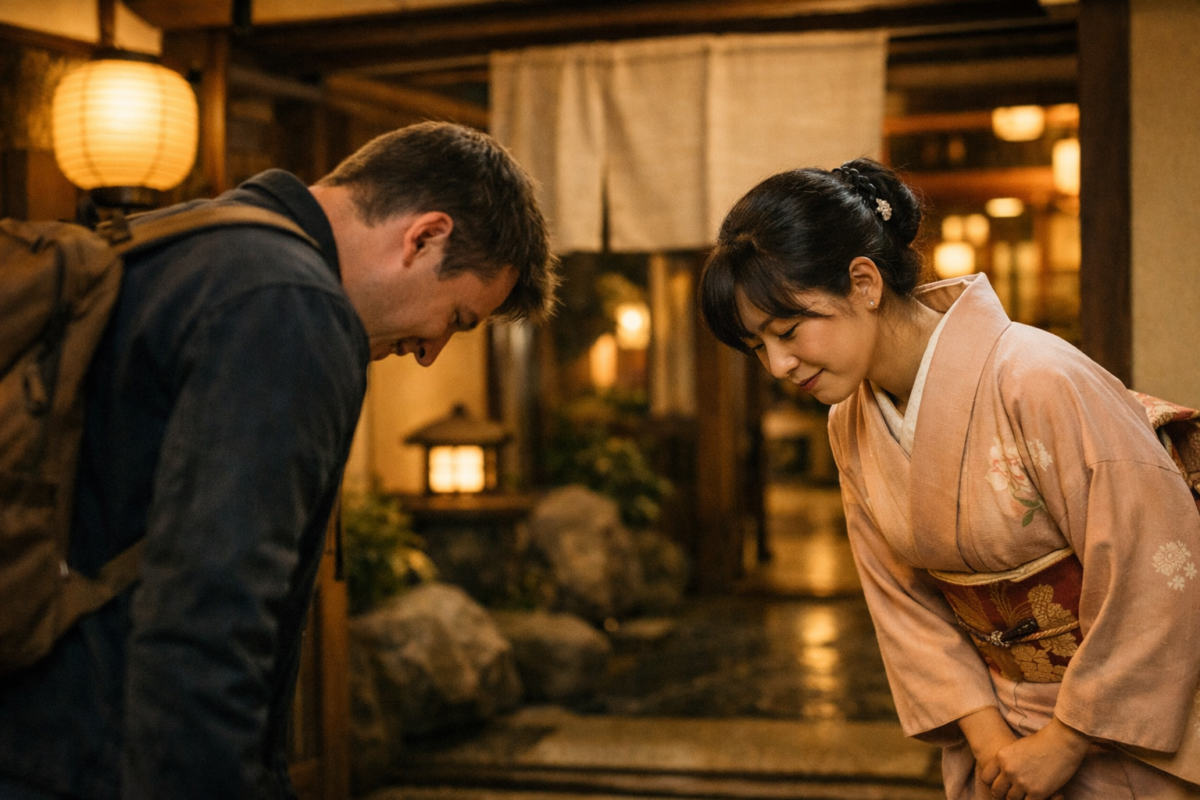
Bowing is the Japanese form of greeting, thanks, apology, respect, and farewell. It replaces the handshake, the wave, the thumbs-up, and the ‘you’re welcome.’ The depth and duration of the bow encodes meaning – a small nod is a casual acknowledgement; a 90-degree bow from the waist is deep respect or sincere apology.
As a visitor, you don’t need to master the full cultural grammar of bowing. What you do need is: when someone bows to you, bow back. A small forward inclination of the head and neck is appropriate for most tourist interactions. Don’t bow too deeply as a stranger – a 30-degree bow from a foreigner is enthusiastic and appreciated; a 90-degree bow from someone who clearly is not Japanese can read as slightly comic. The effort, not the perfection, is what matters.
Local Insight: Japanese people will not expect you to know all the social conventions and will be genuinely touched by any sincere attempt to engage with their cultural norms. The keywords that earn the most goodwill: ‘sumimasen’ (excuse me / sorry – said before asking for help), ‘arigatou gozaimasu’ (formal thank you), and a small bow before and after any service interaction.
10. The IC Card System Works Everywhere – But Overnight Trains Are Different
Most foreign visitors don’t realise that overnight sleeper trains in Japan require advance reservation and specific ticket types that the IC card doesn’t cover. The Shinkansen bullet trains require seat reservations (included in most JR Pass variants but must be reserved at a JR ticket office – not through the IC card). Some night buses and limited express trains also require separate tickets.
This matters practically because the assumption that tapping your Suica card will get you onto any train is incorrect – reserved-seat services require you to hold both a boarding ticket and a seat reservation. The JR ticket offices at major stations are the place to sort this out, and English-speaking staff are available at most major tourist-route stations.
Pro Tip: Book Shinkansen reservations at a JR ticket office as soon as you arrive in Japan – especially for the Tokyo-Kyoto and Kyoto-Hiroshima routes in peak season. Search for the best connecting international flights to Japan on Aviasales and earn cashback with WayAway.
11. Convenience Stores Are Better Than They Sound – Treat Them as a Food Source
This deserves more space than most Japan guides give it, because most Western visitors arrive prepared to be disappointed by convenience store food and leave having had some of the best quick meals of their trip. Japan’s 7-Eleven, FamilyMart, and Lawson stores produce fresh food daily to standards that genuine food culture demands – the onigiri (rice balls) are made with properly seasoned rice and quality fillings; the egg salad sandwiches have a specific creamy-sweet character that is iconic in Japanese comfort food; the hot steamed foods (nikuman, karaage, oden in winter) are properly seasoned; and the chilled desserts – the custard pudding (purin), the parfaits, the mochi – are carefully made.
A full breakfast from a convenience store costs ¥300-600. A reasonable lunch is ¥500-900. They are open 24 hours, seven days a week, everywhere in Japan, and the quality-to-price ratio is extraordinary. The Lawson Premium dessert range and the 7-Eleven seasonal sakura products during cherry blossom season are things that food writers have flown to Japan specifically to eat.
Do This Instead: Budget one genuine restaurant meal per day (ramen, sushi counter, izakaya) and use convenience stores for breakfast, lunch snacks, and late-night eating. This combination gives you the full Japanese food experience at a fraction of the all-restaurant cost – and the convenience store meals are part of the Japanese food experience, not a compromise.
12. Japanese Toilets Are Advanced – And There Are Etiquette Rules
Japan’s toilets – particularly the bidet/washlet-equipped versions found in virtually every hotel, most public facilities, and an increasing number of private homes – are legitimately the most comfortable and technologically sophisticated toilet experience in the world. The heated seat, the adjustable water pressure, the warm air dry setting, the ambient sound option – these are not gimmicks. They are the reason many visitors to Japan describe genuine grief at returning home to inferior bathroom infrastructure.
The specific etiquette item that catches people out: in traditional establishments with separate toilet slippers (provided at the toilet room entrance), you swap into the toilet slippers to enter, and crucially, swap back out when you leave. The mistake of walking back into the dining room or hallway in toilet slippers is one of the more spectacular etiquette errors available to a foreign visitor and is met with a polite, slightly pained reaction from Japanese hosts that accurately communicates exactly how significant the lapse is.
Local Insight: The kanji for ‘occupied’ on a toilet door is 使用中 (shiyo-chuu). The kanji for ‘vacant’ is 空 (kara, or sora). If you’re in any doubt about whether a cubicle is occupied, a gentle knock is perfectly acceptable.
13. The Language Barrier Is Real But Navigable – And Effort Is Disproportionately Rewarded
Japan’s English-language signage has improved dramatically over the last decade, particularly in tourist areas and on the main train networks. Tokyo, Kyoto, Osaka, and Hiroshima have excellent English signage in stations, at tourist sites, and on major roads. Away from the tourist circuit, it becomes more limited.
What remains consistent is the language gap in spoken communication – most Japanese people outside the hospitality industry have limited conversational English, and many feel genuine anxiety about English-language conversations even when they have the vocabulary to conduct them. A slow, clear speaking pace, a willingness to point and mime, and a translation app (Google Translate’s camera function handles most written Japanese instantly) are the practical toolkit.
The disproportionate reward for effort principle: a foreigner who attempts even two or three words of Japanese is received with warmth that seems outsized relative to the effort. Sumimasen (excuse me) before asking for help, arigatou gozaimasu (thank you) after, and oishii desu (it’s delicious) in response to food earns goodwill that, in Japan, translates to genuine care and attention. These are the three phrases worth learning before you go.
14. Photography Etiquette at Temples and in Private Spaces Is More Important Than Most Guides Say
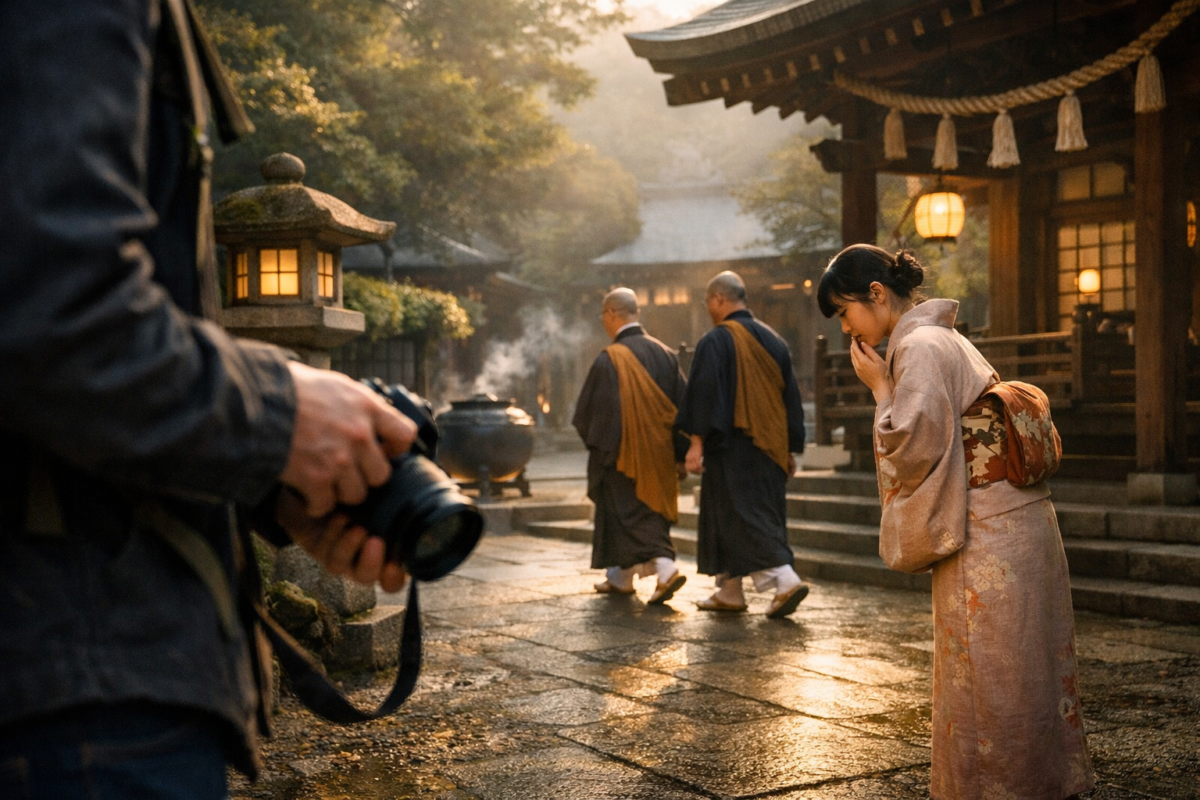
Japan’s temples, shrines, and gardens are active religious and cultural sites, not photography studios. The specific rules vary by location – some prohibit interior photography entirely (look for no-camera signs), others prohibit photography of specific objects (sacred items, private rituals), and some have photography-free periods during ceremonies.
The broader principle is: ask before photographing people in traditional settings. The Geisha and maiko of Kyoto’s Gion district have become so harassed by tourist photographers that the city introduced a photography ban in some streets. Photographing someone in traditional dress without permission, following them, or blocking their path for a shot is not acceptable in Japan regardless of the cultural novelty for the visitor.
For street photography generally: Japan is relatively open to it compared to some countries, but the cultural value of not drawing attention to individuals means that photographing people in ways that single them out – a candid close-up, a shot that captures someone in an embarrassing moment – runs counter to the cultural grain. Ask, or move on.
Heads Up: Gion in Kyoto – the most famous geisha district – has specific ordinances in some alleyways banning photography. Signs are posted clearly. The fine for violation is ¥10,000. The geiko and maiko of Gion are working professionals, not tourist attractions, and the community has made this position explicit.
15. Japan Has a Specific Relationship With Queuing That You Must Respect
Japan’s queueing culture is, by international standards, extraordinary. Queues are orderly, stationary, and absolutely respected. Cutting in line – deliberately or accidentally – is a serious social transgach that draws looks of genuine displeasure from fellow queuers. At train platforms, there are painted lines on the ground indicating exactly where to stand to be level with the train doors. People stand in these lines. When the train arrives, the queue parts to let passengers off before boarding begins.
This sounds mechanical but it produces a system of extraordinary efficiency – the busiest stations in the world run with minimal congestion because the human behaviour is precisely organised. The social contract is that everyone follows the system and everyone benefits from the system. Breaking it is not just rude; it undermines something that works only because everyone participates.
At popular ramen shops, sushi counters, and temples, queue management can be sophisticated – numbered tickets, timed entry, specific waiting areas. Follow the instructions, however complex they seem. The system has been optimised over decades.
16. Natural Disasters Are Real – Know What to Do
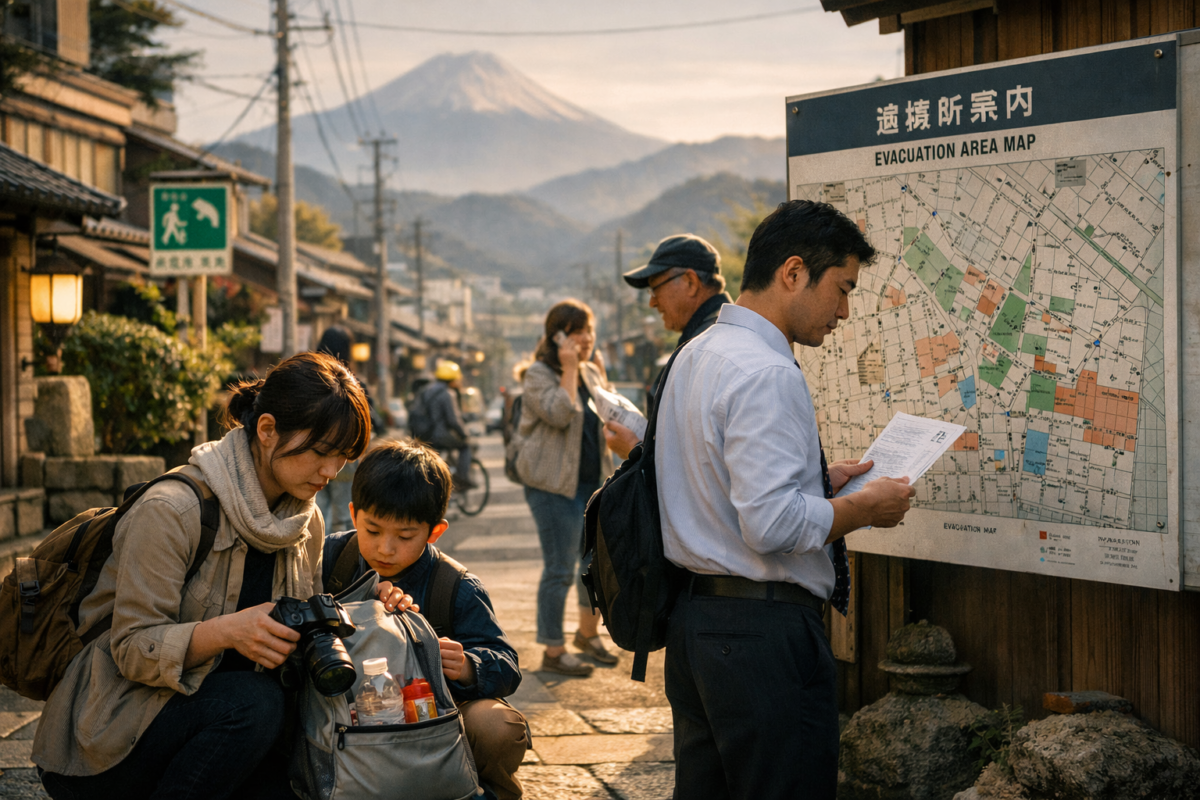
Japan experiences thousands of earthquakes every year – the vast majority too small to feel, a regular number perceptible, and occasionally significant. Japan’s earthquake preparedness infrastructure is the best in the world and buildings are engineered to extraordinary seismic standards. But the risk is real and informed visitors should know the basics:
- Download the NHK World app: English-language emergency alerts pushed to your phone in real time
- Know your hotel’s emergency procedure: Read the card in the room. Understand where the stairs are. Avoid lifts during shaking.
- Doorways vs open spaces: Modern Japanese earthquake guidance recommends sheltering under a sturdy table rather than a doorway (a myth). In a modern building, the building itself is your shelter – stay inside.
- Tsunami zones: If you are on the coast and experience a large earthquake, move immediately to high ground without waiting for a siren. The time between a coastal earthquake and a tsunami can be minutes.
- Emergency number: 110 for police, 119 for ambulance and fire. Both have English translation services available.
17. The Cherry Blossom Season Is Worth the Effort – But Requires Planning
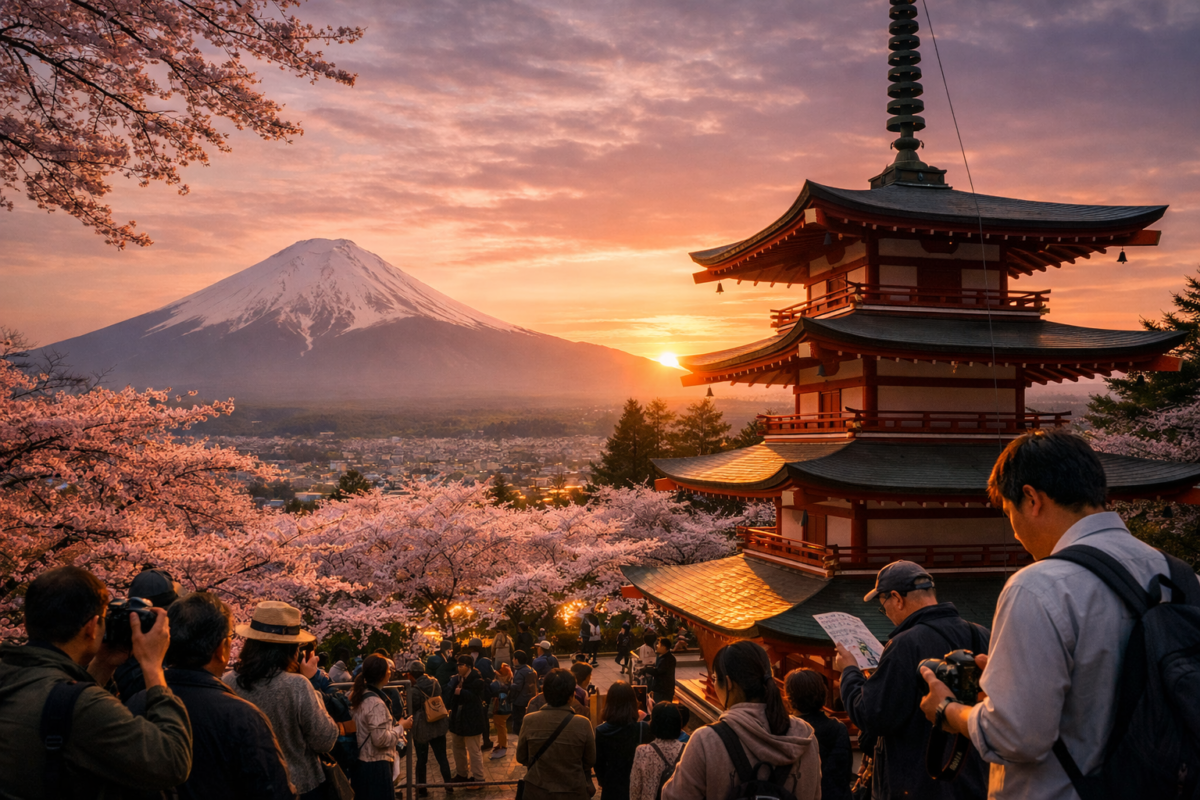
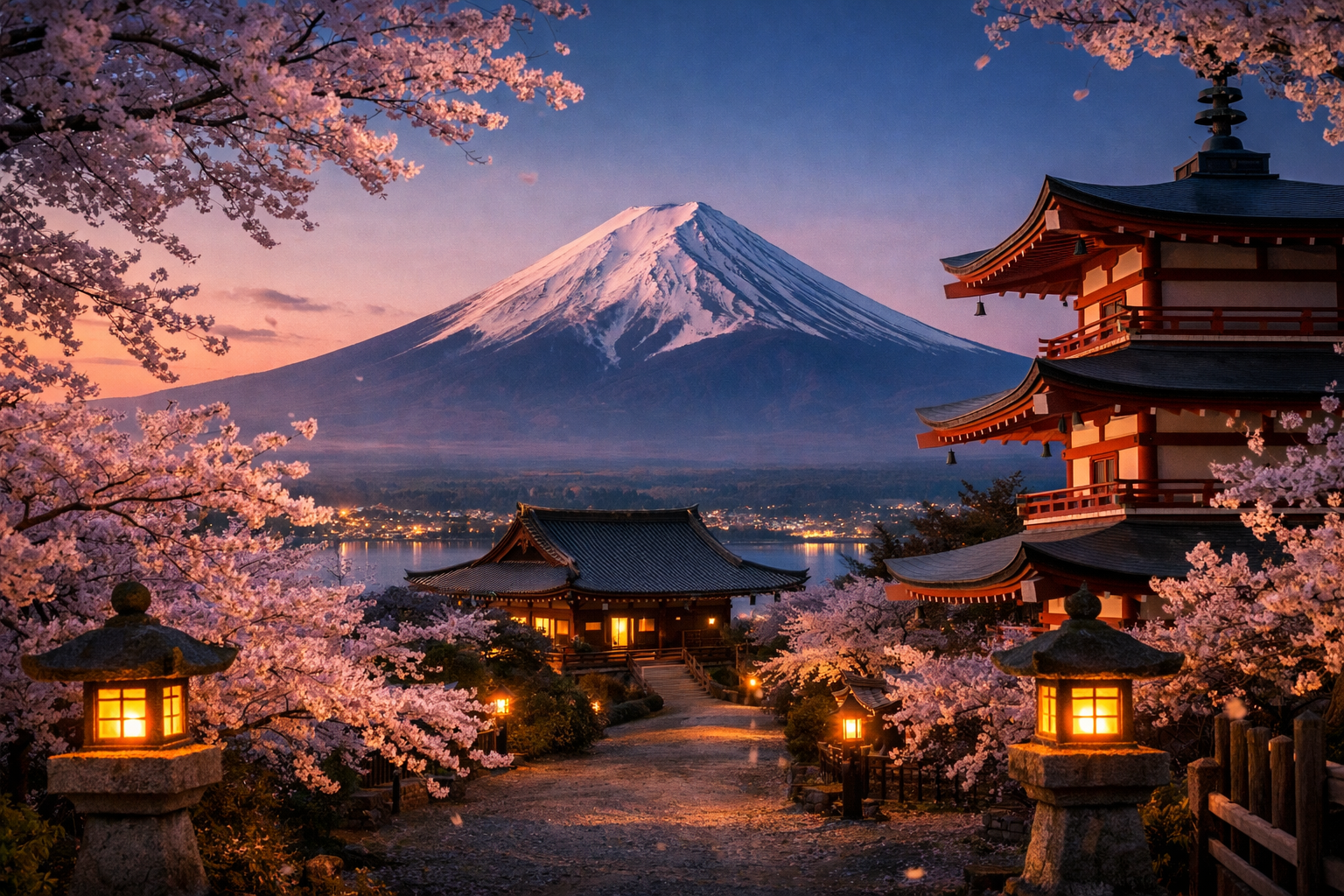
The sakura (cherry blossom) season in Japan – typically late March to mid-April in most of Honshu – is one of the genuinely extraordinary natural and cultural events in the world. The speed of the bloom is part of what makes it so affecting: the trees go from bare to full flower in about a week, stay in full bloom for perhaps ten days depending on weather, and then shed within another week. The Japanese concept of mono no aware – the beauty of transience, the gentle sadness of things that don’t last – is nowhere more visible than in a park full of cherry blossom on a calm spring day.
The planning reality: the most popular hanami (blossom viewing) spots in Kyoto, Tokyo, and Osaka book out 6-12 months ahead for accommodation during peak blossom. Flight prices surge. The famous temple gardens are crowded in a way that requires specific strategies (early morning entry, weekdays, secondary sites off the main tourist circuit). But the experience, for those who manage it, consistently lives up to its reputation – and exceeds it.
Pro Tip: The Japan Meteorological Corporation publishes cherry blossom forecast maps each year from January, showing predicted peak bloom dates by city. Search ‘sakura forecast Japan (Year)’ in January and plan your flights accordingly. Book accommodation immediately when the forecast is published – it is not an exaggeration to say that good rooms in Kyoto during peak bloom sell out within hours of the forecast confirming dates.
18. The Best Japan Is Away From the Famous Japan
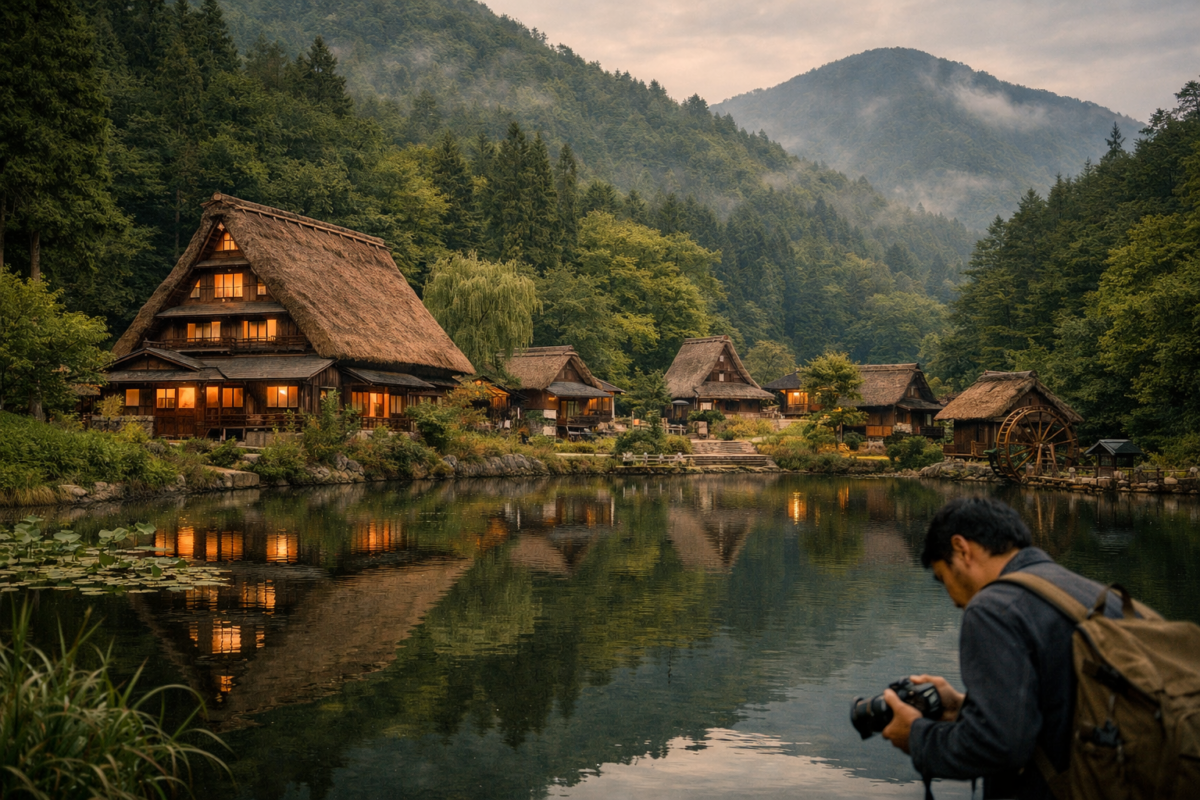
Tokyo, Kyoto, Osaka, Hiroshima, and the Fuji Five Lakes – the standard Golden Route – are famous because they’re genuinely extraordinary. Do not skip them on your first trip. But Japan contains a remarkable amount of un-Instagrammed, un-tour-grouped, un-brochured experience that most first-time visitors never reach because the Golden Route is so satisfying that it fills the itinerary.
The specific recommendations of a devoted Japan traveller:
- Kanazawa: Sometimes called ‘Kyoto without the crowds’ – a castle town with Kenroku-en (one of Japan’s three great landscape gardens), a preserved geisha district, and a world-class food market. 2.5 hours from Tokyo by Shinkansen.
- Yakushima Island: A subtropical island off the southern tip of Kyushu covered in ancient cedar forests so otherworldly that Hayao Miyazaki used them as reference for Princess Mononoke. The Jomon Sugi cedar is over 2,000 years old and requires a 10-hour round-trip hike to reach.
- Tohoku Region: The northeast of Honshu – mountains, hot spring towns, Matsushima Bay (one of the three most celebrated views in Japan), and a pace of life that feels genuinely different from the tourist corridor further south.
- Naoshima Island: A small island in the Seto Inland Sea that has been transformed into a contemporary art destination – Tadao Ando buildings, outdoor installations, a Kusama pumpkin on the shore. Extraordinary and unlike anything else in Japan.
- Aomori: Home to the Nebuta Festival in August (giant illuminated float parade, one of Japan’s great matsuri), Hirosaki Castle’s extraordinary cherry blossom (the moat turns pink from fallen petals), and apple orchards as far as the eye can see in autumn.
Local Insight: The best advice for a second or third Japan trip is to pick one region and go deep. Two weeks in Kyushu. Ten days in the Japanese Alps. A week in Tohoku. Japan rewards depth over breadth in a way that few countries do – the layers only become visible when you slow down enough to let them appear.
Japan Practical: Flights, Money, Connectivity, and Getting Around
Getting to Japan
Japan is served by direct flights from most major international hubs. Tokyo Narita and Tokyo Haneda are the main entry airports for the Kanto region; Kansai International (Osaka) serves the Kyoto/Osaka/Nara corridor. From the UK, non-stop flights to Tokyo take 12-13 hours; from the US West Coast, 10-12 hours; from the East Coast, 14 hours. Search for the best available fares on Aviasales and earn cashback on every booking with WayAway.
If your international flight is delayed or cancelled, AirHelp manages EU261 and equivalent compensation claims on a no-win-no-fee basis – always register a disrupted flight.
Money in Japan
Japan’s yen is currently at historically favourable exchange rates for visitors from the USA, UK, Europe, and Canada – check the real-time rate at our Live Currency Converter before you go. The best way to access cash is via 7-Eleven ATMs – they accept most international cards and charge reasonable fees. Never exchange at airport currency booths; their rates are consistently poor. Wise and Revolut cards give close to mid-market rates and work at Japanese ATMs with minimal fees.
Connectivity: eSIM Is the Smart Choice
Japan has excellent 4G/5G coverage throughout most of the country, including rural areas and many national parks. Airalo and Yesim both offer Japan-specific eSIM packages and Asia-wide data plans. Activate before you fly – you will be connected from the moment you clear customs without visiting a SIM shop or renting a pocket WiFi device. For access to geo-restricted streaming services while in Japan, NordVPN works reliably on Japanese networks.
Getting Around
The Suica/Pasmo IC card covers all local trains, metro, and buses. JR Pass covers Shinkansen (bullet trains) and JR network trains – compare whether it makes sense for your itinerary before purchasing. GetTransfer offers pre-booked airport transfers from Narita and Haneda with meet-and-greet service – useful if you arrive late or with significant luggage. InDrive operates in Tokyo and some other major cities as an alternative to Uber for city rides.
For day trips requiring a rental car – to the Japanese Alps, the Noto Peninsula, parts of rural Tohoku – GetRentACar compares prices across all major Japanese providers. Note that Japan drives on the left; international driving permits are required alongside your home licence.
Luggage Strategy
Japan’s luggage forwarding culture (takkyubin) is one of travel’s great unreported conveniences. The Yamato Transport and Sagawa Express services will pick up your luggage from your hotel, forward it to your next hotel (arriving the following day for ¥1,500-2,500 per bag), or send it to the airport terminal for collection on departure day. This means you can travel between Tokyo and Kyoto on the Shinkansen with nothing but a small daypack, arrive at your hotel to find your bags waiting. Radical Storage also has locations at major Japanese stations for same-day bag storage.
Travel Insurance
Japan’s healthcare is excellent but costs for foreigners without insurance are significant. Comprehensive cover including medical, emergency repatriation, and baggage is non-negotiable for any Japan trip. Ekta Travel Insurance offers flexible policies covering adventure activities (hiking, cycling, winter sports at Hokkaido ski resorts) that appear commonly in Japan itineraries.
Tours and Cultural Experiences
For guided sake tastings, tea ceremony experiences, sumo morning practice viewing, and traditional craft workshops, WeGoTrip has a strong Japan catalogue with English booking and expert local guides. For concerts, kabuki theatre, sumo tournaments, and major events, Ticket Network covers major Japanese venues – sumo tournaments in particular book out quickly for the tournaments that run in Tokyo in January, May, and September.
Plan Your First Japan Trip with These Free Tools
- AI Travel Budget Estimator – calculate your complete Japan trip budget by city, duration, and travel style
- Live Currency Converter – real-time JPY conversion from USD, GBP, EUR, CAD, AUD, and all major currencies
- Weather Checker – essential for cherry blossom timing and typhoon season planning (August-October)
- Packing List Generator – custom Japan packing list for the specific season, including slip-on shoes, sock quality reminders, and midsummer humidity prep
- Travel Planning Services – need a custom Japan itinerary built around your dates, interests, and budget? Our team builds them end to end
- Budget Travel Hub – money-saving strategies that work for Japan and every destination we cover
Frequently Asked Questions
Q1: How much money should I budget for Japan per day?
Japan is more affordable than its reputation suggests, particularly given the current exchange rate. A realistic budget: shoestring traveller (hostels, convenience stores, free temples): ¥7,000-9,000/day (~US$45-60). Budget traveller (capsule hotel or guesthouse, one restaurant meal daily): ¥12,000-18,000/day (~US$80-120). Mid-range (business hotel, restaurant lunches and dinners): ¥25,000-40,000/day (~US$165-265). Use our AI Travel Budget Estimator for a personalised breakdown.
Q2: Is Japan safe for solo female travellers?
Japan is consistently rated one of the safest countries in the world for solo female travel. Violent crime against tourists is extraordinarily rare. The main specific concern is chikan (groping) on crowded commuter trains during peak hours – women-only carriages exist on most metro systems and should be used. Beyond this, solo female travel in Japan is safer than in most Western European cities. Hundreds of thousands of women travel Japan alone every year without incident.
Q3: When is the best time to visit Japan for a first-time visitor?
March-April for cherry blossoms (book everything 6-12 months ahead). October-November for autumn colours (the second great foliage season – maples in Kyoto are extraordinary in mid-November). May, early June, and September for good weather without the peak-season crowds and prices. Avoid July-August (extremely hot and humid with typhoon risk August-September) and Golden Week (late April-early May – domestic tourism peak, accommodation very expensive).
Q4: Do I need to speak Japanese to travel Japan independently?
No – Tokyo, Kyoto, Osaka, and the main tourist circuit have sufficient English signage and hospitality industry English to navigate independently. Google Translate’s camera function handles most written Japanese instantly. The three spoken phrases worth learning – sumimasen, arigatou gozaimasu, and oishii desu – will serve you in the vast majority of daily interactions and are disproportionately appreciated. Deeper rural travel benefits from either a Japanese-speaking companion or significant tolerance for navigating entirely by pointing, map apps, and mime.
Q5: What is the Japan Rail Pass and is it worth buying?
The Japan Rail Pass (JR Pass) gives unlimited travel on most JR trains including Shinkansen for 7, 14, or 21 days. It must be purchased outside Japan (through authorised overseas agents or online) and is only available to non-Japanese passport holders. Whether it’s worth it depends entirely on your itinerary: the Tokyo-Kyoto-Hiroshima-Fukuoka Golden Route makes the 7-day pass financially clear. Tokyo-only travel does not. Calculate your expected Shinkansen journeys and compare against the pass price before purchasing.
Q6: What are the most common mistakes first-time visitors make in Japan?
The most common practical mistakes: not carrying enough cash (ATMs and card acceptance both have limits outside tourist areas), wearing shoes that are difficult to remove quickly (exhausting when you’re doing it ten times a day), not having an IC card (paper tickets are genuinely painful by comparison), overscheduling the itinerary (Japan rewards slowing down; trying to see five cities in seven days means seeing none of them properly), and flying between Tokyo and Kyoto when the Shinkansen is faster city-centre to city-centre, more comfortable, and a better experience.
Final Thoughts: Japan Doesn’t Just Meet Expectations. It Changes Them.
There are places that you visit and appreciate. There are places that you visit and love. And there are a very small number of places that do something more specific – that recalibrate something. That change what you think is possible in a city, in a meal, in an act of ordinary public kindness, in a garden, in a train arriving at 7:04am and departing at 7:04am.
Japan is in the last category. Not for everyone – the cultural distance is real and some people find the formality alienating rather than appealing. But for the people it gets, it gets them deeply. They come back. They learn fragments of the language. They plan their lives around the cherry blossom. They become slightly impatient with places that don’t clean their streets or make fresh onigiri or arrive on time.
The 18 things in this guide are the ones that made the difference between admiring Japan from the outside and actually getting to be inside it, even briefly. Go with them in mind. Be patient with the confusion. Ask for help when you need it. And remember: the station worker who helped a lost foreigner find the exit at 10pm on a Wednesday is not an exception. In Japan, it is the rule.
Start planning your Japan trip today. Find the best flights on Aviasales, earn cashback with WayAway, book your eSIM with Airalo or Yesim, sort airport transfers via GetTransfer, protect your trip with Ekta Travel Insurance, and browse our complete Asia destination guides for Kyoto, Osaka, and beyond.
Itte kimasu — I’ll go and come back.
Hidden Travels Team | hiddentravels.site